Thomas Heising

Visual science communication
Back to the Lab

What are the Tetrapod footprints?

Geology nugget
2024 | Kerry, Ireland
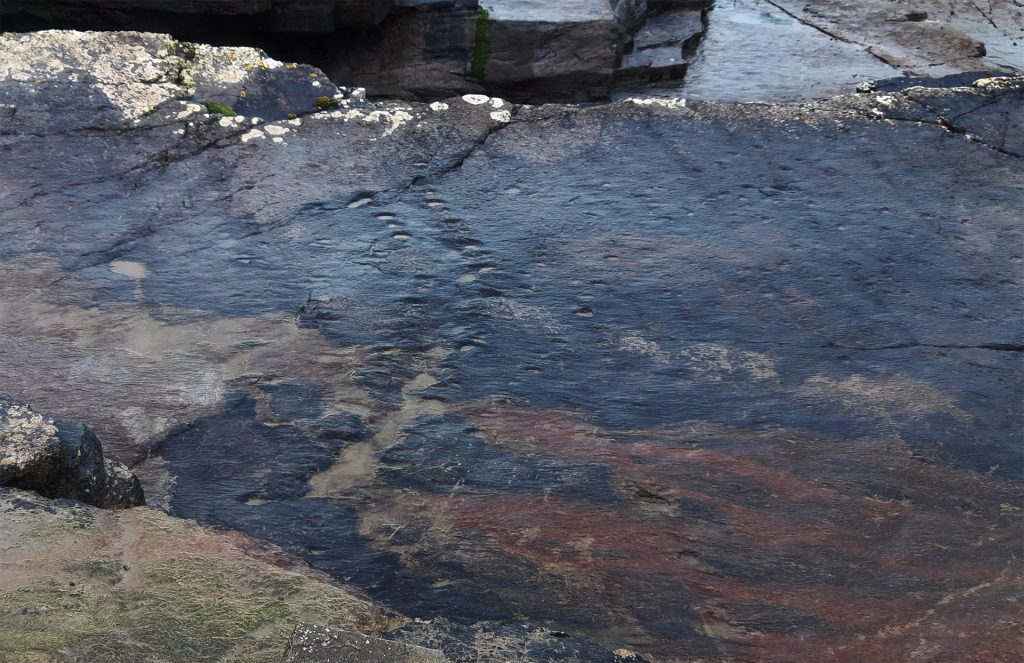
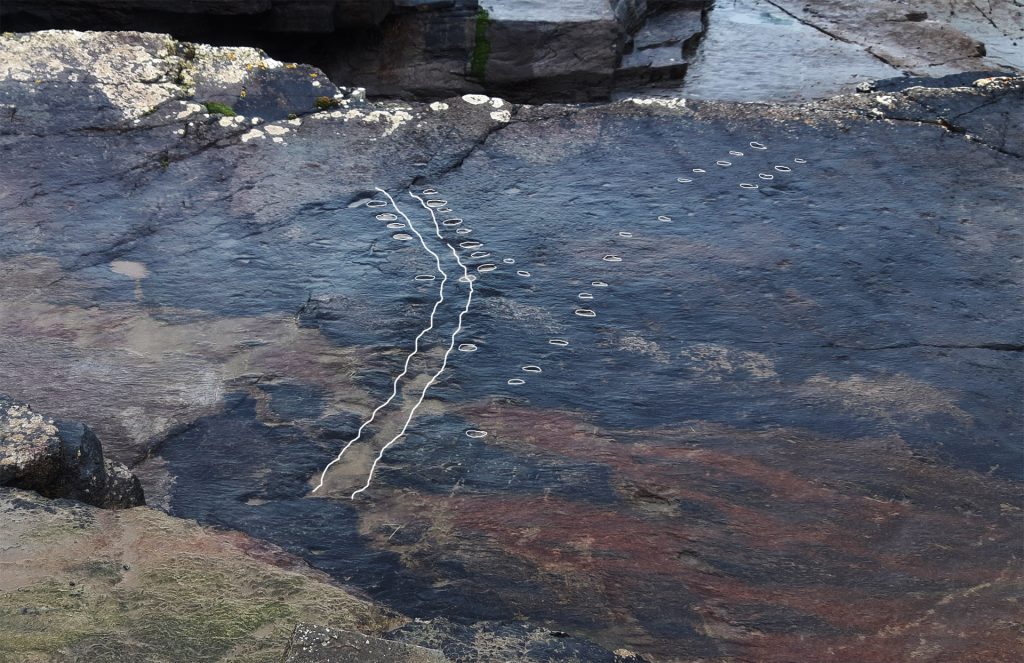
Valentia Island - Tetrapod footprintsValentia Island - Tetrapod footprints annotated
“What are we looking at?”
I made this post for anyone who has seen the tetrapod footprints on Valentia Island and is still wondering:
 
What are they? And what’s all the fuzz about? 
 
Feel free to share this with anyone else who is confused.

What are the tetrapod footprints not?

1) They are not footprints from dinosaurs. These footprints were made about 385 million years ago. Dinosaurs wouldn’t come about until about 150 million years later.
 
2) No, they were not made by amphibians. I’ve spotted a few semi-serious articles calling the animals that laid them “amphibians”. They likely had an amphibian lifestyle, but that does not make them actual amphibians. The first amphibians came to be tens of millions of years LATER than the tetrapod footprints.
 
3) Other texts incorrectly state that they’re the earliest animals living on land. However, they’re not, as there were already invertebrates like arachnids breathing air and roaming above water for millions of years prior to.
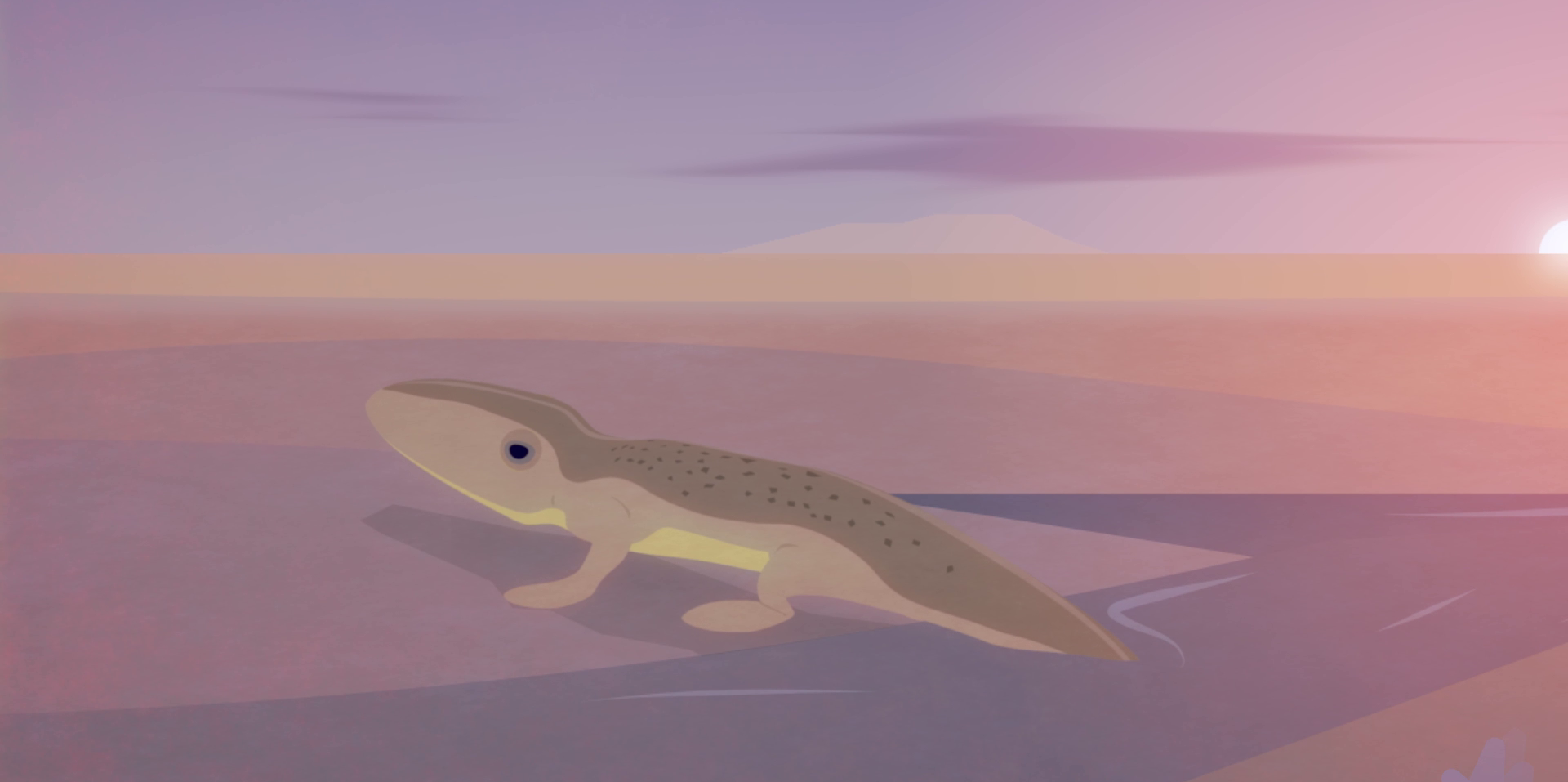
Tetrapod from Live Eco-Museum - Thomas Heising
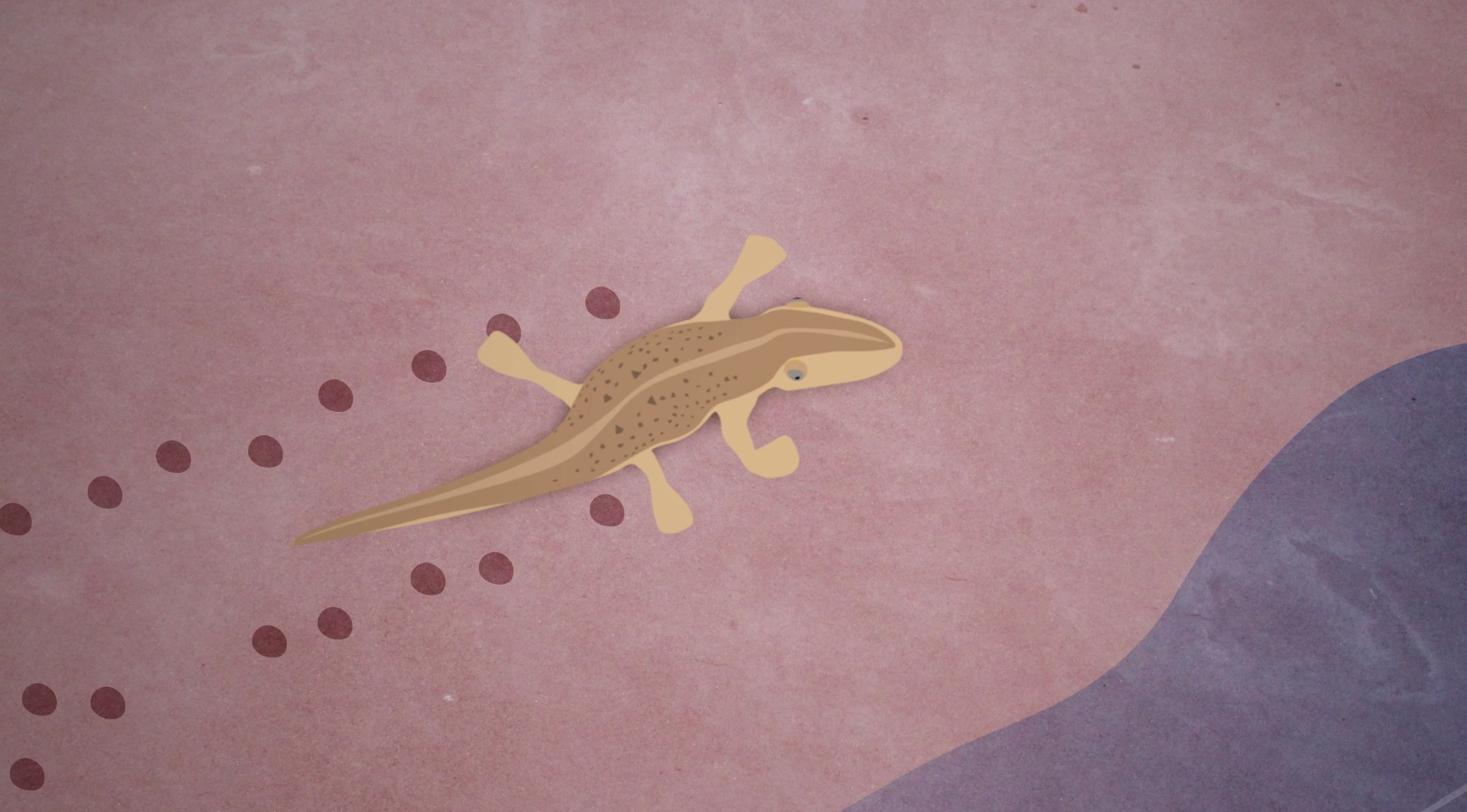
For an animated video for Llŷn, Iveragh Ecomuseums, I created this 3D-animated visualisation of the Valentia Island tetrapod with the help of a geologist at UCC. In hindsight, I would’ve liked to have given it a bit more “fishiness”.

So, really, what are the tetrapod footprints?

They’re likely made by “fish”. Lobe-finned fish that had developed joints in their fins to allow for movement on land. These animals or lobe-finned fish primarily lived in the rivers and lakes of that time’s Munster, but perhaps they came up on land to feed once in a while. And from some of the footprints, it seems that these fins or limbs even had digits aka. fingers or toes!
 
This is still a complicated and vague answer, but researchers can’t be sure of much as no fossils of these animals have been found yet. We can only compare with fossils of other tetrapod or land-dwelling lobe-finned fish that came about a few million years later.
 
Plus this group of tetrapod animals, the in-between stage between “fish” and the rest of us (reptiles, mammals and amphibians), are now completely extinct. The most similar-looking relatives are likely today’s coelacanths and lungfish.
Tetrapod walking from Live Eco-Museum
From the same animated video, I struggled getting the footprints to line up with the actual walk cycle of the animal, plus trying not to make it look too agile.
A good thing about the tetrapod footprints is that other tracks have been found since the main tracks were discovered in 1993: some over by the nearby and dodgy Culoo Rock and recently more of them near the Kerry Cliffs. The chances of having discovered so many tetrapod footprints around the area mean that these animals might have been fairly common back 385 million years ago.
 
Story time!
 
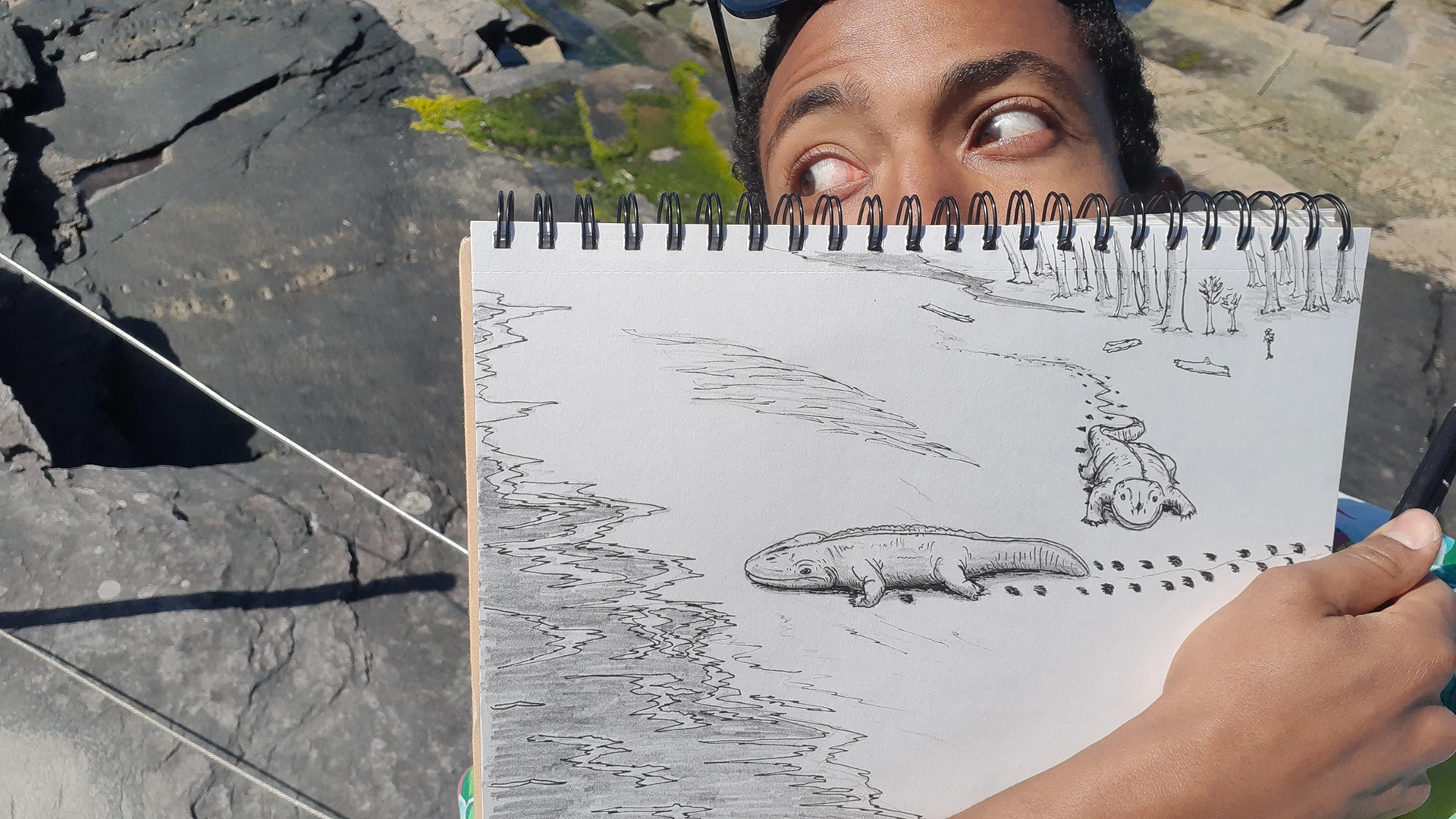
On one lovely summer day in 2021, I sat by the main signposted tracks and did a quick sketch of what the animals might have been like. A cute couple in their 60s came by to have a look at the tracks as well. Awkward silence fell as they stood and looked at the footprints. The husband finally looked over at myself sitting on a patch of grass sketching my interpretation of the circumstances. “What are we looking at?” he asked. I told him if he could give me a moment, then I would finish the sketch and show.
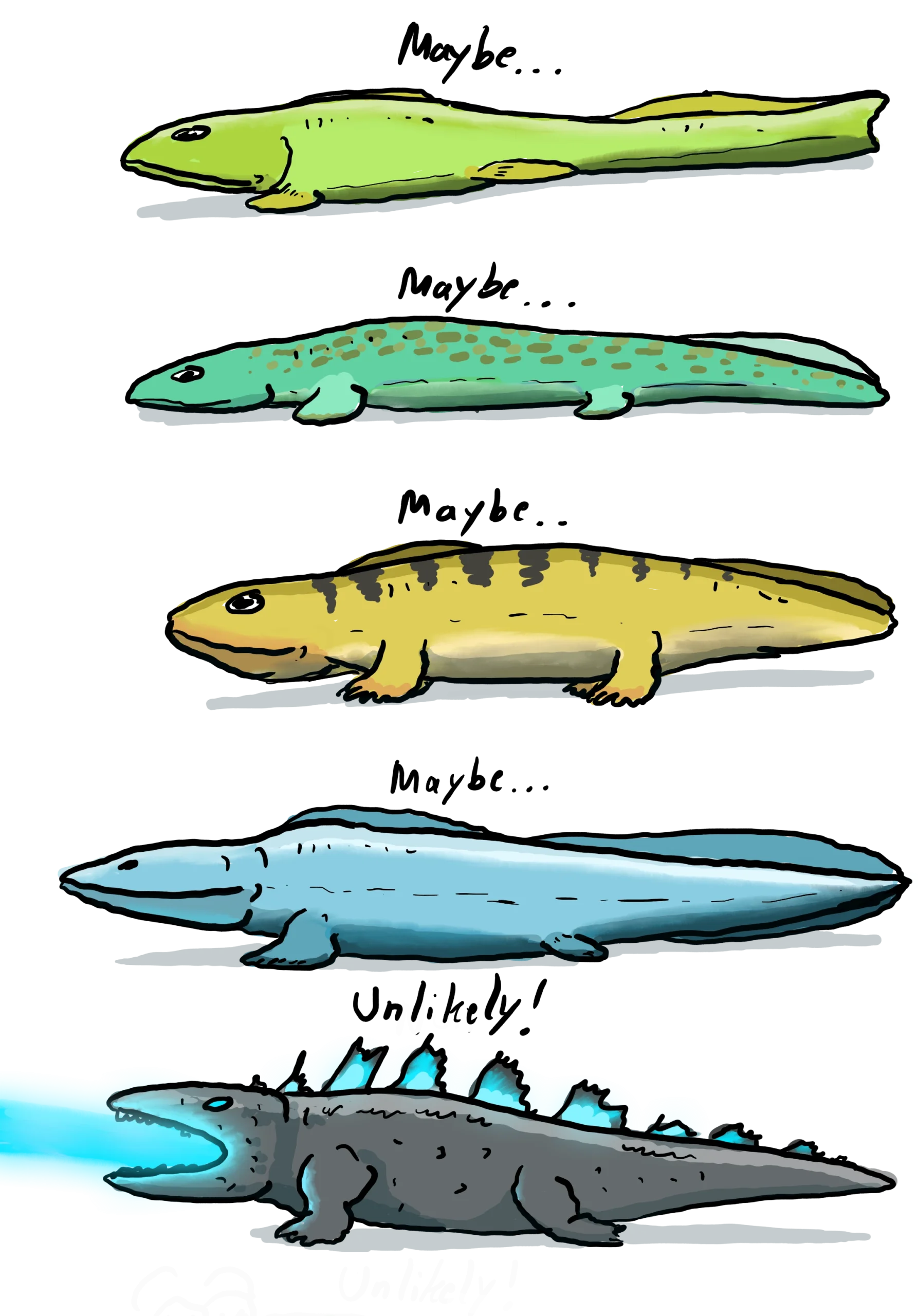
Tetrapod sketch
The sketch in question after the couple left. A few things redone in future versions, but this was the start of a slight obsession.
My knowledge on evolutionary biology at the time wasn’t as precise as it is now, but I talked away about the ripples in the sedimentary rocks, the animals intersecting each other’s paths and how we could be descendants of these animals. They thanked me for the passionate lesson, and later paid for my ticket into the Valentia Lighthouse. Job done!
 
Truth be told, it’s nice to think of the tetrapods of Kerry as our ancient land-colonising direct ancestors, but the chances of that are, in the grand scheme of things, small. They could very well be part of the evolutionary trend at the time though!
 
Anyways, more on this in the future. So what do you say when someone asks what tetrapods are?
 
You can say:
 
They were perhaps our ancestors or related to them? Maybe the first vertebrate animals to walk up on land? The reason why you and I have five fingers on each hand? Perhaps the reason why your thyroid glands are in your neck? The reason why you get hiccups? Why human embryos look a bit like tadpoles? They’re maybe the reason we even exist!?
  
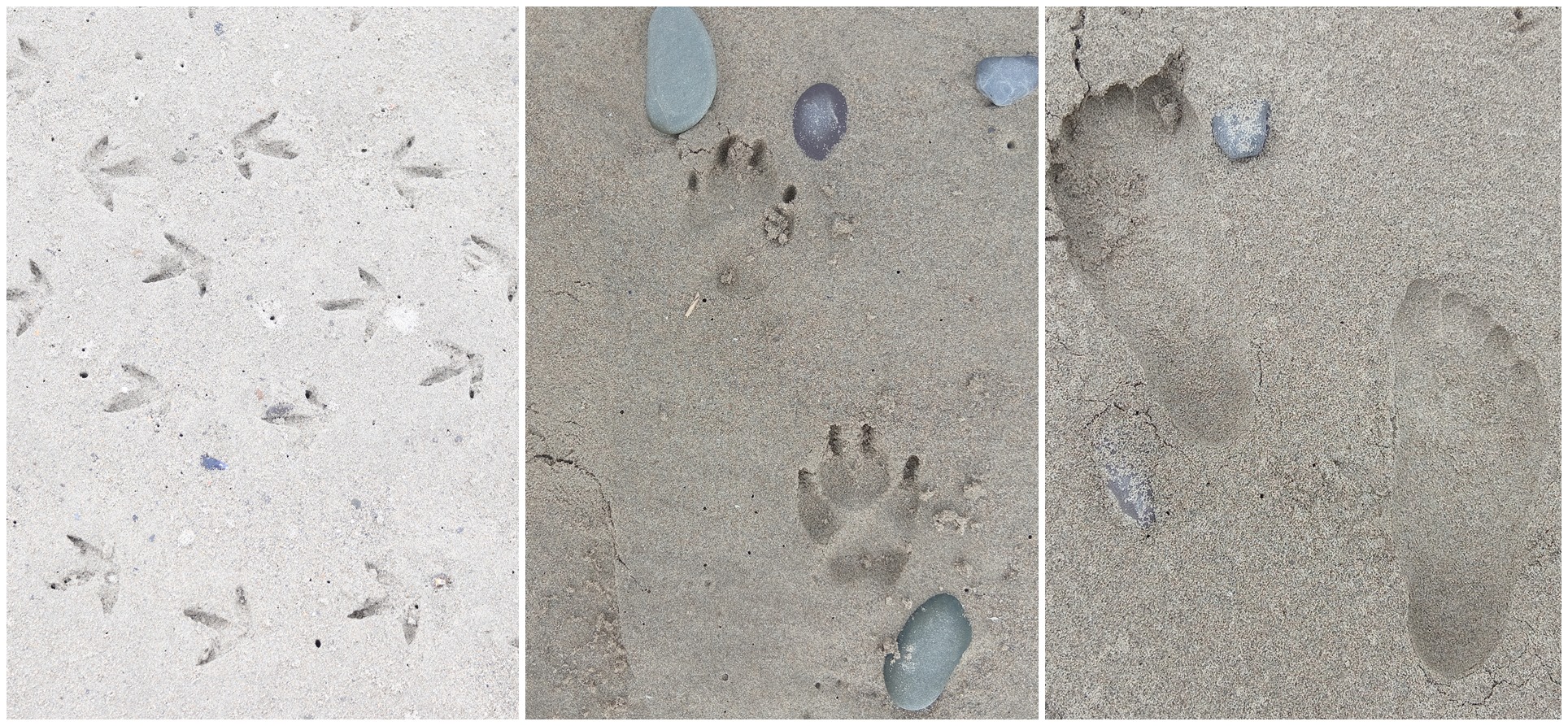
In fact, these below are also tetrapod footprints:
Modern-day Tetrapod footprints
Why these tetrapod footprints aren’t famous is simply because they aren’t 385 million years old.

References:

Clack, J. A. & Ahlberg, P. E., 2016. Sarcopterygians: From Lobe-Finned Fishes to the Tetrapod Stem Group. Springer Handbook of Auditory Research, Vol. 59, pp. 51-70. DOI: 10.1007/978-3-319-46661-3.

Clement, A., 2019. Sarcopterygian Fishes, the “Lobe-Fins”: Anatomical, Functional, and Developmental Diversity in Chordate Evolution. Heads, Jaws, and Muscles. pp.119-142. doi: 10.1007/978-3-319-93560-7_6.

Higgs, K. T. & Meere, P. A, 2024. Tetrapod trackways from the Upper Devonian St. Finan's Sandstone Formation, southwest Kerry, Ireland. Irish Journal of Earth Sciences, Vol 42, pp. 97-118. doi: 10.1353/ijes.2024.a935022.

Stössel, I., Williams E. A. & Higgs K. T., 2016. Ichnology and depositional environment of the Middle Devonian Valentia Island tetrapod trackways, south-west Ireland. Palaeogeography, Palaeoclimatology, Palaeoecology, Vol. 462, pp. 16-1490. doi: 10.1016/j.palaeo.2016.08.033.