Some spot for a harp concert!
Hiking
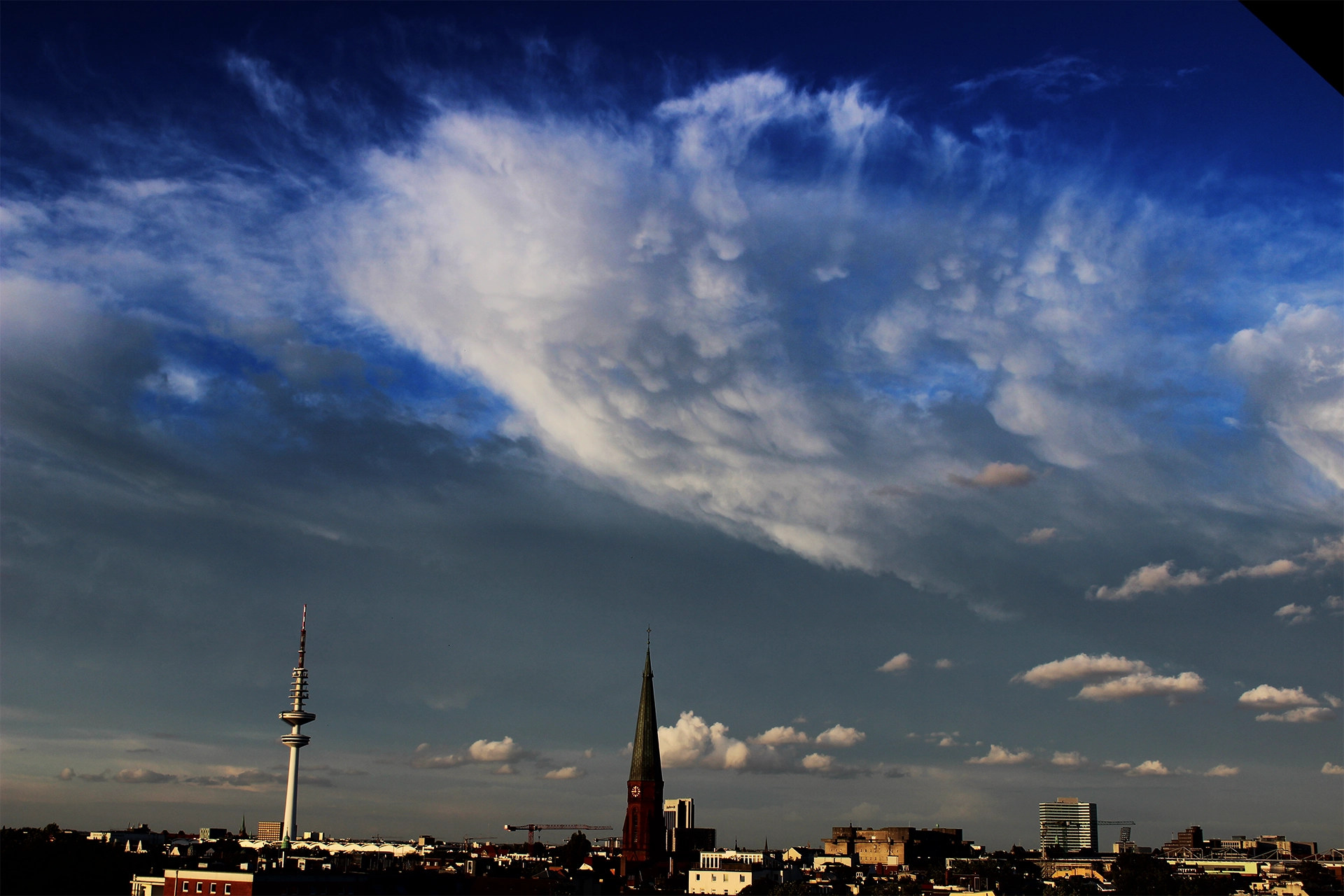
I just came up with the above term, but I should warn you: do not use it in a scientific context.
Here we go anyways.
How does a thunderstorm lose its head?
The short answer is that a thunderstorm doesn’t have a ‘head’. But! If it had a mouth that would its updraft area, while the downdraft area would be its anus. Both make up the underbelly of the cloud. But up several kilometres in the atmosphere, it can form an anvil. A feature that could look like a head, depending on our imagination.
A thunderstorm’s ‘head’ is primarily made of ice and snow and can spread for hundreds of kilometres. It’s one of the last visual features on a thunderstorm to disappear as seen on the image above.
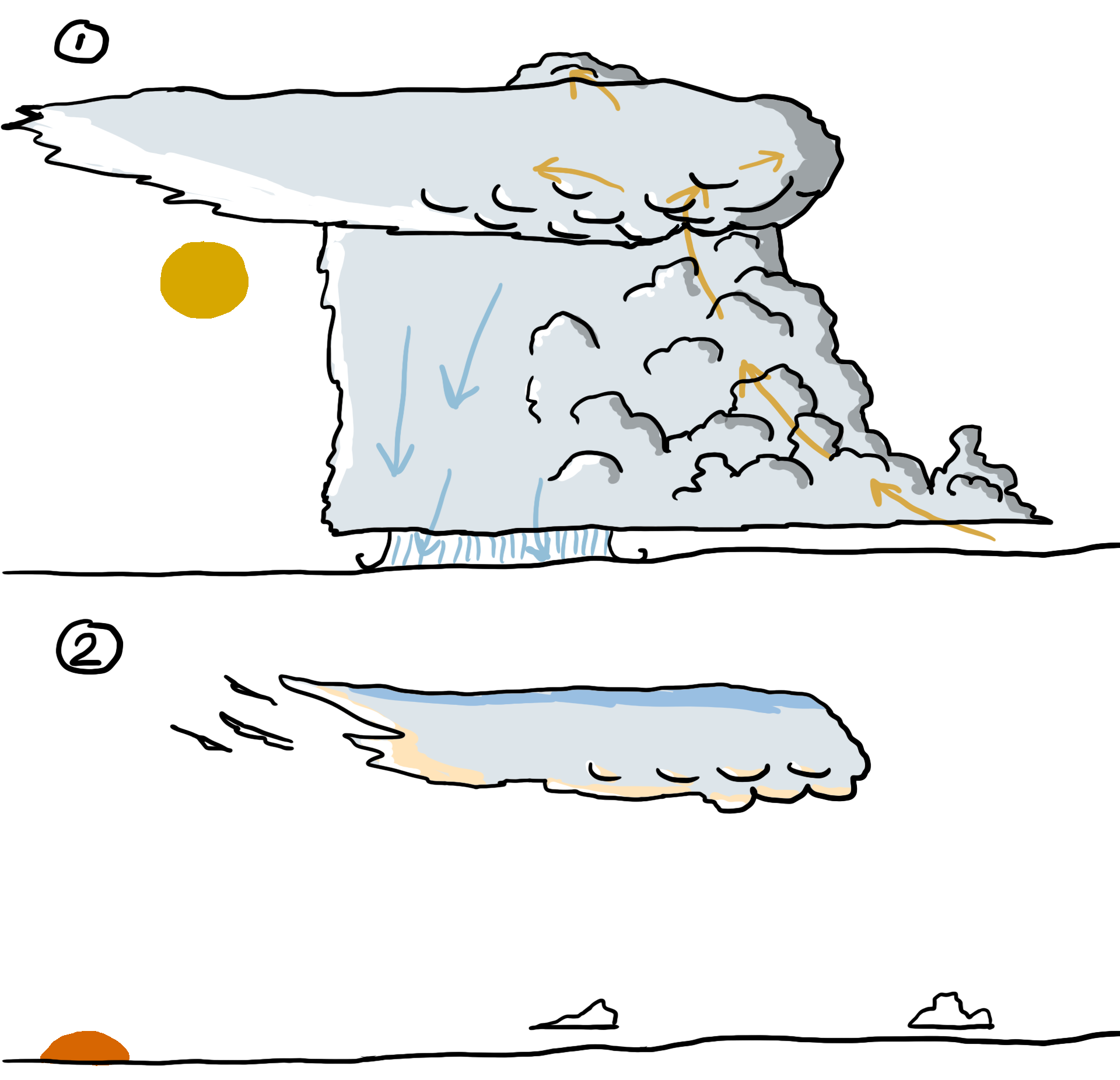
It goes something like this: After an exciting afternoon and evening of thunder and lightning activity, the sun sets and thus the primary source of heat for fuelling the thunderstorms is cut off. The towering structure of the thunderstorm disappears quickly, while the head is left hanging up above, and may even drift away from where the thunderstorm was.
Seen on this decapitated thunderstorm are lobes of mammatus cloud: mysterious pockets of ice and snow hanging like fruit or breasts from the anvil.
A sketch below can help visualise things a bit better perhaps.
Thomas Heising here!
I’m originally from Denmark, but now living in Cork, Ireland and working with visual science communication. You may have found this post because you were curious about this page or wanted to know more about the topic at hand – in any case: welcome.
There are more writings, visuals and videos around here about geology, the weather, our planet, Ireland, Denmark and other things that interest me.