Let them crawl
Video - Irish nature
Dolphins swimming around in Roaringwater Bay.
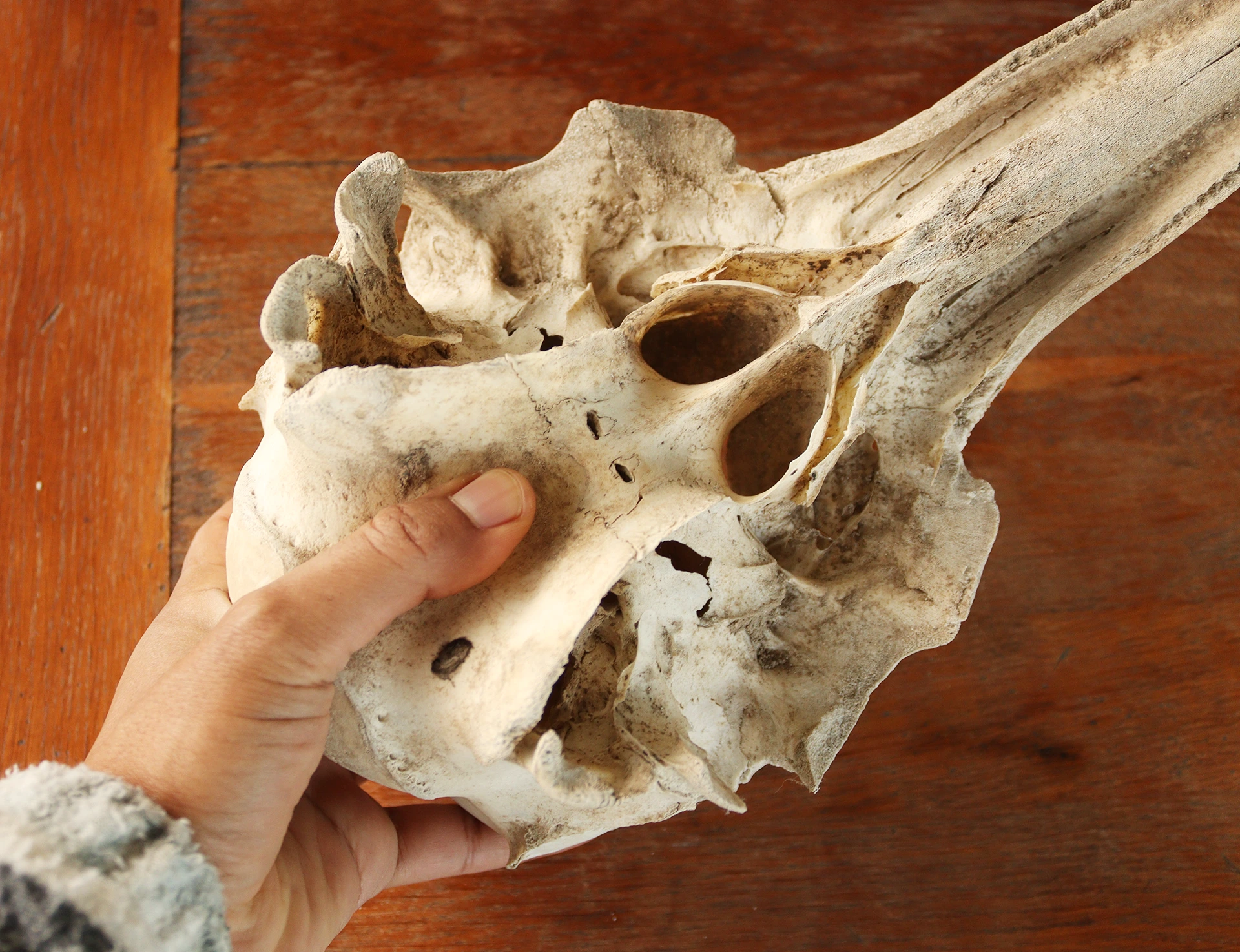
Ventral view of a common dolphin cranium.
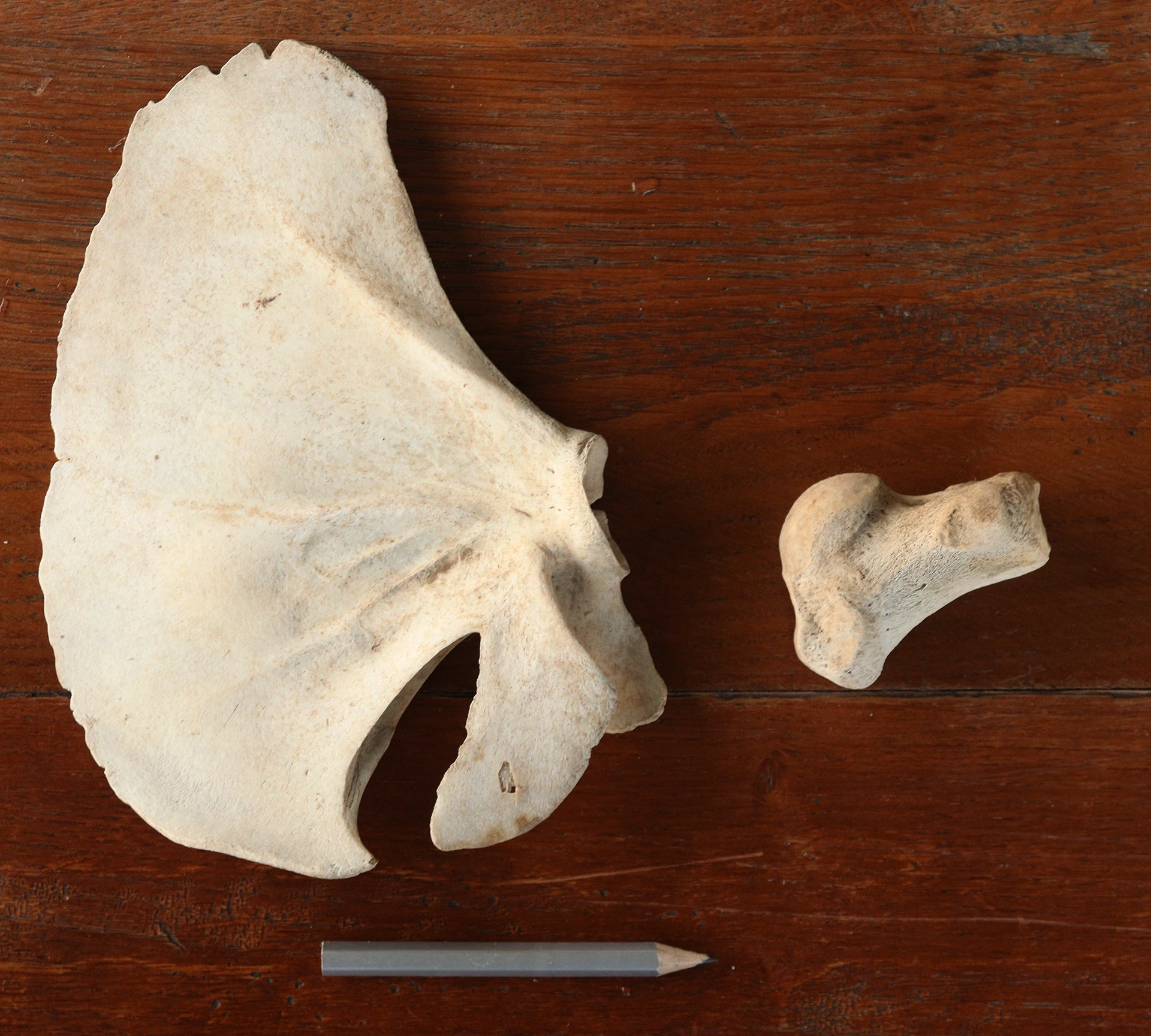
The shoulder blade (scapula) and upper arm (humerus) of a common dolphin. You (very likely) have these two bones inside of you as well – similarly looking but in different proportions.
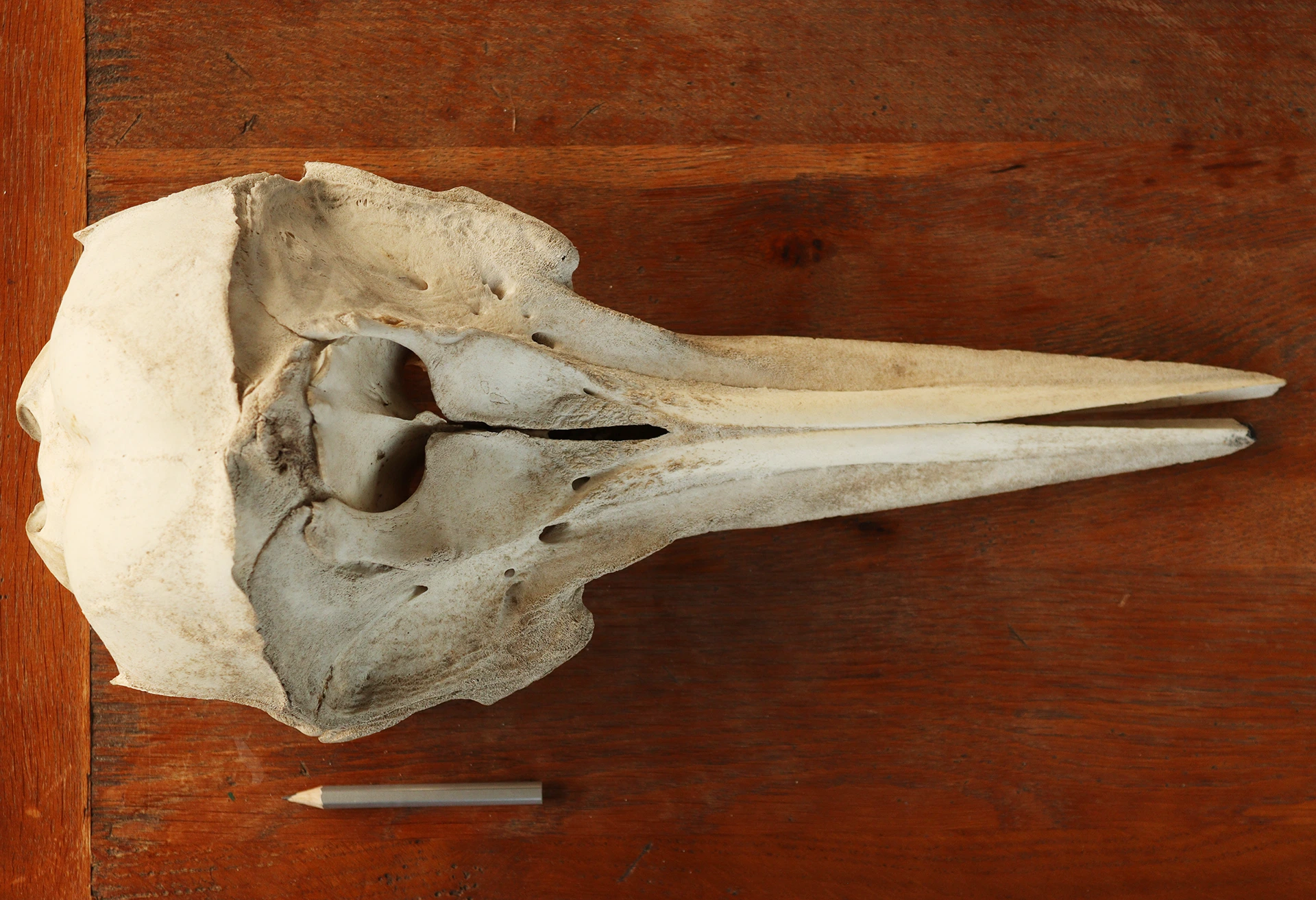
The nasal cavity is obviously like your nostrils.
The premaxilla is akin to the part of your upper jaw holding in your incisor teeth. Though the dolphin’s is much longer than yours!
The maxilla is comparable to most of your upper jaw. Though the dolphin’s is much longer than yours!
The backside of the skull holds the supraoccipital and the parietal bones which make up the back of your skull too.
This is the dolphin’s frontal which is the same as your forehead bone.
Dorsal view of the cranium. Click the dots to see what the different features are called.
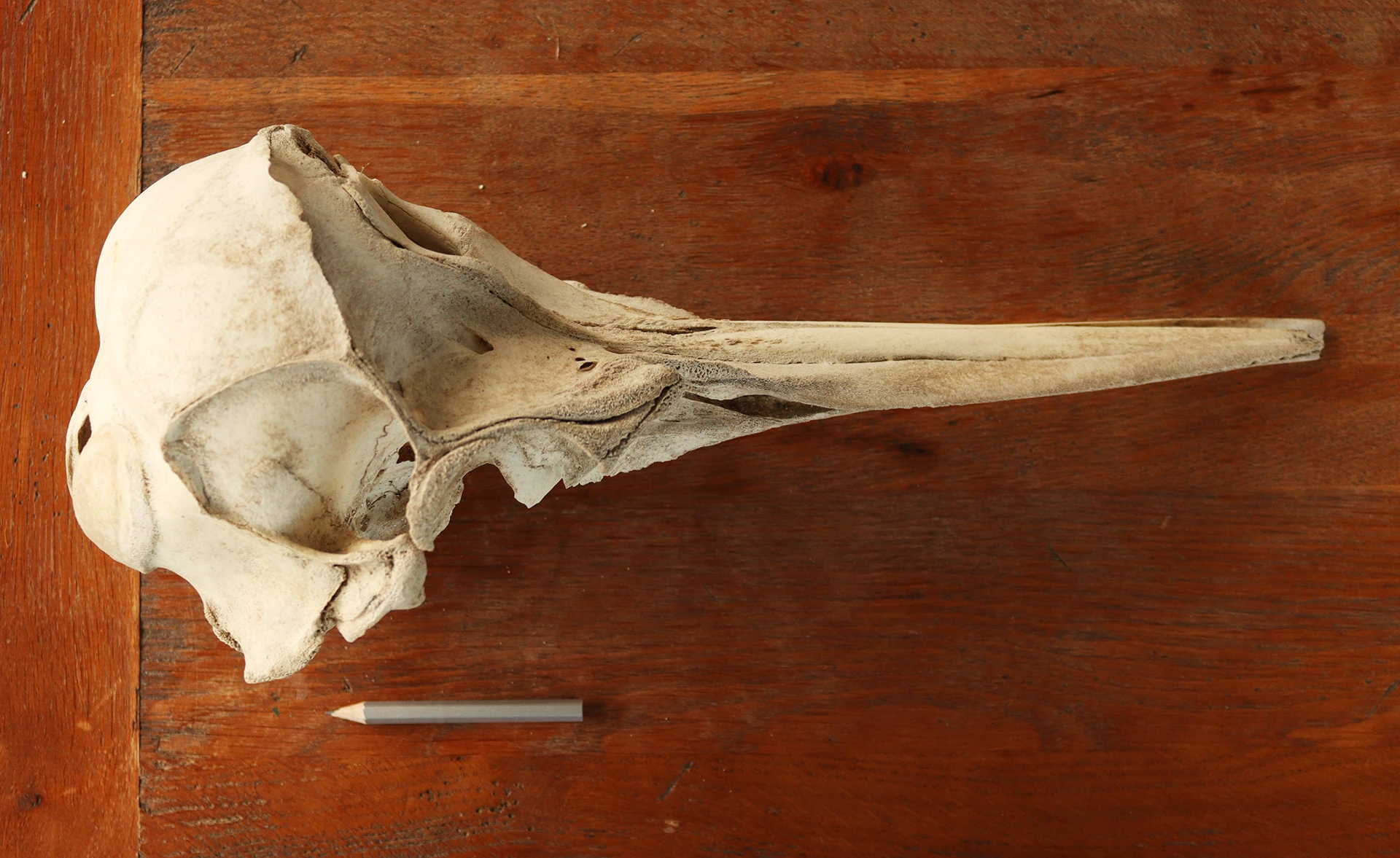
The nasal cavity is obviously like your nostrils.
The premaxilla is akin to the part of your upper jaw holding in your incisor teeth. Though the dolphin’s is much longer than yours!
The maxilla is comparable to most of your upper jaw. Though the dolphin’s is much longer than yours!
The backside of the skull holds the supraoccipital and the parietal bones which make up the back of your skull too.
This is the dolphin’s frontal which is the same as your forehead bone.
Like on a dolphin, the orbital bones circle your eyes.
The occipital condyle is, on both the dolphin and yourself, skull bones that connect to your vertebrae.
Lateral view of the cranium. Click the dots to see what the different features are called.
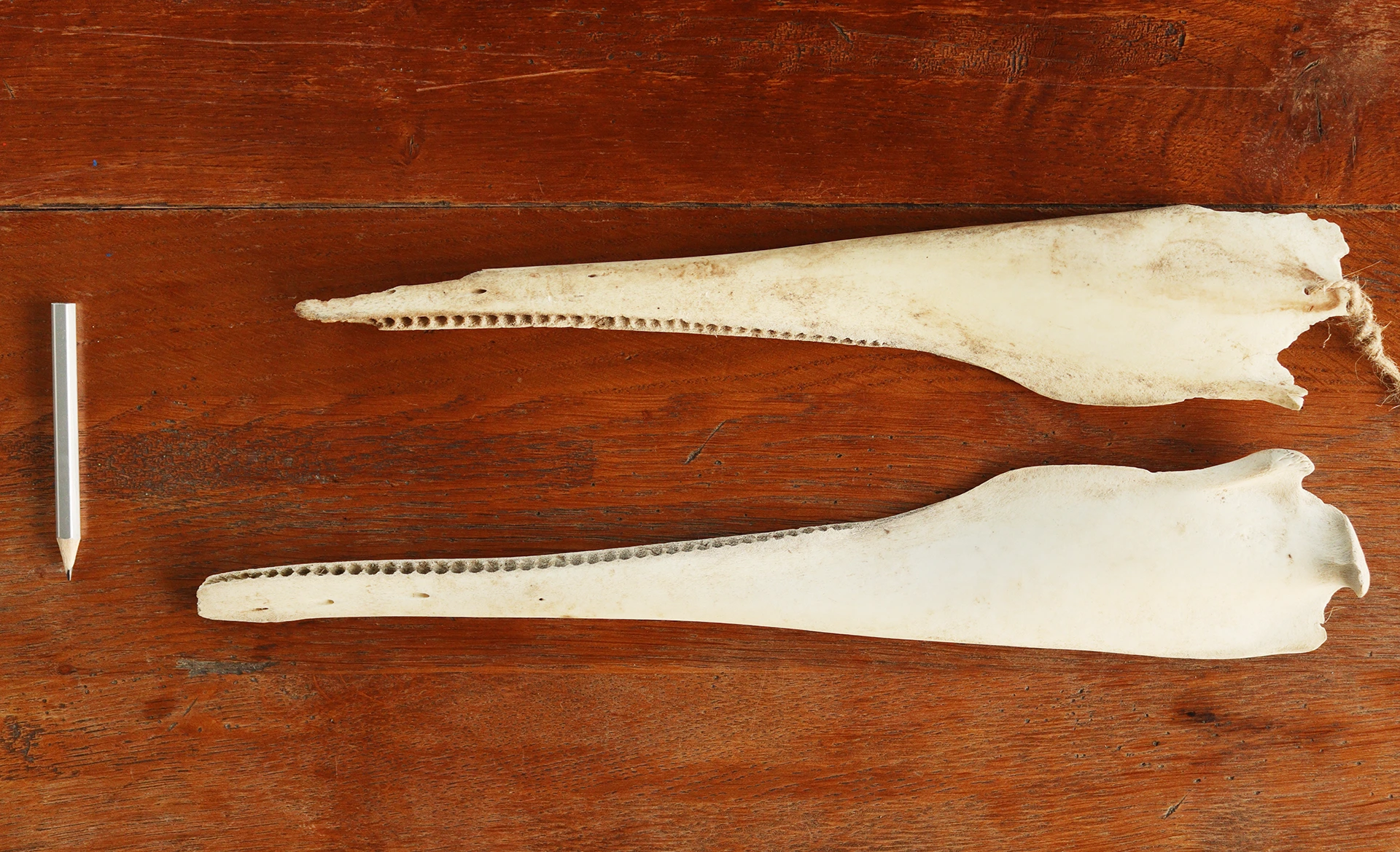
Dolphin mandibles.
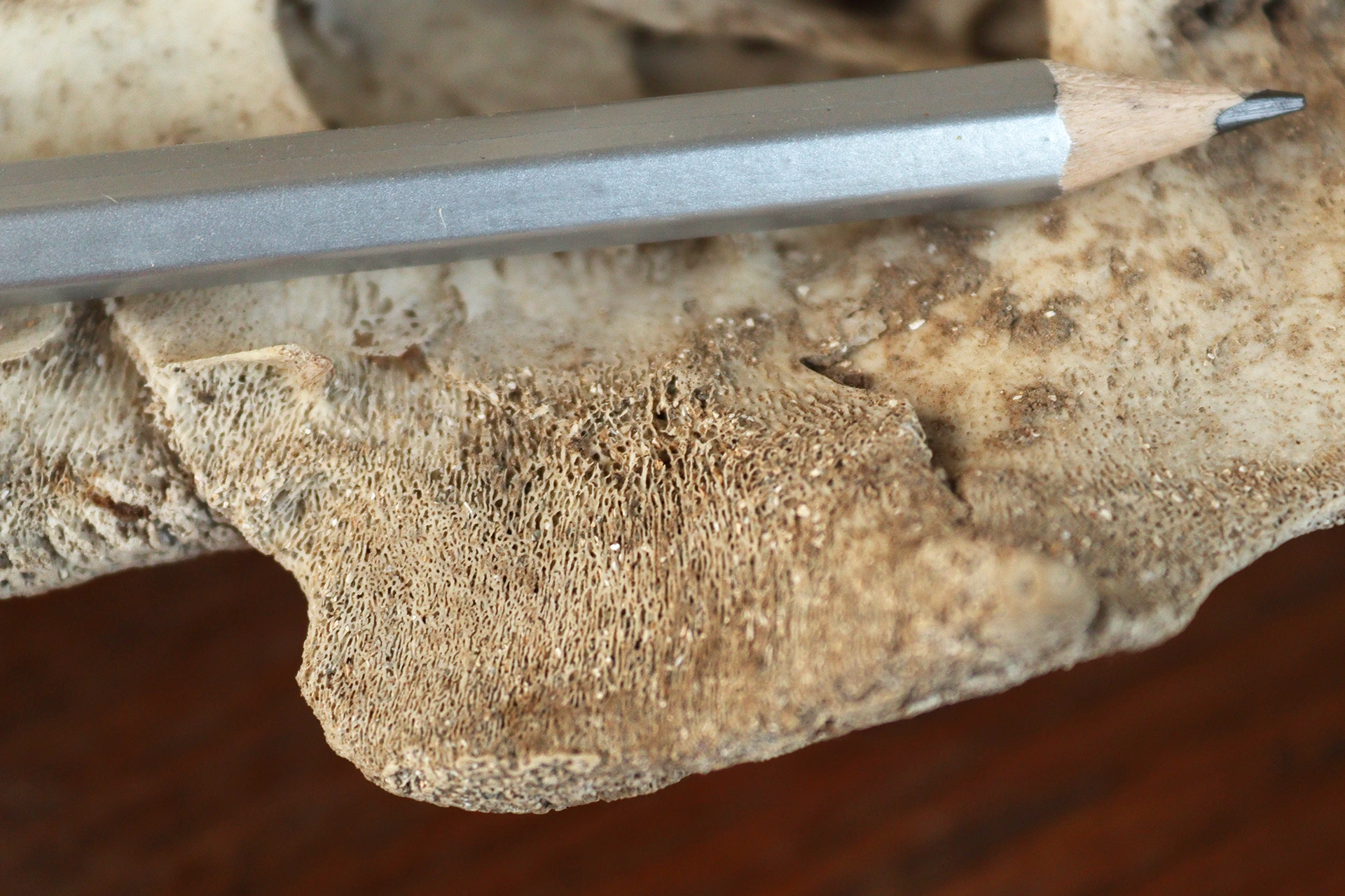
Dolphins also have porous layers of spongy bone in between layers of hard bone – just like us.
References:
Bianucci, G. 2013. Septidelphis morii, n. gen. et sp., from the Pliocene of Italy: new evidence of the explosive radiation of true dolphins (Odontoceti, Delphinidae). Journal of Vertebrate Paleontology, Vol. 33:3, PP. 722-740. DOI: 10.1080/02724634.2013.744757
Boessenecker, R. W., Ahmed, E. & Geisler, J. H. 2017. New records of the dolphin Albertocetus meffordorum (Odontoceti: Xenorophidae) from the lower Oligocene of South Carolina: Encephalization, sensory anatomy, postcranial morphology, and ontogeny of early odontocetes. PLOS ONE, 12(11): e0186476. DOI: 10.1371/journal.pone.0186476
Chen, X., Wang, X., Colacelli A., Lee M. & Xie L. Electricity Demand and Grid Impacts of AI Data Centers: Challenges and Prospects. 2025. DOI: 10.48550/arXiv.2509.07218
Data Centres Metered Electricity Consumption 2024. Metered electricity consumption by data centres increased by 10% in 2024. CSO statistical release, 10 June 2025.
Houssaye, A., Tafforeau, P., de Muizon, C. & Gingerich, P.D. 2015. Transition of Eocene Whales from Land to Sea: Evidence from Bone Microstructure. PLOS ONE 10(2): e0118409. DOI: 10.1371/journal.pone.0118409
Thewissen, J. G. M., Cohn, M. J., Stevens L.S., Bajpai, S., Heyning, J. & Horton W.E. 2006. Developmental basis for hind-limb loss in dolphins and origin of the cetacean bodyplan. Proc. Natl. Acad. Sci. U.S.A., Vol. 103 (22). PP. 8414-8418 DOI: 10.1073/pnas.0602920103
https://www.ie.edu/insights/articles/from-cloud-to-cup-how-much-water-does-your-chatgpt-drink/
Thomas Heising here!
I’m originally from Denmark, but now living in Cork, Ireland and working with visual science communication. You may have found this post because you were curious about this page or wanted to know more about the topic at hand – in any case: welcome.
There are more writings, visuals and videos around here about geology, the weather, our planet, Ireland, Denmark and other things that interest me.