Thomas Heising

Visual science communication
Back to the Lab

Dinosaur watching

Video - Irish wildlife
2024 | Wexford, Ireland
Just like the Muertes archipelago from the Jurassic Park-movies, the Saltees are islands ruled by dinosaurs in a human-dominated world!
 
Visiting the Saltees off the coast of Wexford with my 18-55mm lens wasn’t going to get me fantastic intimate shots of the hundreds of puffins and gannets thriving on and around the islands.
 
And I wasn’t the only one who’d come to the island for photography. A few loud YouTubers hung around too with their outstanding and expensive equipment. I shouldn’t judge; I used to be a YouTuber and I just can’t afford what they have.
As our entourage arrived at the largest and most publicly accessible of the islands: Great Saltee, a frantic visitor was insistently asking the boat crew, who were very busy helping the rest of us off the dingies safely, if they could bring her back to the mainland as she had forgotten her camera at her B’n’B. “Really, there’s no point in me being here if I don’t have my camera“, she emphasised. I left the seaweed carnage that our feet were submerged in for the dry sand on land (there’s no pier on the island) and skipped an opportunity to witness the resolution of the matter with the camera-less lady. Too triggering.
 
A good friend had arranged this whole trip, inviting myself and a few others to join him. While I won’t spend too much time writing intricately about my impressions of Great Saltee or about the many species of the exotic lifeforms out there, I do want to first write a special thanks to Ben for planning and executing the trip: thank you!
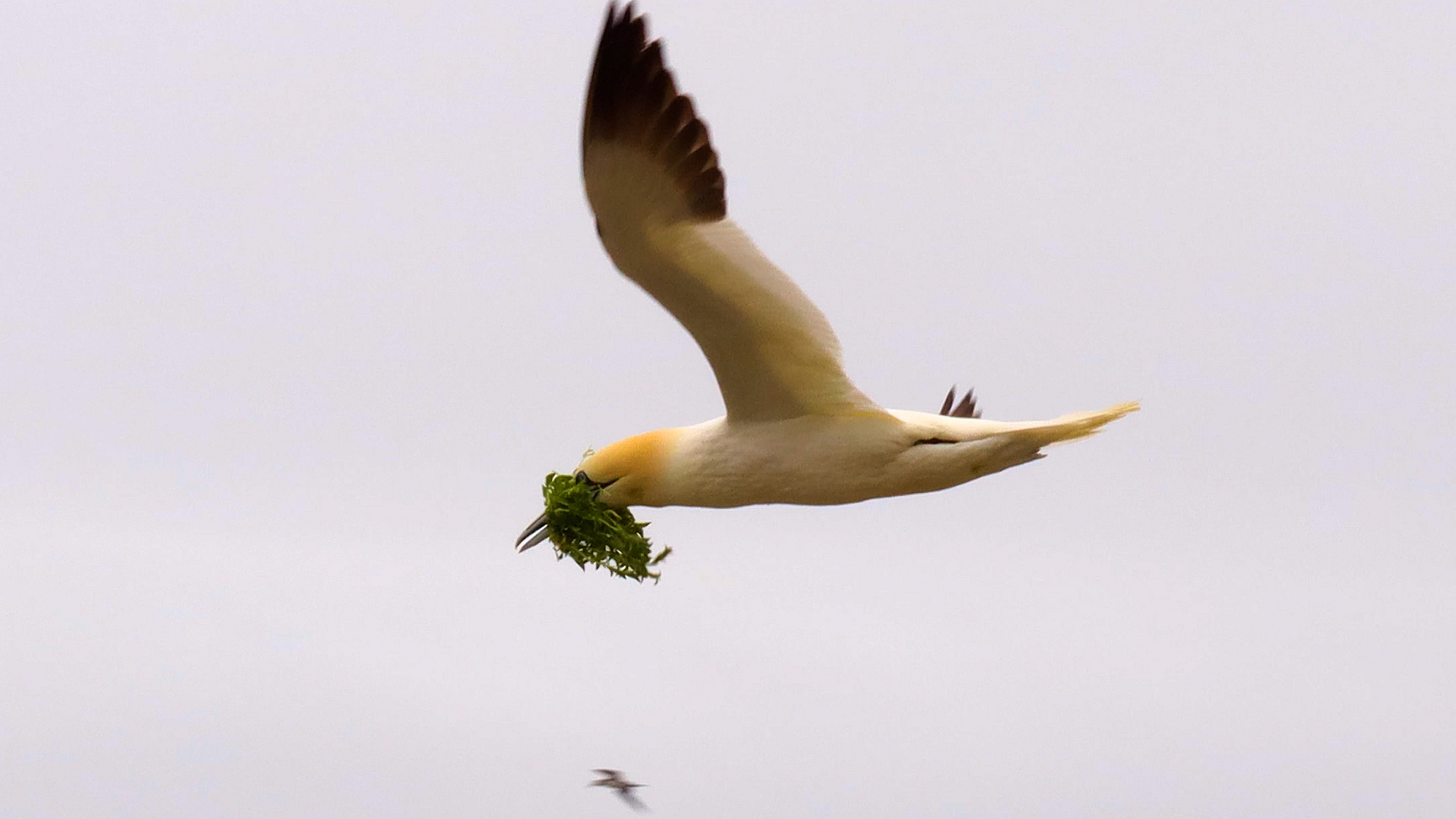
Gannet carrying building material for its nest.
Oh no, here we go again
Prior to the trip, I finished Anne Sverdrup-Thygeson’s book the Tapestries of Life. A simultaneously easy and hard read in that the language is passionate and understandable, while the matters at hand are quite frustrating.
 
It has been said many times: we are causing an immense amount of harm to our shared biosphere and the numerous systems maintaining it.
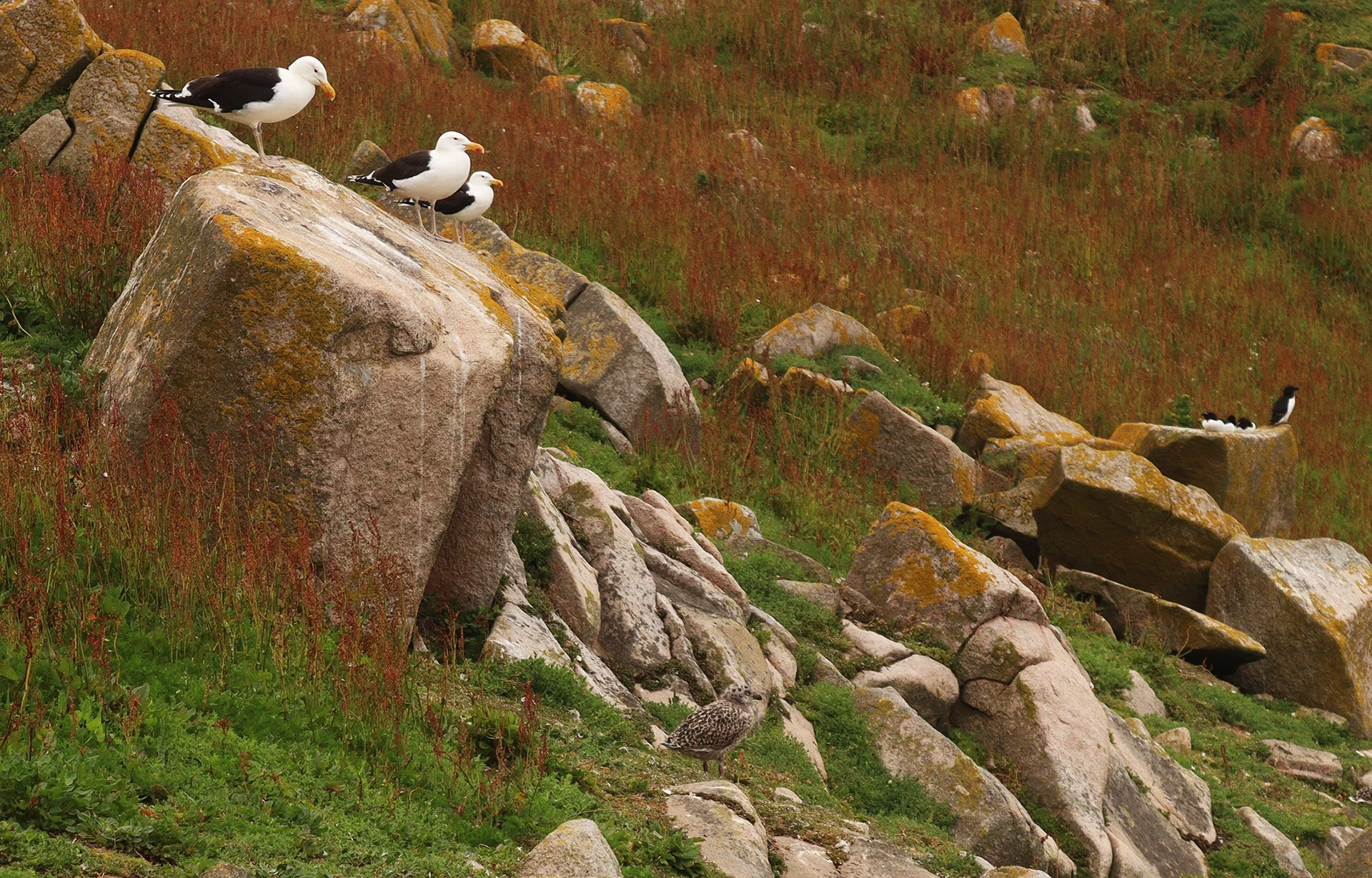
Spot the chick!
For a long while, I thought that perhaps the politicians of Europe and North America were merely slow at causing positive change that would lessen the damage done to our environments. But with these same politicians willing to genocide innocent people to secure the prospects of fossil fuels, I see that they’re more into cementing power and wealth than the future of life on our planet. If there’s something that the ongoing ethnic cleansing of Palestine has taught me is that lip service of (sometimes) elected officials is harmful. It still blows my mind that some of these decision makers have children.
 
That being said, I do pay attention to the many people in institutions and organisations who are excellently calling and working for change. Unfortunately, the solutions are beyond the scope for these even. People like Greta Thunberg pushed the debate here in the Global North, got support from the public and science community, but our decision makers remain passive and complicit in crimes against the biosphere. Her amalgamation of fossil fuels and human rights are not complicated to understand: how will we show care for our environment if we don’t care about human rights, and vice versa?
Back to the dinosaurs
Visiting the Saltees should be done with great care. Not only because of the tall granitic cliffs and fenceless paths approximating them, but also to avoid disturbing the balance of life here.
 
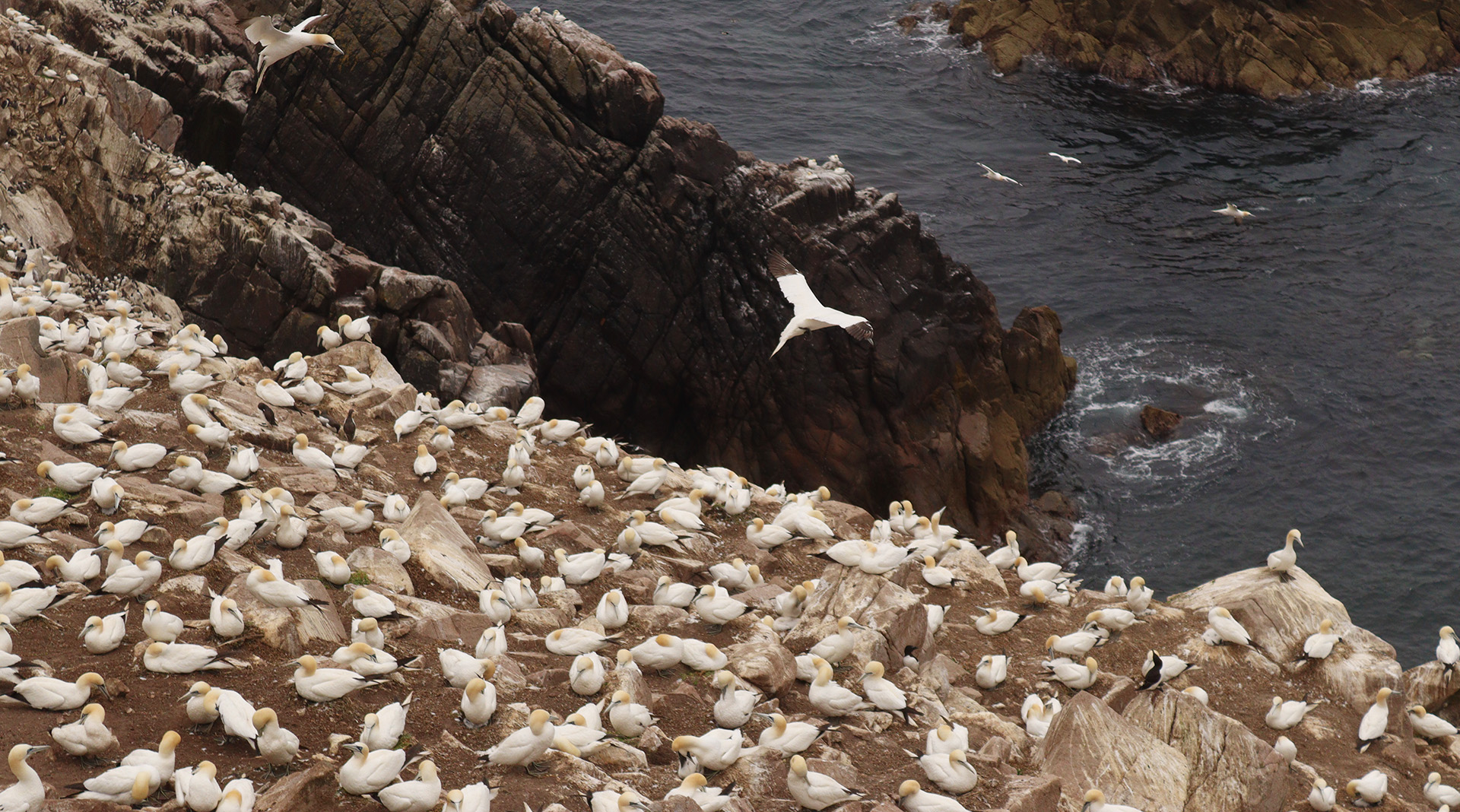
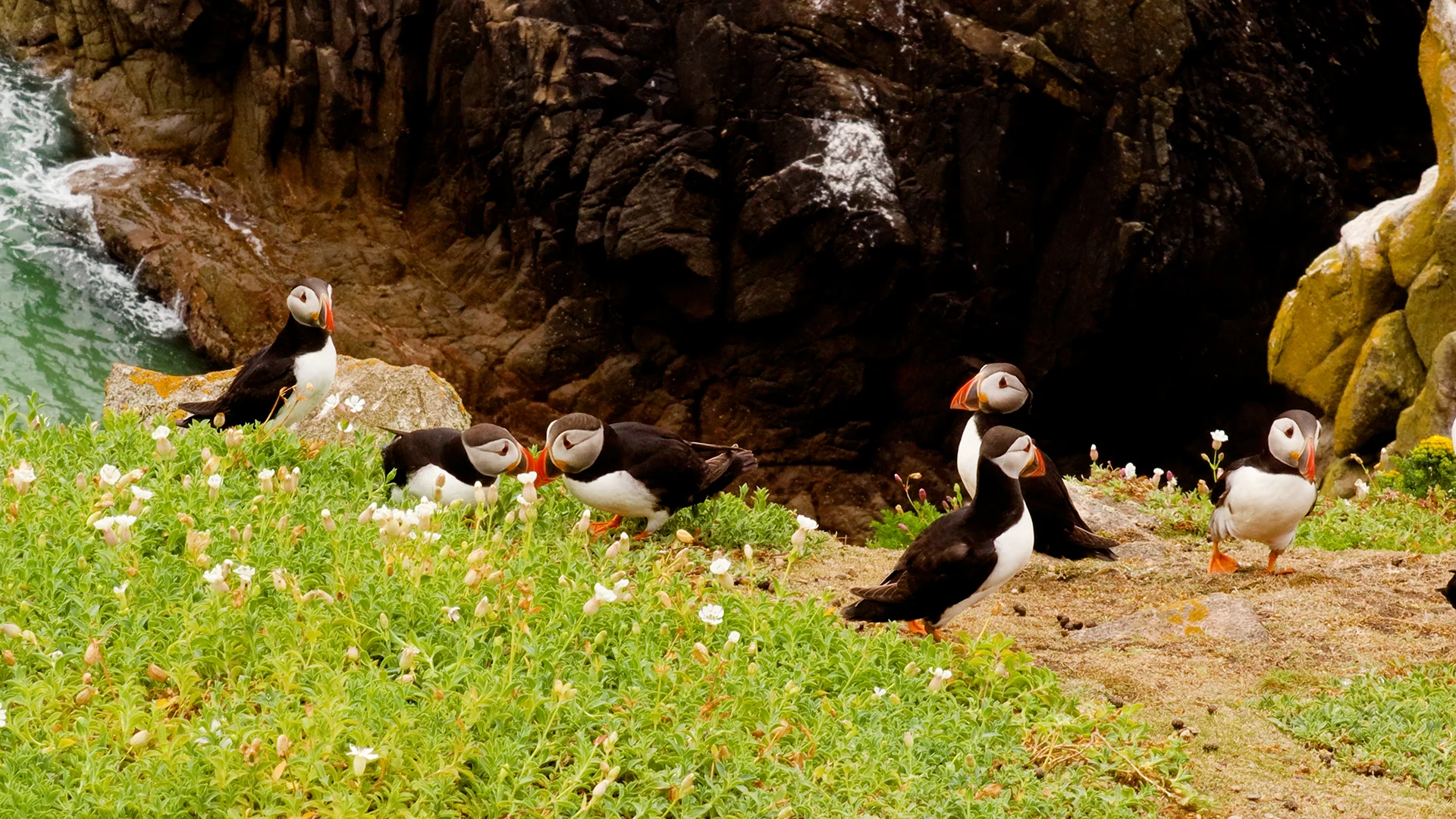
Dinosaurs like gannets, puffins, razorbills, cormorants and great black-backed gull (which definitely has big-tyrannosaur-energy) all thrive and breed on the island. In a sense, they’ve already got their thing going on out on the Saltees, successfully so, while we humans just visit to capture a few visuals. For instance, I took these pictures hoping to eventually make an epic point about our ongoing mass extinction.
With this creative bit of scheming in mind, I started noticing my own and other visitors’ behaviour at the island which brought more questions about our influence on our environments. There’s a bit of user experience to it seeing how humans respond to forms of communication, stimulus, environments and rights.
 
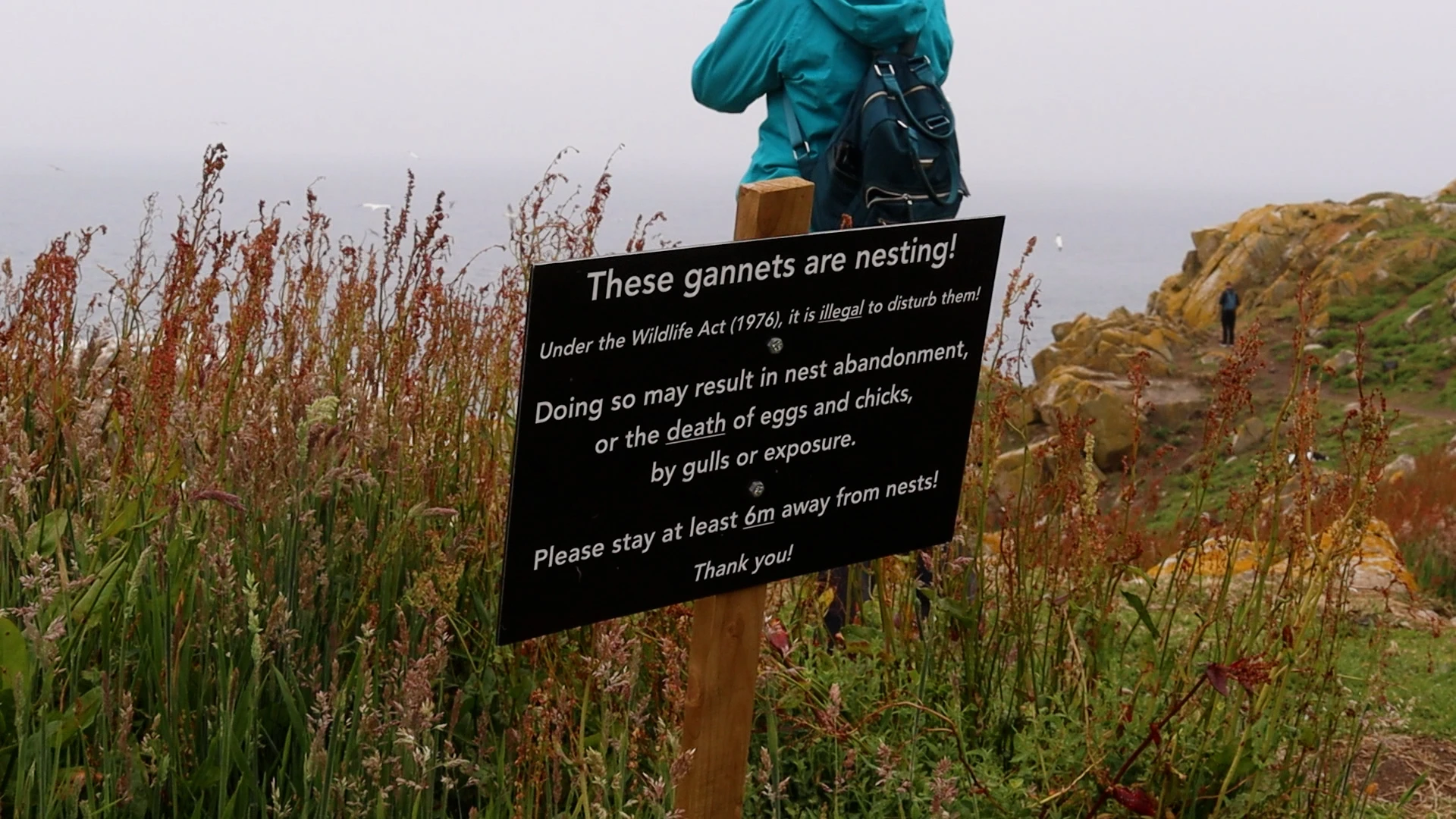
There are paths on the island that visitors must stick to. There are signs reminding people to keep their distance from nesting gannets. There are instructions on the website emphasising that there are no shops nor toilet facilities on the island. As a visitor one must not litter, use drone photography nor bring dogs. The above is a selective mention of the most stringent and understandable instructions meant to curb relentless human notions of privilege and self-entitlement while on the island.
 
This may sound misanthropic, but in actuality, it’s a great exercise in understanding our perceptions of ourselves. We tend to get offended or feel condescended when faced with behavioural instructions likely not seeing our specific selves as being a problem in a given context. It’s ego-bruising.
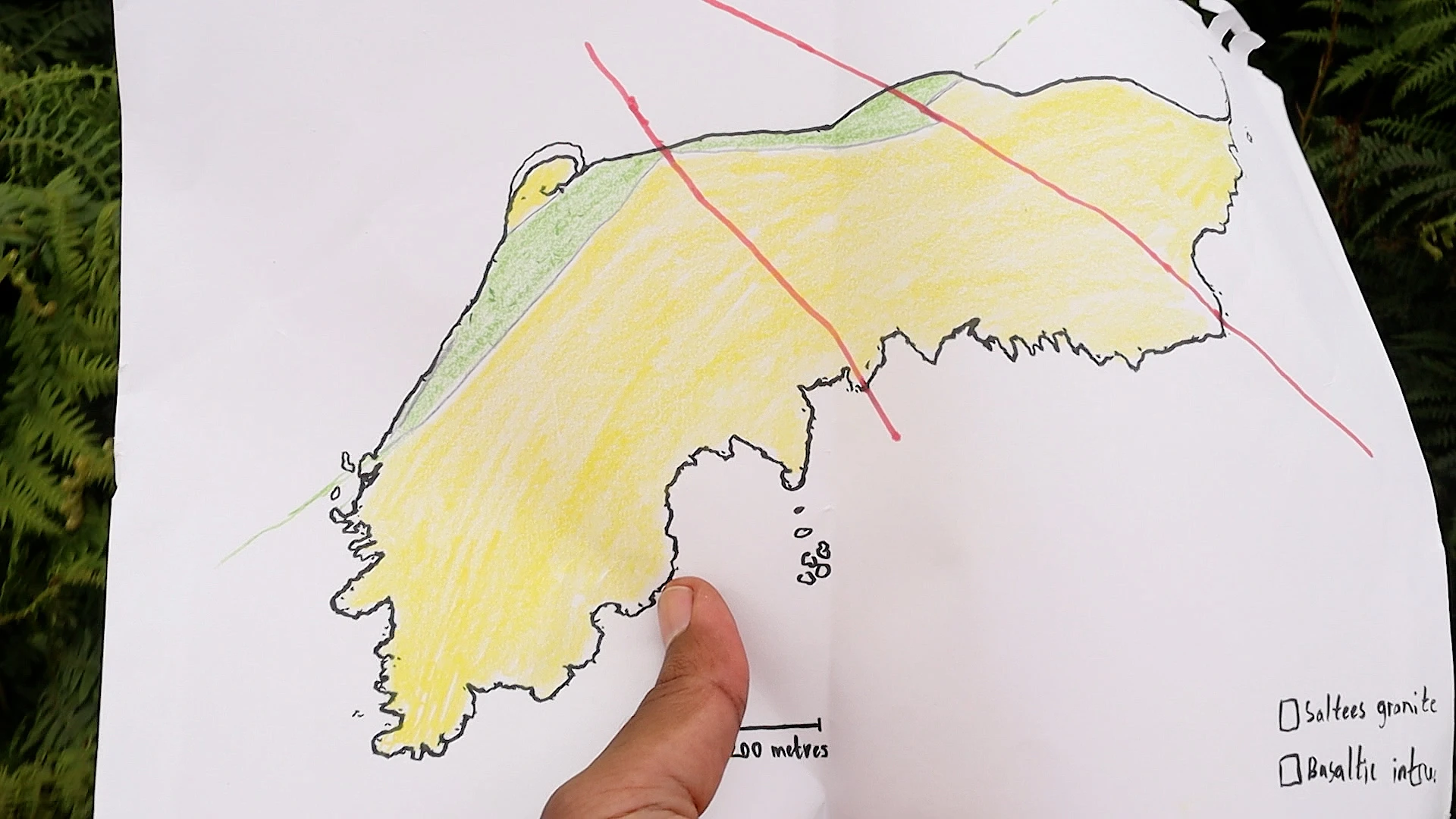
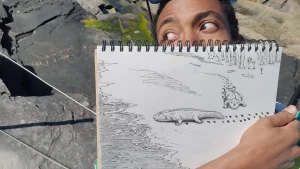
A hand-drawn geological map in case technology failed me. Based on Geological Survey Ireland’s online maps. Forgot to colour the legend in the corner, but the yellow is granite, while the green is basalt.
The fearless puffins
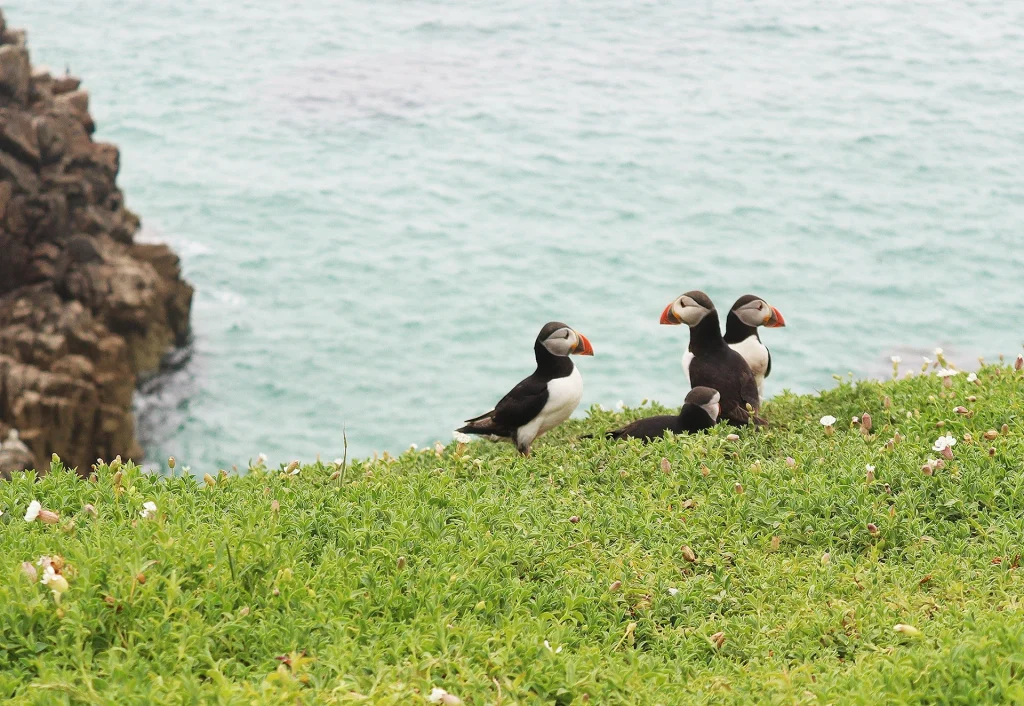
Puffins are incredibly adorable. They’re a bit like human babies: have big heads, aren’t great at walking and make funny sounds. On Great Saltee they’re fairly unafraid of humans – not moving much as one approaches.
 
They’re also very tasty if you ask certain North Atlantic cultures. In fact, they belong to the auk family and are related to the much larger great auk. The main difference between the puffin and the great auk is that the puffin is still here. But perhaps not for much longer.
 
The great auk was found across the North Atlantic including here in Ireland. That was until it gained additional attention of humans. While initially hunted by European cultures for its meat, the attention was soon drawn to its feathers for down. This accelerated the hunting of the bird. We then went after the eggs of the auk, further reducing the population. In fact, it was the crushing of an auk egg under an icelander’s boot that solidified the extinction of the species in 1844.
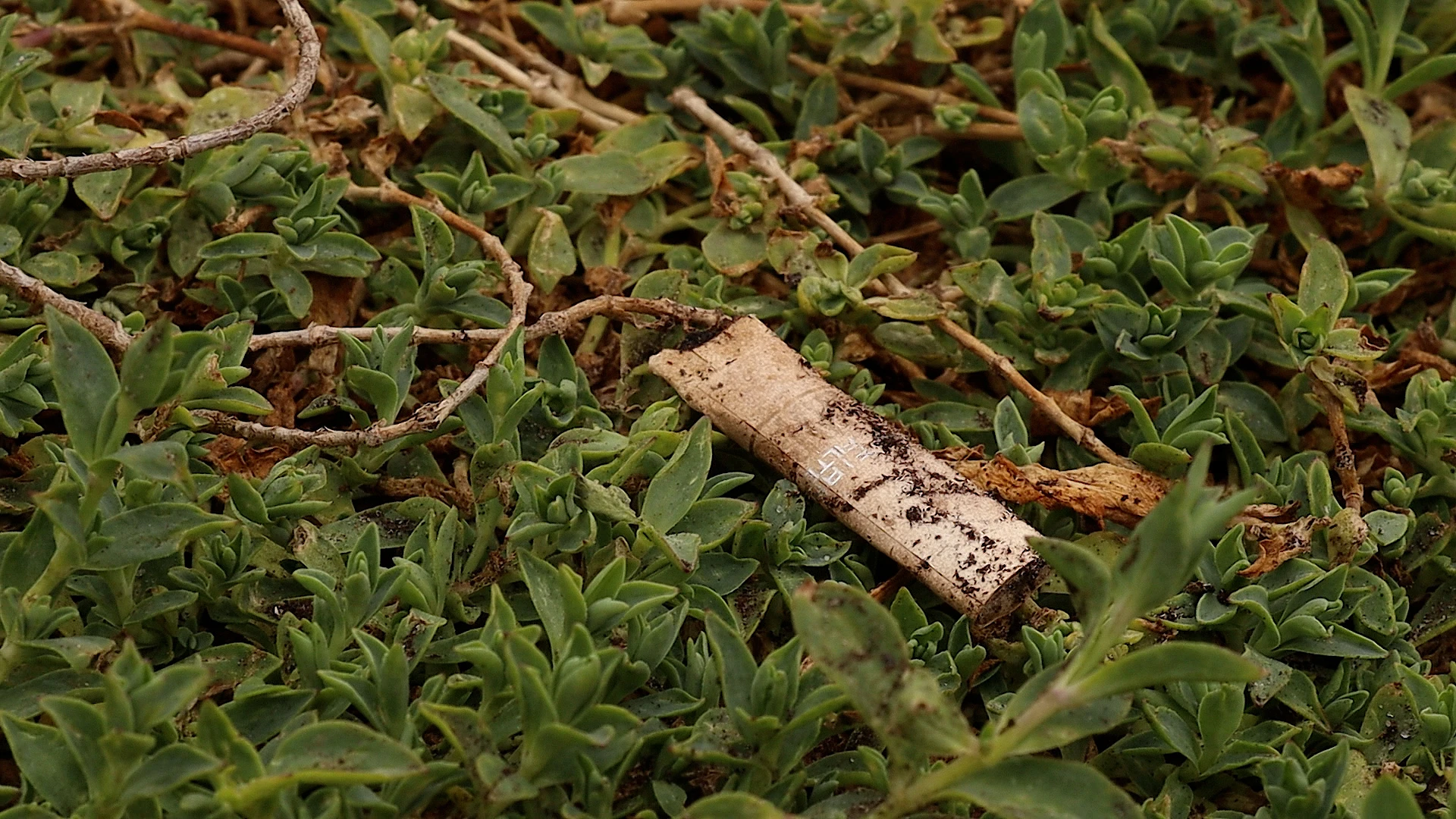
Cigarette bud on the island.
The peculiarity of humans
Fossil fuel burning is not the only problem we humans cause for the biosphere. Elisabeth Kolbert’s book The Sixth Extinction is, like Sverdrup-Thygeson’s book, bringing to attention the numerous ways we are playing with the equilibria of our natural world. I emphasise the use of the word “playing” because a lot of it is deeply irrational and we often deceive ourselves or others with alleged necessities of these actions. “We must grow out economy” is one of the worst. And more importantly, we know well the damage we are causing.
 
It’s from Kolbert’s book that I got to know about the great auk. She recounts the incessant and brutal slaughter of the now-fabled sea bird for eggs, superstition, meat and down.
 
Life is not without destruction of course. Species go extinct and conditions change significantly which allows for the appearance of new lifeforms. An example often brought up involves the extinction of non-bird dinosaurs that allowed mammals to diversify, thrive and bloom.
 
But there’s something about us humans as a species of animals. Like I said, WE KNOW so vividly that we’re causing a lot of destruction. The active dismantling of existing ecosystems and natural resource cycles are not just bad for other lifeforms, but for us too. Deforesting to create cheap furniture. Purposefully or inadvertently, mass murdering species that transport vital nutrients from sea to land, from land to sea, from land to air and back to land again. Light pollution at sea disrupting ecosystem behaviours that influence foodchains globally.
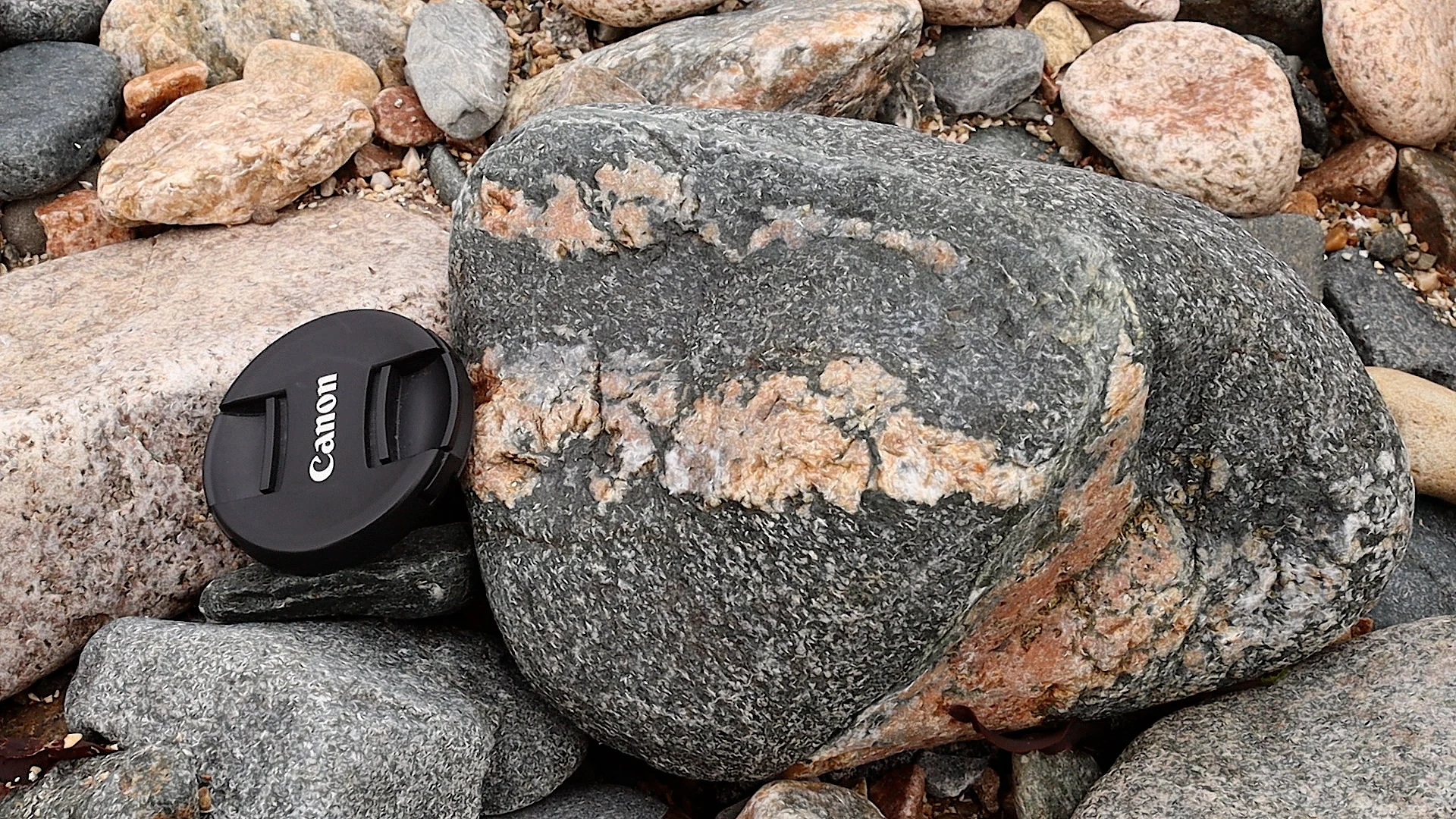
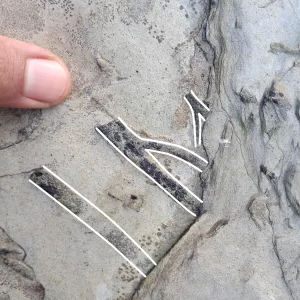
Granite from the north coast of Great Saltee. Coming from Munster, it was a little bit refreshing seeing other rocks than sedimentary ones.
Anti-nature?
Our culture vilifies or rejects insects. But as is clear now, they have vital roles as pollinators, nutrient carriers, decomposers and many other depending on the groups of insects. Besides spiders, I used to consider many other invertebrates repulsive in their appearance and unsolicitedly presence. But it’s been a personal development project to get closer to insects in particular in an attempt at undoing the cynicism of being an urbanised 21st century primate. To learn about the different insect species here in Ireland and to understand their place in our ecosystem. But also to see how myself and my fellow humans are in the way of bees, flies, beetles and moths in keeping the ecosystem intact.
 
It’s likely not possible to turn the tide, but what else to do?
 
Since 2015, the puffin went from being assessed as being of Least Concern to Vulnerable by the International Union for Conservation of Nature (IUCN) Red List. Causes include warming sea waters and extensive hunting. Some have more recently suggested that the problem is more severe and longstanding.
Shoots, this really is a long post!
Walking around Great Saltee felt like I was a guest at a place that I really shouldn’t be in. It felt like I needed to remove myself as soon as possible. I took the liberties afforded by the dinosaurs flying around the place and, before leaving, spent some time on the north coast looking at chilled margins between the granite and its basaltic intrusion. Making sure I got everything on this one visit. If they closed the island off to the public tomorrow, I would understand.
 
Even though most people know not to litter in a place like Great Saltee, we still bring plastic-wrapped lunch, chocolate bags, loose pieces of fabric, plastic bottles, vapes and cigarettes with us. Some of these are of course dropped accidentally, which makes little difference compared to deliberately. Because you will inevitably find litter on the island. The best thing one can do is to pick up the tissue paper and candy wrappings others have left and bring them back to civilisation. It’s your and my kind doing all of this after all.
 
This is the sensation of being a progressively self-conscious human: vividly knowing that the seemingly most innocent of things are destructive especially when knowing that many, many, many other people do that exact seemingly innocent thing.
 
I think about the person who didn’t bring her camera on the same trip. I hope she gave up on the camera and took a stroll around the island, just for the sake of it. I too have an urge to take pictures when faced with a new environment, but to my own defence, I’ve also been happy when leaving the camera behind (or significantly worse: bringing the camera but forgetting a fully-charged battery or SD-card).
 
For this visit to the Saltees, I came away with some cool pictures, video, social moments and memories. But also feelings of being slightly ashamed and humbled. These feelings can be crippling and people may tell you not to absorb or harbour such sentiments for reasons that they’ll make you question things too much.
Cutting our politicians some slack: every single of us need to change or ask for change. Our society is a reflection of us because we allow things to be the way they are. That includes genocide, extinctions and environmental degradation.

 
Music licensed via audiojungle.net.

References:

Devlin, Z. 2021. The Wildflowers of Ireland: A field guide. 2nd edition. Gill Books.
 
Kolbert, E. 2015. The Sixth Extinction: An Unnatural History. Bloomsbury Publishing.
 
Sverdrup-Thygeson, A. 2022. Tapestries of Life: Uncovering the Lifesaving Secrets of the Natural World. Mudlark.
 
Wilson, J. & Carmody, M. 2024. Birds of Ireland: A field guide. 2nd edition. Gill Books.