Periwinkles play
Video - Irish wildlife
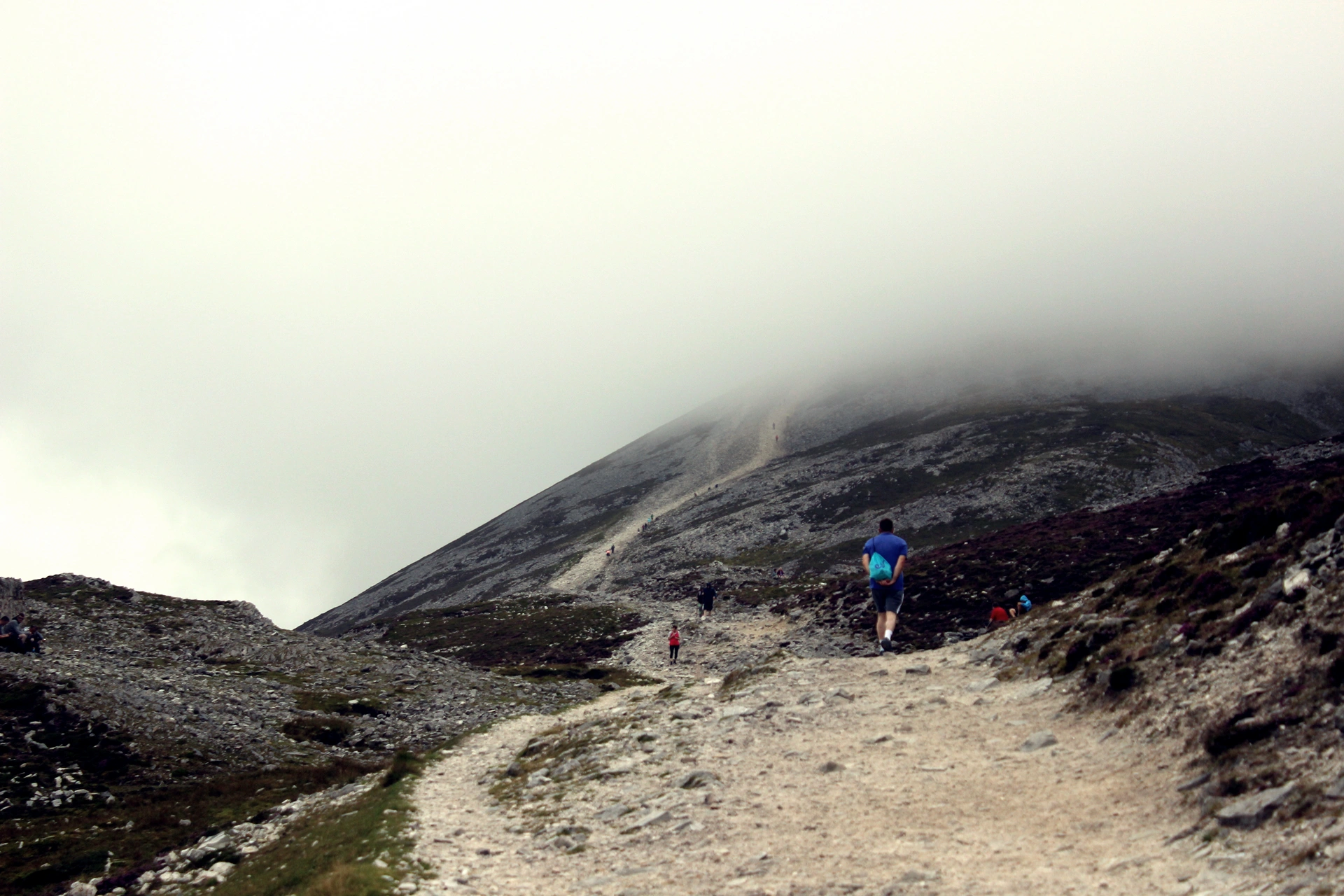
Before we talk about hiking bare-feet up a mountain, let’s wonder for a moment:
how does a large slice of ocean floor end up on that same mountain?
That is a confusing opening, I know, but we’re still on-topic!
Croagh Patrick is a beautiful slice of Earth’s crust! It’s a mere 8 km from the colourful town of Westport (both hugged close to the shores of Clew Bay) and is named after the saint who mythologically drove away the snakes from the island.
Getting more into the geology, the rocks in the area are metasedimentary or metavolcanic; meaning they are metamorphosed (rocks being changed chemically and structurally due to pressure, temperature and/or the presence of fluids) sedimentary or volcanic rocks.
But what about that ocean floor?
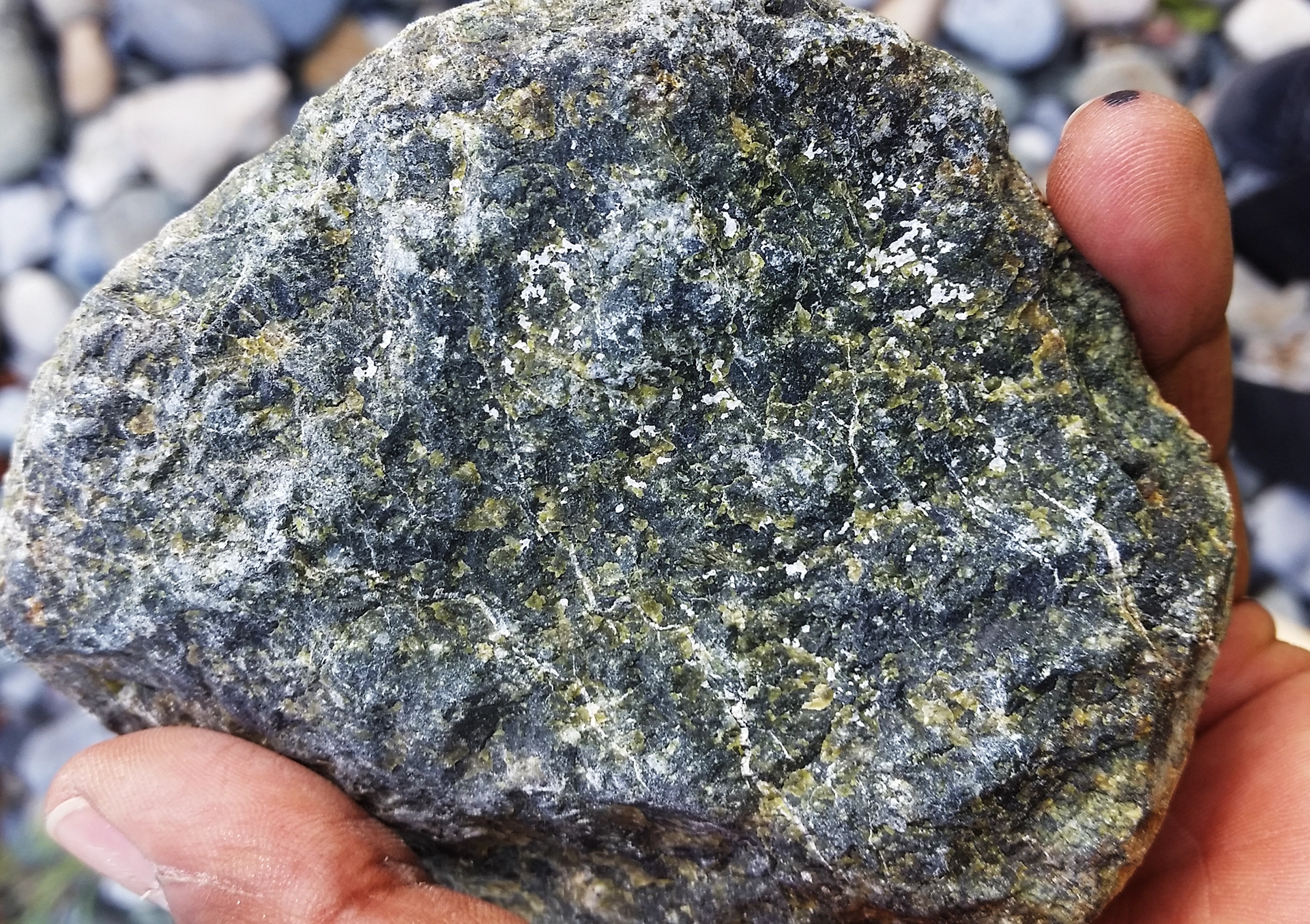
Yes, so when starting a hike up Croagh Patrick from the main entrance, one walks over a small exposure of green rocks. These rocks are most striking when the rain has wettened the surface. They are serpentinites: metamorphosed ocean crust.
More specifically metasomatised ocean crust as they’ve been metamorphosed by fluids, likely seawater, significantly. Thus the minerals, the textures, the colours and the density changed, mutating the rock from black ocean bedrock to a vibrant green rock.
The minerals here are called serpentines and they’re some of my favourite minerals to look at through a microscope. I studied them as part of my undergraduate dissertation and as such, I gained a slight obsession with them.
As decorative as serpentinites are, I wouldn’t store them indoors for decoration. One of the serpentine minerals is chrysotile – a source of asbestos due to its fibrous nature. And as we should all know, asbestos should stay out of our lungs.
But… how did a huge slice of ocean crust end up being part of Croagh Patrick?
We don’t know for sure. But when landmasses collide like they did over 400 million years ago, bedrock several kilometres underground can be pushed to the surface.
Also, remember to enjoy the view over Clew Bay as you ascend!
References:
https://www.gsi.ie/en-ie/data-and-maps/Pages/default.aspx
Meere, P., MacCarthy, I., Reavy, J., Allen, A. & Higgs, K. Geology of Ireland: a field guide. The Collins Press, Cork, Ireland (2013).
Thomas Heising here!
I’m originally from Denmark, but now living in Cork, Ireland and working with visual science communication. You may have found this post because you were curious about this page or wanted to know more about the topic at hand – in any case: welcome.
There are more writings, visuals and videos around here about geology, the weather, our planet, Ireland, Denmark and other things that interest me.