Fossil hunting in Toe Head
Geology nugget

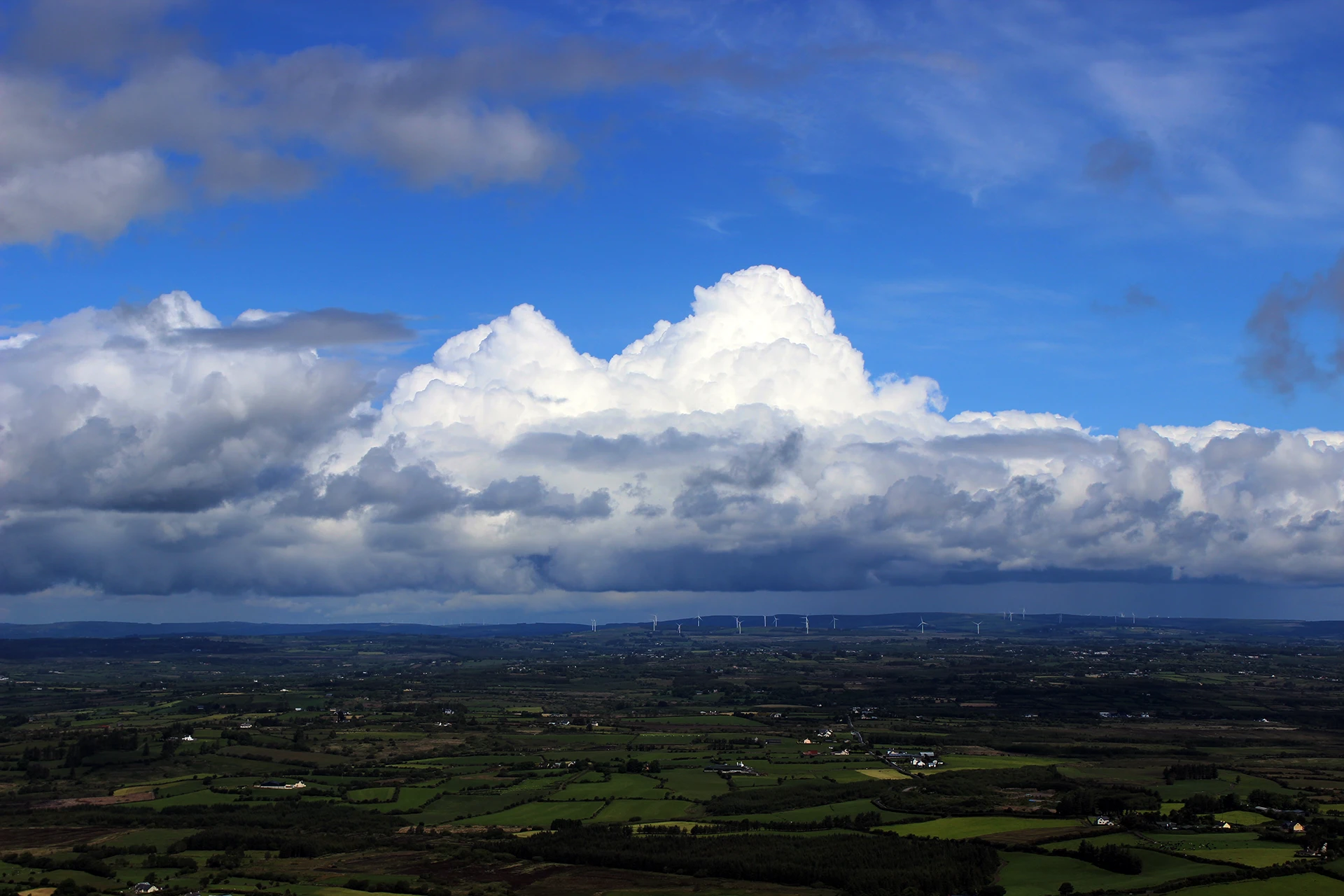
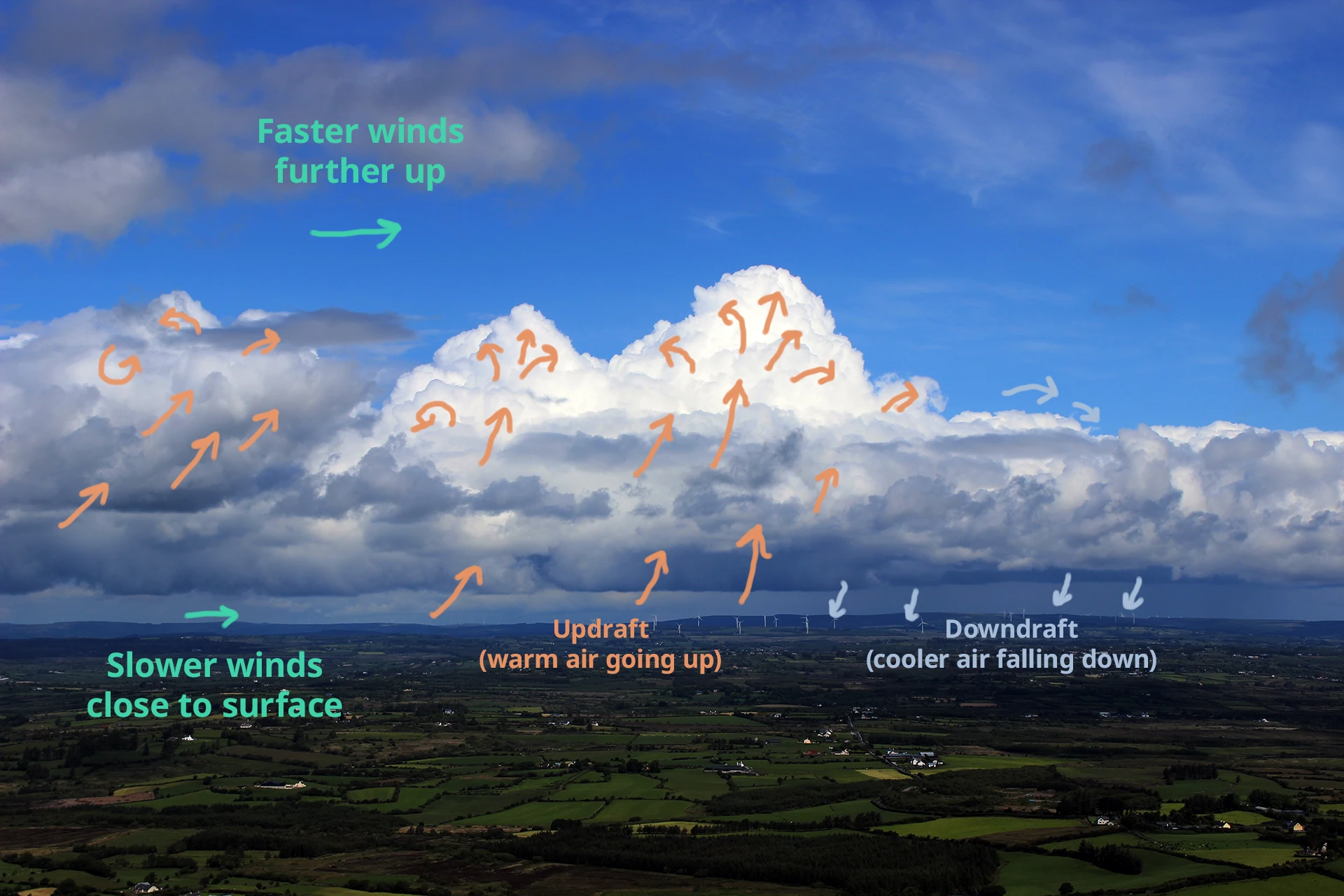
Cumulus clouds are also known as cauliflower clouds, but can sometimes take on other imaginative shapes. Kids and adults alike may point to a shapeshifting cumulus-cloud and refer to it as a “horse cloud” or a “doggie cloud”. Moments later the same cloud may look like a torn-apart, swirling mess – a kind of cloud known as fractus.
Developing under clear skies, cumulus clouds are fuelled by unstable air.
Now, the term unstable brings different associations for people when used to describe the atmosphere. ‘Unstable’ can for some people mean ‘unpredictable’, which is not a far-fetched way of describing what is meant here.
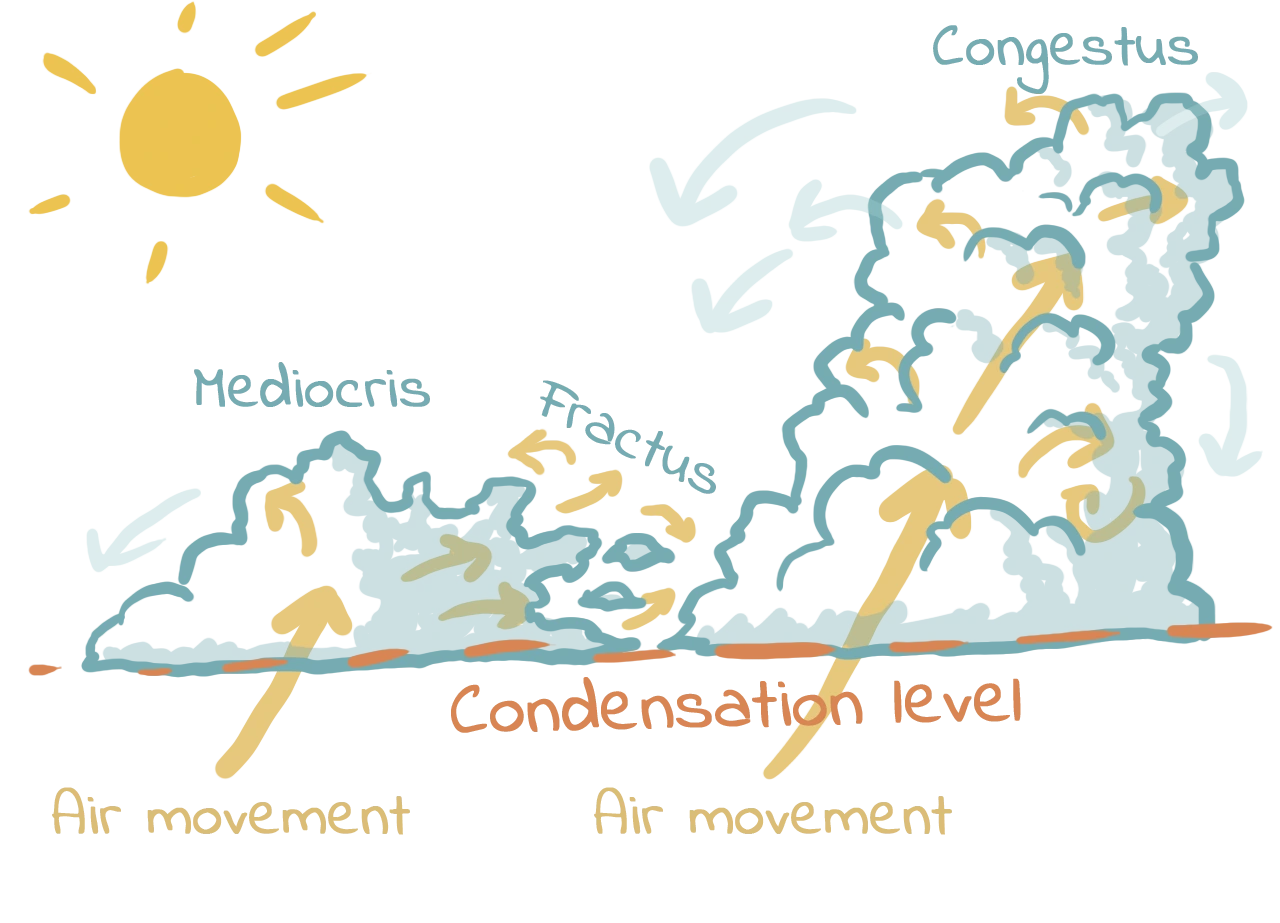
But it’s perhaps better to think of “unstable” as the atmosphere’s structural integrity failing? What happens is the same as in a pot of water on a hot stove.
As the heat is turned on, the water at the bottom starts to heat as well; which makes it less dense, causing it to rise up pushing the colder water above it aside. This happens with cumulus-clouds as well – instead of water, this involves air.
The sun heats up the ground, warming a pocket of air and lowering its density. This pocket of air becomes warmer and less dense than the surrounding air, causing it to rise like a balloon.
As it travels upwards, this bubble of air may lose heat to the surrounding air or simply match the temperature of the surrounding air. Thus it may stop moving or growing upwards. However, it can also keep getting warmer relative to the surrounding air, which will further its journey upwards.
This can cause the entire lower atmosphere to churn and rotate, breaking up the structure that existed before the air started moving. The atmosphere literally starts mixing violently!
References:
Seigel, R. B. 2014. Shallow Cumulus Mixing and Subcloud-Layer Responses to Variations in Aerosol Loading. Journal of the Atmospheric Sciences. Vol. 71: 1. PP. 2581–2603. DOI: 10.1175/JAS-D-13-0352.1
Thomas Heising here!
I’m originally from Denmark, but now living in Cork, Ireland and working with visual science communication. You may have found this post because you were curious about this page or wanted to know more about the topic at hand – in any case: welcome.
There are more writings, visuals and videos around here about geology, the weather, our planet, Ireland, Denmark and other things that interest me.