A guided natural tour in Zambia
Video - Zambian wonders
Note: None of the content on this site is produced using AI. Therefore, you can always reach out to me if there’s anything factually or textually incorrect.
One summer day, the 2nd of July 2011 specifically, after visiting a friend in the provincial city of Roskilde, I embarked on the train journey home to Copenhagen – blissfully unaware of the drama ahead.
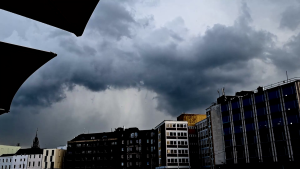
The same afternoon, a thunderstorm cloud developed over southern Sweden tracking west towards Copenhagen. No one had foreseen the growth it would undergo as it travelled over the strait of water Øresund separating Sweden and Denmark. Over a short amount of time, the thundercloud literally exploded, likely drawing in moist air from Øresund. And what goes up has to come down.
As I neared central Copenhagen, the clouds were dropping monumental amounts of water and hail on the city. It was what we in Danish call “et skybrud” – a cloudburst. Luckily for the sake of documentation, I had my video camcorder with me.
135 mm of rain was recorded at the Botanical Gardens in the city centre and streets became flooded in minutes as seen in the footage above.
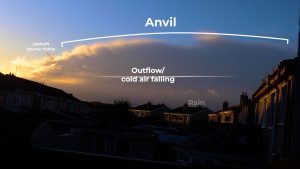
Cumulonimbus clouds like the one that dropped millions of tonnes of water on Copenhagen in 2011 are hard to predict. Their likelihood of happening can be predicted on a particular day, but the exact hour, position and intensity are difficult properties to pin down.
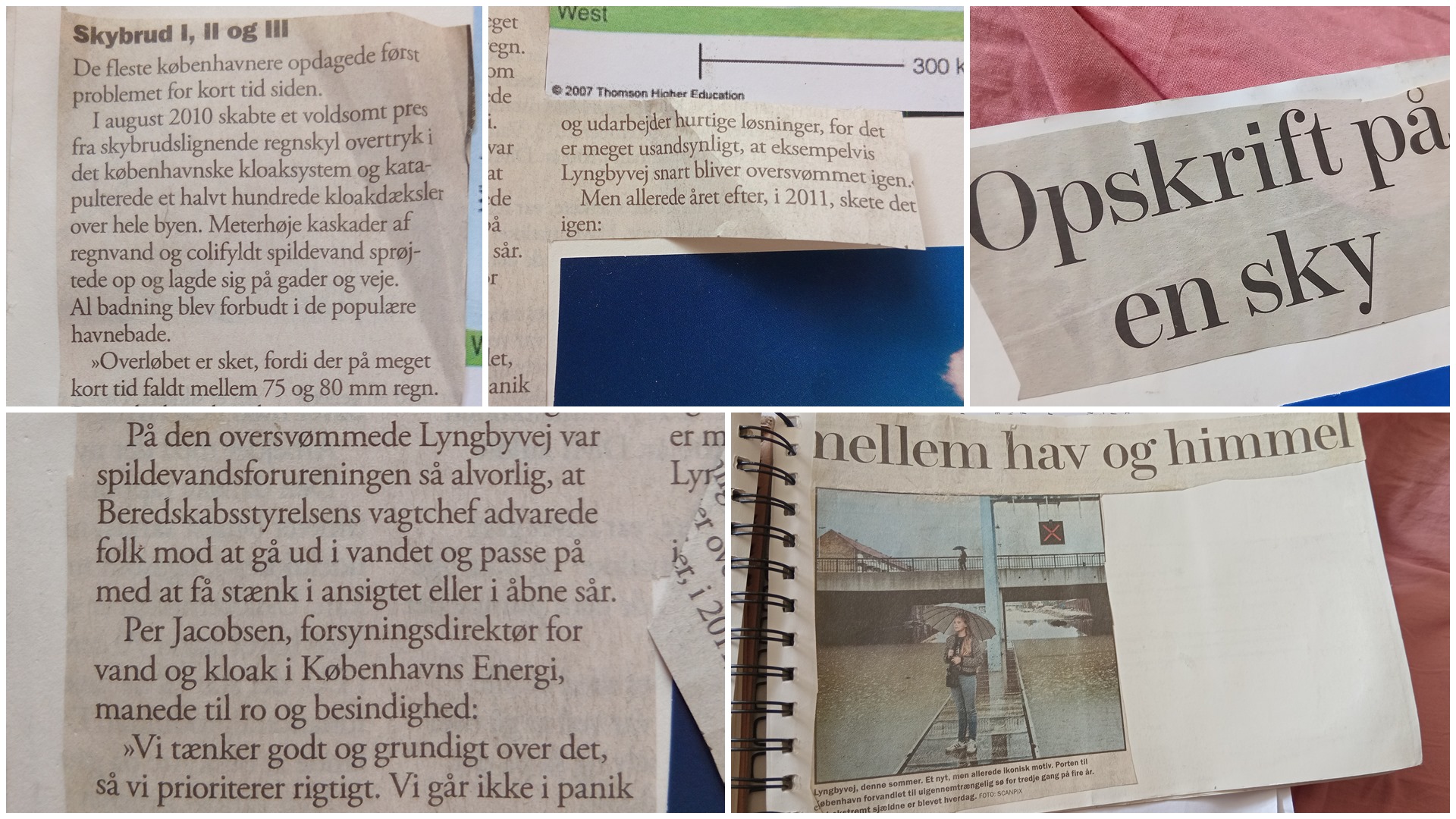
The year prior to in August 2010, another cloudburst had been responsible for 80 mm rain and caused flooding across the city. But that paled in comparison to the disastrous outcomes of the thunderstorm of July 2011.
If you need to be prepared, reading the clouds and checking live data yourself is always the best way to go.
References:
https://www.dmi.dk/nyheder/2012/2-juli-et-aar-siden-det-koebenhavnske-skybrud
https://www.dmi.dk/nyheder/2011/forventet-skybrud-men-uventet-styrke/
Thomas Heising here!
I’m originally from Denmark, but now living in Cork, Ireland and working with visual science communication. You may have found this post because you were curious about this page or wanted to know more about the topic at hand – in any case: welcome.
There are more writings, visuals and videos around here about geology, the weather, our planet, Ireland, Denmark and other things that interest me.