A guided natural tour in Zambia
Video - Zambian wonders
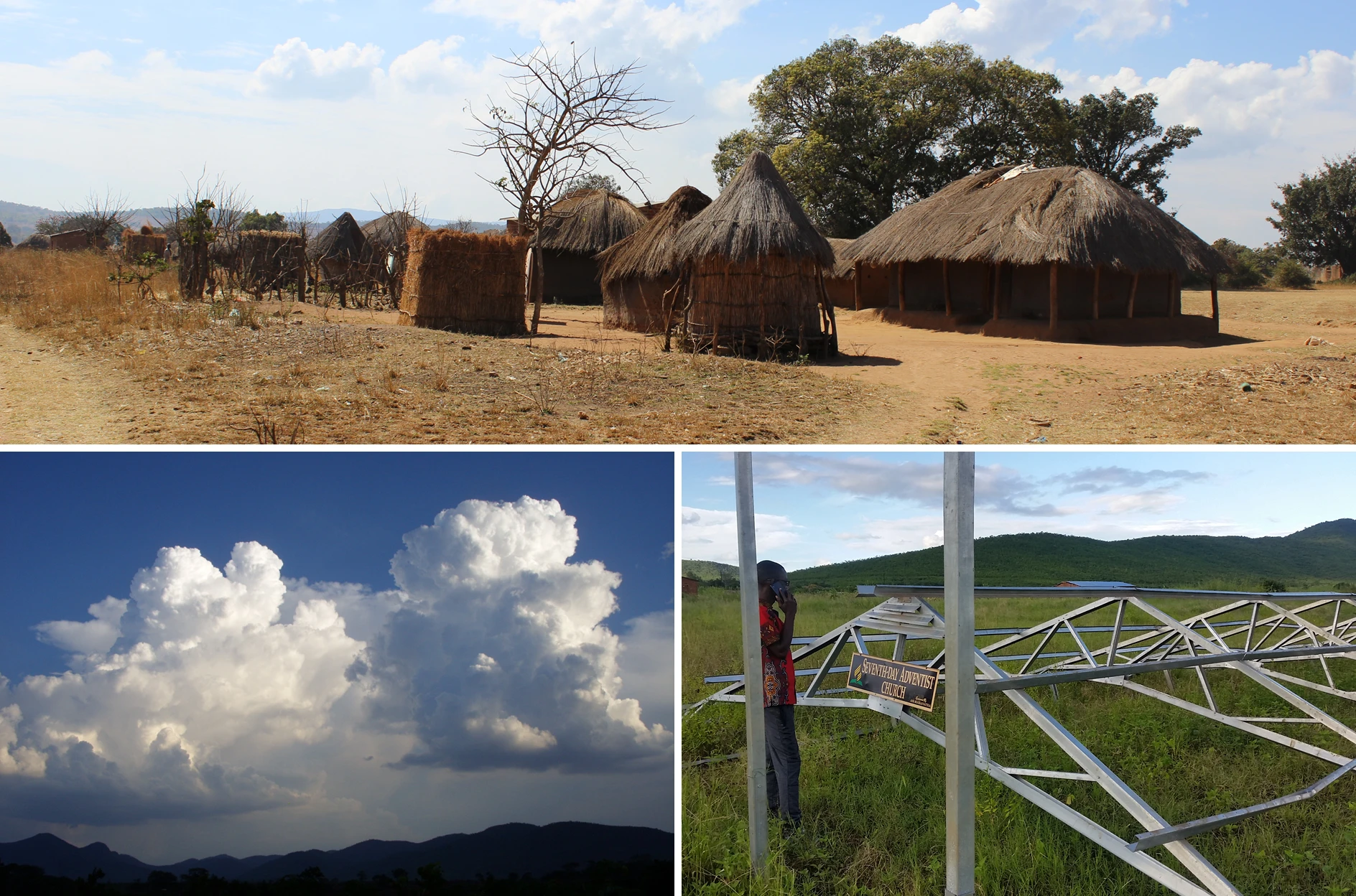
Nostalgia grabs a hold of me when I think of eating nshima served with a well-seasoned bean stew while sitting in a Zambian clay hut observing grape-sized raindrops plunge from the skies!
On the other hand, I’m well-used to the tragic televised images of African villagers enduring every possible natural disaster with great distress and poverty – clay huts often framed as part of their desperate conditions. Colonial stuff, you know.
However, I will highlight a reason why I think clay huts are an optimal form of housing in a Sub-Saharan African setting.
The Intertropical Convergence Zone (ICTZ) is a global belt of thunderstorms that basically drive most of the weather on our planet. The ITCZ forms around the equatorial region as this is most exposed to sunlight, thus the warmest places on our planet on average. As you should know, or will know, from my other posts: thunderstorms form as hot, moist air rises.
Thunderstorms forming from the ICTZ impact much of the African continent depending on the time of year. The terms ‘wet season’ versus ‘dry season’ basically refer to whether the ICTZ has shifted north or south.
Such thunderstorms can be daily during the wet season and, in some cases, very destructive. Millions of tons of rain can drop catastrophically from a thunderstorm cloud which can send short-lived hurricane force winds out in every direction. A local woman recalled a huge tree that was seen moving like a straw of grass in the winds of one such downburst.
The third picture above shows the metal skeleton of a standard western-inspired building that was totalled during a recent downburst. Having a wall with a strong wind impacting perpendicular on to it will put enormous amounts of pressure on the entire structure.
However, clay huts often have cylindrical shapes, and the use of straw as a building material diffuses a lot of the force exerted upon them by strong winds.
After coming to this conclusion, I found a relevant study mentioning how the introduction of western building traditions in Fiji have done more harm than good considering the type of extreme weather they get from Pacific typhoons. The locals have already had centuries of experience with building homes that could withstand strong winds.
References:
1. Elkharboutly, M. & Wilkinson, S., 2022. Cyclone resistant housing in Fiji: The forgotten features of traditional housing. International Journal of Disaster Risk Reduction, Vol. 82, 10330. doi: 10.1016/j.ijdrr.2022.103301.

Thomas Heising here!
I’m originally from Denmark, but now living in Cork, Ireland and working with visual science communication. You may have found this post because you were curious about this page or wanted to know more about the topic at hand – in any case: welcome.
There are more writings, visuals and videos around here about geology, the weather, our planet, Ireland, Denmark and other things that interest me.