Thomas Heising

Visual science communication
Back to the Lab

News from Svalbard

Video - Society
2024 | Svalbard, Norway
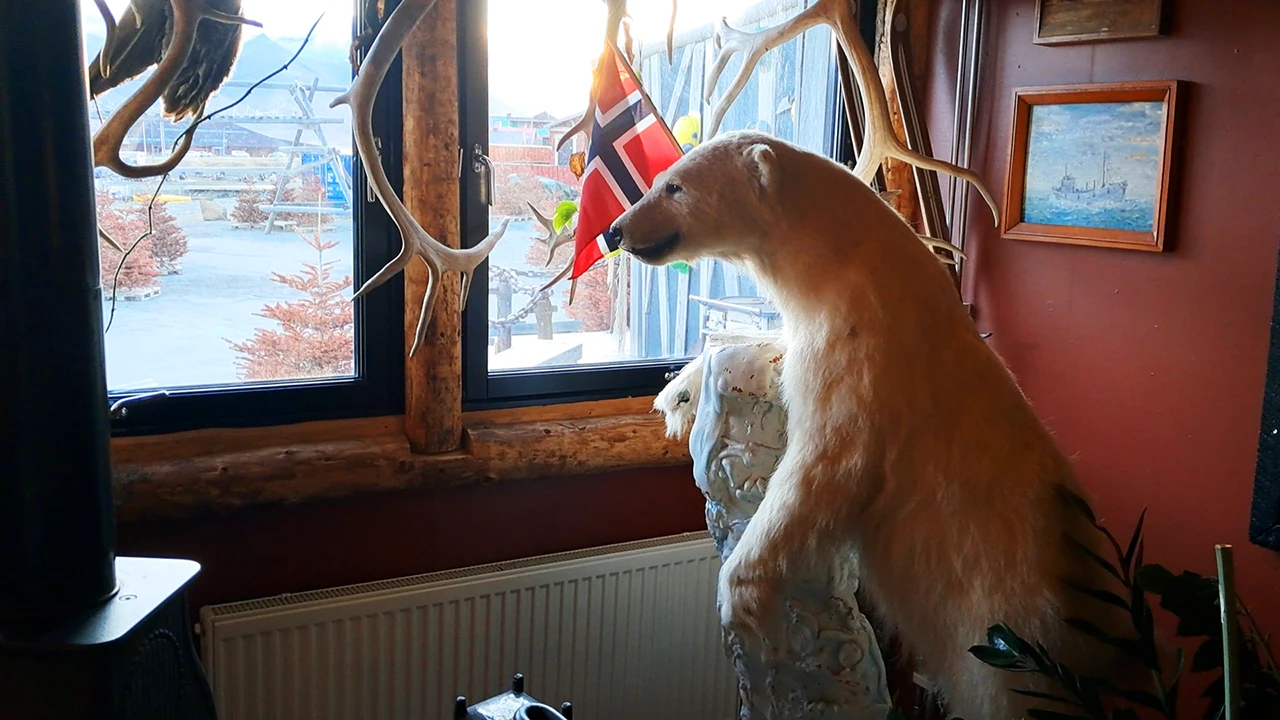
So, Svalbard was a different experience altogether. In other posts, there’s a bit about polar bears and about when the Arctic wasn’t arctic.
 
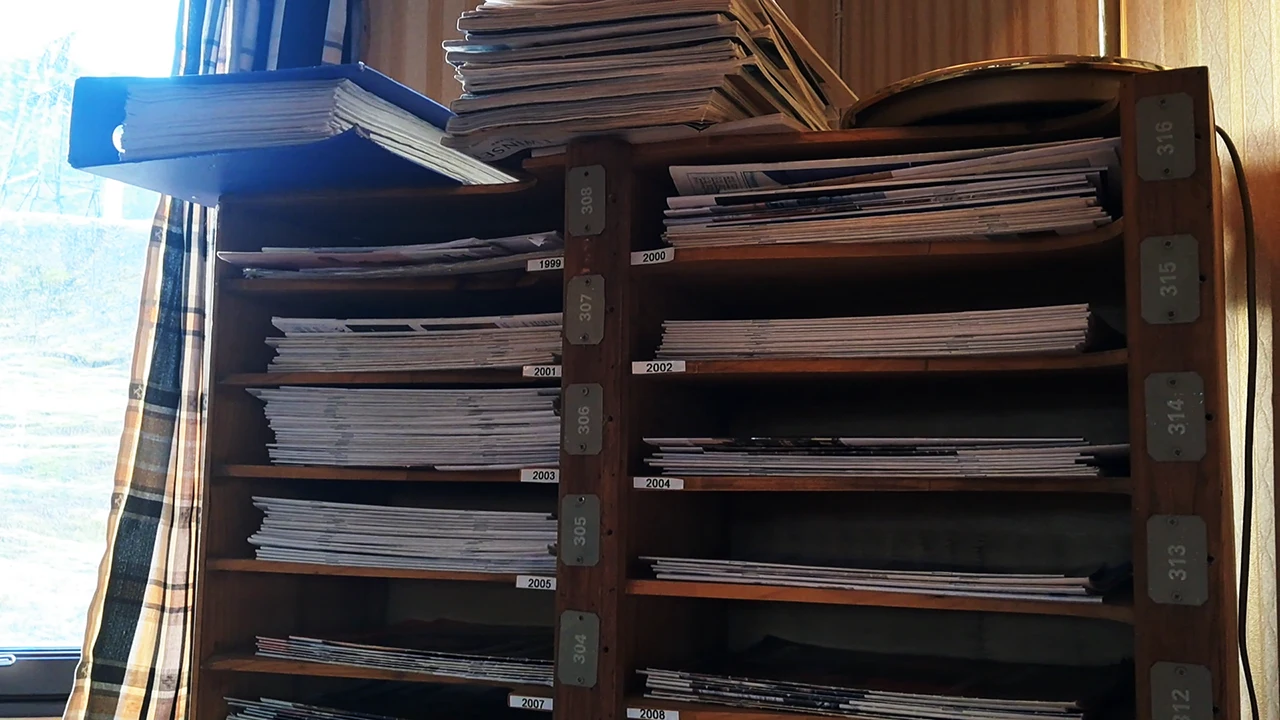
To zone in on something different from this trip, I came across stacks of the local newspaper Svalbardposten kept over a few decades. As Svalbard has been officially claimed by Norway since the 1920s, most of the communication, administration and infrastructure is Norwegian – including Svalbardposten.
Despite Scandinavian ownership, Svalbard is inhabited by people from all over the world including Filipinos, Italians, Ukrainians, Russians, Thai and various Scandinavians. These inhabitants may stay all-year round or seasonally.
We should’ve stayed for one more week!
Svalbardposten however is all in Norwegian. With written Danish (my father tongue) and Norwegian being largely identical, I decided to skim hastily through many of these issues to understand the local society better. Newspaper archives are great for that.
 
Anything interesting?
 
Yes, loads, but most of it relates to climate change which most people are so fatigued from hearing about, so I will save those comments to the end.
 
Life on Svalbard is incredible though. During the depth of the winter months, it is dark 24/7. Conversely, during the height of the summer, you have daylight 24/7. A local said that it was the summer months that proved most mentally difficult for people. Allegedly, this is when the risk of suicides increases.
Utøya og Oslo terror attacks
“Work resumes”
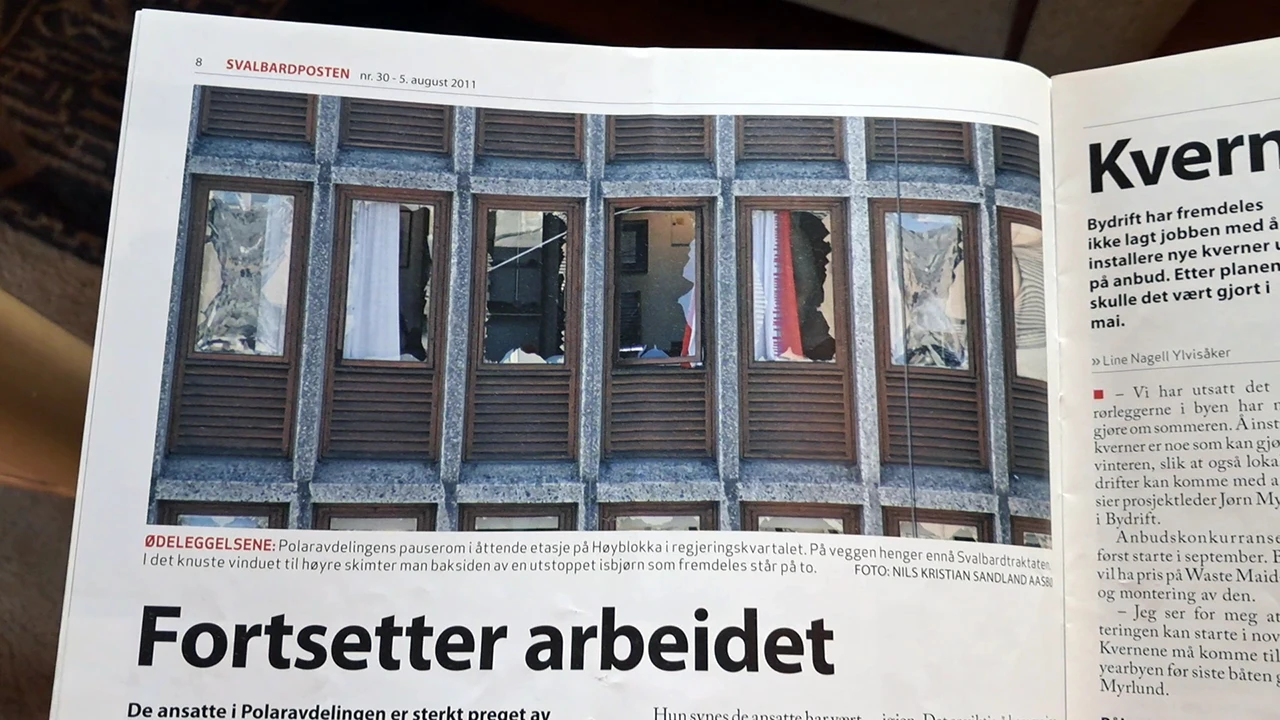
It was also chilling reading the issues after the 2011 terror attacks on the island Utøya, mainland Norway, committed by a right-wing guy who killed 77 people, most of them teenagers and kids. One of the kids was Svalbardian Johannes. An article recounts how the Longyearbyen School resumed after the summerbreak – all aware that Johannes wouldn’t be starting along with the other students. This was one of the worst terrorist attacks in Europe, yet unfortunately little attention was subsequently brought to the dangers of right-wing ideologies in Europe.
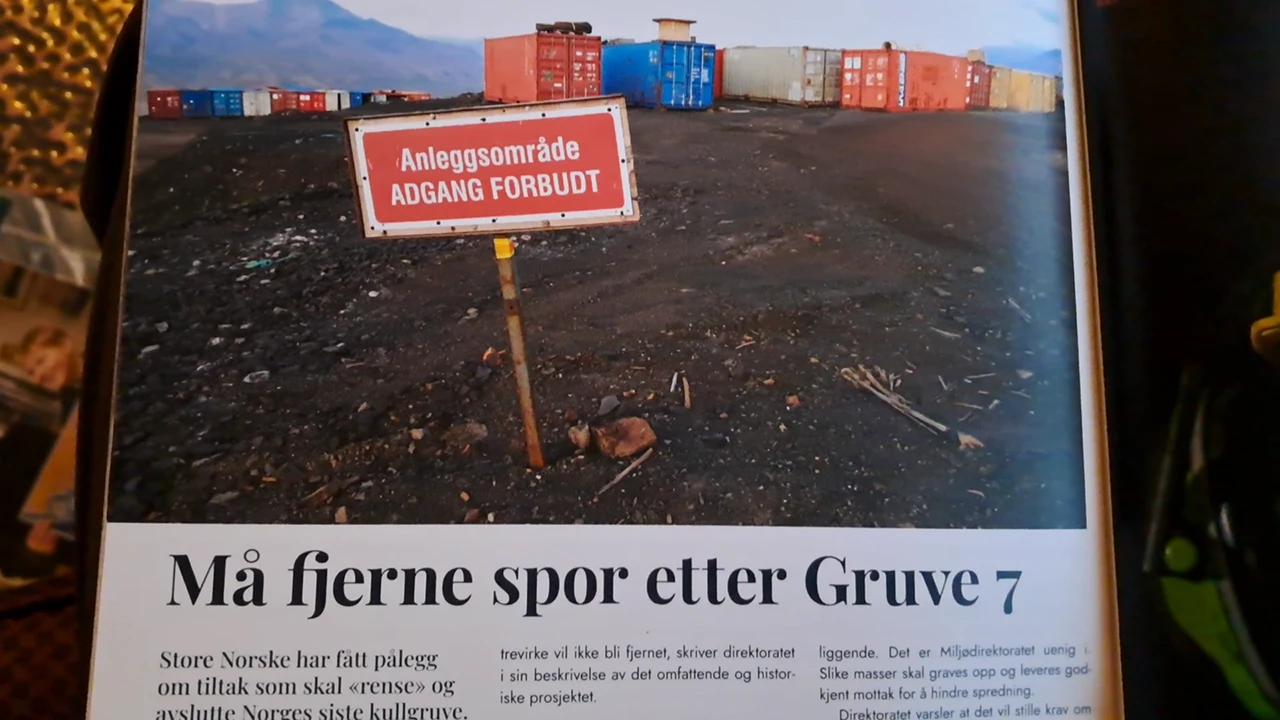
“Must remove traces of Mine 7”
Geopolitically, the Svalbard archipelago sits bang in the middle of many resource battles. The discussions on what can be used internationally versus used only by Norway are ongoing. Recently, a Latvian company challenged the Norwegian government legally on the matter when they weren’t allowed to catch snow crabs around Svalbard’s continental shelf.
 
This was a head-turning interpretation of an important international treaty Svalbardtraktaten written between Norway and several other countries that defines Norway’s sovereignty over Svalbard. Therefore, this legal outcome was also Norway flexing its claim over the archipelago. Moreover, tensions between Europeans and Russians, all interested in mining, potential military presences and research, are covered throughout.
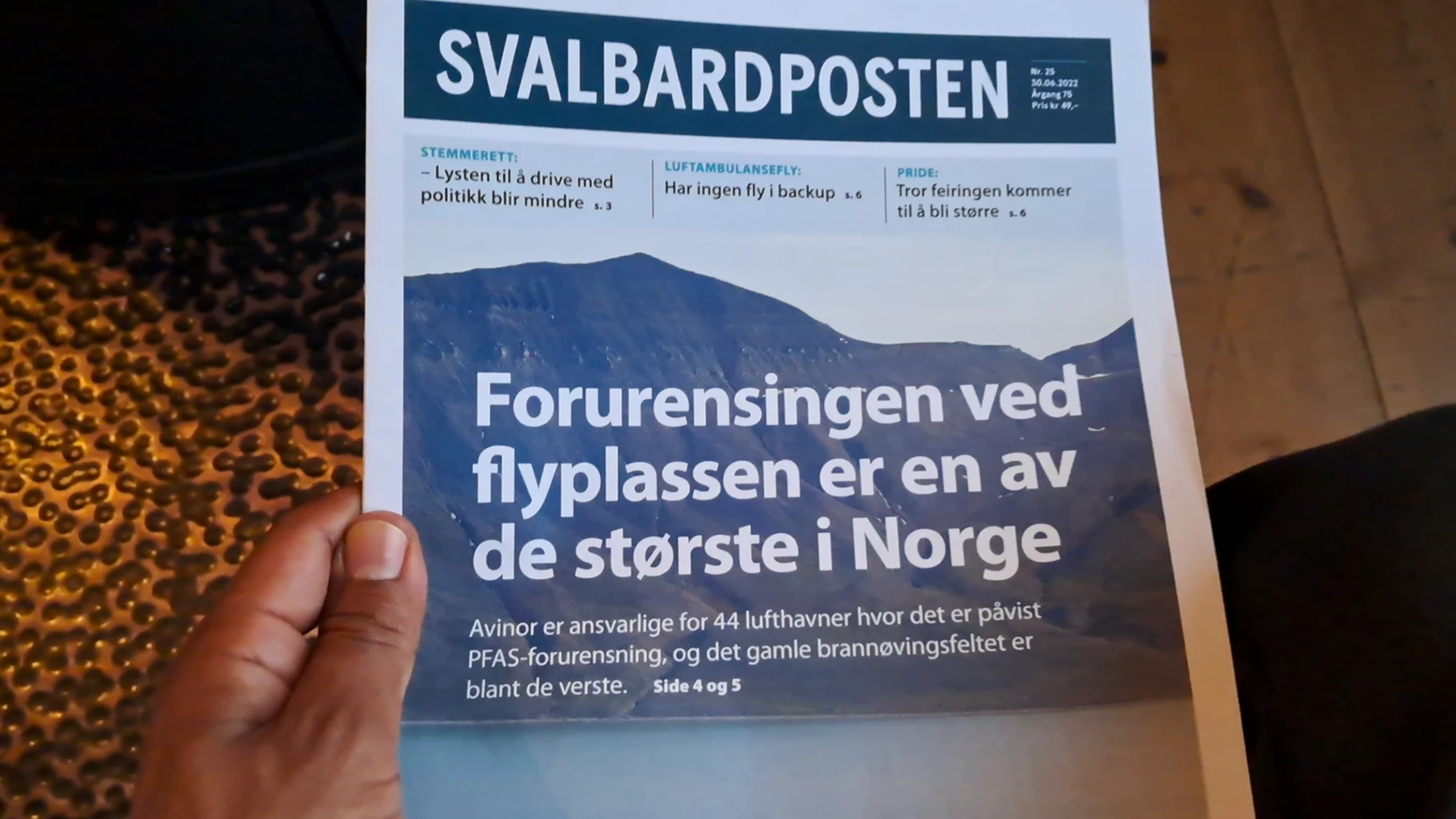
“Pollution at the Airport is one of the biggest in Norway” headlines an article describing alarming PFAS-pollution at Svalbard’s airport.
 
There’s also a map in each issue showing the extent of the polar ice sheets, including articles commenting on their annual shrinkage. Ooops, we’re about to veer into talking about climate change, so let’s go back a bit again.
Drone technology on Svalbard
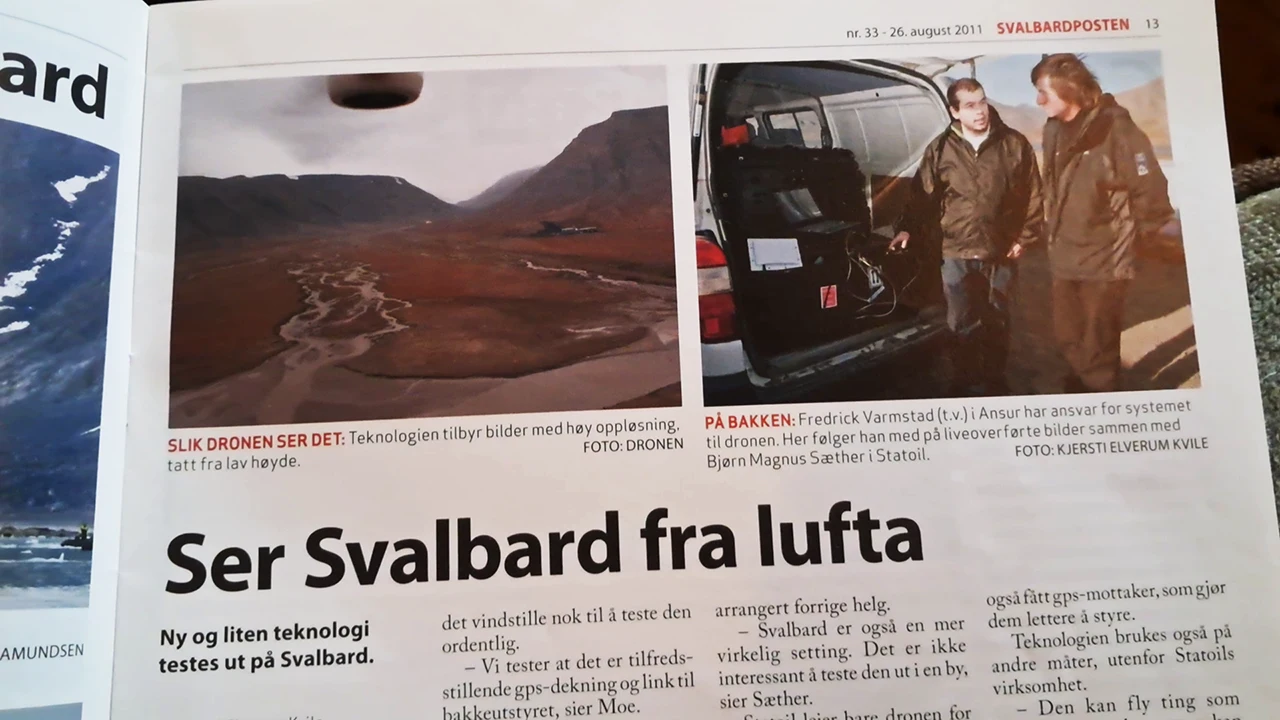
“Seeing Svalbard from above”.
“New and small technology is tested on Svalbard”.
Camera drones were not a widely known form of technology back in 2011.
On other matters, the Norwegian coal mining history has come to a close. Their last mine Gruva 7 (yes, meaning Mine 7) will close in 2025 after 70 years of digging out Palaeogene forests for fuel. Miners in one of the articles nostalgically describe it as the end of an era and as an identity crisis.
 
Loads of naughty-naughty things like large oil and benzene spills and carcinogenic PAH (Polycyclic aromatic hydrocarbon) will hopefully be cleaned from the surface and subsurface over the next few years. At least, Miljødirektoratet (The Norwegian Environment Agency) are expecting so. Longyearbyen is just next to the mine after all.
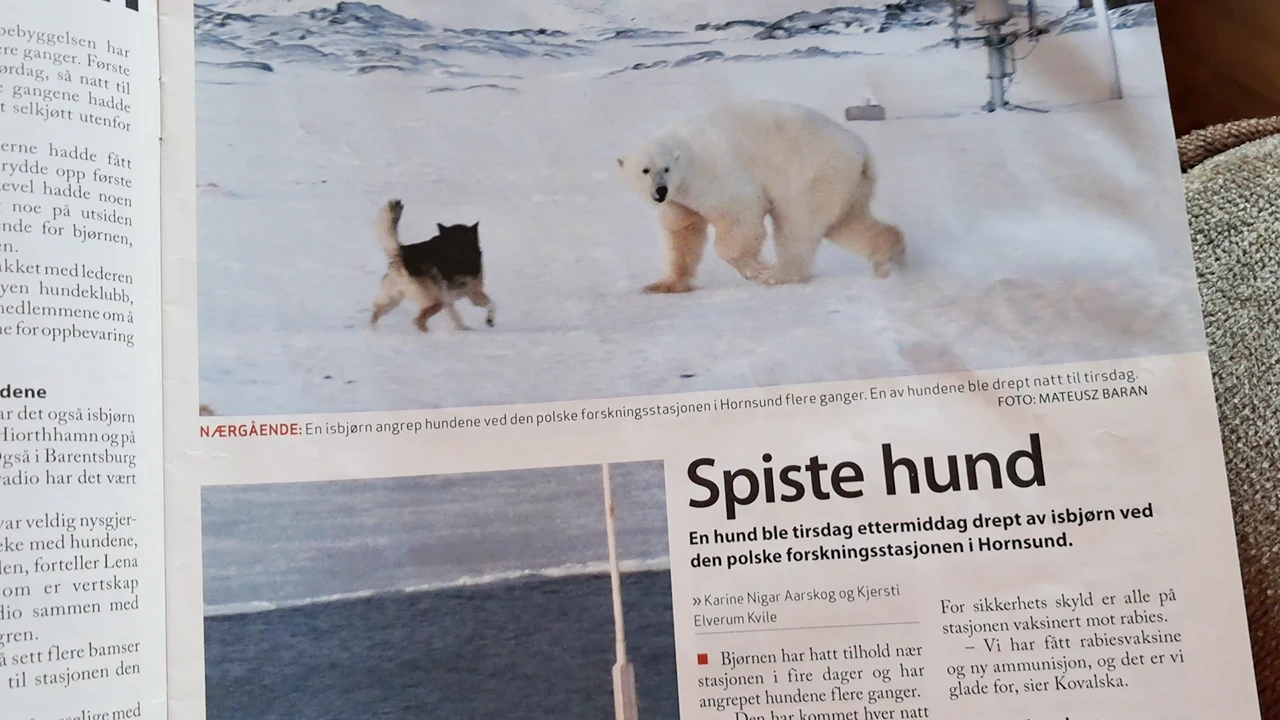
Headline literally reads: “Ate dog”
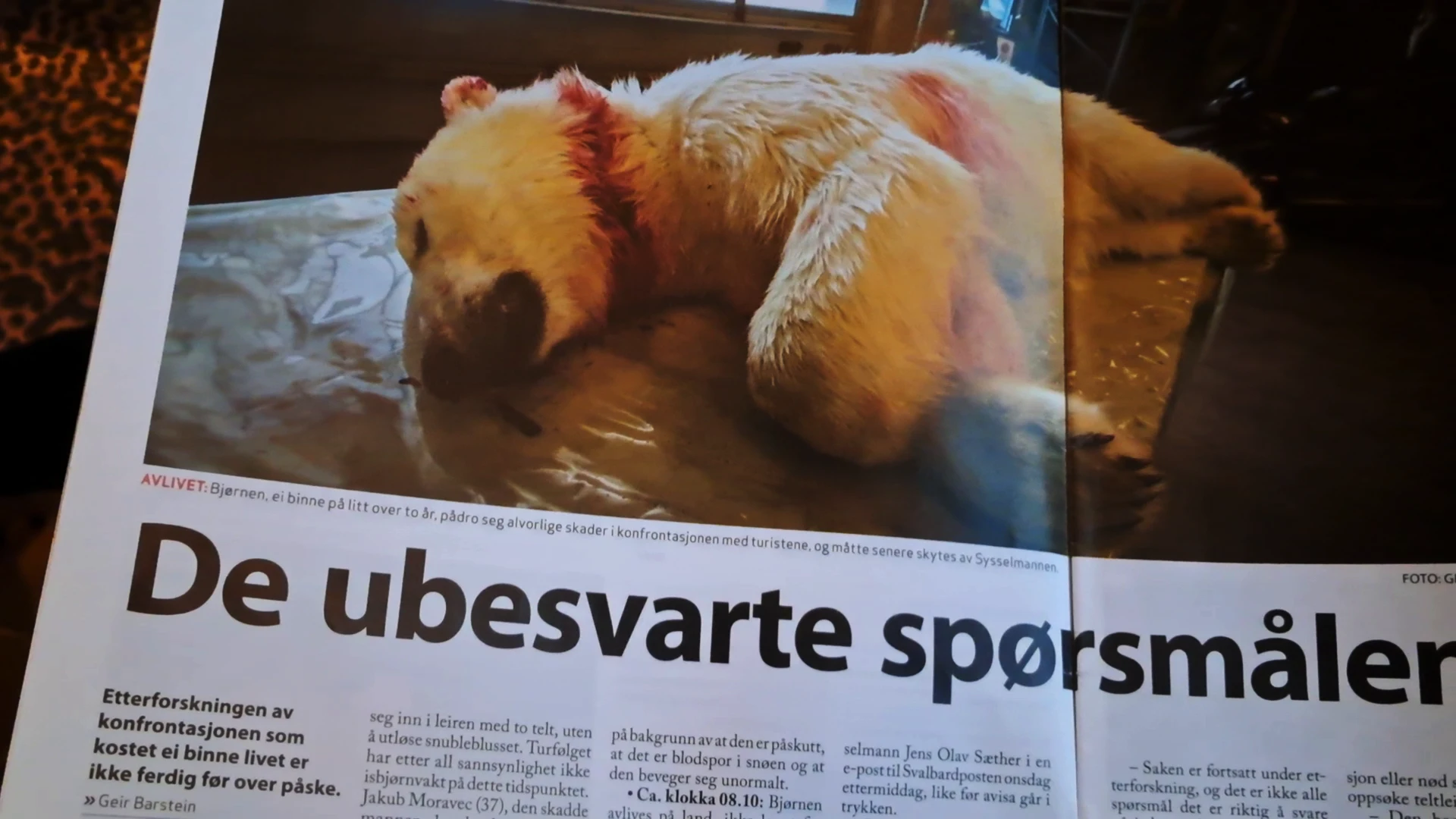
There’s also articles from over the years showing unfortunate outcomes of encounters between humans and polar bears. Most of these ending with the deaths of the latter. Polar bear behaviours have been documented as becoming more erratic as their habitats have changed in recent decades. With the ice retreating, their prey often migrate elsewhere. Some of the bears throughout the Svalbardposten-issues are described as thin and aggressive, thus likely attacking out of desperation.
 
Also, the annual CO2 emissions of an average Svalbardian is much higher than that of an average Norwegian person. According to 2021 estimates, 7.6 tonnes of CO2 are emitted on average by individual Norwegians annually, while on Svalbard that alone is at a whooping 39 tonnes. Understandably so given the all-year subzero or cold temperatures, reliance on mainland resources and little and seasonal renewable sources of energy.
 
Damn, seems like we can’t talk about Svalbard without talking about climate change.
Okay so, the cat’s out of the bag.
 
One article references a study showing that Svalbard is warming about six to seven times faster than the rest of the world. These changes are visible on Svalbard as glaciers are disappearing fast when they should be growing, and summer temperatures have set records in recent years. Ironically, researchers have been racing to secure samples from the data-rich ice before it melts. More frequent landslides is another a sign of warming conditions.
 
Svalbard’s problems are not specific to Svalbard’s inhabitants, but to all of us. It’s easy to speculate on solutions on behalf of Svalbardians, but it seems that the place is a microcosm for all of human civilisation. 
 
Thinking about outcomes for the archipelago, its people and ecosystems requires solutions for all of us.
 

References:

Bradley J. A., Moncayo L. M., Gallo G., Brusca J., Viglezio T., Pasotti J. & Giovannelli D. 2025. Svalbard winter warming is reaching melting point. Nat Commun, Vol. 16, 6409. DOI: 10.1038/s41467-025-60926-8

Svalbardposten. Number 7 – 6 May 2011.

Svalbardposten. Number 17 – 6 May 2011.

Svalbardposten. Number 25 – 1 July 2011.

Svalbardposten. Number 30 – 5 August 2011.

Svalbardposten. Number 33 – 26 August 2011.

Svalbardposten. Number 34 – 2 September 2011.

Svalbardposten. Number 36 – 16 September 2011.

Svalbardposten. Number 39 – 7 October 2011.

Svalbardposten. Number 43 – 4 November 2011.

Svalbardposten. Number 47 – 2 December 2011.

Svalbardposten. Number 13 – 27 March 2015.

Svalbardposten. Number 25 – 30 June 2022.

Svalbardposten. Number 11 – 24 March 2023.

Svalbardposten. Number 12 – 31 March 2023.

Svalbardposten. Number 17 – 12 May 2023.

Svalbardposten. Number 20 – 9 June 2023.

Svalbardposten. Number 21 – 16 June 2023.

Svalbardposten. Number 22 – 23 June 2023.

Svalbardposten. Number 26 – 1 September 2023.

Svalbardposten. Number 28 – 15 September 2023.

Svalbardposten. Number 31 – 6 October 2023.

Svalbardposten. Number 7 – 5 July 2024.

Svalbardposten. Number 8 – 6 September 2024.