Thomas Heising

Visual science communication
Back to the Lab

My exit on Brexit

Existential dread
2016 | Bristol, England

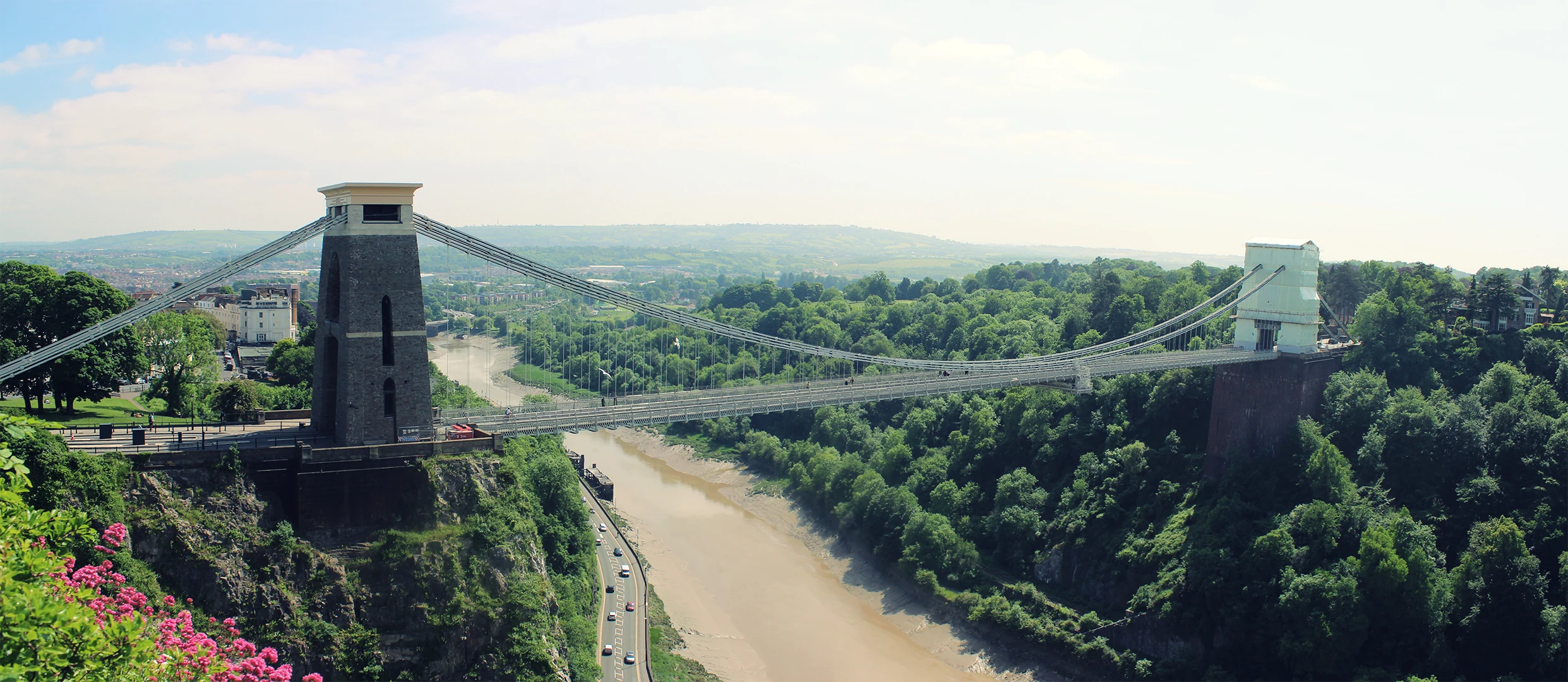
Bristol’s iconic Clifton Suspension Bridge crossing the river Avon.
The icebreaker
A quirky bit of personal life experience starts with informing people that I lived in Bristol for six months. This is followed by a peak revelation that I left England, and thus the United Kingdom, on the day the Brexit-referendum results were announced!
 
The anecdote here is that I, as a citizen of the European Union, exited the UK on the day it exited the EU. Of course, tens of millions of people in the UK got to experience this day as well on-site, many of which didn’t find it as quirky an experience as I did.
 
Though, the penultimate sentence isn’t correct. The UK only made their choice to leave the EU official that day on the 24th of June 2016. But spritually, the UK did leave at the announcement of the referendum results. Scepticism and outright opposition towards the pan-European institution peaked over the course of summer 2016, even in my circles of young college students.

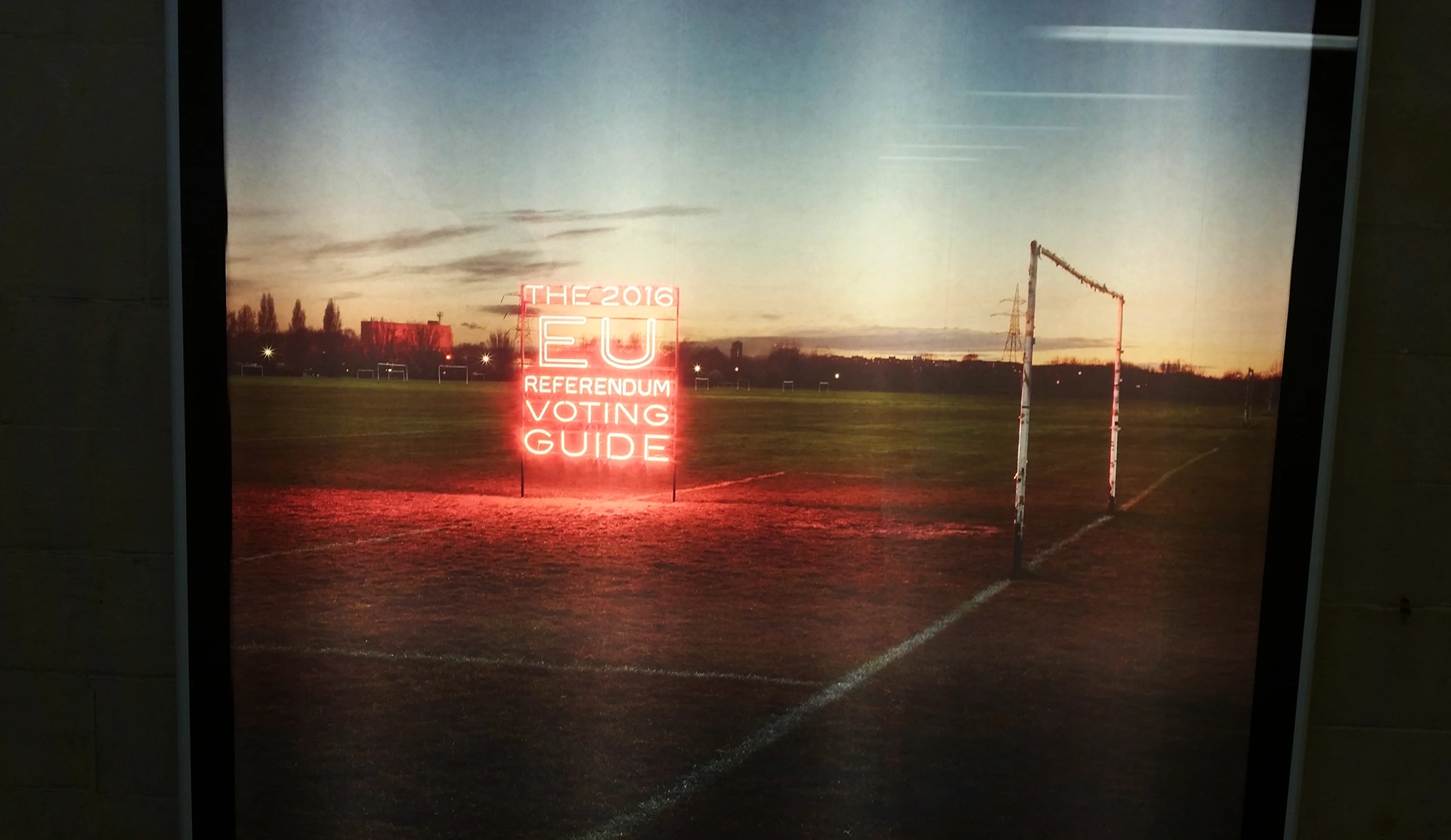
A good number of bizarre posters were produced during this period.
Bizarre news
I was dating a nice Scottish man at the time, enjoying our last morning together in Bristol before my trip to the airport. He was quietly watching the television as I came into the living room. Still only in his underwear, he turned to me from the couch in a state of defeat and disbelief: “We’ve voted to leave the EU“. After processing this bit of reality, it then made me relieved recalling that I would return to Copenhagen the same day.
 
As we ventured outside, I was half expecting crowds of right wingers and racists marching fervently down Gloucester Road with pitchforks and burning torches. But more weirdly, everything was business as usual out in public. No signs of societal collapse, people in panic nor of rallying xenophobes. The referendum results momentarily left the minds of myself and the Scotsman as the hours of the 24th of June progressed.
Leave!
The referendum campaign leading up to this bizarre day was an even more interesting time. Rural castles decorated with enormous “Leave”-banners. The blatantly untrustworthy claims about freeing up funds for the National Health Service made by blatantly untrustworthy public figures. The brutal murder of Jo Cox was like a warning shot: don’t be a community champion publicly talking for migrant rights these days.
 
Mind-distorting moments of cognitive dissonance ensued from my chats with British age peers at the time who, due to the UK being a more fiscally conservative country than Denmark, didn’t understand the benefits of a strong social welfare state that takes care of its citizens. They didn’t see how the alleviation of poverty would benefit everyone.
I told them that my exchange programme in Bristol did not cost me a single sterling: rent, college and living expenses were all covered through a grant from the Erasmus Plus-programme and the Danish state was PAYING me monthly to attend university.
 
But nope, according to some of these young Brits, who would knowingly end up with tens of thousands of pounds in students debts, the UK would somehow manage better without the EU. Somehow. Instead what I was sometimes met with on an individual basis was envy towards my particular situation, not imaginings of how they could demand more from the UK government.
 
There’s an undeniable apathy that decades of policies dismembering social security for many British people have created. Admittedly, I was strangely honoured to witness all of this in person, as if it was the bowels of the depleted empire turning itself inside-out.

Looking towards the southern parts of Somerset from Mendip Hills.
Supremacy is persistent
A Kenyan lecturer of mine in Copenhagen told me and the rest of my class about an experience he had had in London. Walking past a white British construction worker, the guy beckoned my lecturer’s attention: “Which country, that we colonised, are you from?“. Colonial supremacy is persistent.
 
Though I was studying Geoscience in Bristol, I was free to choose a number of unrelated modules. I was considering Film Studies and Physics, but went instead for introductory modules on Philosophy and Sociology, both of which required serious rewirings of my natural scientified brain.
 
During the Philosophy-module, we were given an overview of the Bristolian legacies of the Transatlantic Slave Trade. Painfully, this involved revisiting moral arguments FOR slavery, and as much as it was depressing to learn about, I understood much of the racialisation I had experienced in Denmark through this. We Danes are also colonisers.

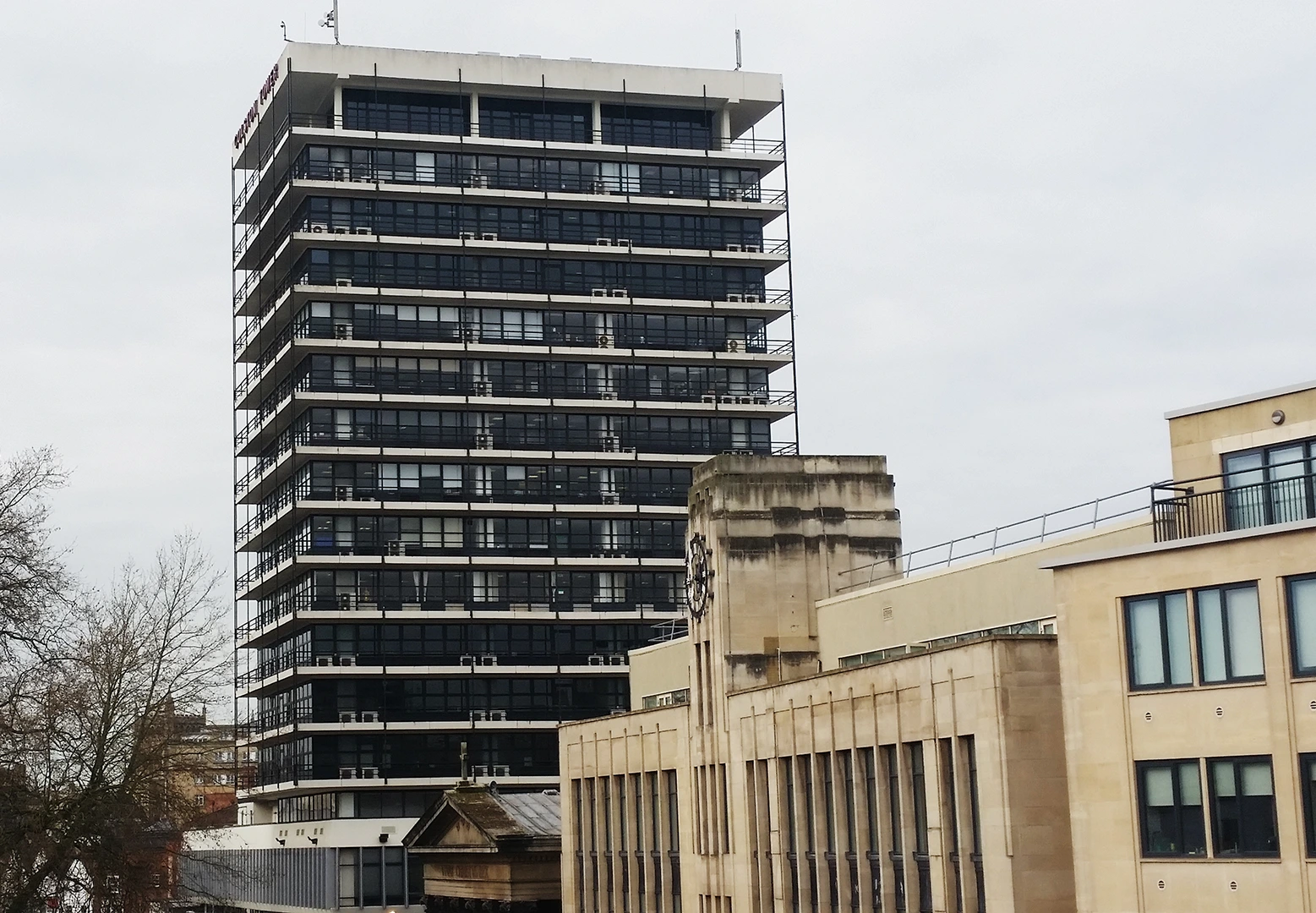
One of Edward Colston’s legacies: Colston Tower flanked by Colston Avenue and Colston Street.
Through the Philosophy-module, we were then given an overview of visible structures in Bristol that benefitted from colonialism, and of the debates that had sprung about from the presence of these. This included a dive into the background of Edward Colston – a 17th century business man who was responsible for the deaths of many, many, many people transported across the Atlantic Ocean. 
 
Pro-colonial Brits are evidently fans of him, referring to him as a mere successful philanthropist with his human trafficking ventures deemed a “complicated” personality trait. Those were different times and now is now, some would argue. 
 
For years, many had unsuccessfully asked for the statue of Edward Colston to be removed from the city centre. It was to these locals a celebration of colonial violence, and I must admit, as someone with African heritage, it felt eerie walking past the statue after learning about the man’s life.

Oh, and I did a module on Environmental Radioactivity which was enormously interesting!
Colston this, Colston that, Colston there
Honestly, I’ve never seen a historical figure being revered infrastructurally as much as Edward Colston was in this particular part of Bristol’s city centre. The area in which his statue stood, before it was forcibly removed in 2018, had a thing too many named after him: Colston Tower, Colston Avenue, Colston Hall, Colston Street and Colston’s Girls’ School, Colston Arrrghh! Even without the statue, there would still be some reverence for the man.
 
The debate went beyond the confides of Bristol when the statue was pulled down by crowds of decolonising protesters and thrown into the harbour two years after my time in the city. In Denmark, both closeted and openly right-wing acquaintances and commentators, who had never looked into the history of Edward Colston, commented on the grassroots removal of Colston’s statue: “They’re erasing history” and again: “Colston merely seemed to have been a complicated man” were the same supremacist arguments. These arguments didn’t matter in the end: the people of Bristol had made their choice, and in the time to come, many of the Colston-monuments would be renamed.

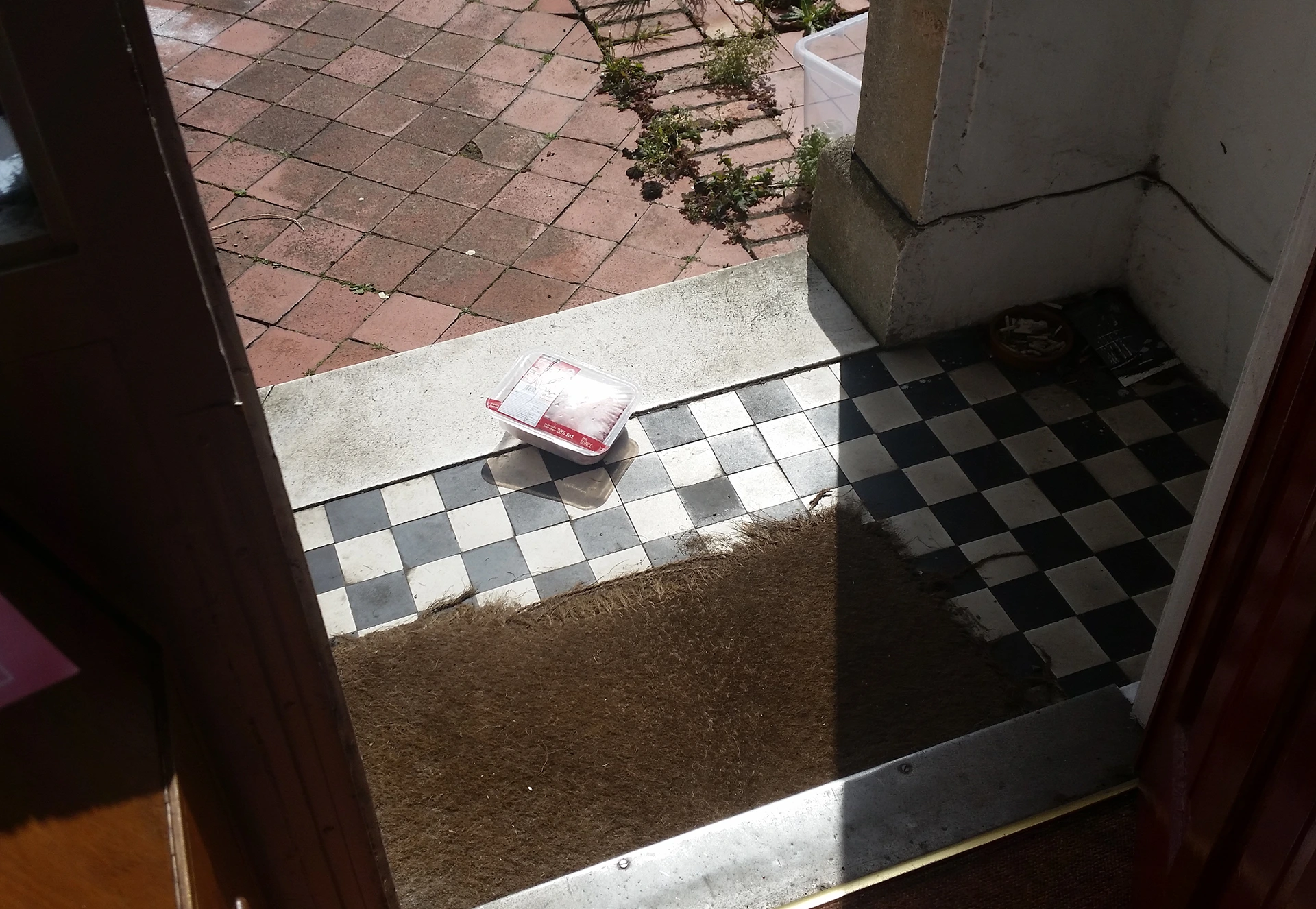
Minced meat left at our doorstep. Mating ritual, peace offering or pure clumsiness?

The winners of Brexit
After much ado, Brexit was solidified in 2020, and the self-destructive campaigns of ‘right-wing’ politics that vilify migrants and refugees, dismantle social security, long for colonial violence and desire the demolition of natural environments have since taken a strong foothold in the world. People accept it and want it, even if it goes against their basic needs and survival. It’s that irrational primate thinking that doesn’t see logic, but instead just wants to pick up a stick and strike everything it deems the slightest bit irritating.
 
Many business expected to grow their wealth because of Brexit. As would later become evident with the elections of Trump, these ‘right-wing’ takeovers give networks of wealthy people easier access to public funds and conveniently relevant contracts that they can then siphon more wealth from.
Cheddar Gorge in the Mendips

Cheddar Gorge in Mendip Hills towers the very birthplace of cheddar cheese. Not only that, the remains of the oldest near-complete human skeleton found in the UK come from here.

I wonder why we love being lied to and exploited. Perhaps this comes from post-childhood longings for parental control, no matter the irrationality, harm and abuse? There’s something romantic about that for a lot of people: the violent rich and famous abusing us and making us feel less than.
 
This helps fulfilling the colonial boomerang: when empires exacting colonialism on other countries will also exact colonialism on its own people. Keeping them in perpetual poverty and at a brink of survival to make sure that they do what they’re supposed to do.
 
However, people living in poverty have also less to lose as revolutions and societal paradigm changes have shown historically. The people of Bristol taking matters into their own hands and removing Colston’s statue showed us that people can resist whenever they want to.

References:

https://www.nhm.ac.uk/discover/cheddar-man-mesolithic-britain-blue-eyed-boy.html

https://www.theguardian.com/business/2017/mar/22/uk-millionaires-brexit-eu-ubs-wealth-management