Back to the LabEnjoy this easy-to-follow geological tour of Copenhagen, regardless of whether you're there or not.

A virtual tour of Copenhagen's rocks
Enjoy this easy-to-follow geological tour of Copenhagen, regardless of whether you're there or not.

Why though?
Since there aren’t many tourist activities in Copenhagen that don’t involve spending a good deal of money, it can be hard to know what to do in the city.
And with a great proportion of Denmark’s bedrock being covered by layers of recent ice age and post-ice age sediments, it’s even harder to imagine conducting a rocky fieldtrip around this Scandinavian capital.
But it just so happens that Copenhagen had many of its buildings and monuments constructed with rocks sourced nationally and internationally.
Thus, with this page and a bit of enthusiasm for rocks, you’ll have a great time there. And if you’re already in Copenhagen while reading this, cancel all your other plans (Tivoli is so expensive and eardrum-ravagingly noisy anyways) and commit instead to exploring all stops in this guide!
The knowledge here is derived from my notes as a geology student in Copenhagen and from various websites and publications that I have linked to further down.
As an added bonus, I have visited these stops in-person many times, including some of the locations from which these rocks come from. I will note this along the way.
Stops
Stop 1: Palaeogene chalk at St. Alban's Church
Stop 2: Milky Norwegian granites
Stop 3: Fool's Gold on Marmorkirken
Stop 4: Corals on the bank
Stop 5: Cephalopods at the train station
Stop 6: Nexø's ancient sands and rivers
Stop 7: Granites of Denmark
Stop 8: Oldest building material in Copenhagen?
Oh wait! First, let’s get a brief overview of Copenhagen’s actual geology.
Just before we head on out: thanks for the nice emails! Let me know if there’s any way I can improve this page.
No AI was used to create this resource – everything has been carefully compiled, photographed, illustrated and written by me. Therefore, if there are any errors or instances of misinformation, do reach out via motion@thomasheising.ie.
Also if you want to leave a tip, you can do so via PayPal below (link at the end as well). Whatever I get from you will be used for website costs and lunch at local businesses, so thanks a lot!
Now enjoy!
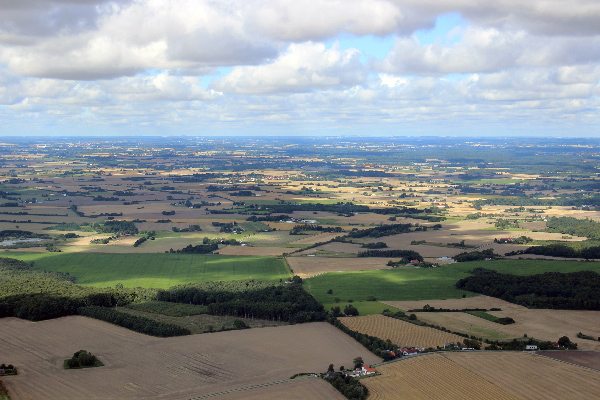
Pancake flat.
The basics:
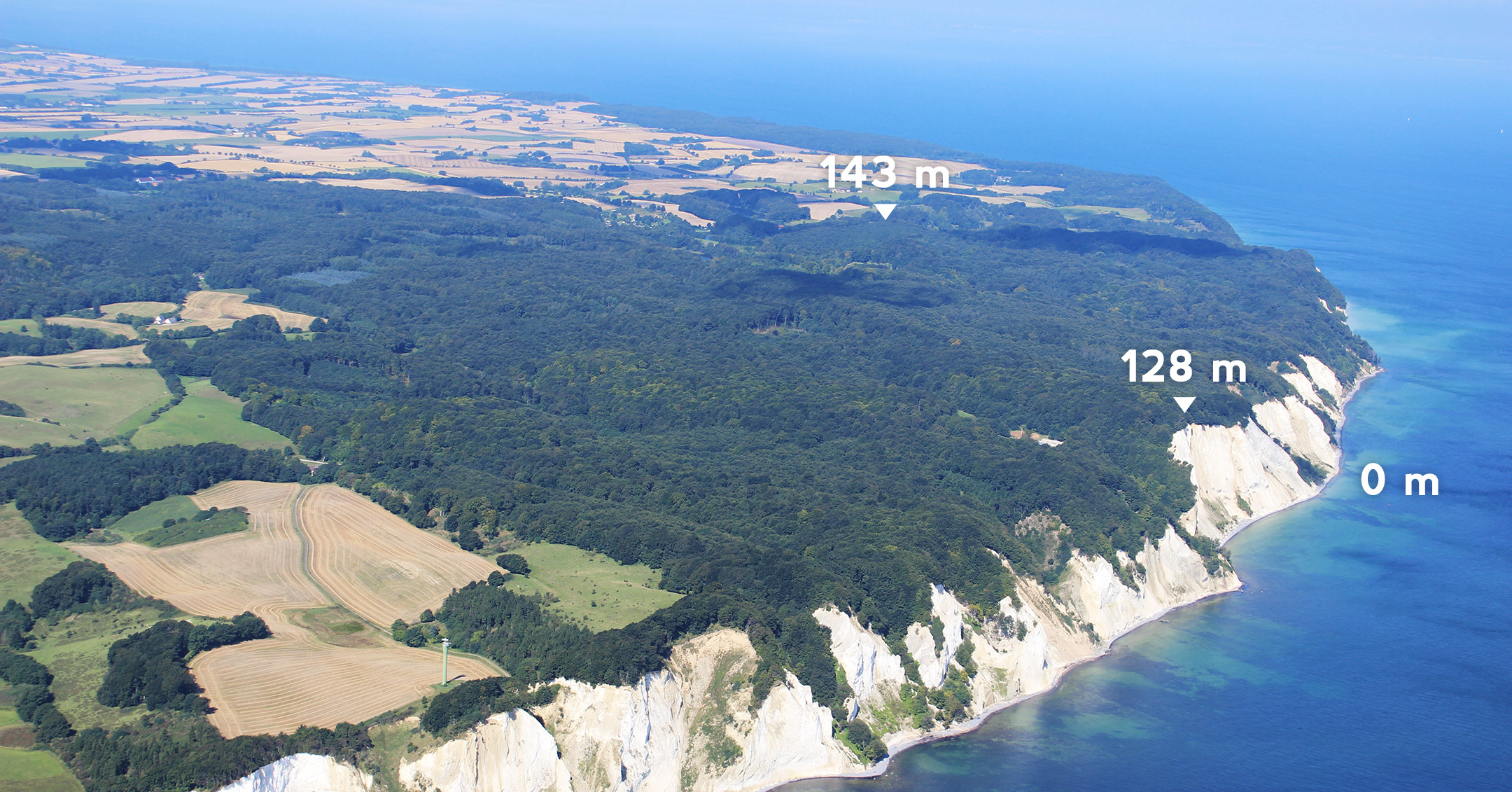
Denmark is incredibly flat with its highest elevation being about 170 metres. Some years ago, I took some aerial pictures of Møns Klint and Klinteskoven from an altitude of about 500 metres. These areas are some of the highest and most topographically varied in Denmark with a maximum elevation of 143 metres. As you can see (included a bit further down), the relief isn’t that dramatic.
Though Møns Klint is from ground level one of the most beautiful places in Denmark; plus one of the few places in the country with exposed bedrock.
These rocks are from the Late Cretaceous; about 70 million years old. Back then, sea levels were higher and great sea creatures entertained themselves around bountiful reefs. Today the chalk is rich in fossils of animals from these reefs yielding a rewarding experience for rock-hoarding visitors!
I used to live close to Møns Klint for a handful of years. As a curious and rock-hoarding young person, I would carry kilograms of belemnite and sea urchin fossils into our house. They’d end up the most unlikely of places, and a race developed between whether my father could throw Cretaceous fossils out of the house faster than I could bring them in.
Anyways, the above was a slight digression as Møns Klint is 120 kilometres south of Copenhagen. However, I am mentioning this place as part of East Denmark’s geological history. About halfway between Møns Klint and Copenhagen along the coast, one arrives at Stevns Klint.
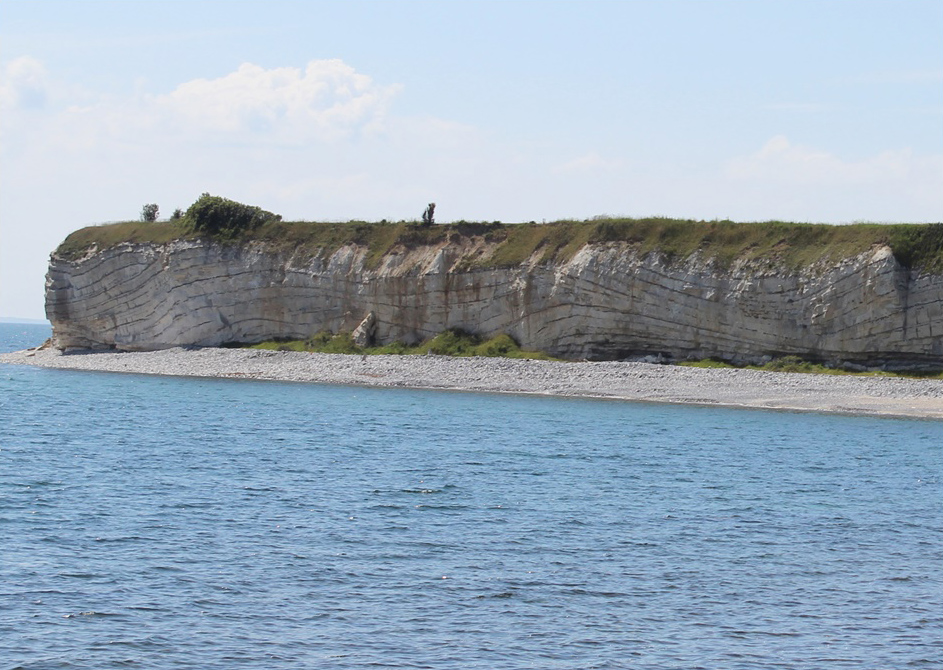
And Stevns Klint has one of the most remarkable exposures of rocks, not only in Denmark, but globally! These are chalk as well and only a few millions of years younger than the rocks at Møns Klint. In fact, you will find a section of these rocks with the infamous age of 66 million years.
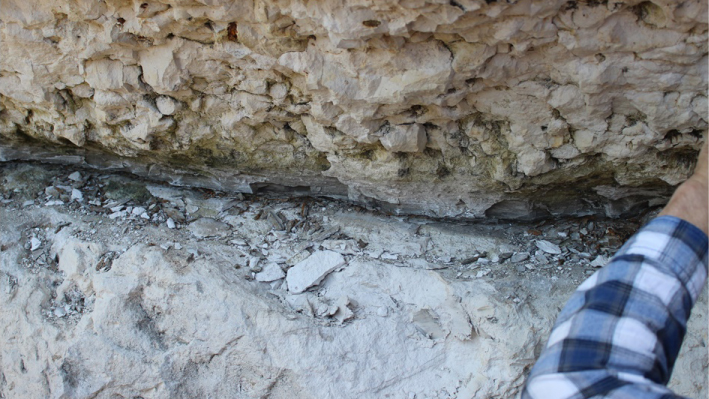
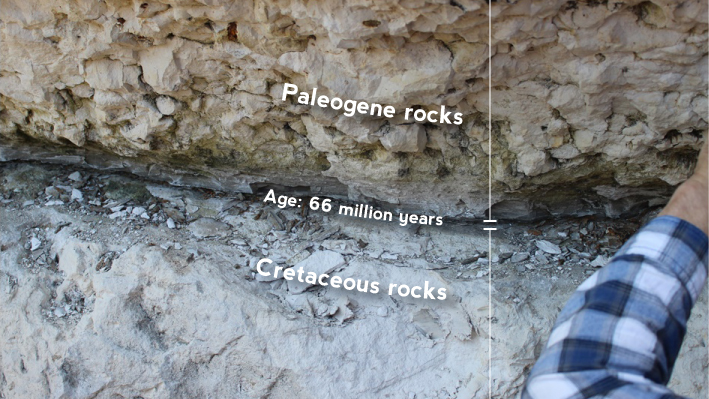
Yup, Stevns Klint has a section where the boundary between the Cretaceous and the Palaeogene periods is readily exposed. The same boundary that marks the end of the reign of the dinosaurs.
I went there on a fieldtrip during my studies and took the picture below. Arm of a palaeontologist has been allowed in for scale.
This boundary is surreal to study as the mass extinction, that happened at the time that these rocks and sediments were laid, also gave rise to the success of the mammals. And so, also allowed us humans to come about to start our own mass extinction 66 million years later.
Closer to and in Copenhagen, the rocks are even younger than this. The bedrock of Copenhagen is also chalk, informally called Københavnskalk (Copenhagen chalk). The best bet in finding samples of this are in Amager Fælled, Kalvebod Fælled and near construction sites with dug-up dirt.
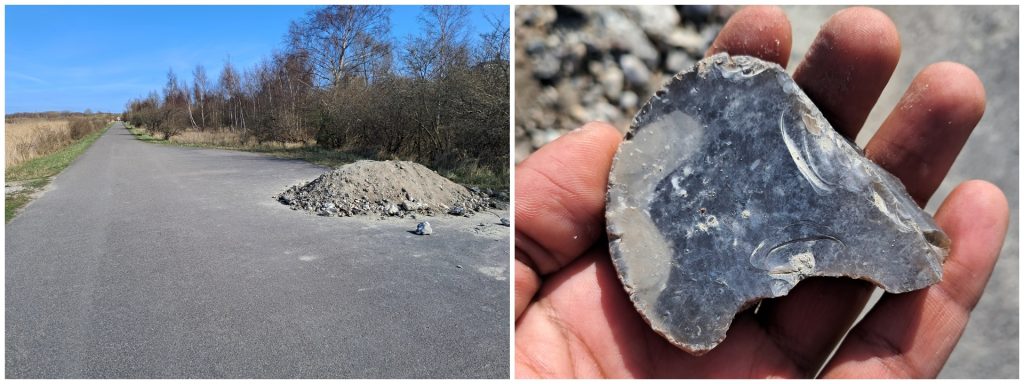
Københavnskalk has chert nodules (as seen in the picture) and layers in them originating from sponges that lived in these prehistoric waters.
So while Denmark has little original bedrock exposed, it has some. I will mention the island of Bornholm later as well, but I think this will do for now.
And so, the tour begins!
Let's go more or less backwards in time when visiting these sites.
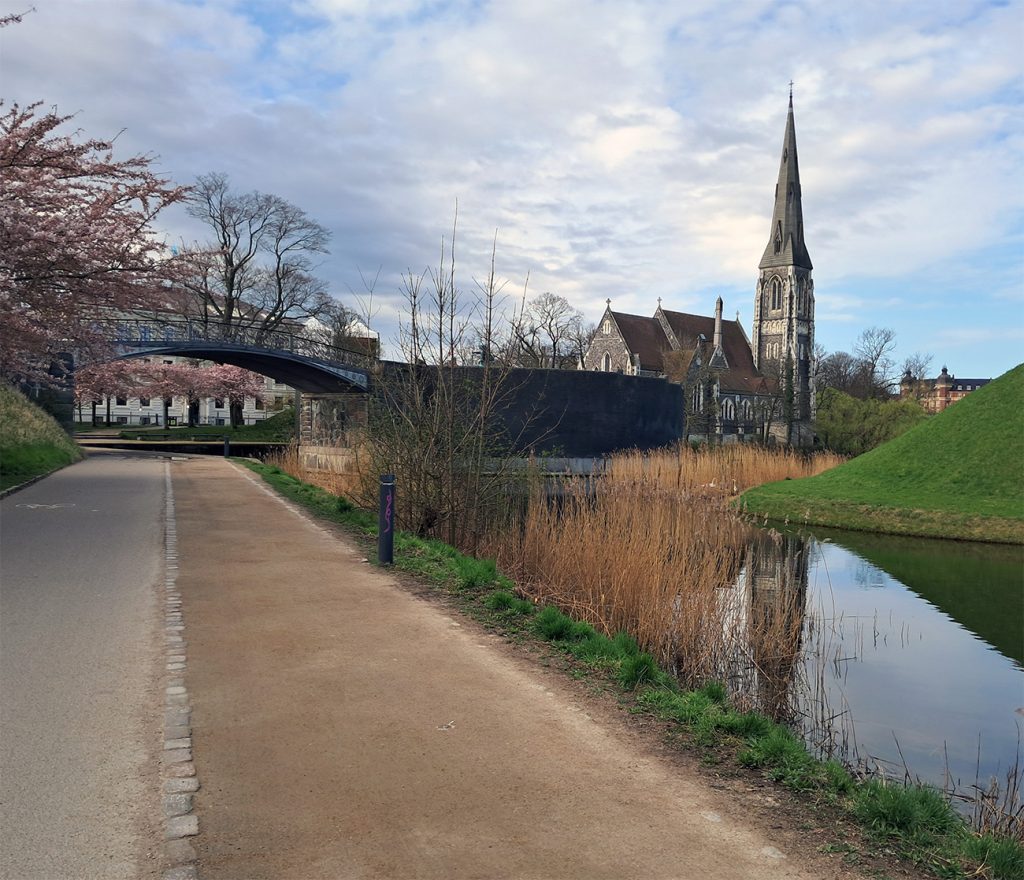
Stop 1: Palaeogene chalk at St. Alban's Church
Address: St Alban’s Anglican Church, Churchillparken 11, 1263 Copenhagen K
After living in Ireland for seven years, I find that the architecture of St Alban’s Church makes a lot more sense. The church was constructed in the late 19th century by the Church of England and rock material was derived from Faxe Kalkbrud and Stevns.
These rocks are primarily Cretaceous and Palaeogene chalks and limestones around 70-60 million year old from when sea levels were higher and much of Denmark was underwater (as mentioned in the introduction). Plenty of fossils of past life can be found in these rock layers including corals, crabs, shark teeth and sea urchins.
If you’re attentive you might spot of these fossils in the bricks.
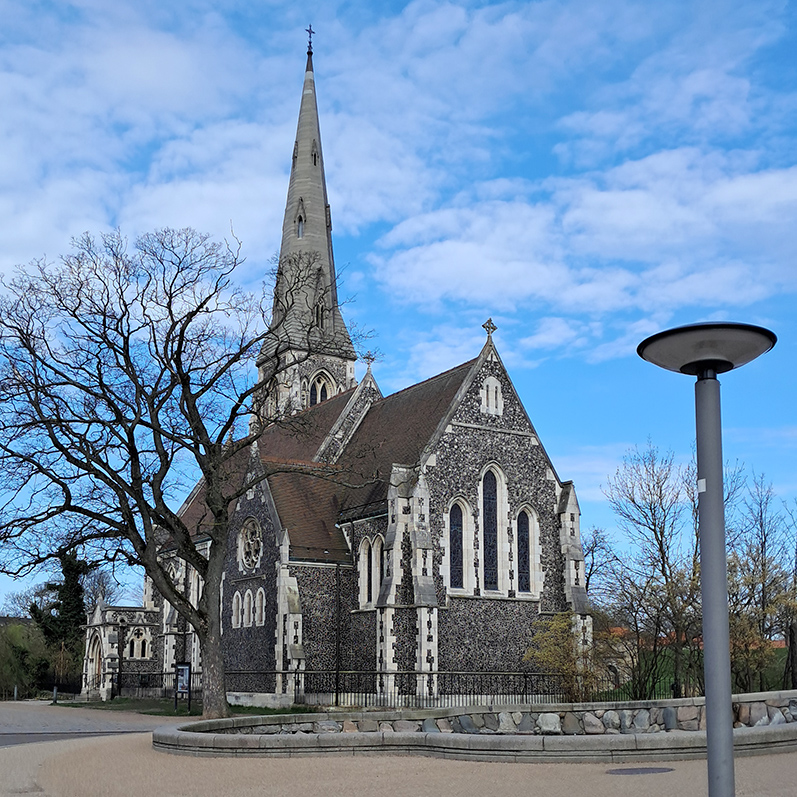
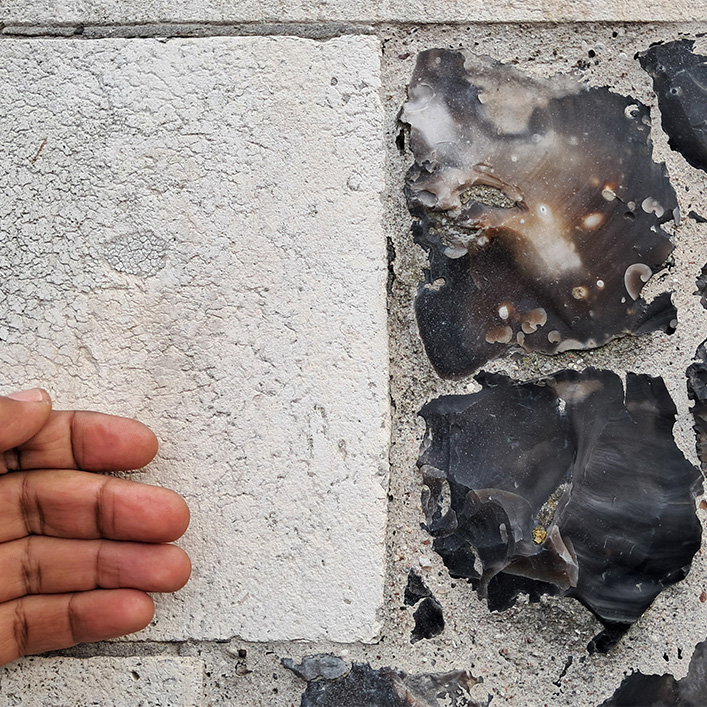
While these sorts of Anglican churches are mostly made of Carboniferous limestones in Ireland; this Danish counterpart is composed of the local bedrock in the surrounding Copenhagen areas giving the building this unique look and colour scheme. The darkness of the fractured chert stones plays perfectly with the brightness of the chalk bricks.
Stop 2: Milky Norwegian granites
Address: Here and there.
Moving further back in time and to something a bit more explosive, we have larvikite – a rock widely appreciated for its uses in decoration and construction. Even in use on many building facades as far away as in Ireland, it’s still being quarried from its original source in southern Norway.
It decorates many buildings in the city such as this shop at Købmagergade and Kronprinsensgade.
It decorates many buildings in the city such as this shop at Købmagergade and Kronprinsensgade.
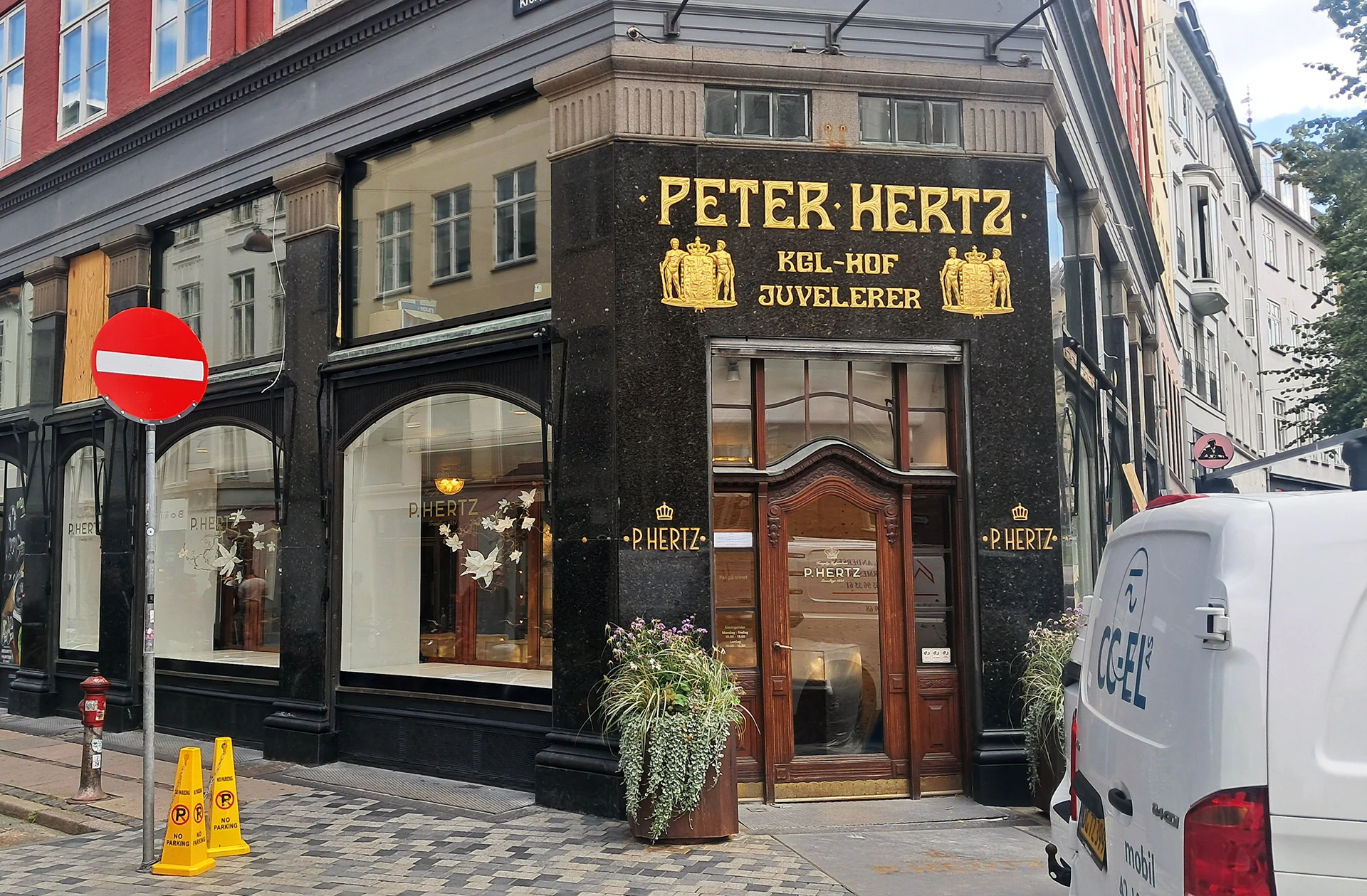
Unfortunately, this is another rock that people sometimes refer to as a marble. I want to stress: larvikite is far from a marble. The limestones and chalks mentioned throughout this guide are in fact the kinds of rocks that turn into marbles.
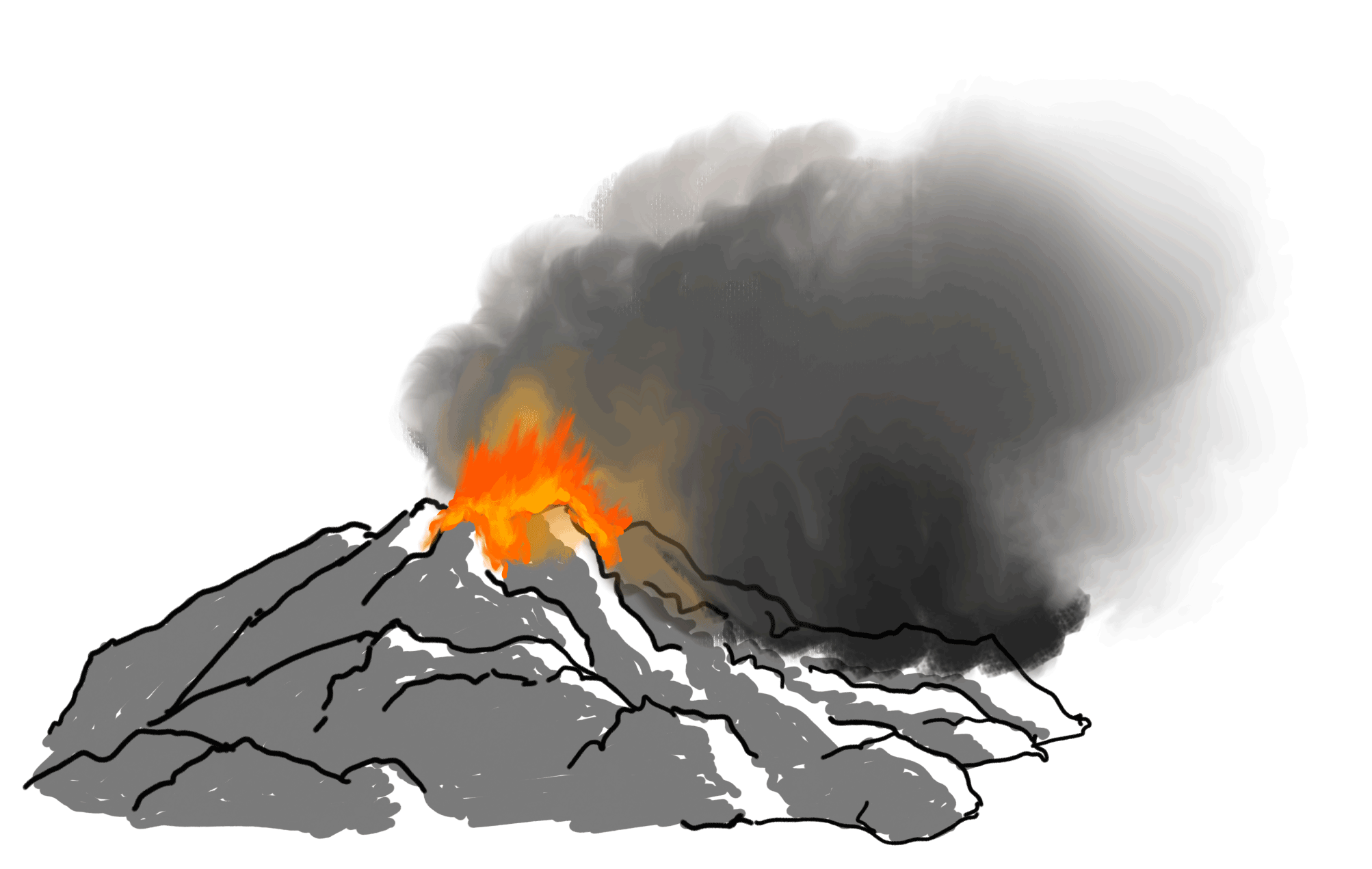
Larvikite is a type of granitic rock that makes up a good chunk of Osloriften or the Oslo Rift or Graben – an area where the Earth’s crust started pulling apart and volcanic rock rose through the crust. This happened about 290-300 million years during the end of the Permian Period.
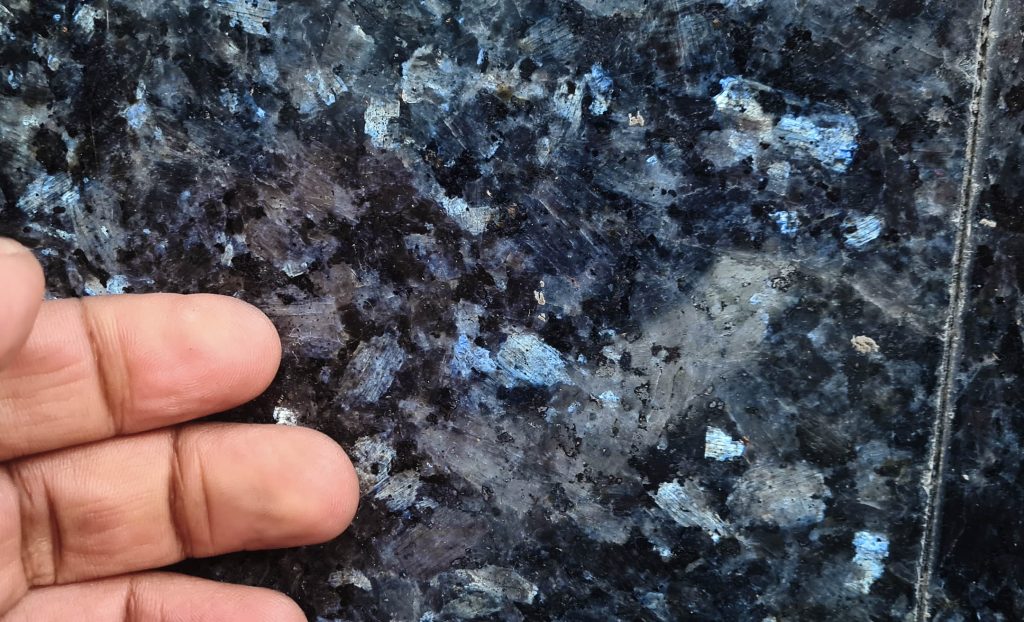
The rifting of the Oslo Graben took place over many events and millions of years. Naturally decorative volcanic rocks were created from this earth-shattering period, and these have been carried by glaciers and sea waters from Norway and Sweden on to many beaches all over Denmark. Search for “rombeporfyr” or “augitporfyr” to see what to look for if you’re planning to do a bit of coastal exploration.
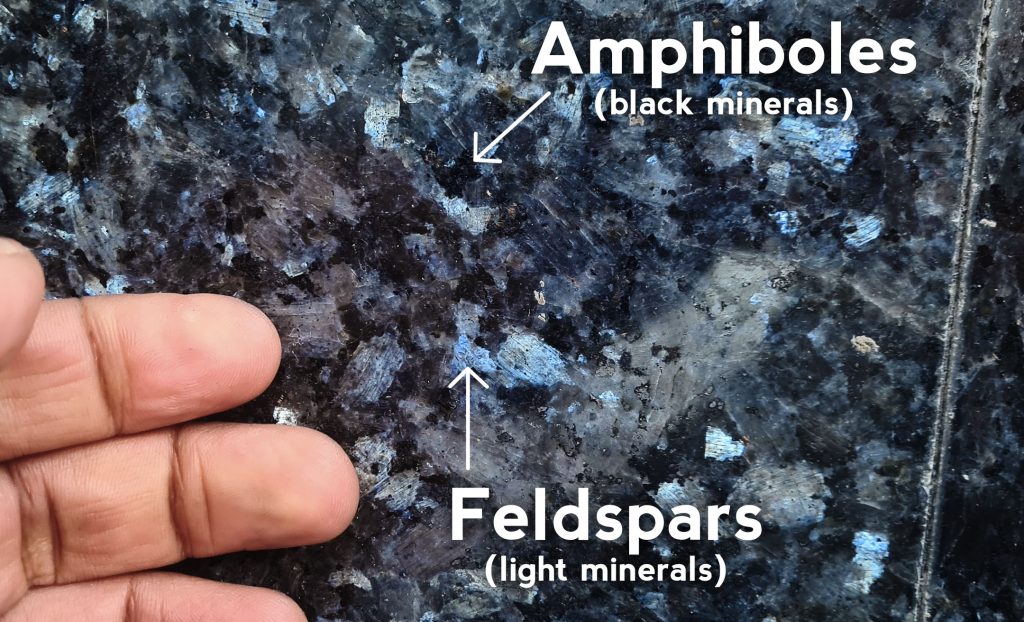
One last thing about Larvikite is its glistening and milky appearance. From certain angles and under various lighting scenarios, a display of white, blue, yellow and green may appear on the otherwise black rock. This effect is called labradorescence and is due to light interacting with microscopic structures in feldspar minerals in the rock. We will get back to the feldspars later!
Stop 3: Fool's Gold on Marmorkirken
Address: Frederiks Kirke (Marmorkirken), Frederiksgade 4, 1265 Copenhagen K
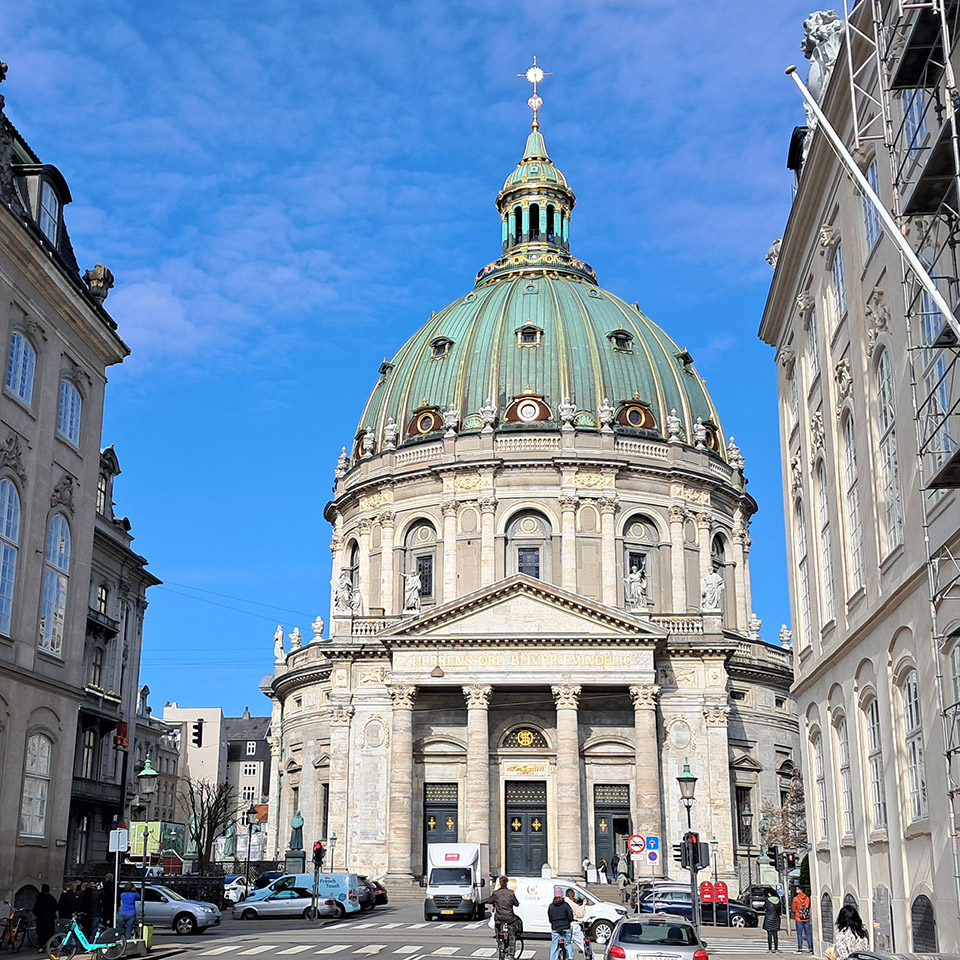
We’re far from done with Norwegian rocks in Copenhagen. Next up is Frederiks Kirke (Church of Frederik) or more commonly referred to as Marmorkirken or the Marble Church.
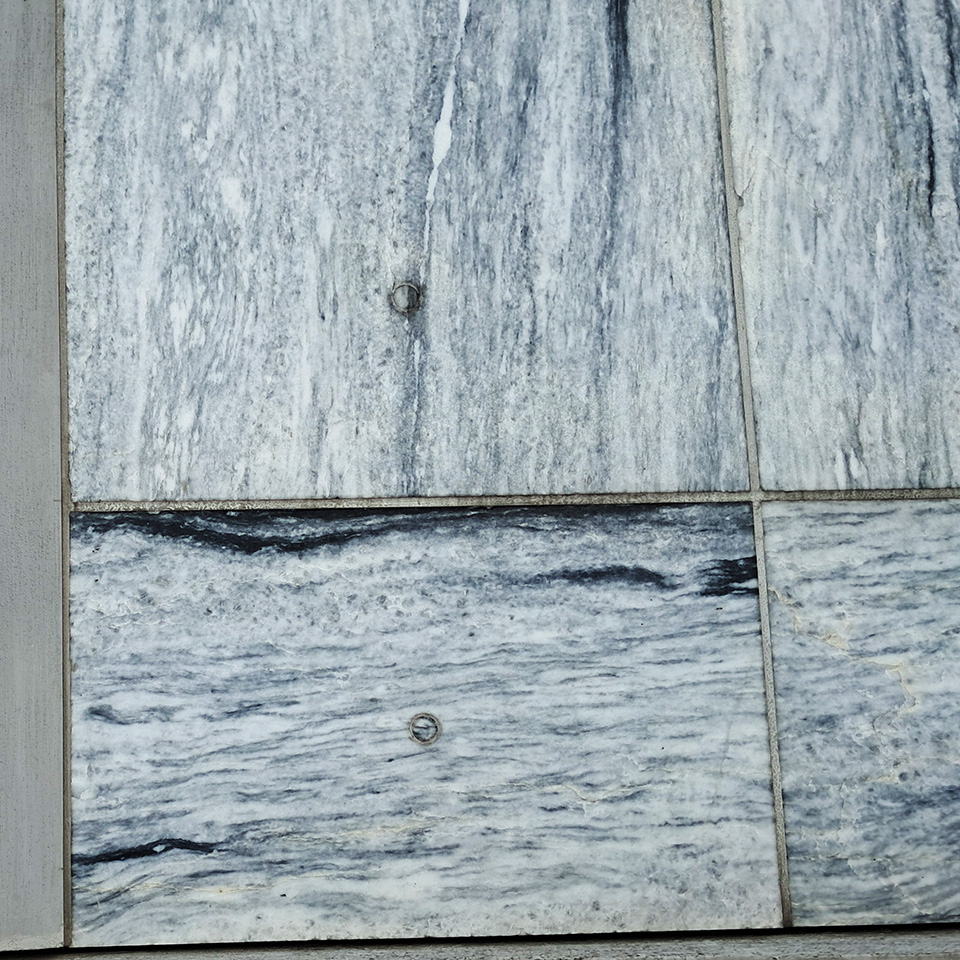
The church is quite a sight to come across and can be seen easily from many vantage points around the city. On its walls and pillars, you’ll have amble opportunity to study Gjellebekkmarmoren (the Gjellebekk marble) – another Norwegian limestone.
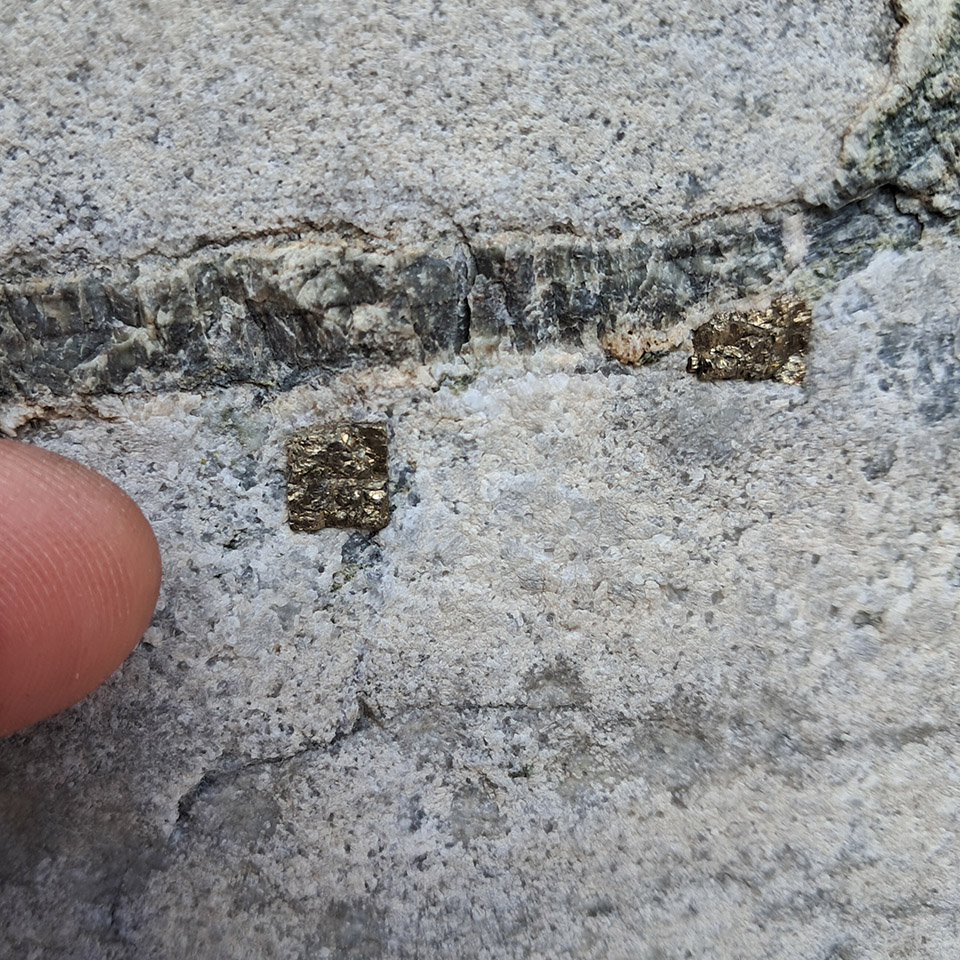
I find that each limestone in the city has something different to offer. Here on Marmorkirken you may spot small cubic crystals that formed inside the rock. These are pyrite minerals, also known as fool’s gold, and are common as secondary minerals in rocks like limestone.
An interesting thing about many of the Norwegian limestones we’ve seen on this tour is that they’re all close to the Oslo area where all the intense rifting happened giving rise to the larvikite. In this case, granitic magma referred to as Drammensgranitten (Drammen Granite) rose through the Earth’s crust in the Oslo Graben and heated the Gjellebekk limestone, altering the latter and turning it into a marble.
Unfortunately, the limestone/marble in use from Gjellebekk was not a great construction choice. While the rocks still make up the building inside and outside, they’re also easily eroded compared to other marbles and limestones. Thus use of it for construction ceased subsequently.
While the Gjellebekk limestone formed during the Silurian somewhere between 440 and 420 million years ago, it would as mentioned get “cooked” by the intruding magmas from the Oslo Rift over a hundred million years later, perhaps giving it its stripy appearance seen today.
Palaeogene chalk from Faxe Kalkbrud can also be found on the building.
Stop 4: Corals on the bank
NOTE that they're currently changing the limestone, so there might not be much to see!
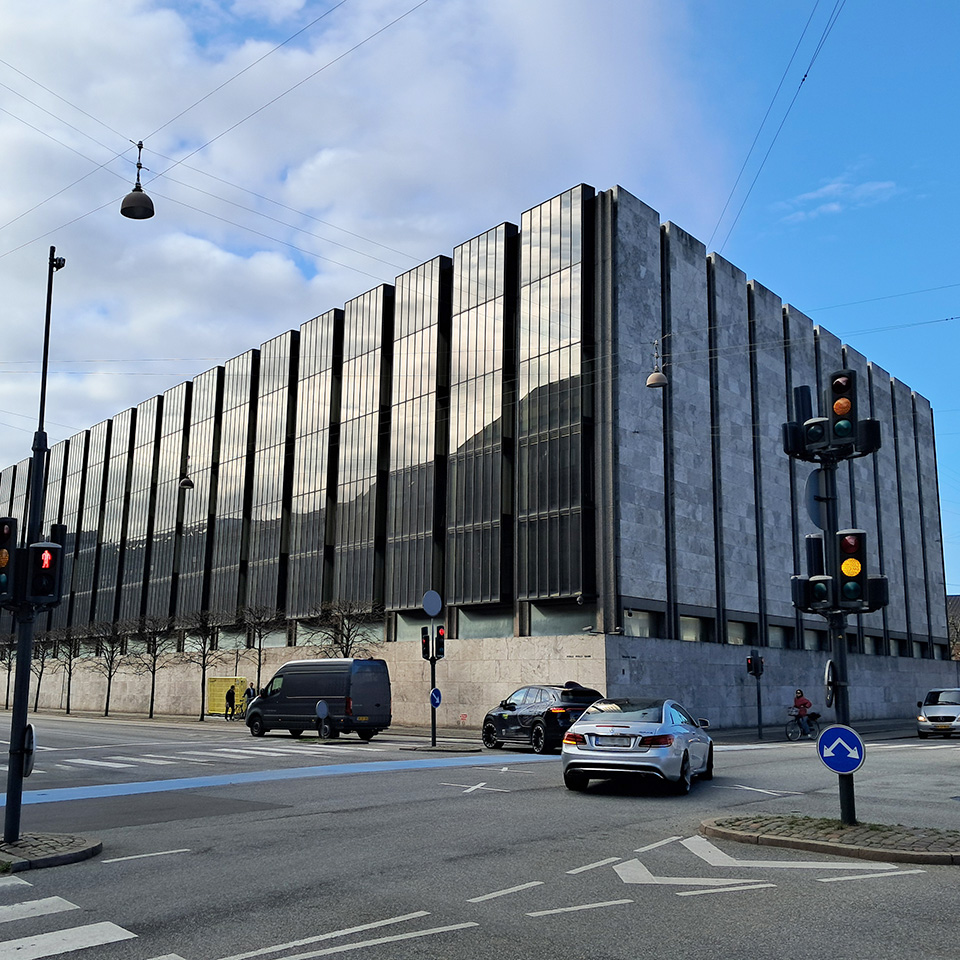
Address: Danmarks Nationalbank, Langelinie Allé 47, 2100 Copenhagen Ø
This one almost got me into a bit of trouble!
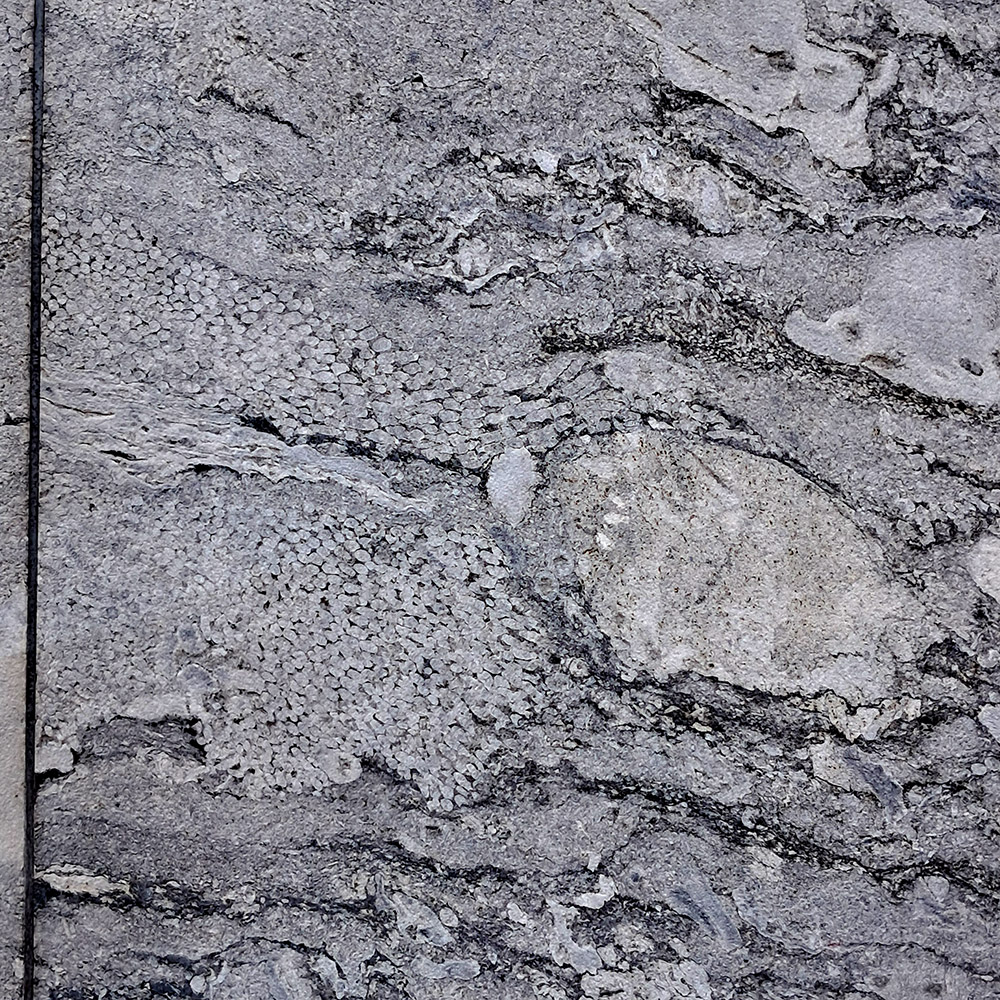
Even if you’re a non-Danish speaker, you may be able to surmise from the name that Nationalbanken is the central bank of Denmark. From afar it may look like it’s dressed with boring dirty concrete bricks. However, the material is not concrete, but instead Norwegian limestone. Getting up close to the walls of the bank, you’ll notice remarkable small structures embedded within the rocks.
These are fossils from a time where the Oslo area was under water and teeming with marine life. On the walls, you’ll see fossils of crinoids (informally known as sea lilies) and coral colonies. One article (provided in the references at the bottom) lists species names such as Halysites and Heliolites.
Like the Gjellebekk limestone, this limestone (Porsgrunnmarmor or Porsgrunn marble) is also Silurian in age and was further heated by the intruding magmas of the Oslo Rift – events hundreds of millions of years apart.
Though, security inside the bank have gotten a bit cross with me spending a long time with a loupe pressed up against the wall… sorry but not sorry!
Okay, we’re past the Norwegian limestones!
One thing to note and explain is my interchangeable use of limestone and marble.
Again, marbles are limestones that have been heated and altered. This process is called metamorphism and we thus call limestones sedimentary rocks, while marbles are their metamorphic counterparts. The structure and mineral composition of the limestones change almost completely, thus fossils shouldn’t be visible in marbles.
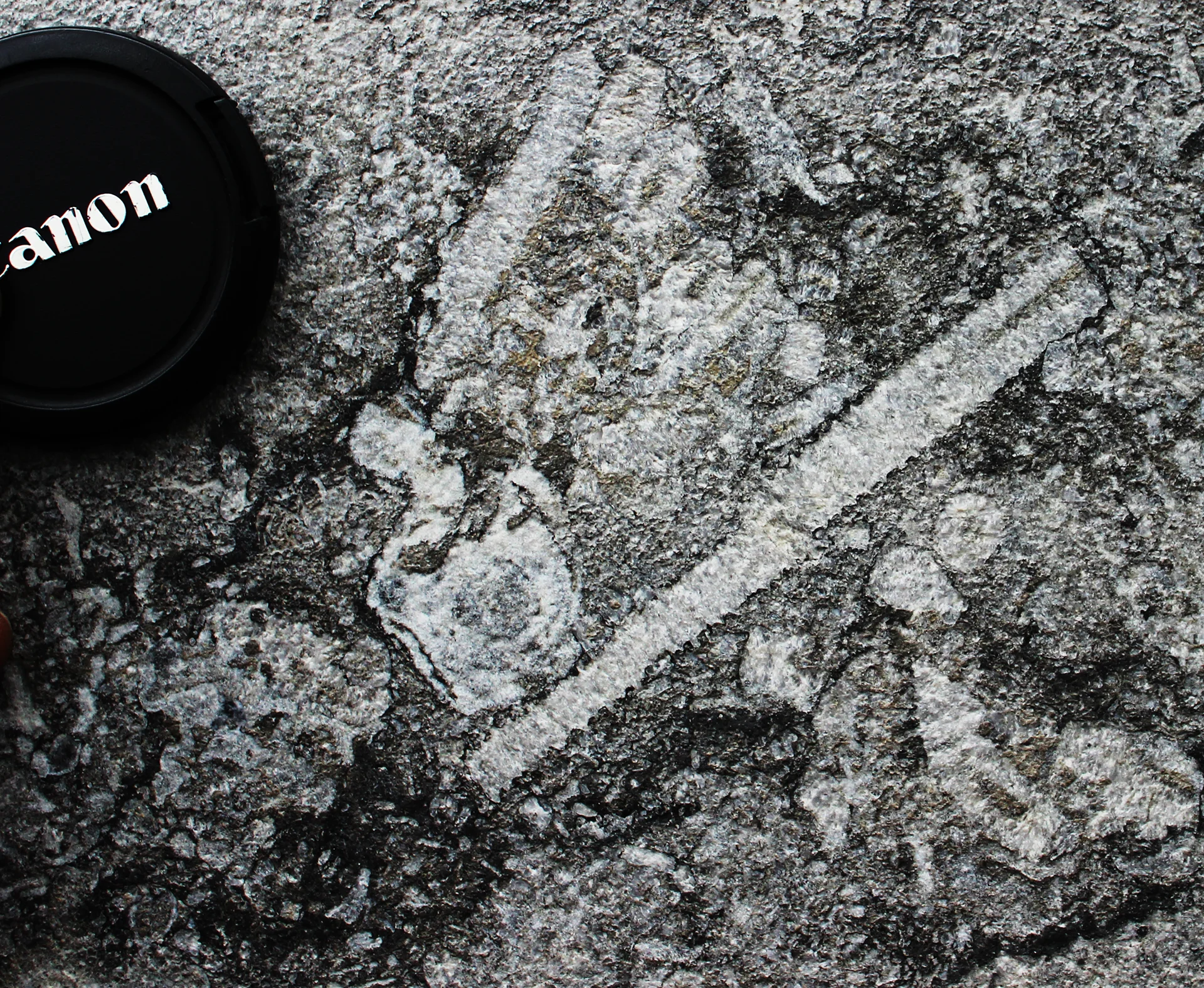
Crinoid fossils.
Porsgrunn marble is thus not a marble, and the moniker is a marketing ploy, not a scientific tag. But the threshold between a limestone and marble is not clear-cut, and thus some sources may conflict.
Anyhow, on to Swedish limestones!

A crinoid.
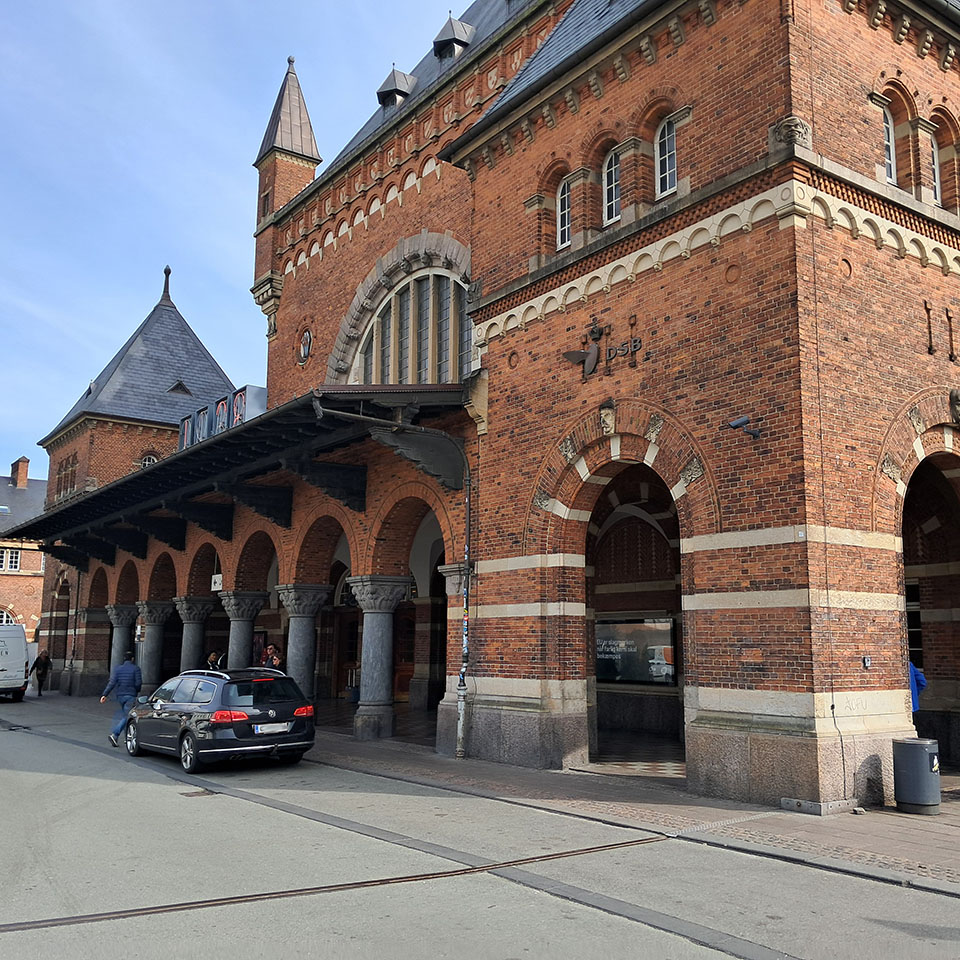
Stop 5: Cephalopods at the train station
Address: Banegårdspladsen 9, 1570 Copenhagen V
A 15-20 kilometres swim1 or an equal distance’s train or car ride from Copenhagen, and you’re in Sweden. Many of the rocks in Copenhagen are geologically Swedish, and we will cover a few here.
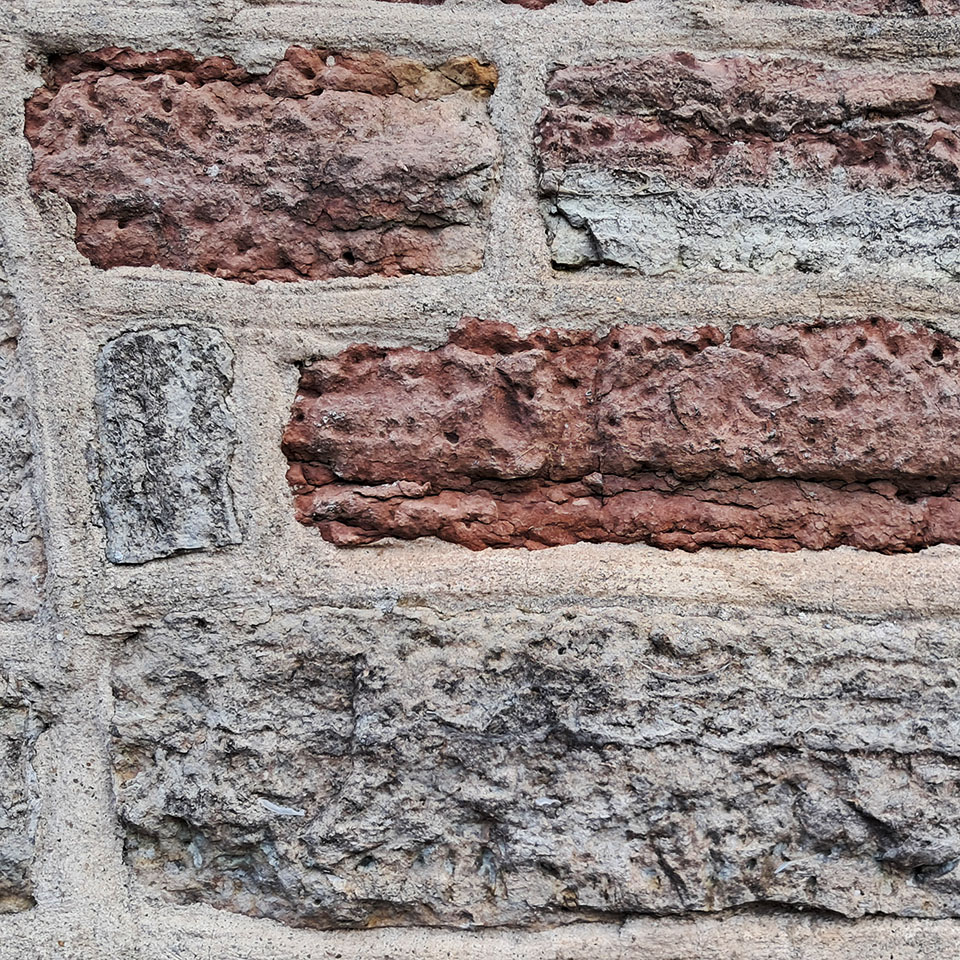
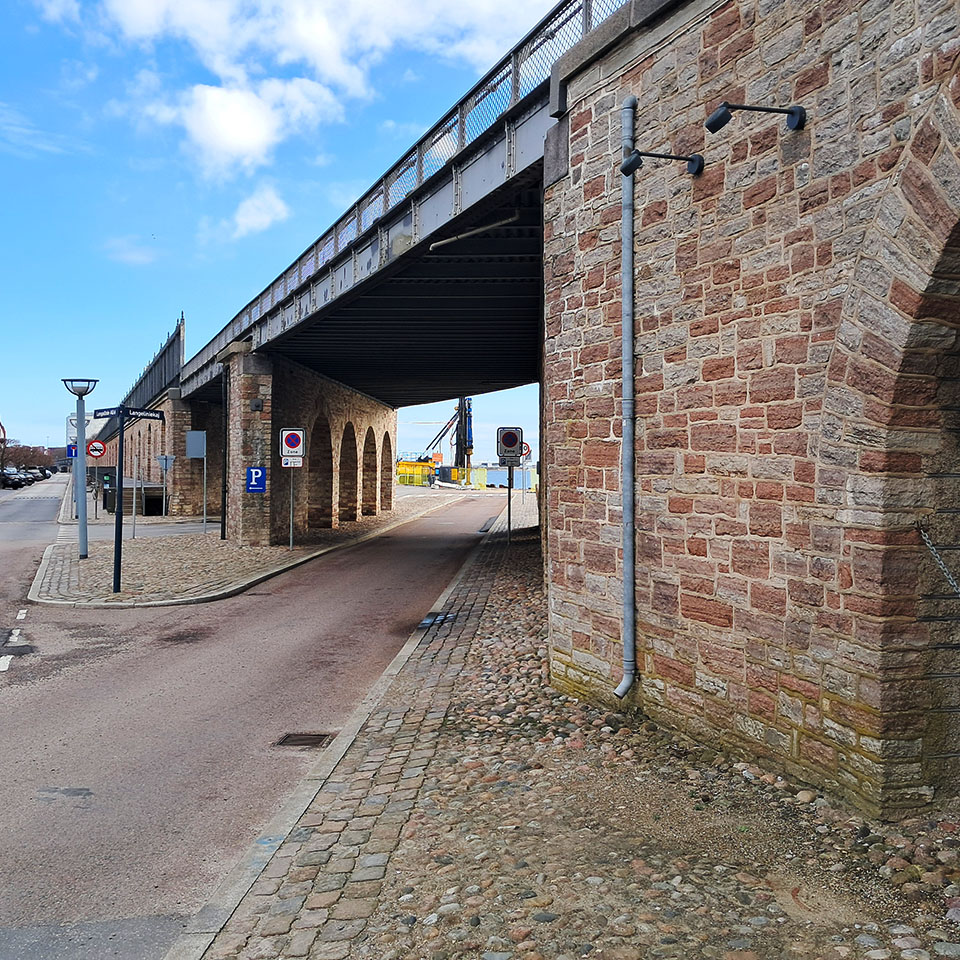
Looking at certain tiles around the Central Station or getting close to the walls of Danske Bank Finanscenter (opposite the other money building Nationalbanken), you’ll notice cone-shaped structures in the red and pale rocks here.
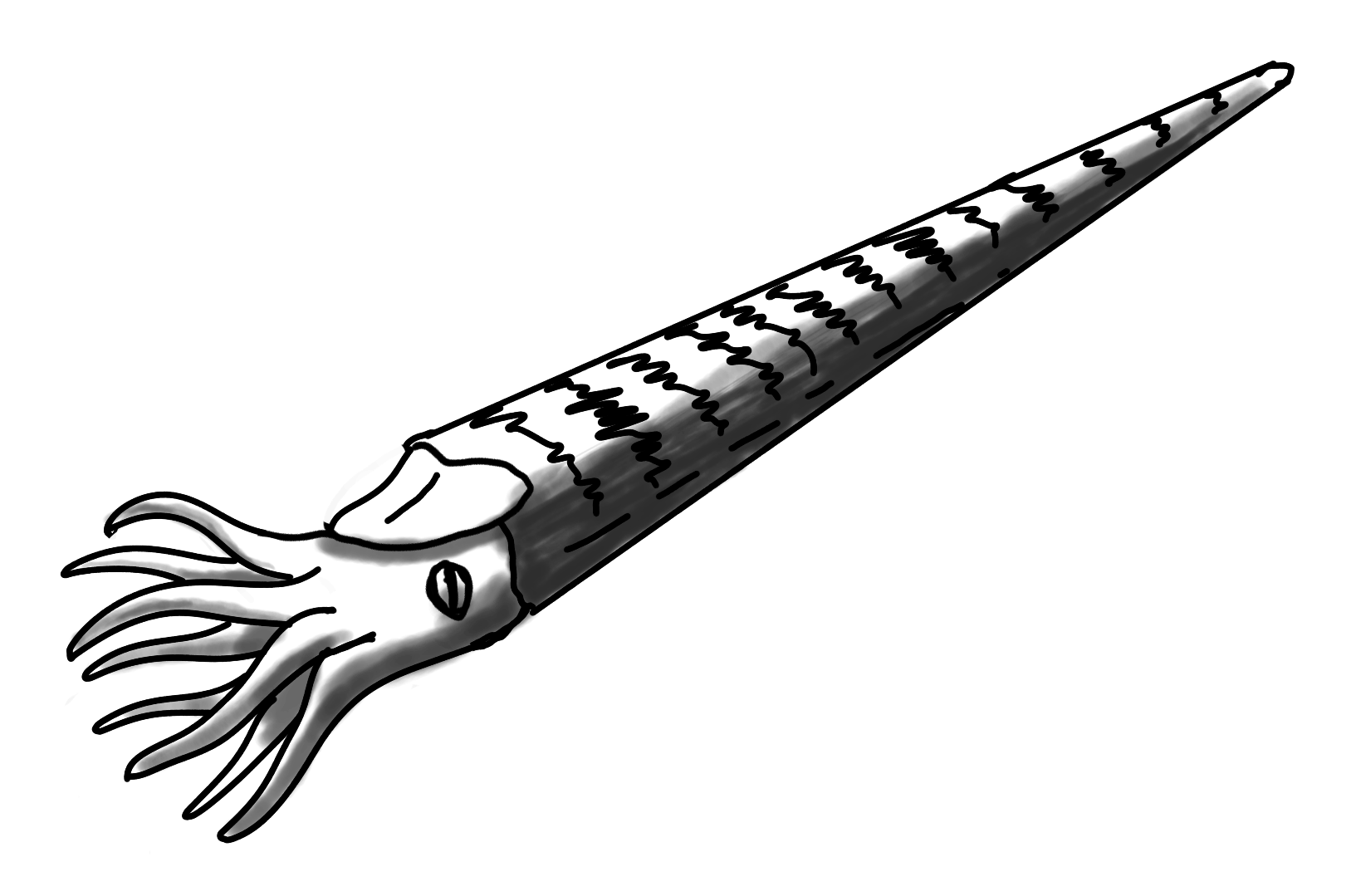
These cones are orthocone fossils: mineralised leftovers from hard parts, primarily the shells, on animals that lived during the Ordovician Period at somewhere between 490 and 450 million years ago.
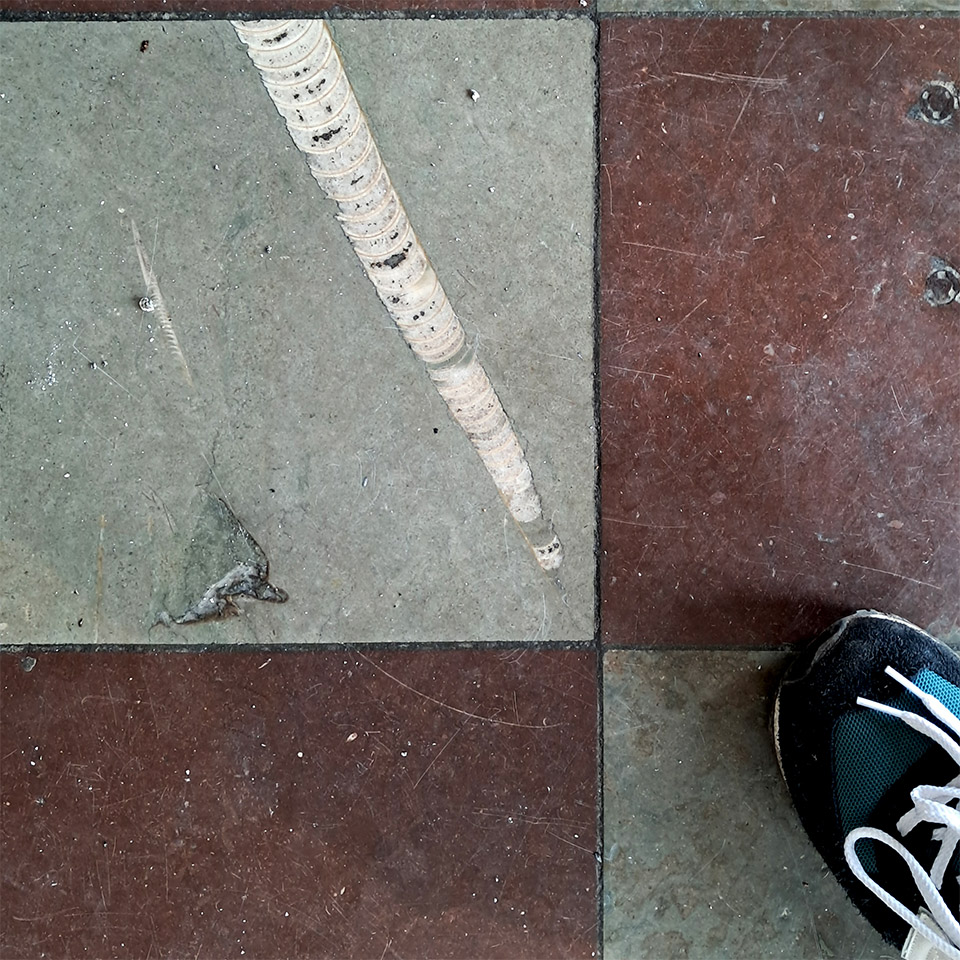
Address: Langeliniekaj 9, 2100 Copenhagen Ø
These can also be found on walls near the Little Mermaid. ‘Orthoceratite’ is a tentative name given to a range of cone-shaped cephalopods (animals that include squids and octopuses). While this animal’s genus is Orthoceras, many different cone-shaped cephalopod fossils are often referred to as orthoceratite. In fact, cephalopods had incredible diversity in shell shapes back then. While we today only have two species of cephalopods that live in shells, back in the Ordovician there were dozens.
Stop 6: Nexø's ancient sands and rivers
Address: Reventlowsgade 10, 1651 København V
Could you envision a time without complex life on land? No plants, no animals and no fungi. Deserts, mountains, rivers and lakes – all lacking greens and soils. There was life on Earth however, as all the shenanigans were merely taking place in the seas and oceans. Maybe some unseen bacterial life on land or algae led astray?
But before we slip further into this fantasy, you must know of the Danish island of Bornholm.
While human beings have decided only since the 16th century that Bornholm belongs to Denmark, it is about 140 km from mainland2 Denmark and only 35 km off the coast from southern Sweden. It also shares many of the same rock units as can be found in Sweden, and none of the ones found exposed in Denmark.
And as Denmark is lucky to claim Bornholm as their own, there is a such a thing as Danish non-bird dinosaur fossils. On Bornholm there are remarkably well-preserved sediments from the Jurassic and Cretaceous periods in which dinosaur footprints and fossilised remains have been found.
Mad, I know, but that’s a story for another time. However, Bornholm is a beautiful visit if you’ve time, money and energy for it.
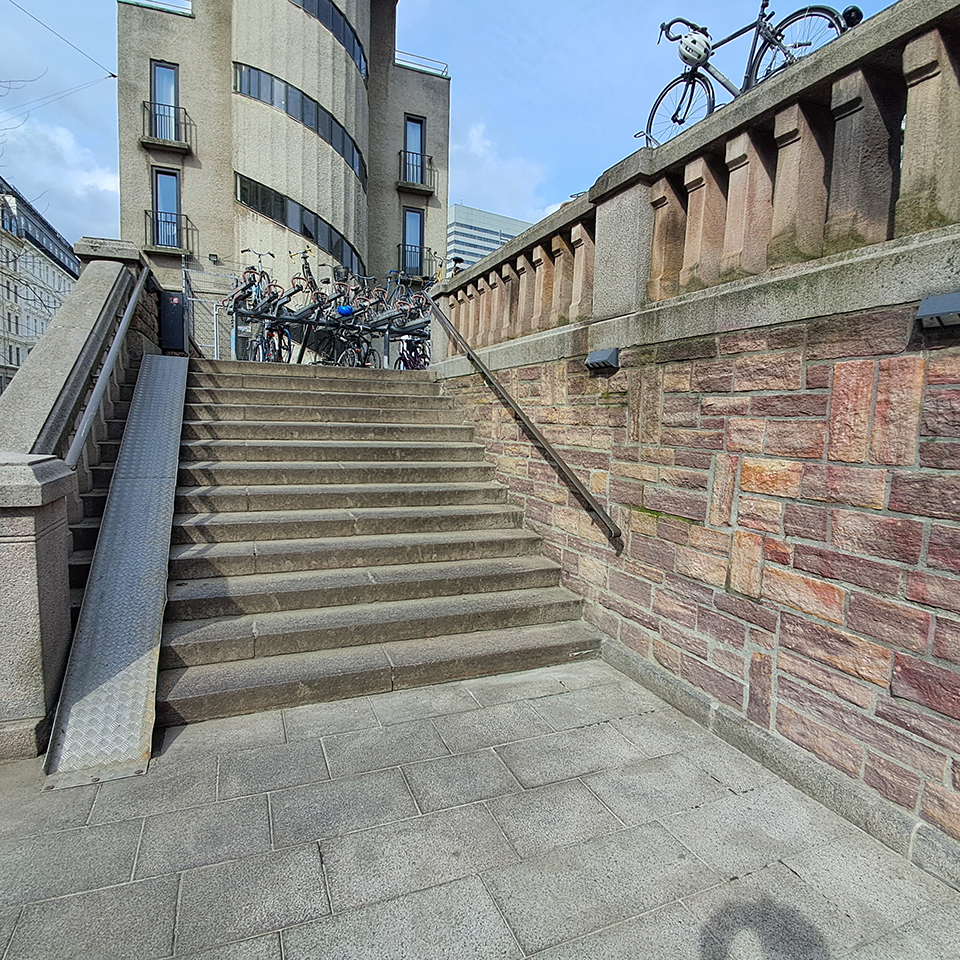
I am bringing Bornholm up as this is where many building rocks in Copenhagen come from, including Nexø sandsten (Nexø sandstone). It can be found at some of the walls at the Central Station (Hovedbanegården) and as part of Frihedsstøtten.
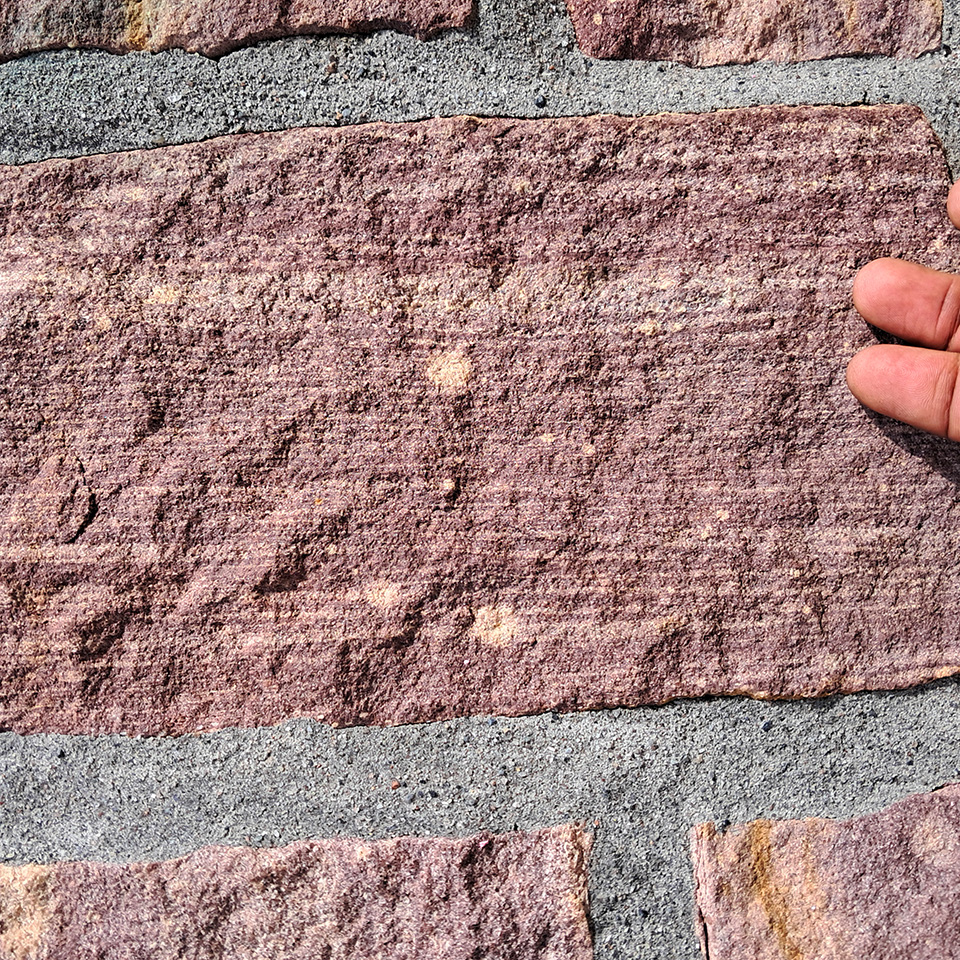
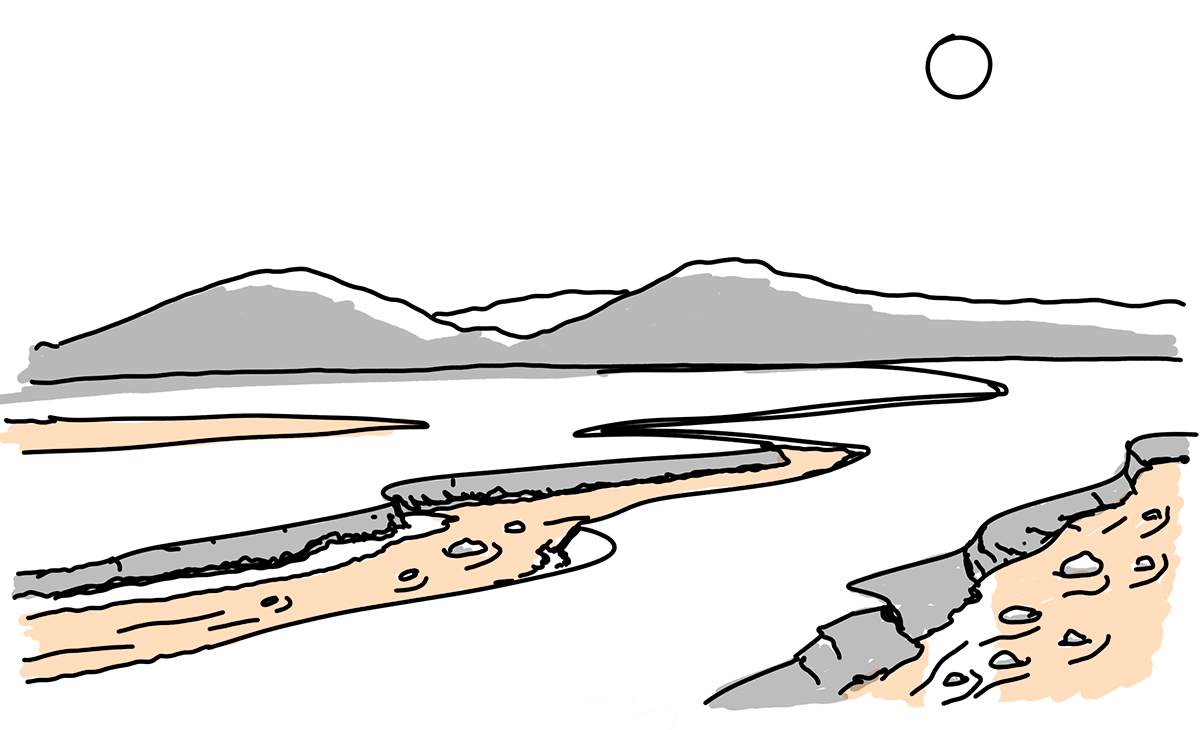
This sandstone came from a continental desert landscape with numerous river systems. Its environmental origins are seen markedly in the Nexø sandstone as sedimentary flow structures and changing grain sizes in the sediments. But there was no life in this dry landscape, and so these rocks are completely devoid of fossils. Not even spores or pollen can be derived from them as plants didn’t exist when the sediments in the rocks were initially laid.
Nexø sandstone is a staggering 520 to 540 million years old dating back the Cambrian period. The oldest sedimentary rock in Denmark. But the journey isn’t over yet.
Stop 7: Granites of Denmark
Address: Everywhere!
As I said, Bornholm can be referred to as geologically Swedish, but let’s abide by politics and look at the Danish granites of Bornholm in any case.
The granites here are some of the oldest rocks on this tour with some yielding ages of 1.4 billion years! Back then these were molten rocks aka magma in our crust that crystallised slowly as they cooled.
Based on their mineral compositions and relative placements, these rock units have been given different names: The Svaneke granite is coarser in its grain sizes and looks more red with its larger feldspar minerals.
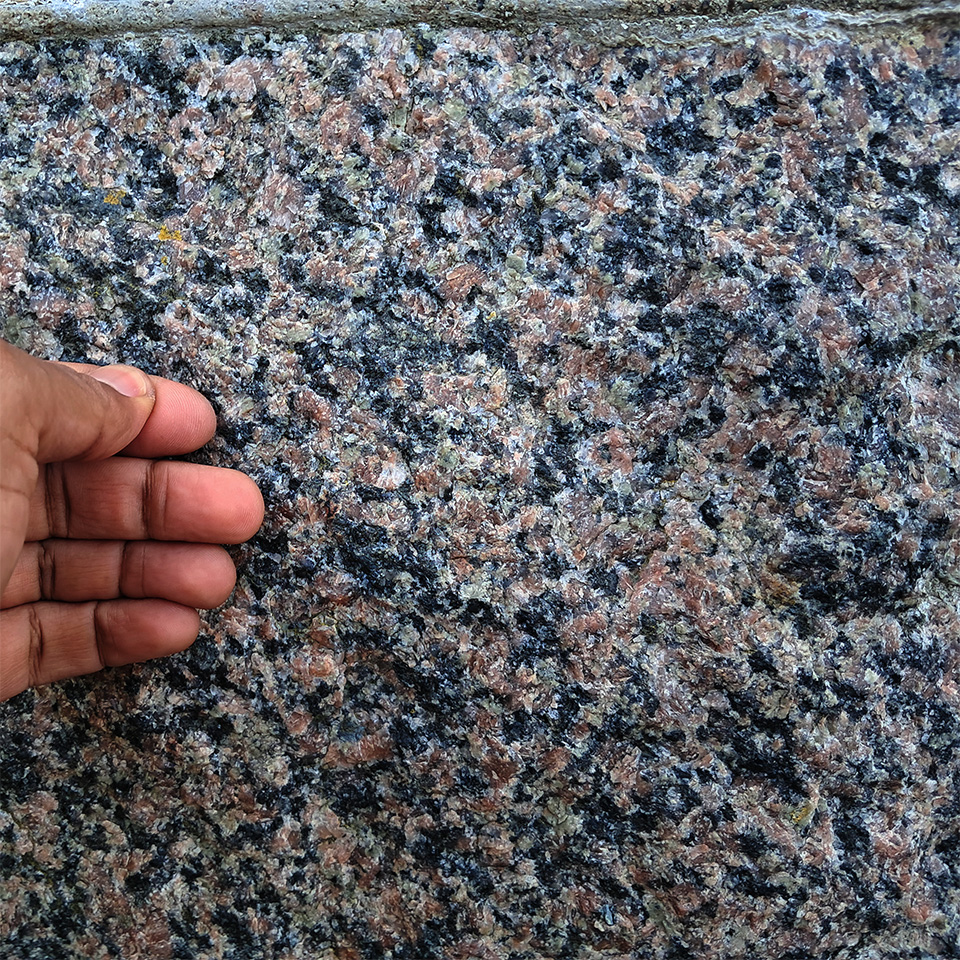
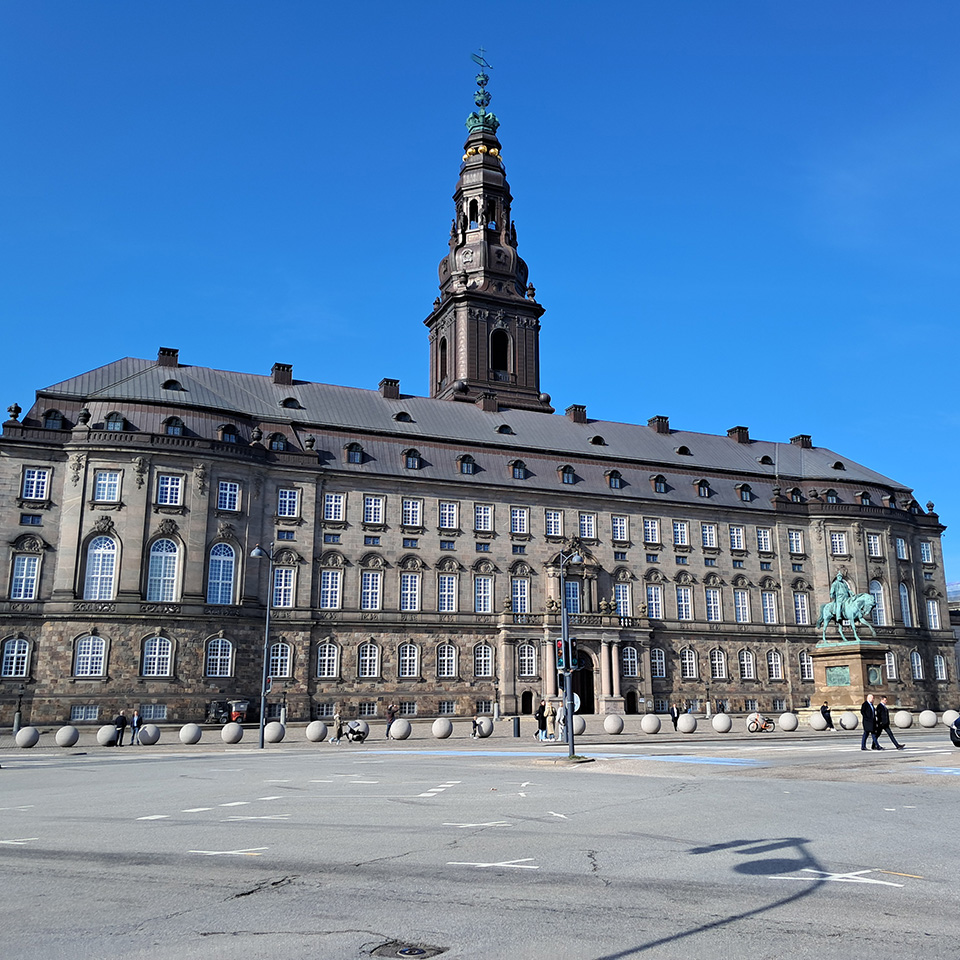
Opposite to that visually is the Rønne granite that has overall smaller mineral grain sizes and is more grey in colour.
The Vang granite has a denser concentrations of dark minerals (amphiboles) and thus looks darker.
And finally, we have migmatite which is a granite that was mixed with a gneiss – a rock that forms under incredibly high pressures and temperatures. Perhaps the granite was melting from the gneiss? Who knows.
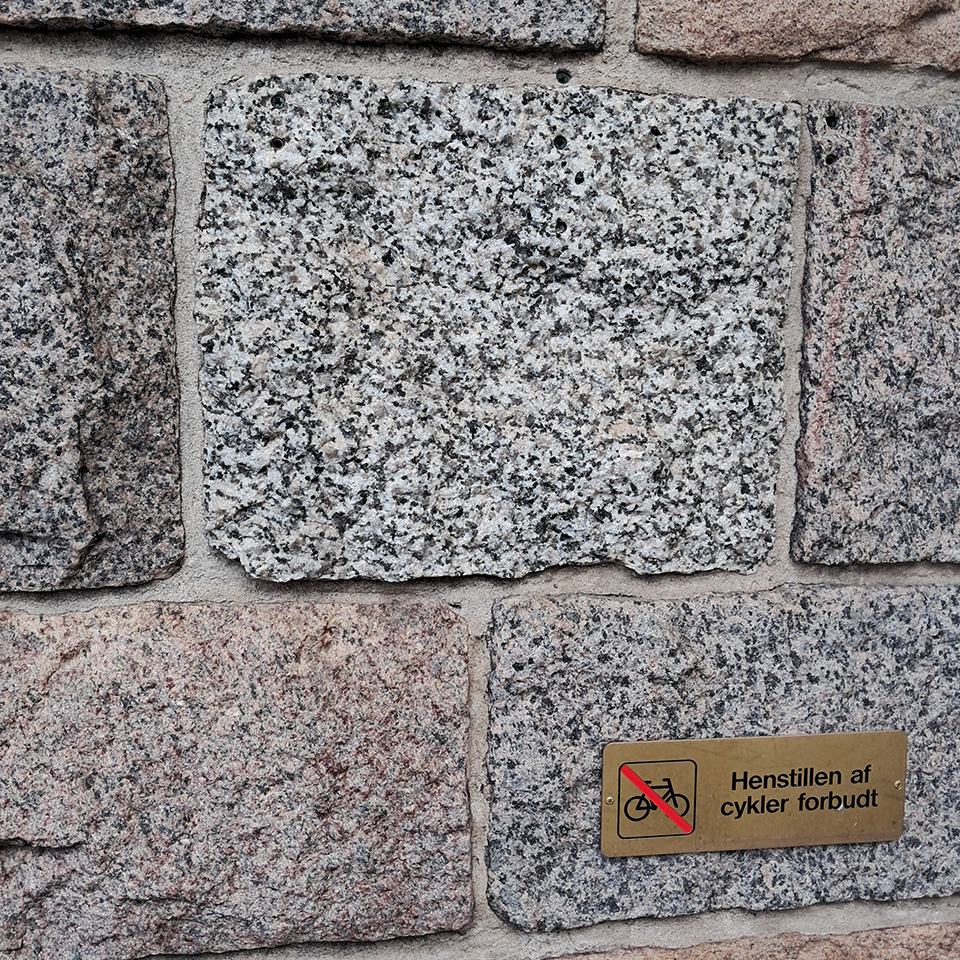
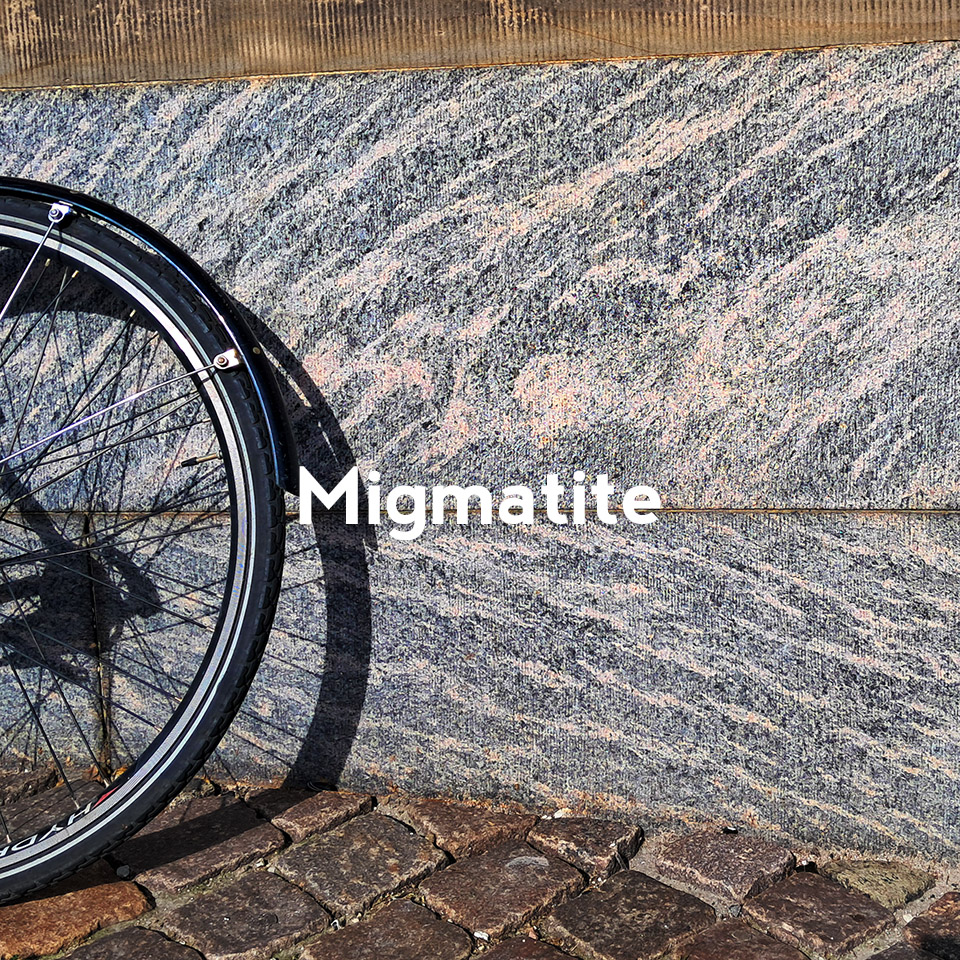
These granites are ALL OVER THE PLACE in Copenhagen. They make up the sidewalks, buildings and walls at every corner.
But some key and clear places to look at them includes:
– Danske Bank Finanscenter.
– Christiansborg.
– Forsvarsministeriet.
Note that I’m not condoning these buildings and their functions by mentioning them. They just happen to have great examples of these granites.
Stop 8: Oldest building material in Copenhagen?
Address: Holmens Kanal 20, 1060 København K
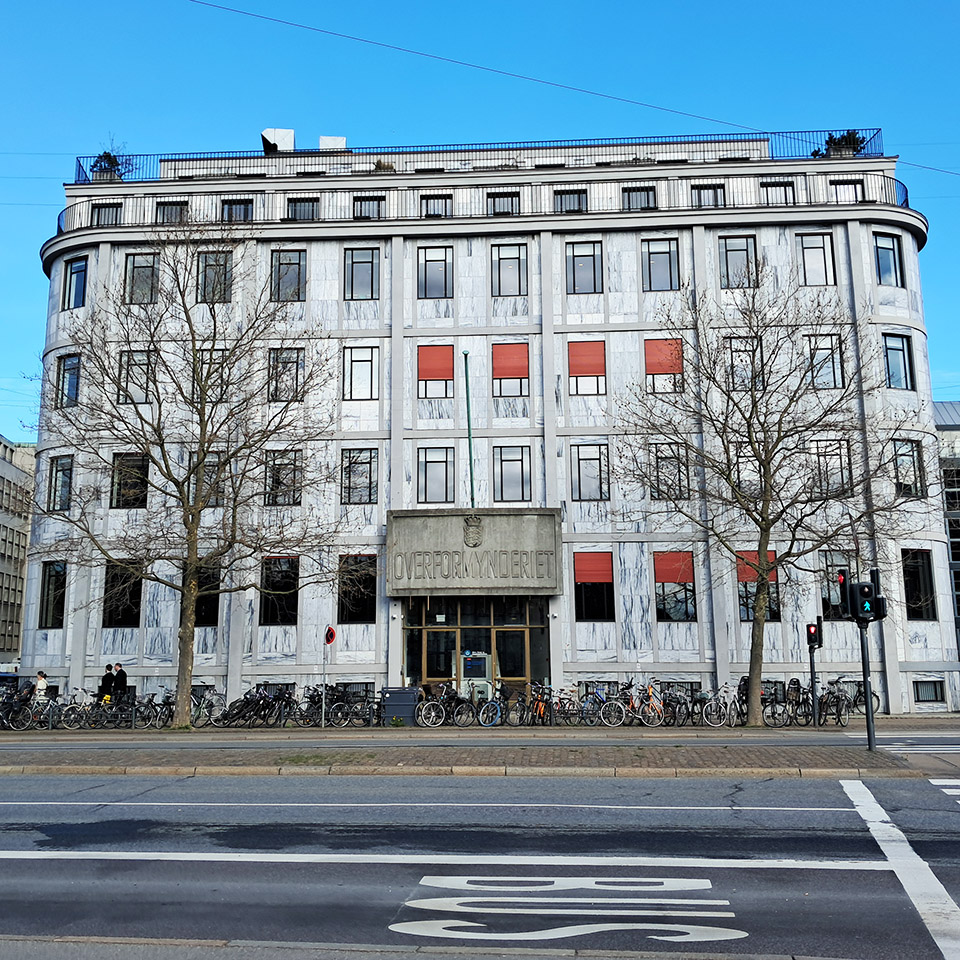
Overformynderiet is quite a name, and I don’t know how to translate it properly. That’s also irrelevant – we’re here for its rock facade!
This building is decorated with true marble, all the way from Maarmorilik in Greenland. And we end our rock guide with this as it’s much older than the other rocks here – about 2 billion years old. Nearly four times the age of the Nexø sandstone!
In contemporary times, the quarry of Maarmorilik-marble is now closed, but mining of zink and lead is seemingly still active today in the Maarmorilik-area.
That's it!
There’s some other buildings with rock material not mentioned, but I might update this in the future. Feel free to reach out if you did the tour and want to bring feedback, criticism or knowledge.
Suffice to say, we also covered all three rock types:
Sedimentary: Sandstones, chalk and limestones.
Igneous: Granite.
Metamorphic: Marble and gneiss.
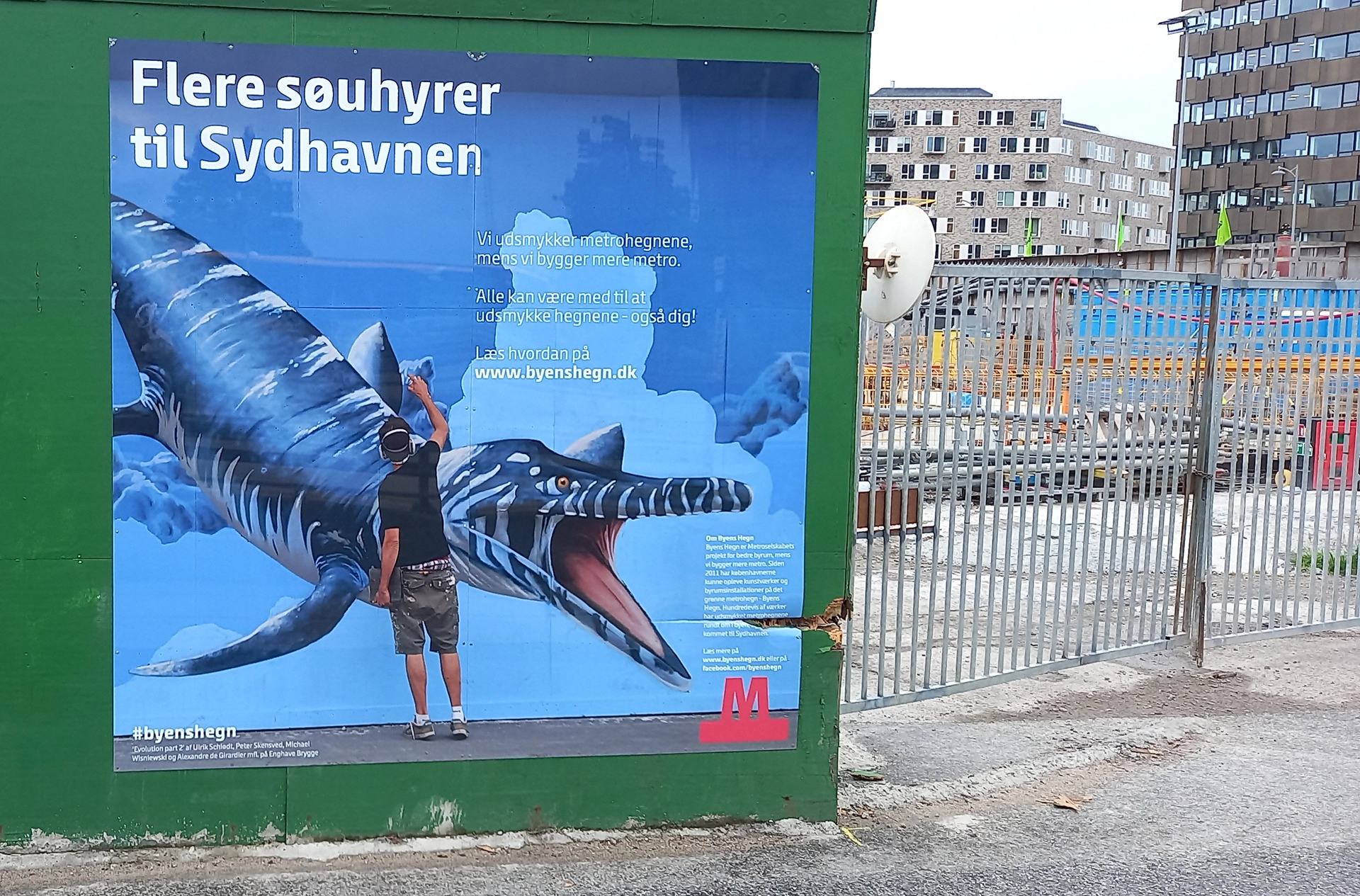
Geology art in Copenhagen promoted on barriers around the construction of metro stations. The animal depicted is likely a mosasaur – reflecting Eastern Denmark’s Late Cretaceous exposures.
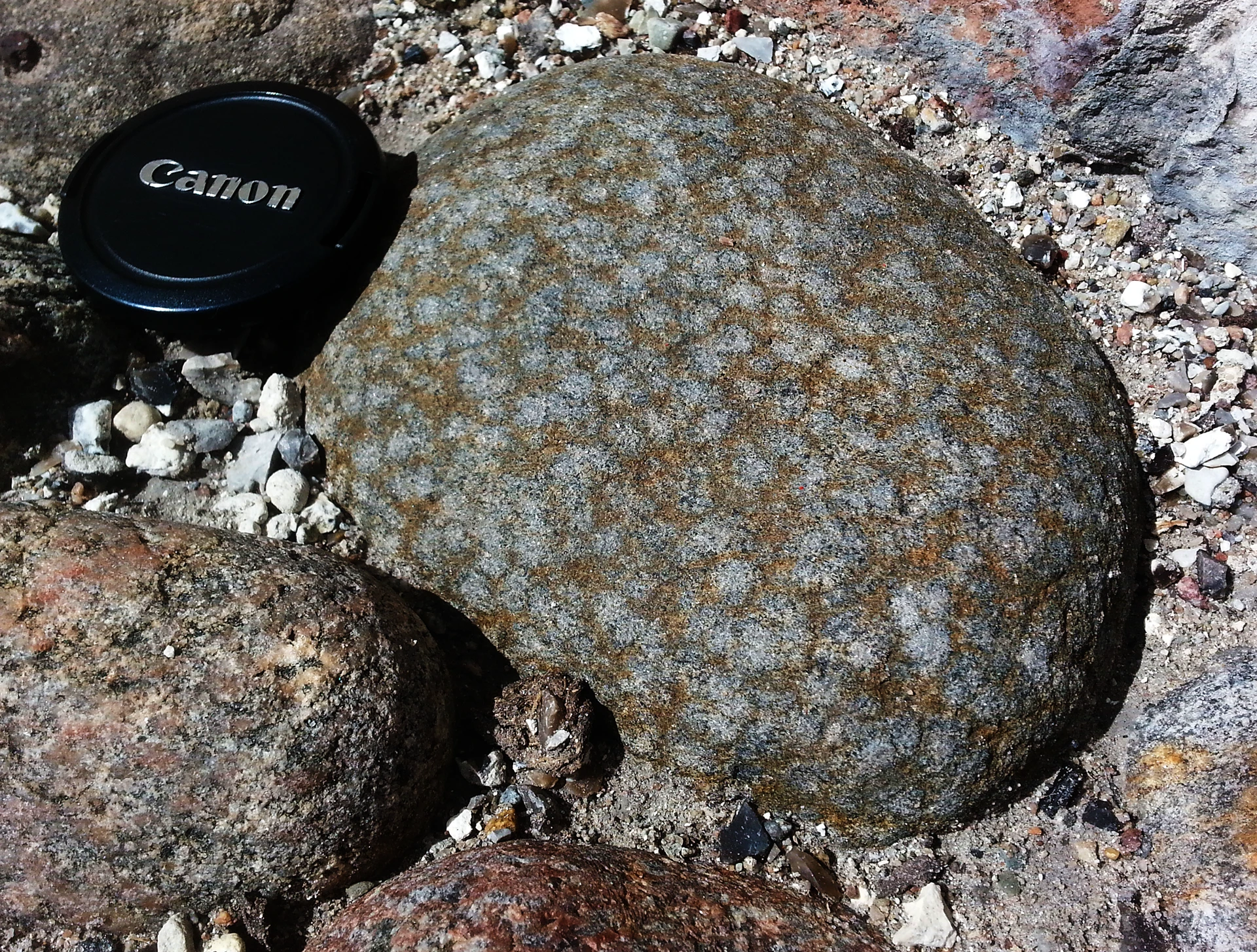
This iconic spotted rock can be found in different places substituting the granite as a pavement brick. It also has volcanic origins, but is from southwestern Sweden. The rock is referred to as Kinnediabas (Kinne dolerite) and is solidifed basaltic magma that rose through the crust around at the same time as the Larvikite from Stop 2 was formed.
The brighter parts are made of the mineral plagioclase, while the dark green minerals are olivine. The occassional redness comes from iron in the olivine rusting away.
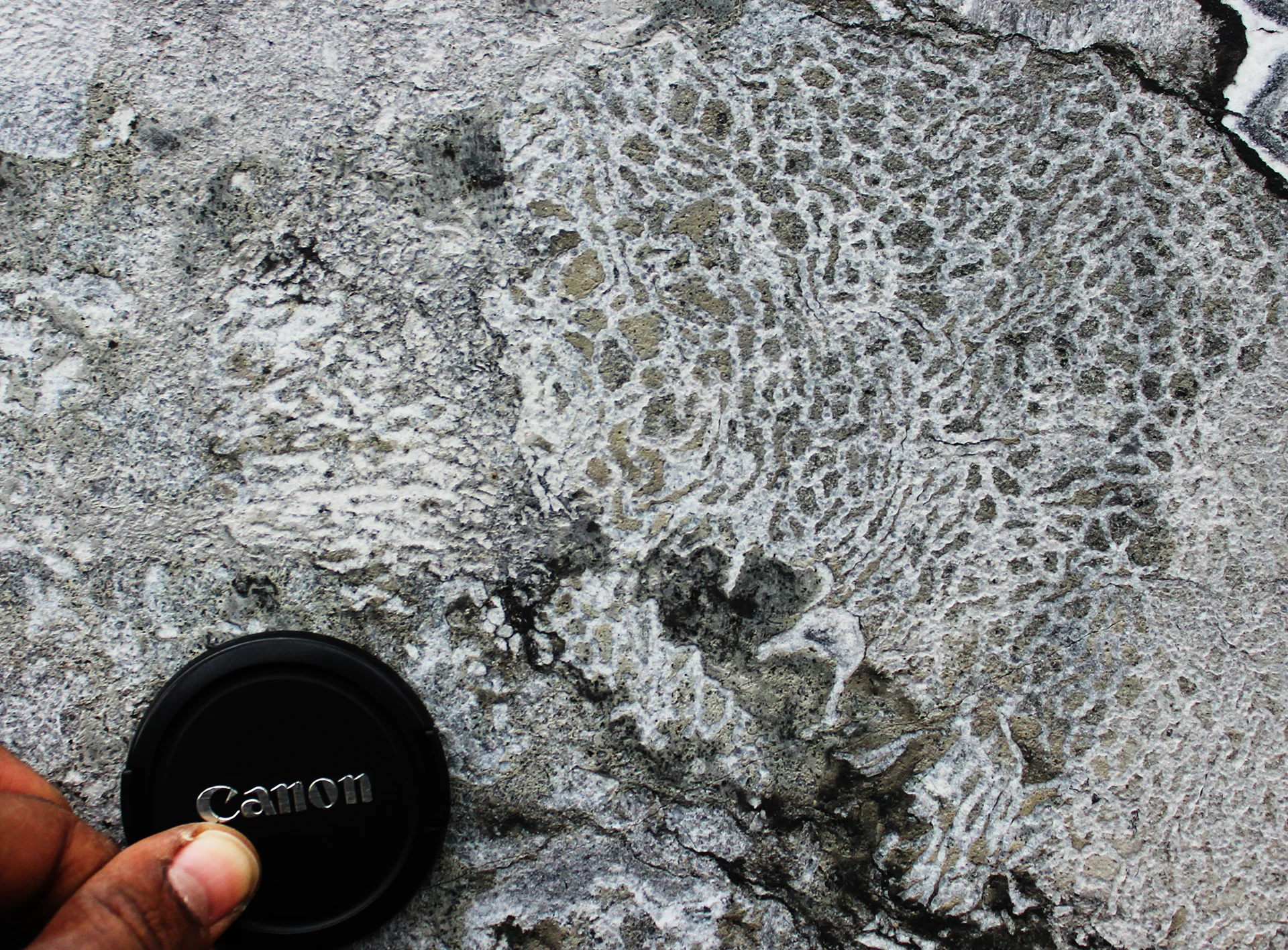
Halysites-corals from stop 4. A type of coral that formed chains of colonies back in the Silurian.
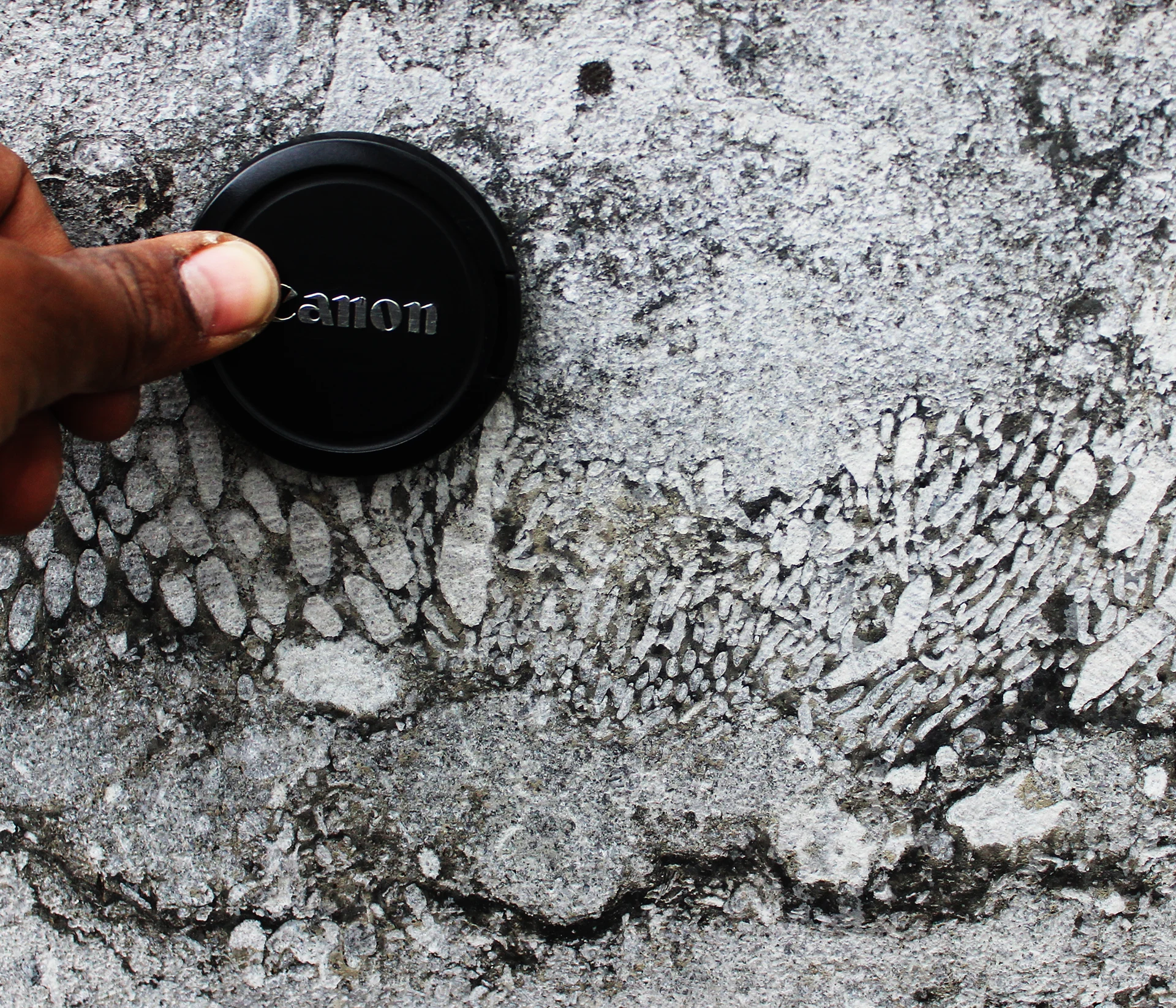
Rugose corals from stop 4. A type of coral that formed branches inside which the animals lived.
No AI was used to create this resource – everything has been carefully compiled, photographed, illustrated and written by me. Therefore if there’s any errors or instances of misinformation, do reach out via motion@thomasheising.ie.
Also if you want to leave a tip, you can do so via PayPal below. Whatever I get from you will be used for website costs and lunch at local businesses, so thanks a lot!
Now enjoy!
Footnotes:
1: Please don’t attempt to swim between the two countries.
2: Controversial, yes, mainland Denmark includes here the island of Sjælland which is where Copenhagen is and has almost half the population. But physically, it’s a Danish island off mainland Denmark (Jylland/Jutland)
References:
Geology of Denmark:
- Geologi og hydrogeologi, Miljøstyrelsen
- Den geologiske udvikling i Danmark – Naturen i Danmark – Lex
- Historien om Geomuseum Faxe – Østsjællands Museer
Stop 1:
- The History of St Albans Church – St Alban’s Church
- St. Alban English Church – Indre by – Alt om København
Stop 2:
- Petersen, J.S., 1978. Structure of the larvikite-lardalite complex, Oslo-region, Norway, and its evolution. Geol Rundsch. Vol. 67, p. 330–342. doi: 10.1007/BF01803271
- The larvikite plutonic rocks of the Oslo Rift – IUGS
- Definition of labradorescence – mindat.org
Stop 3:
- 260 år med marmor fra Gjellebekk – Liernett.no
- Gjellebekkmarmor – Bergstaden Røros og Kobberverket
- Marmor – Gjellebekk – Petrologi
- Historie – Marmorkirken
- Fakse Kalkbrud – Slots- og Kulturstyrelsen
Stop 4:
- Birkefeld, G., 2004. Geologi midt i byen – spektakulære fænomener inden for rækkevidde. Geologisk Nyt. 2/04.
- Kalkstein – Hovet – Petrologi
Stop 5:
- De Geer, G., 1941. Om ortovarv: ett slags aglacial varvighet inom ortocerkalken. Arkiv För Kemi, Mineralogi och Geologi. Band 15 B. No. 14.
- Bergkartvisare – Sveriges geologiska undersökning
- Ortocerkalkstein – Store norske leksikon
Stop 6:
Stop 7:
- Bjergarter – rapakivi.dk – Svens Strandstens Site
- Troldestenen Bodilsker – De Nationale Geologiske Undersøgelser for Danmark og Grønland (GEUS)
- Bjergarterne i Bornholms grundfjeld – Naturen i Danmark – Lex
Stop 8:
- Holmens Kanal 20 – Overformynderiet, facaderenovering og -restaurering – Bygningsstyrelsen
- Thomassen, B., 2003. The Black Angel lead-zinc mine at Maarmorilik in West Greenland. Geology and Ore. No. 2. 2nd edition. P. 1-12. ISSN 1602-818x.
General: