Video game fauna – an ice wraith
Technology
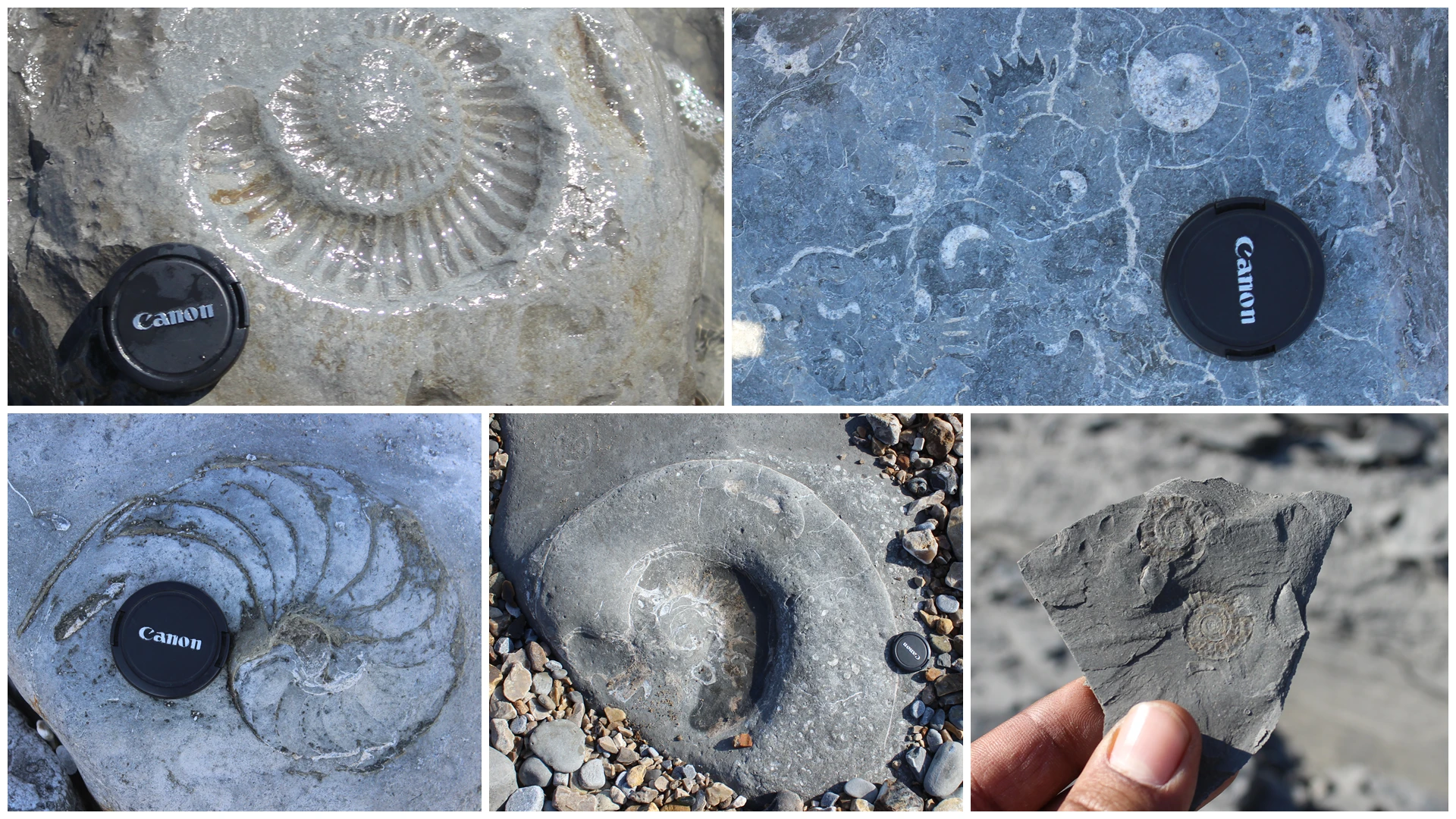
From a trip to Lyme Regis.
There’s a lot of other places where you can read about ammonites on the Internet as they’re one of the Mesozoic Era’s most famous animals. That says a lot as dinosaurs are primarily the ones associated with this period in Earth’s history.
Near Lyme Regis, ammonite fossils are abundant in the rocks along the coast, leading one to get seriously exhausted from being constantly awed by their beautiful structures. Many other awe-inspiring fossils from this stretch of coast have been found including of huge marine vertebrates, other molluscs and fish – all of them alive around 200 million years ago.
Fun fact: Ammonites became extinct simultaneously with the non-bird dinosaurs. But right before they disappeared at the end of the Cretaceous 66 million years ago, fossil records have shown that they were thriving at the time.
So, success is great, but it doesn’t mean you’re prepared for everything. Understandably, few organisms would be prepared for ten kilometre wide rocks crashing in from space.
References:
Sessa J.A. et al., 2015. Ammonite habitat revealed via isotopic composition and comparisons with co-occurring benthic and planktonic organisms. Proc. Natl. Acad. Sci. U.S.A. Vol. 112 (51), p. 15562-15567. doi: 10.1073/pnas.1507554112
Page K. N., 2008. The evolution and geography of Jurassic ammonoids. Proceedings of the Geologists’ Association. Vol. 119 (1), p. 35-57. doi: 10.1016/S0016-7878(08)80257-X.
www.bgs.ac.uk/map-viewers/bgs-geology-viewer

Thomas Heising here!
I’m originally from Denmark, but now living in Cork, Ireland and working with visual science communication. You may have found this post because you were curious about this page or wanted to know more about the topic at hand – in any case: welcome.
There are more writings, visuals and videos around here about geology, the weather, our planet, Ireland, Denmark and other things that interest me.