Thomas Heising

Visual science communication
Back to the Lab

Safari in Denmark

Scandinavia
2026 | Capital Region of Denmark, Denmark

A Safari in Denmark

Note: None of the content on this site is produced using AI. Therefore, you can always reach out to me if there’s anything factually or textually incorrect.
Arriving from the expansive forests of southern Sweden, I wasn’t expecting to find as enriching a safari experience in the Capital Region of Copenhagen. Despite having prehistorically been covered by forests, Denmark is among worst nations in the world when it comes to the quality of its forests as described the Forest Landscape Integrity Index. 
Yet, some wildlife does exist in some places!
 
When I was about 14 years of age, I was obsessed with spiders. Combing the corners at home and fields outside, I stumbled upon a yellow-white-black striped spider. Even back then, there luckily was a very helpful website cataloguing Danish spiders, and I identified this beautiful arachnid as a hvepseedderkop or in English a wasp spider.
Kalvebod Fælled
17 years later in Kalvebod Fælled, I saw it again for the first time. Unlike back then, it is now designated as fairly common across most of Denmark. Perhaps more observations have come in, perhaps it has thrived?
 
I spotted a grass snake too, yet I was too slow with the camera this time around. Rest assured, this footage here still exists.
 
Anyways, here is my safari in the Capital Region of Copenhagen.
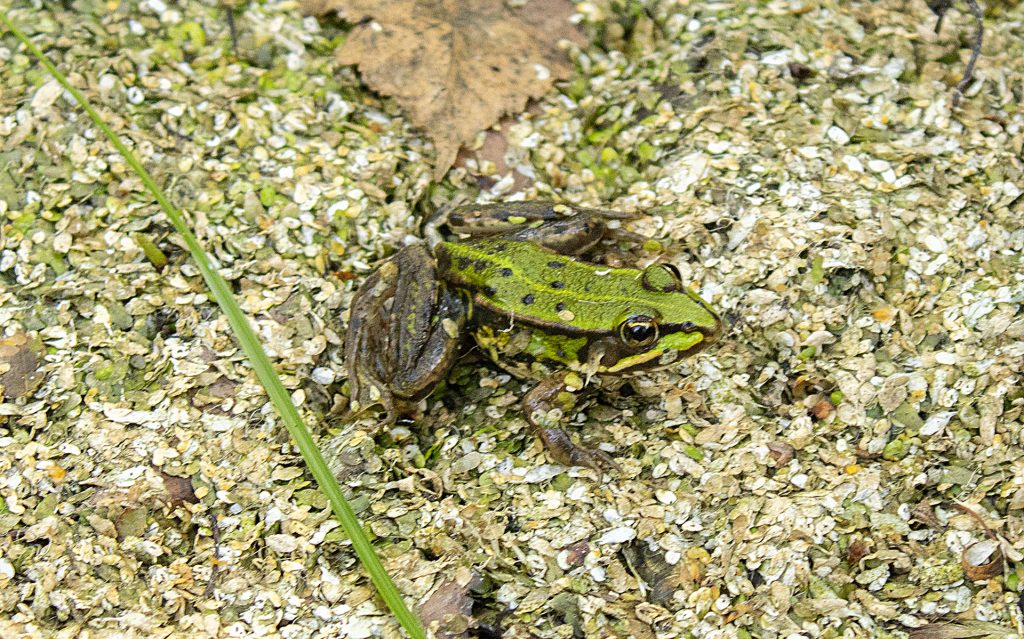
Water/green/march frog?
Grøn Frø in Kalvebod Fælled
The frogs of northern Europe are difficult to discern between. It’s well-documented that these water frogs have interbred between species and thus created numerous intensely studied hybrids. It’s a complex topic and I’m not an amphibian expert as much as I like these animals.
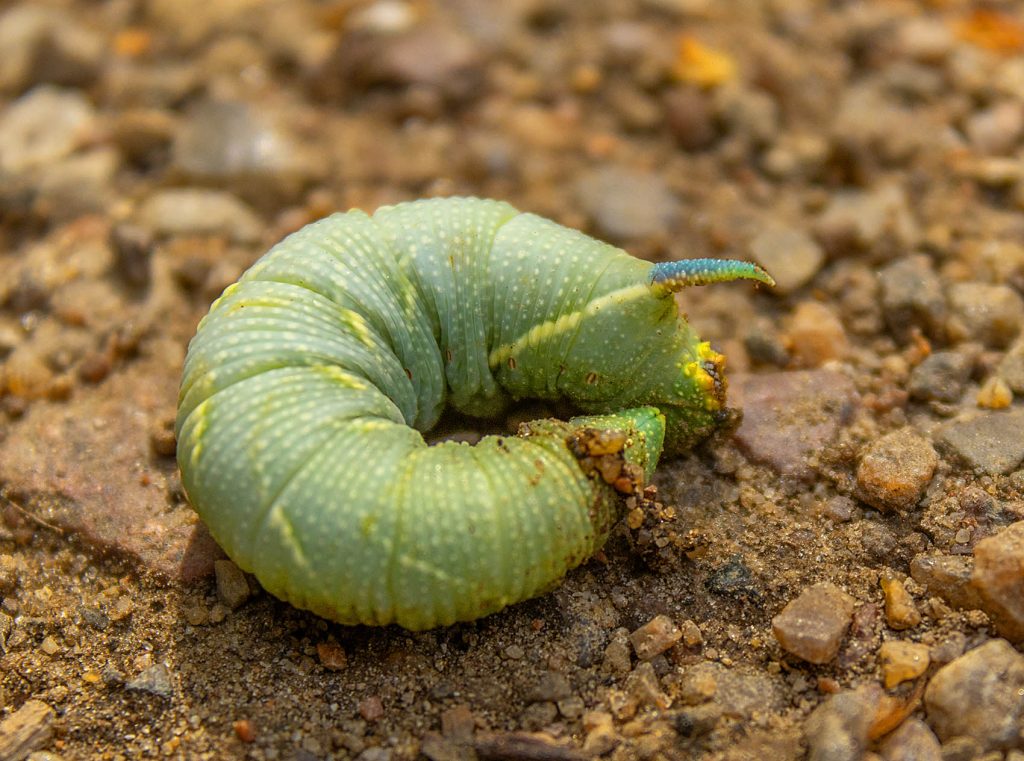
Lime hawk-moth caterpillar
Lime Hawk moth caterpillar in Kalvebod Fælled
This colourful lime hawk-moth caterpillar (or lindesværmer in Danish) curled up to protect itself from me. Hiding under rocks and roots during winter, this insect and its associated larvae are active for a brief window during summer. In Denmark, Naturbasen reports that the species is becoming more common than previously in the northern parts of country.
Wasp spider
The star of the show, at least according to me: a hvepseedderkop or wasp spider. Both the Danish and English names are direct equivalents of each other. This spider is rather large for Danish standards and builds robust webs with characteristic emboldened zigzag patterns going through web’s centre.
 
I’ve seen strong large grasshoppers end up in these webs and the wasp spider immediately scurrying over to consume its battling prey!
 
This is also an animal where you’ll see a stark difference between male and female individuals. The female, as in the pictures above, is large and colourful, while the male is tiny and pathetic in comparison. And she may indeed eat him during mating.
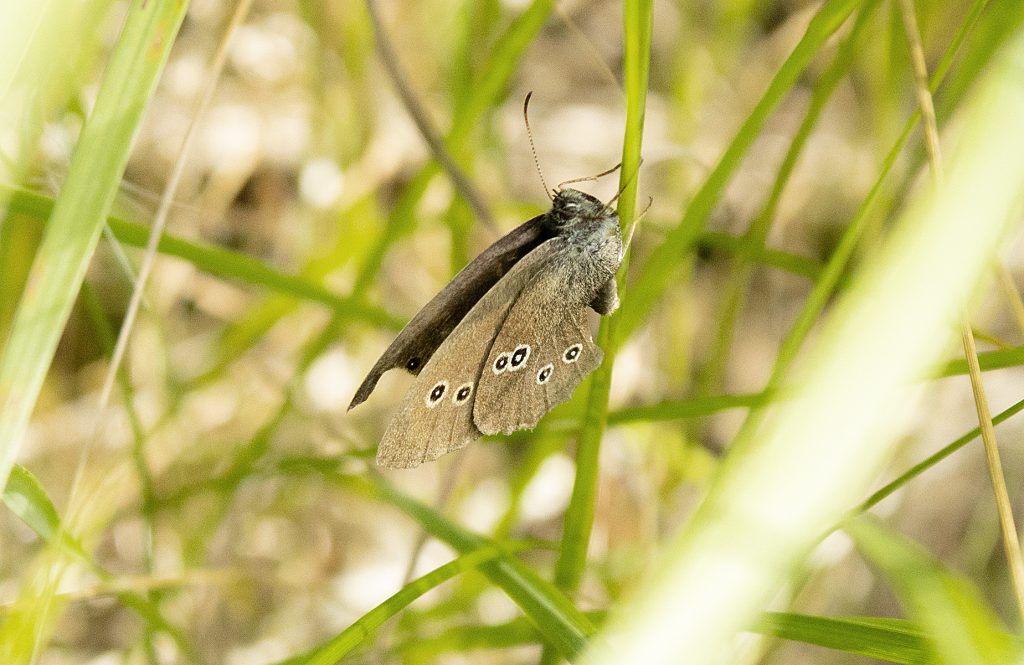
Ringlet butterfly
Ringlet butterfly in Kalvebod Fælled
Another common butterfly in Denmark is the Engrandøje or in English: the ringlet butterfly.
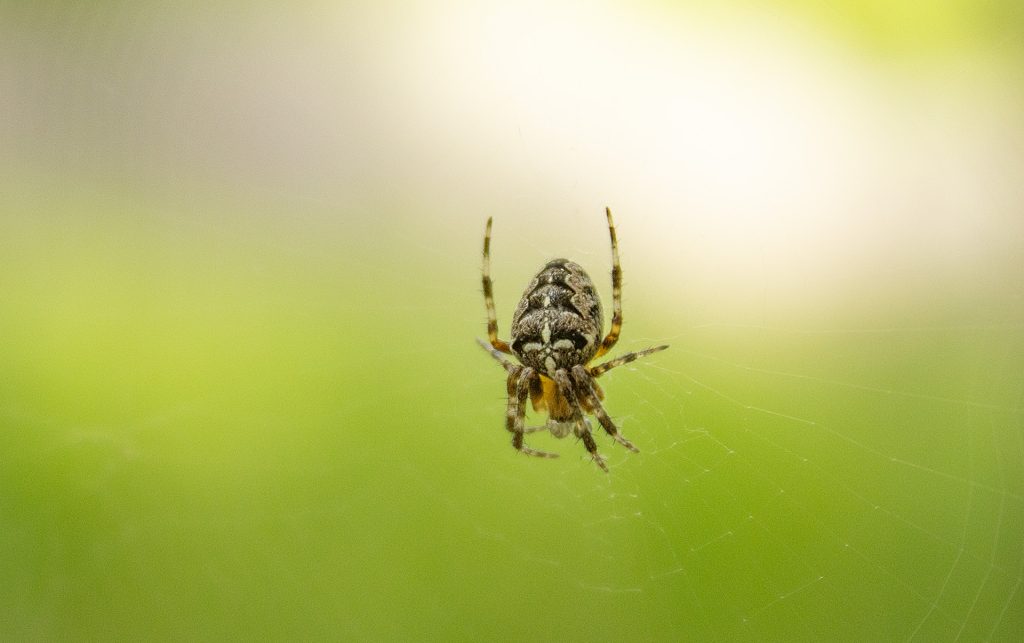
Garden spider
Garden spider in Kalvebod Fælled

Another spider from this safari and an orb-weaver like the wasp spider above, korsedderkopper or garden spiders is also quite common in Denmark.

While their webs can be bothersome and uncomfortable to get in the face during a forest walk, they’re also incredible. If you’ve got patience, I recommend searching for orb weavers in the middle of building their web. It’s a pretty fascinating process.
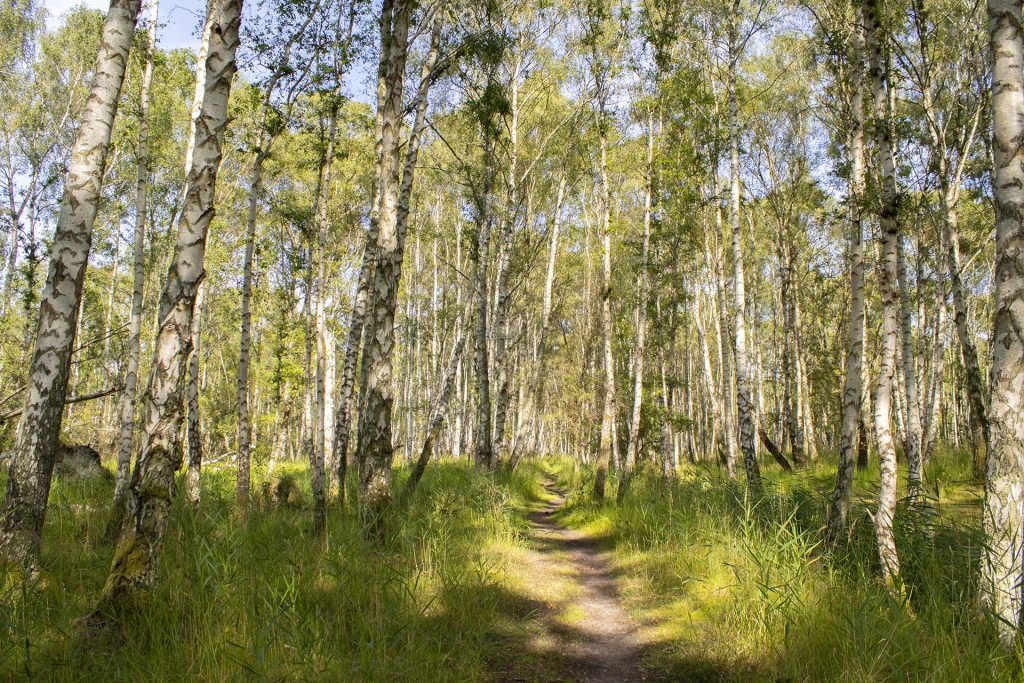
Birch woods in Kalvebod Fælled

References:

Marracci, S. & Ragghianti, M. 2008. The hybridogenetic Rana (Pelophylax) esculenta complex studied in a molecular context. Italian Journal of Zoology, Vol. 75(2), PP. 109–112. DOI: 10.1080/11250000701875969

https://www.naturbasen.dk/art/851/lindesvaermer

https://www.ukmoths.org.uk/species/mimas-tiliae/

https://www.naturbasen.dk/art/2129/hvepseedderkop

https://butterfly-conservation.org/butterflies/ringlet