Holy shit!
Space stuff
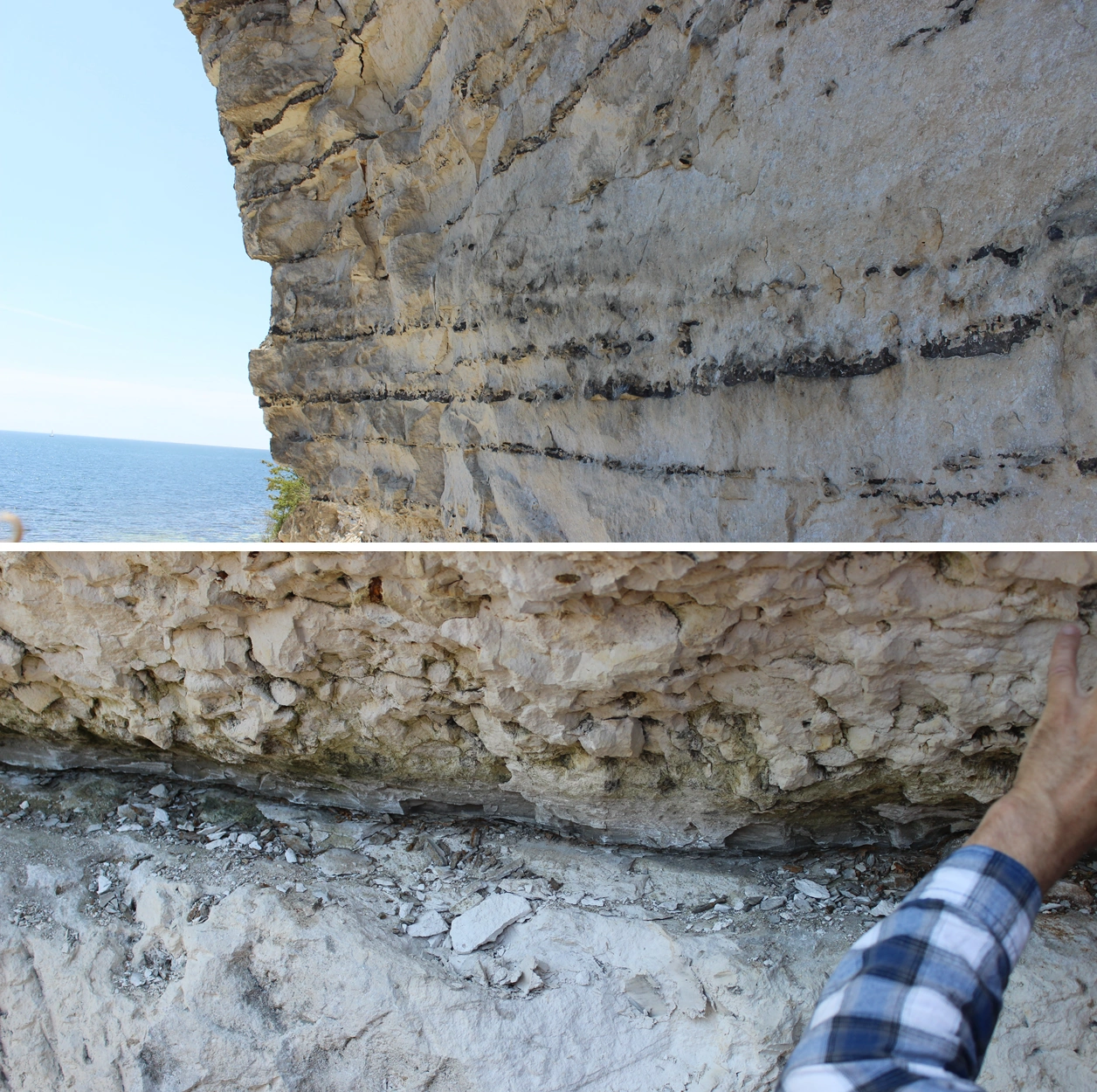
Field-trip pictures from a geological university excursion to Stevns Klint in eastern Denmark.
Stevns Klint has one of the few Danish exposures of in-situ rocks that can be visited freely. While not as impressive in scale as cliffs in other Scandinavian nations, Stevns Klint has put Denmark on the map in the international geoscience community.
About 66 million years ago, an asteroid from space plunged into our planet causing global death and destruction. The event is likely most famous for having ended the global reign of the dinosaurs; moreover eradicated all the non-bird dinosaurs. And they weren’t the only ones to suffer from this disaster.
Numerous species and groups of lifeforms ceased to exist, and as a consequence, the balance of life shifted. We, along with other mammals, gained our prominence in the global ecosystem because of this catastrophic impact event.
Anyways, I wasn’t going to go into much detail about this; sometimes good to start out epically though!
More modestly, the fieldtrip shown above took us (a group of geology students) to an exposure of the boundary between the Cretaceous Period and the Palaeogene Period. The dark grey strip of sediments in the lower picture was laid 66 million years ago and records a change in marine conditions back then.
It’s hard to say with exact certainty what happened to cause the marine conditions shifting from bountiful reefs to a dark clay-marl horizon of sediments. However, this layer has been recorded having high concentrations of the element iridium, which is chemically associated with asteroids.
This could perhaps explain why the white chalk above and below are suddenly interrupted by this grey strip: the bryozoan and sponge reefs of the Late Cretaceous might’ve stopped building as the asteroid impact soured the conditions for them back then. Then afterwards in the Palaeogene, reefs would’ve recovered and built up again over hundreds of thousands or millions of years.
References:
1. Christensen, L., et al. 1973. Sedimentology and depositional environment of Lower Danian Fish Clay from
Stevns Klint, Denmark. Bulletin of the Geological Society of Denmark. Vol. 22. Jan 2073.
2. Surlyk, F. et al. 2006. Stevns Klint, Denmark: Uppermost Maastrichtian chalk, Cretaceous–Tertiary boundary, and lower Danian bryozoan mound complex. Bulletin of the Geological Society of Denmark. Vol. 54, pp. 1–48. doi: 10.37570/bgsd-2006-54-01
Thomas Heising here!
I’m originally from Denmark, but now living in Cork, Ireland and working with visual science communication. You may have found this post because you were curious about this page or wanted to know more about the topic at hand – in any case: welcome.
There are more writings, visuals and videos around here about geology, the weather, our planet, Ireland, Denmark and other things that interest me.