Cute, but wash your hands
Scandinavian wildlife
I’m continuing the theme of deprogramming my distain for culturally vilified animals with Cork’s Lifelong Learning Festival!
It’s a bit silly how we vilify bats in the Western world. Other cultures exist where these flapping mammals are revered and celebrated. Yet here in Europe, we associate bats with dark magic, vampires and horror.
The most famous positive Western bat-featuring cultural product I can think of involves a highly celebrated comic book hero character who dresses up as such an animal. I’m sure you know what I mean.
Indeed, some bats do consume blood, even from humans. Yet it’s only a handful of species, and they exist outside of Europe. Here in Ireland, there are a good few species of bats – again: none of them will purposefully land on you to suck your blood.
There’s an Irish organisation known as Bat Conservation Ireland which has plenty of facts, opportunities for citizen participation and resources. Some of the info in this post is based on the content from that website (I always gather my references at the bottom of these pages) and from the UK counterpart.
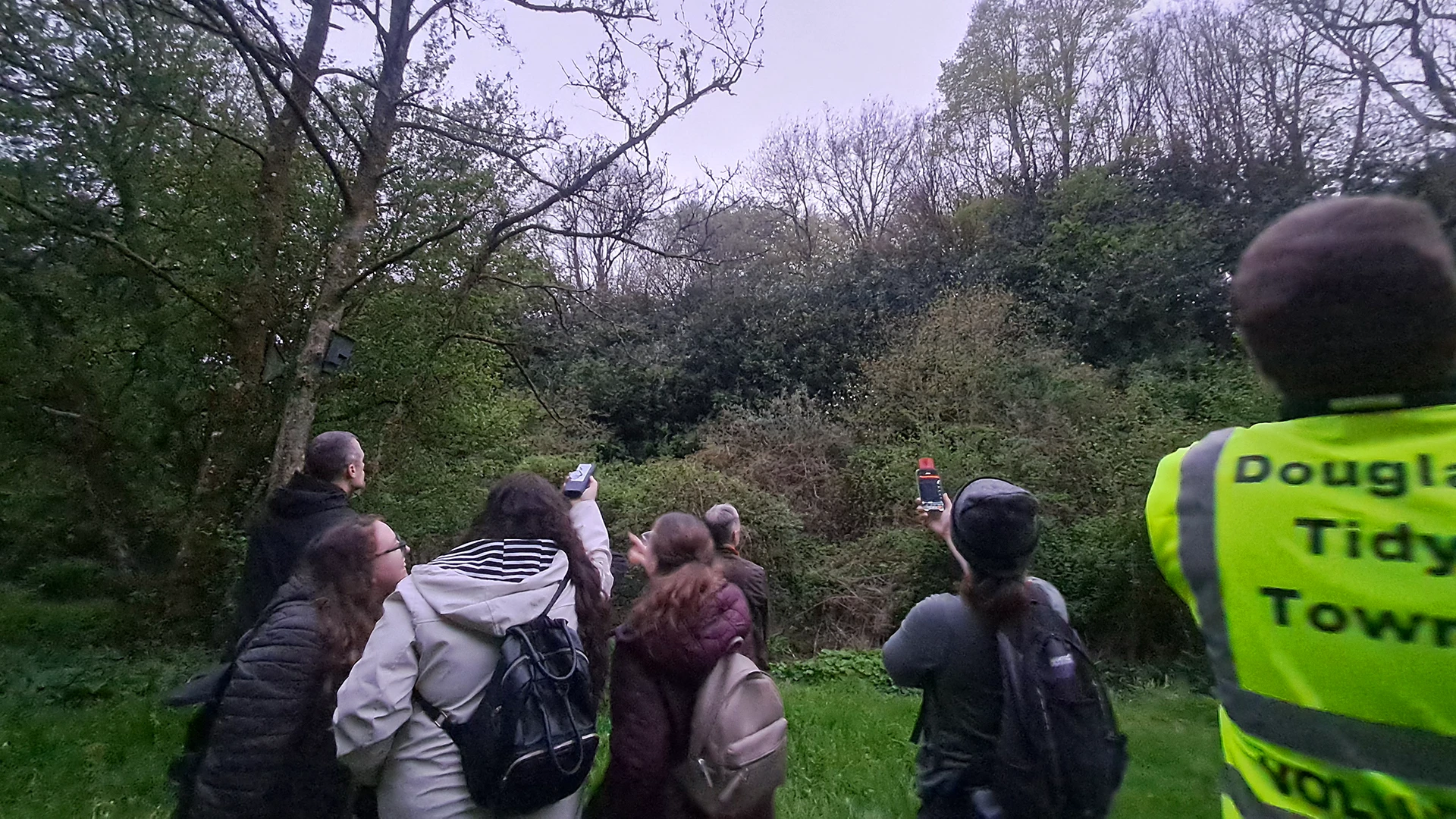
So, one of the best events of the Festival was a Bat Walk in the Mangala (Ballybrack Woods) organised by Douglas Tidy Towns. An ecologist gathered us for a brief introduction on bats and the area just as the sun was setting behind Cork’s horizon. Participants were hopeful, but also a bit doubtful, about the chances of seeing bats.
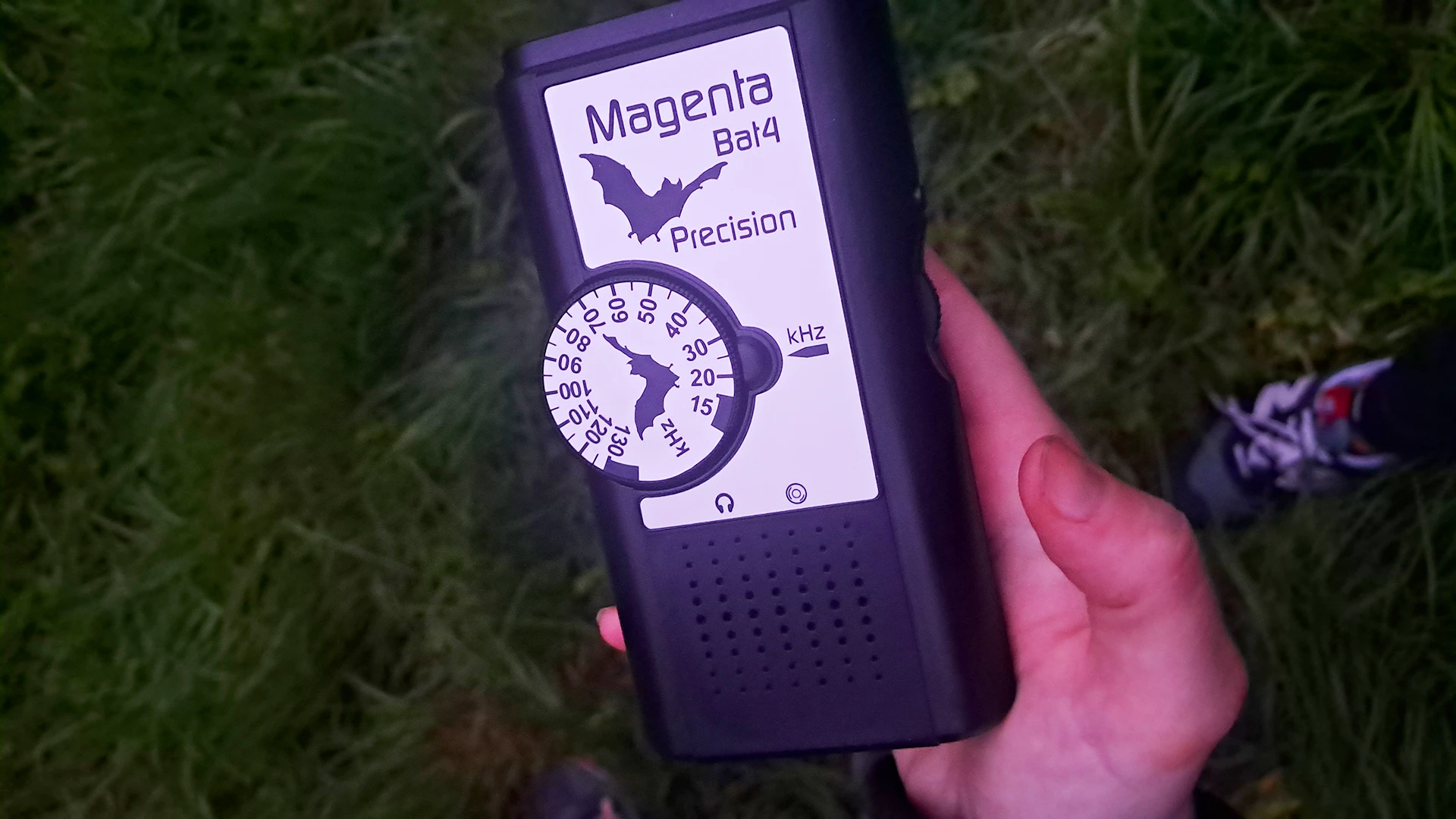
A bat detector – a hearing aid for hearers.
To help us spot these small animals, the ecologist had brought some clunky devices along for us to use: bat detectors.
Bats can make sounds at high frequencies that we can’t hear (literally called ultrasound). I’m personally unable to hear sound frequencies above 16.8 kHz. For instance, the common pipistrelle bat is able to echolocate at about 55 kHz. That’s way out of range for us humans to hear, so our ears won’t pick up on these sounds.
These animals don’t just make these ultrasounds to pass time. That’s how they hunt and scan their environment, depending on the species. Admittedly, I was one of the people who thought they did so due to poor eyesight, yet they actually see fine. They might just be hunting at night for safety. Who knows?
The technique is called echolocation. A bat basically makes a sound. That sound spreads throughout an environment, hits objects and reflects back to the bat. The animal can then perceive its environment at an incredible detail level – as the ecologist said: down to the scale of a mite. They need this too as some of the insects they’re chasing are small.
The bat detector is handy here, as it literally records sounds at frequencies chosen by the user, and then plays it back through a speaker at frequencies that we can hear. Beyond the uncomfortable clinging, the rattling of key bundles also produces high frequency sounds that we can’t hear, and we were able to pick up these inaudible sounds with the detectors too.
In the audio above you may hear some “blip blop”-sounds. This is what the largest bat in Ireland sounds like.
So, as the sky went from light magenta to dark blue, we started to see flickering small beings perhaps 50-100 metres above our heads. Individuals of the largest bat in Ireland: Leisler’s Bat were out testing the air currents not long after sunset. Pointing the detectors upwards allowed us to hear these animals at about 25 kHz.
Ethereal chirping and clicking noises sounded from the devices. Most often we’d hear the clicking via the devices before seeing the animal.
A bit like chasing paranormal activity.
We ventured into the denser parts of Ballybrack Woods. A small groove provided the most activity. Common pipistrelles were hunting here – back and forth.
Again, we’d point the detector towards a dark area of the forest, hear the clicking get louder and then see the bats zoom past us – sometimes less than a metre from our heads.
Click, click, click, click, click, click, click, click, click, zzzzztt, click, click, click, click.
The “zzzztt” came from when the bats caught insects.
To say that this whole experience felt magical may seem dramatic, but it’s honest, and I think everyone should try going on a bat walk. One male pipistrelle bat put on quite a show for us hunting back and forth near a light post. His passing in front of the light gave brief glimpses of his translucent wings, and his shadow cast on the ground made him seem much bigger than he was.
Note: None of the content on this site is produced using AI. Therefore, you can always reach out to me if there’s anything factually or textually incorrect.
On the other hand, bats are great disease carriers, and should not be handled by exposed skin. If you see a bat on the ground somewhere, you can visit Bat Conservation Ireland’s website and find out what to do. They’re quite common animals, and you will be able to find in both forests and urban spaces. Personally, I’m waiting for payday at the end of the month as I’m definitely getting a bat detector!
If you’re in Cork, keep an eye out for Douglas Tidy Towns on social media to see when the next bat walk is on.
It will enrich your evening!
References:
Sieradzki, A. & Mikkola, H. 2022. Bats in Folklore and Culture: A Review of Historical Perceptions around the World. Bats – Disease-Prone but Beneficial. IntechOpen. DOI: 10.5772/intechopen.102368