Staring into a mass extinction
Geology nugget

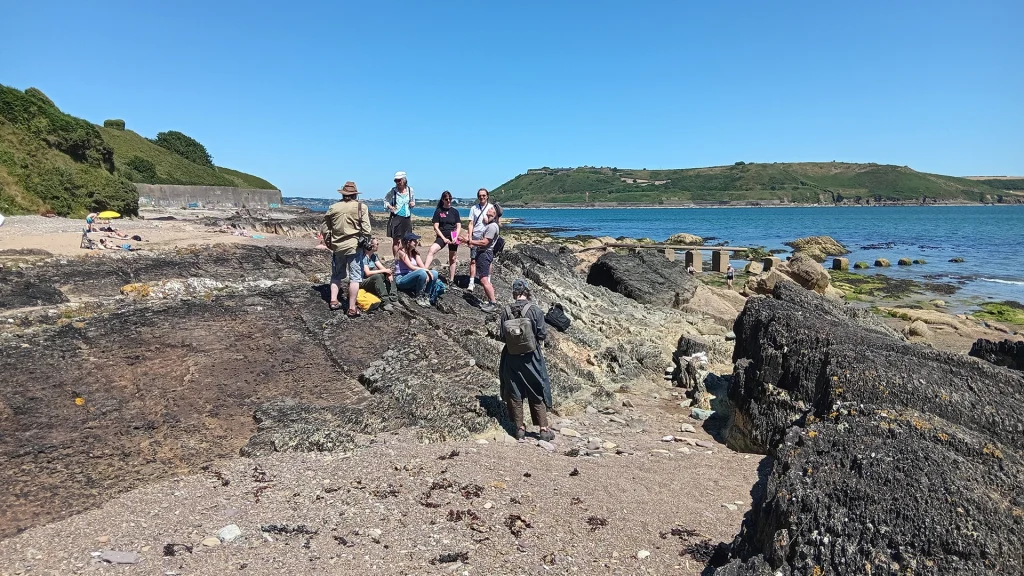
Members of the Cork art group The Fold standing on the flank of a fold.
A year ago, I joined “The Fold” here in Cork which is a band of geologists and artists intersecting geoscience with art. All forms of art!
Poets, painters, storytellers, sound artists, photographers, sculptors and, of course, geoscientists socialising for fieldtrips, chats and showcases.
Recently, we went to Graball Bay near Crosshaven to look at the Old Red Sandstone exposures there. From a personal experience, I can say that pairing up with non-geo artists to look at rocks is surprisingly freeing!
As the founder Jess points out: Geologists often show up looking for something, while artists show up to look!
Lighting, framing, perspective and colour are properties that experts sometimes underestimate in the field, thus, artists noticed things on this trip that seasoned geo-folks took for granted.
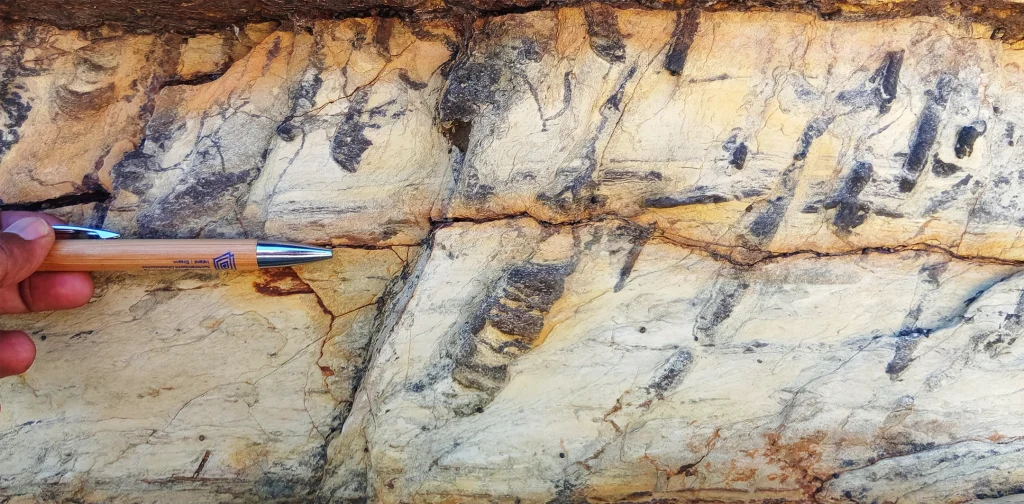
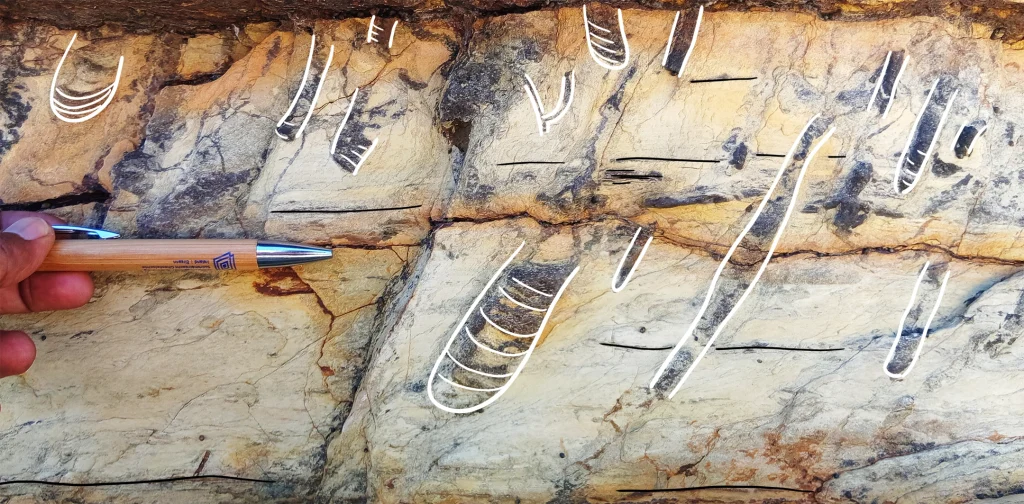
Graball Bay sports some of the best trace fossils I’ve seen in Cork. 360 million years ago small animals dug into the Devonian landscape – perhaps looking for food or safety. White lines indicate burrow structures, while the black lines mark sediment layers that once were surface horizons that the animals dug into.
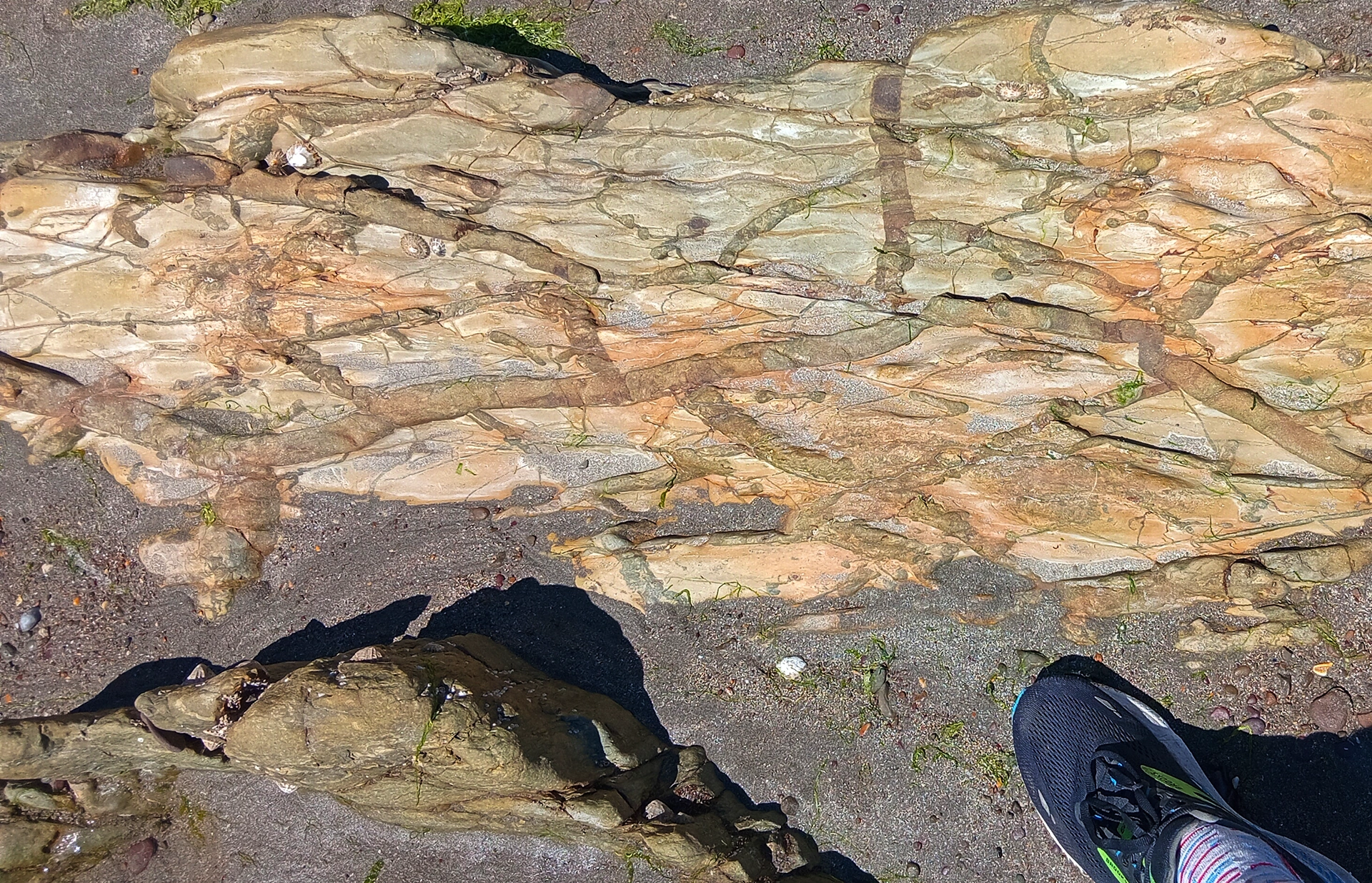
During periods with less rain back in the Late Devonian, the ground would’ve dried up, contracted and formed cracks in the soil. These can be seen here quite viscerally. Notice how they’re kind of squeezed from top to bottom? This “squeezing” or “shortening” is the result of tremendous mountain-building processes.
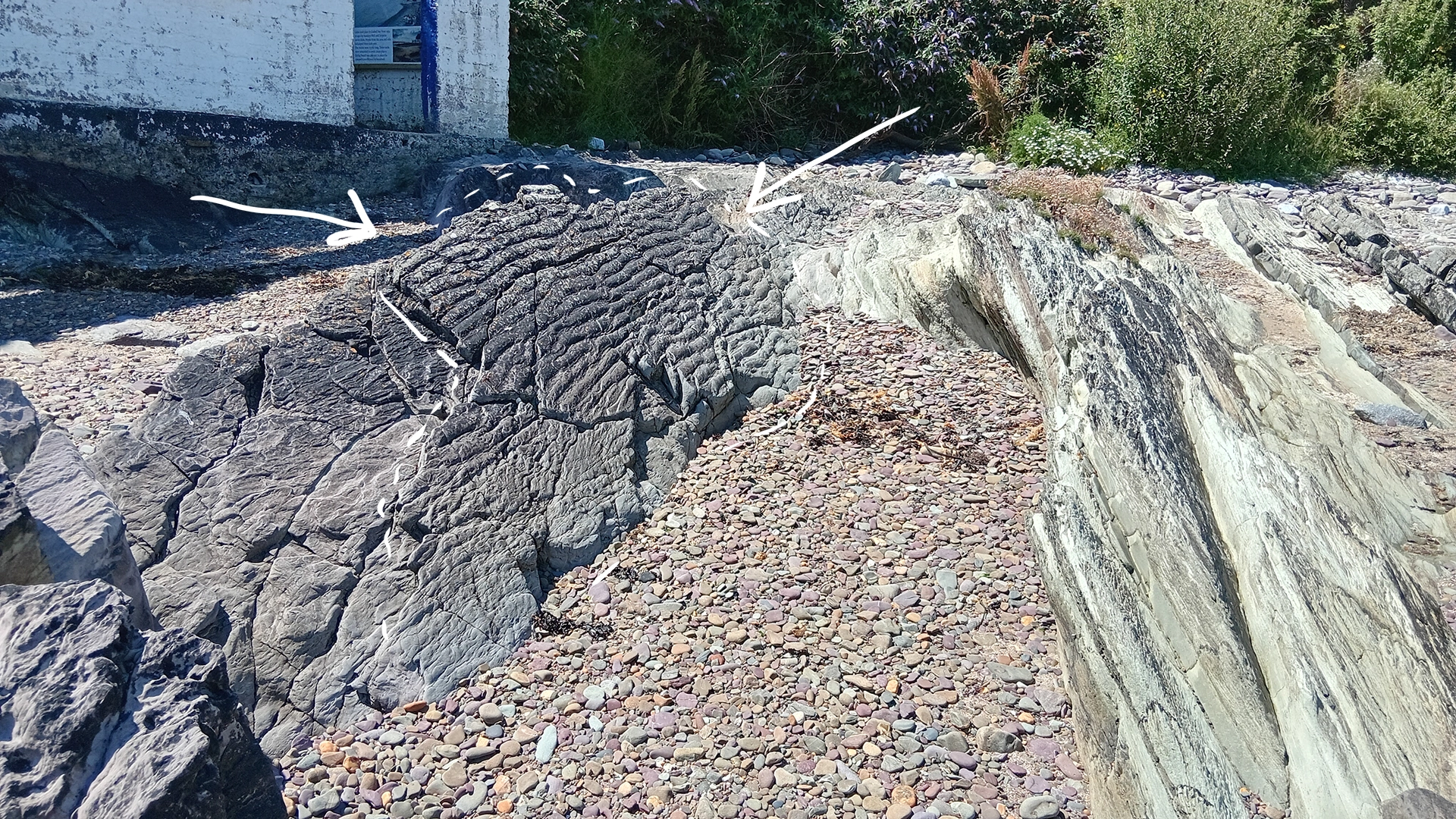
Petrified ripple features preserved 360 million years after they formed! Perhaps sculpted from movement of water in a lake or river that existed back then.
References:
1: Higgs, K.T. & Higgs, B.M., 2015. New Discoveries of Diplocraterion and Tidal Rhythmites in the Upper Devonian Rocks of Grab-all Bay, Cork Harbour: Palaeoenvironmental Implications. Irish Journal of Earth Sciences. Vol. 33 (2015), pp. 35-54. doi: 10.3318/ijes.2015.33.35