Periwinkles play
Video - Irish wildlife

Once in a while, that sweet moment comes about where I can marvel someone by telling them that the empty gnarly, plastic-like mermaid’s purse, that they’re holding, is in fact a shark eggcase. They may have seen them before thinking that these were plastic, but never in their wildest dreams could they imagine having shark eggs on an Irish beach. The reaction is always worth it!
So I figured a few more people would stumble upon here out of interest in knowing what’s around the beaches and coasts along County Cork. It may be used for other Irish coasts, but I’m limiting it officially to Cork.
This guide will grow as I visit the shorelines of the County and photos will improve as I remember to bring my DSLR along as well.
Note that this isn’t written by a biologist (I got good grades in my palaeontology module, though!), so please refer to official literature to learn more about the organisms here.
Also, and finally! If you want to do something positive with your animal discoveries, visit Explore Your Shores.ie and submit your findings. I also recommend buying this book.
Enjoy and email me if you spot any errors (motion[at]thomasheising.ie).


You’re of course welcome and free to read the descriptions of each beach discovery below. However, I personally would recommend that you look at the images above and then click your way through.
Have fun in any case!
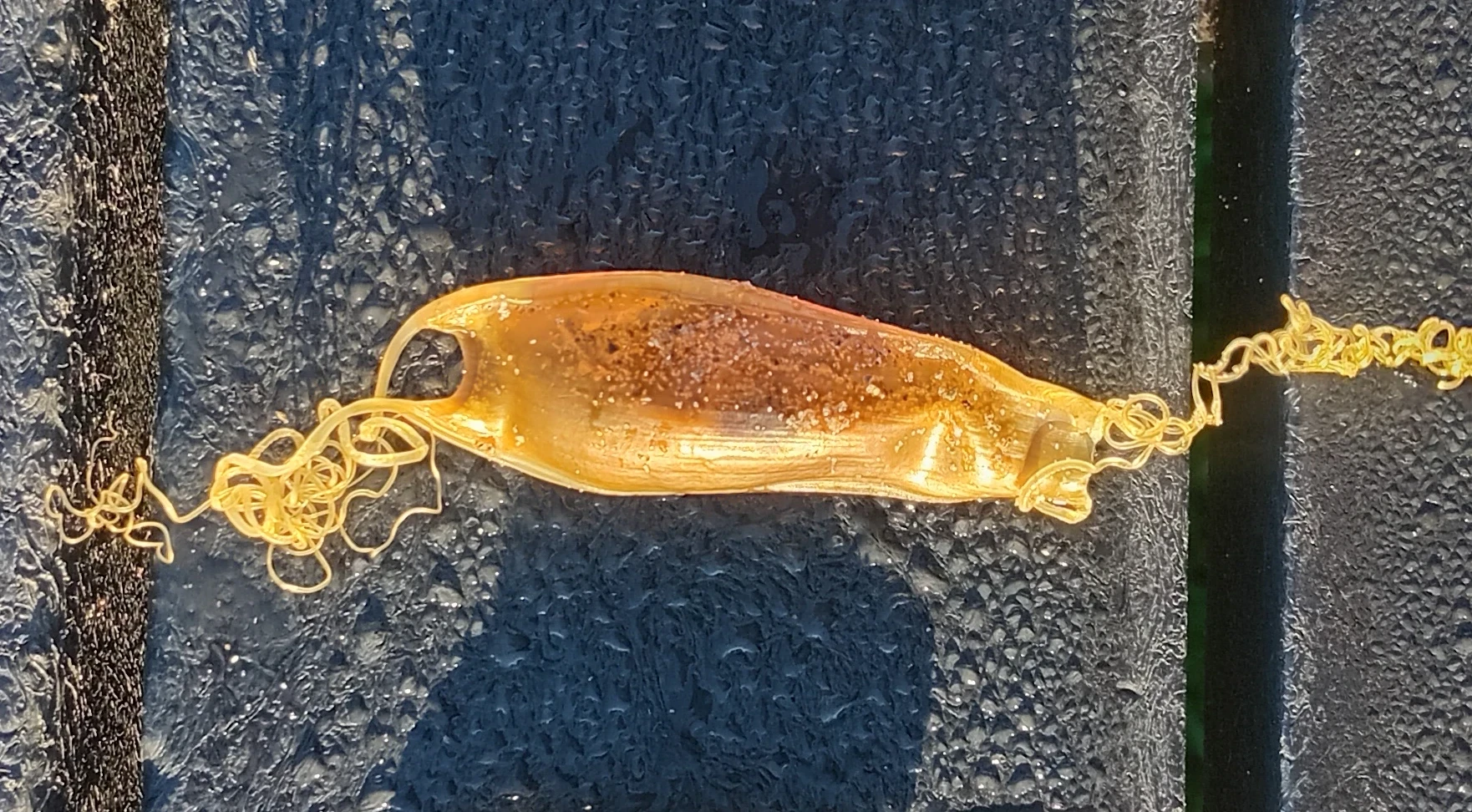
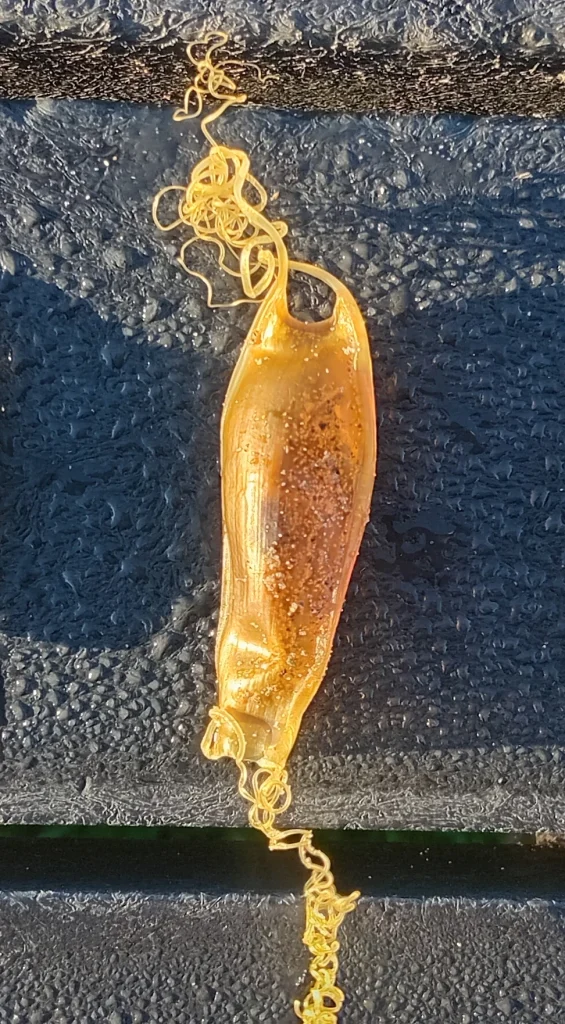
The egg case from catshark. Yes, indeed catshark are sharks. You’re staring at a shark egg. It’s often referred to as a mermaid’s purse.
Photo taken: November.
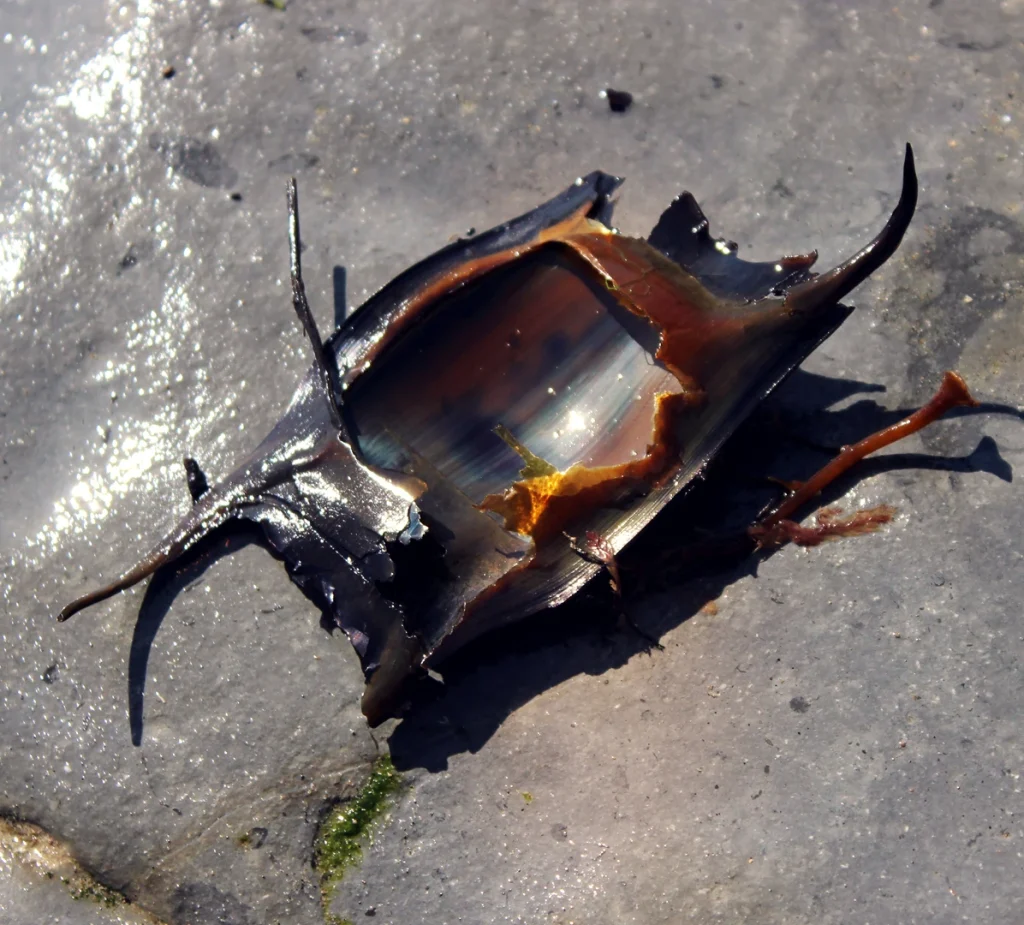
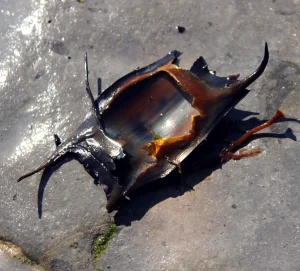
The egg case from a skate – like sharks they’re a type of fish with skeletons made of cartilage. These egg cases are often referred to as mermaid’s purses.
Photo taken: May.
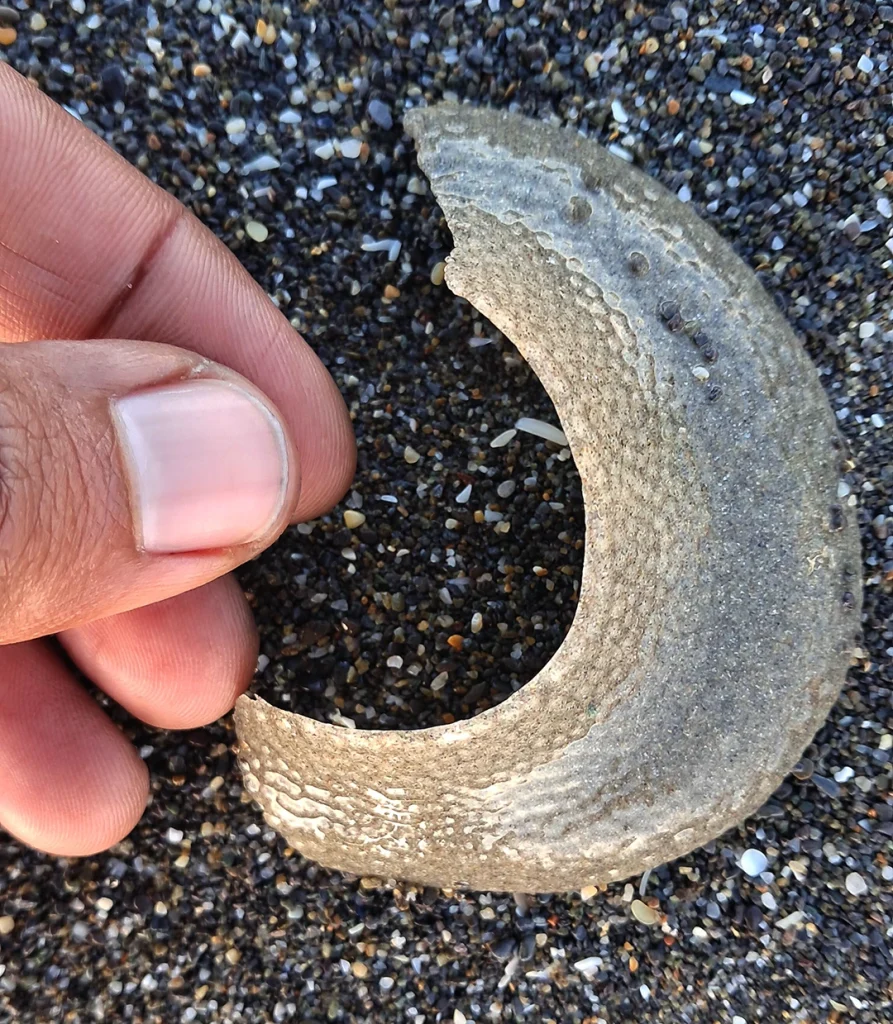
Another odd beach find related to egg-laying. This time it’s by a sea snail called a moon snail. Each of these collars can be jampacked with little snail embryos ready to pop. Unless, they’ve already hatched of course.
Photo taken: April.
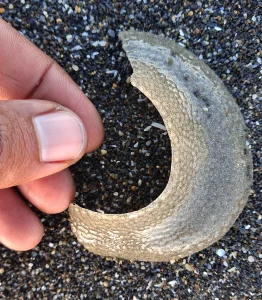
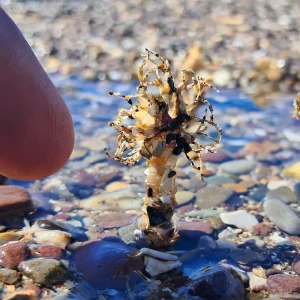
By-the-wind sailors are often mistaken (including by myself) for being pieces of plastic or for being jellyfish. These animals are neither. Instead, they’re hydrozoans, which are animals that are related to jellyfish. Normally, the exhibit beautiful purple-blue patterns, but this one here has been fairly decomposed.
Photo taken: November.
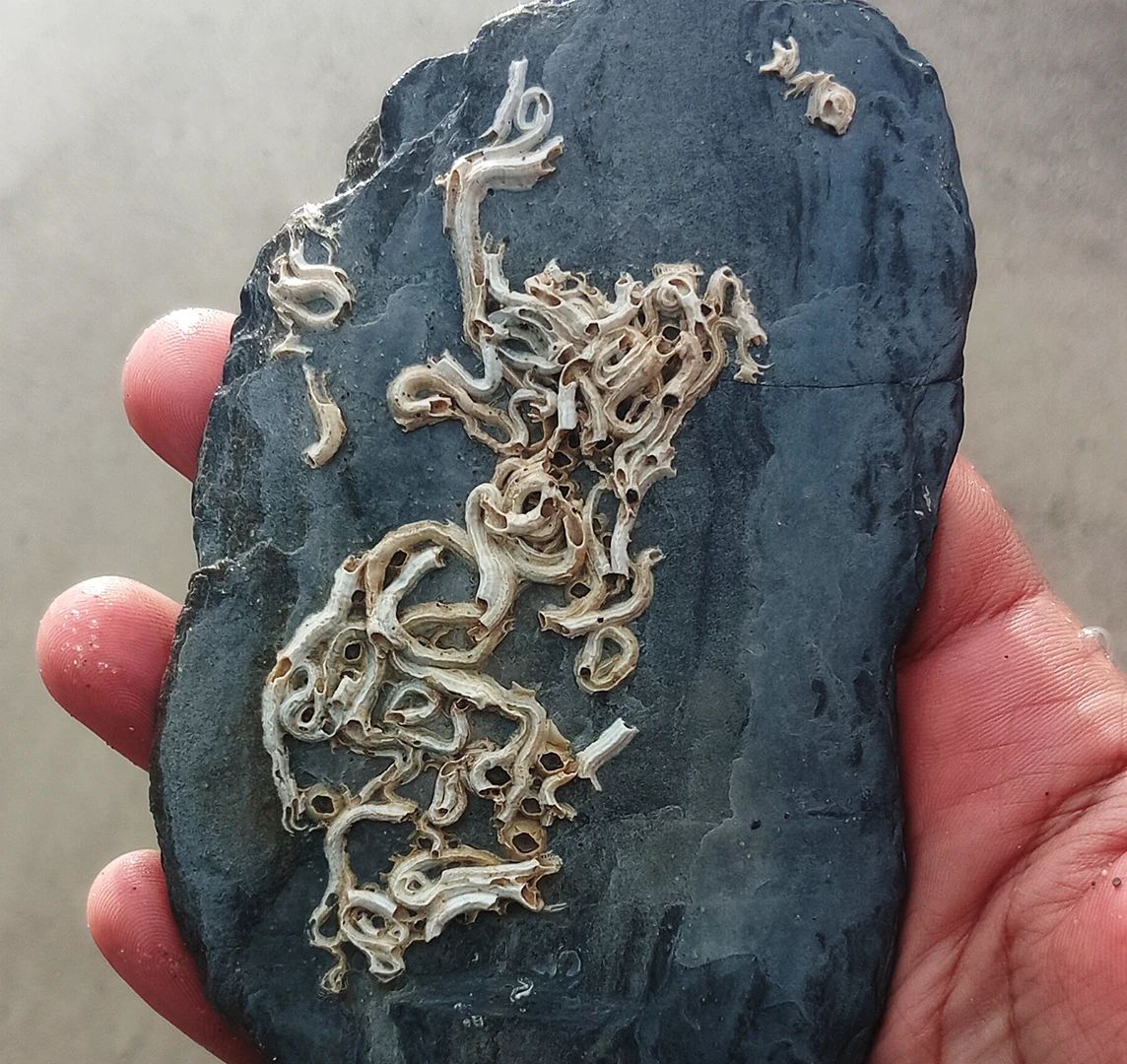
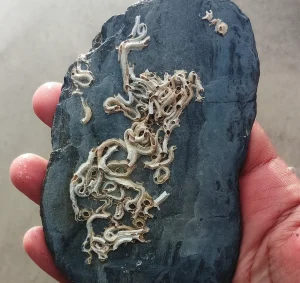
Keelworms, also known as tubeworms, create these tunnels on various surfaces.
Photo taken: January.
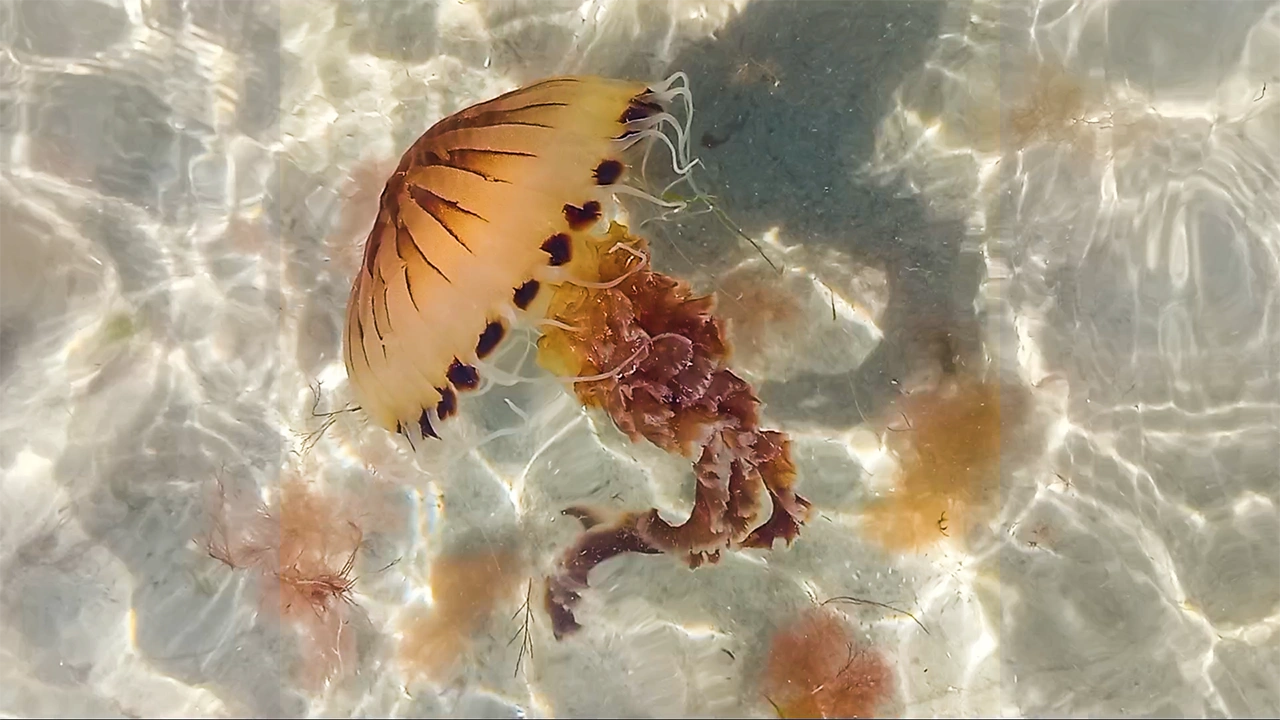
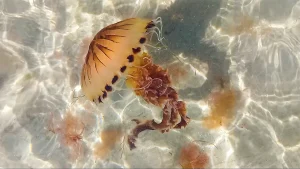
Compass jellyfish are beautiful, but can be a painful experience to interact. This one was quite close to my legs.
Photo taken: July.
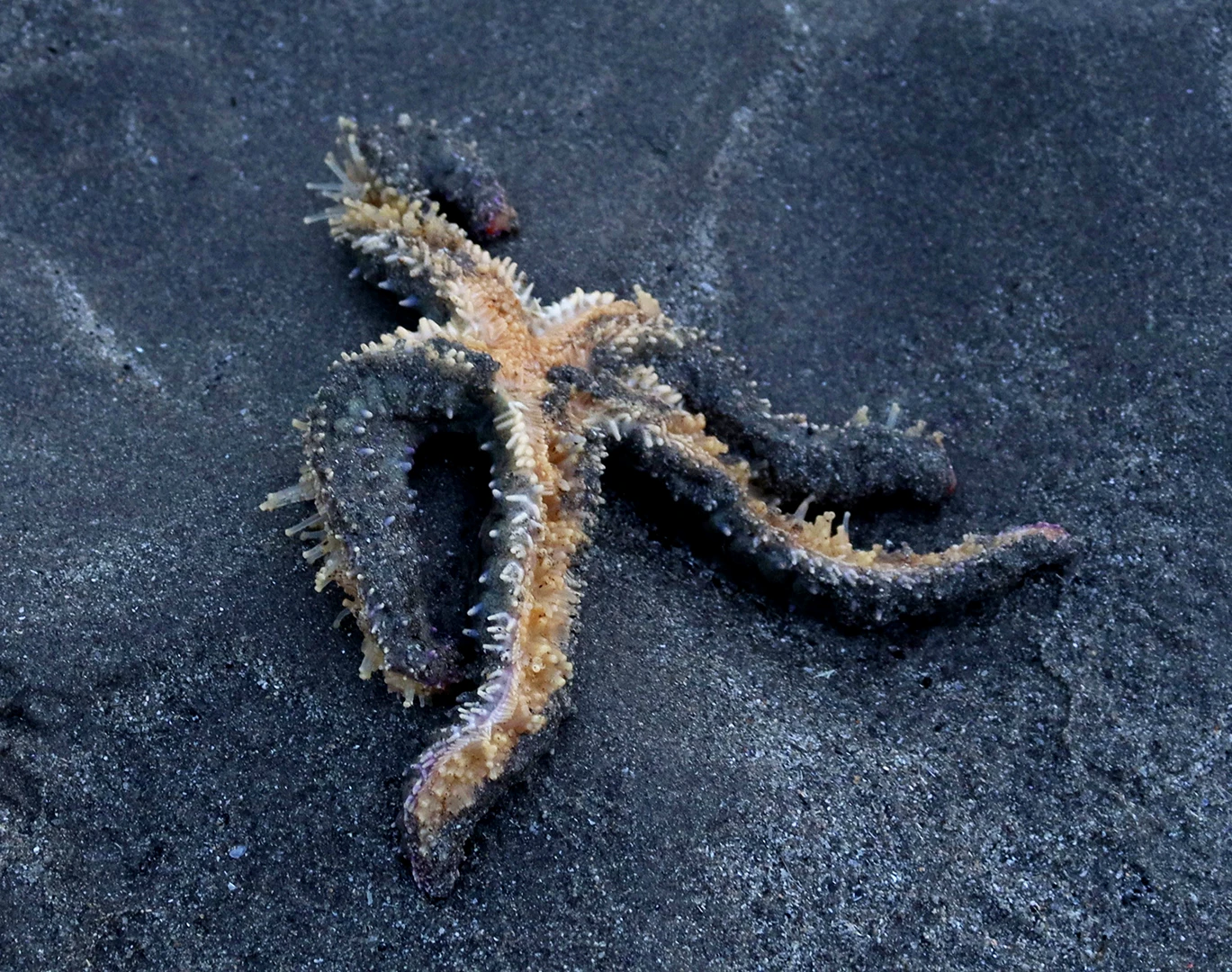
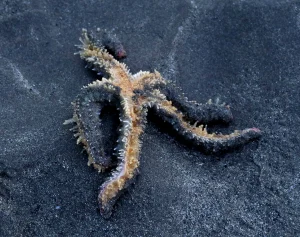
Oh, you definitely know this one. At times, even less of the animal can be found on the beach as other animals will have feasted on it. Try getting close to its arms – they look stunning in detail.
Photo taken: January.
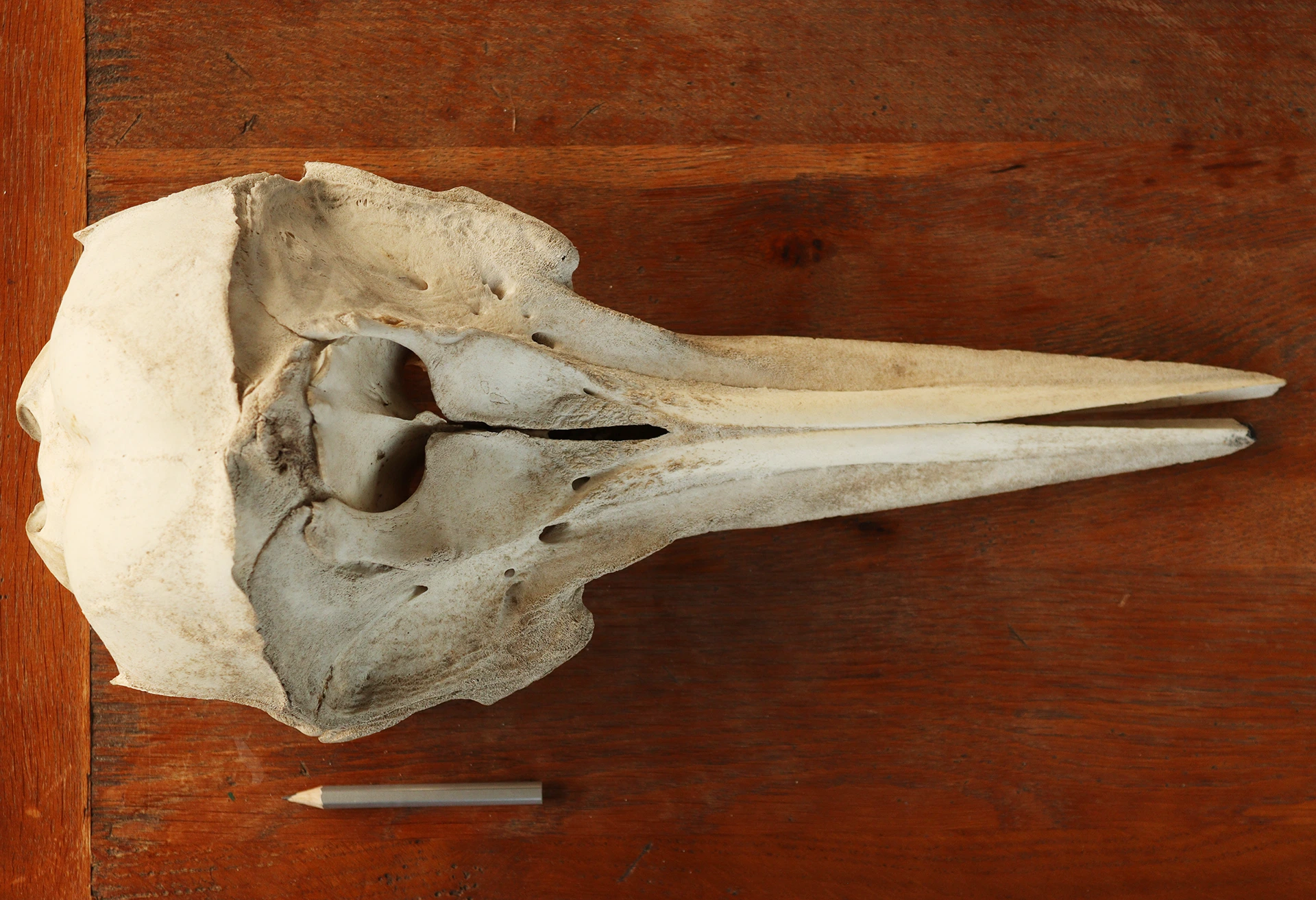
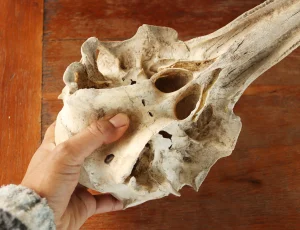
A rare find, but at times the remains of dead whales wash up along our coasts. This skull is of a common dolphin, and if you want to see more pictures of its bones, then here’s a whole page for you.
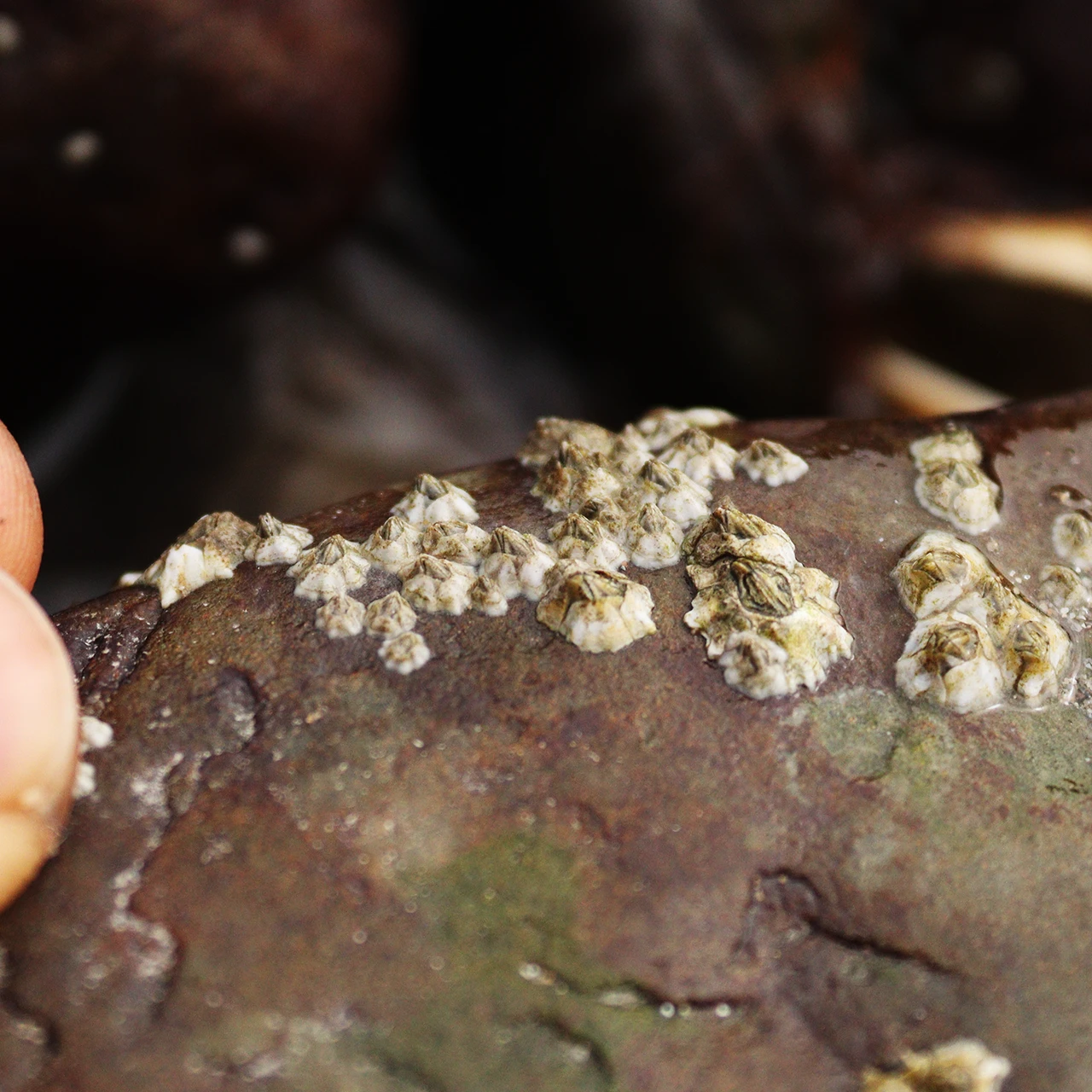
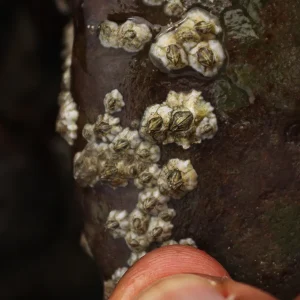
I know they spend their adult lives in hard shells, but even then it blows my mind that barnacles are related to crabs… Fun fact: barnacles have the longest penis size compared to their bodies – out of all animals!
Photo taken: April.
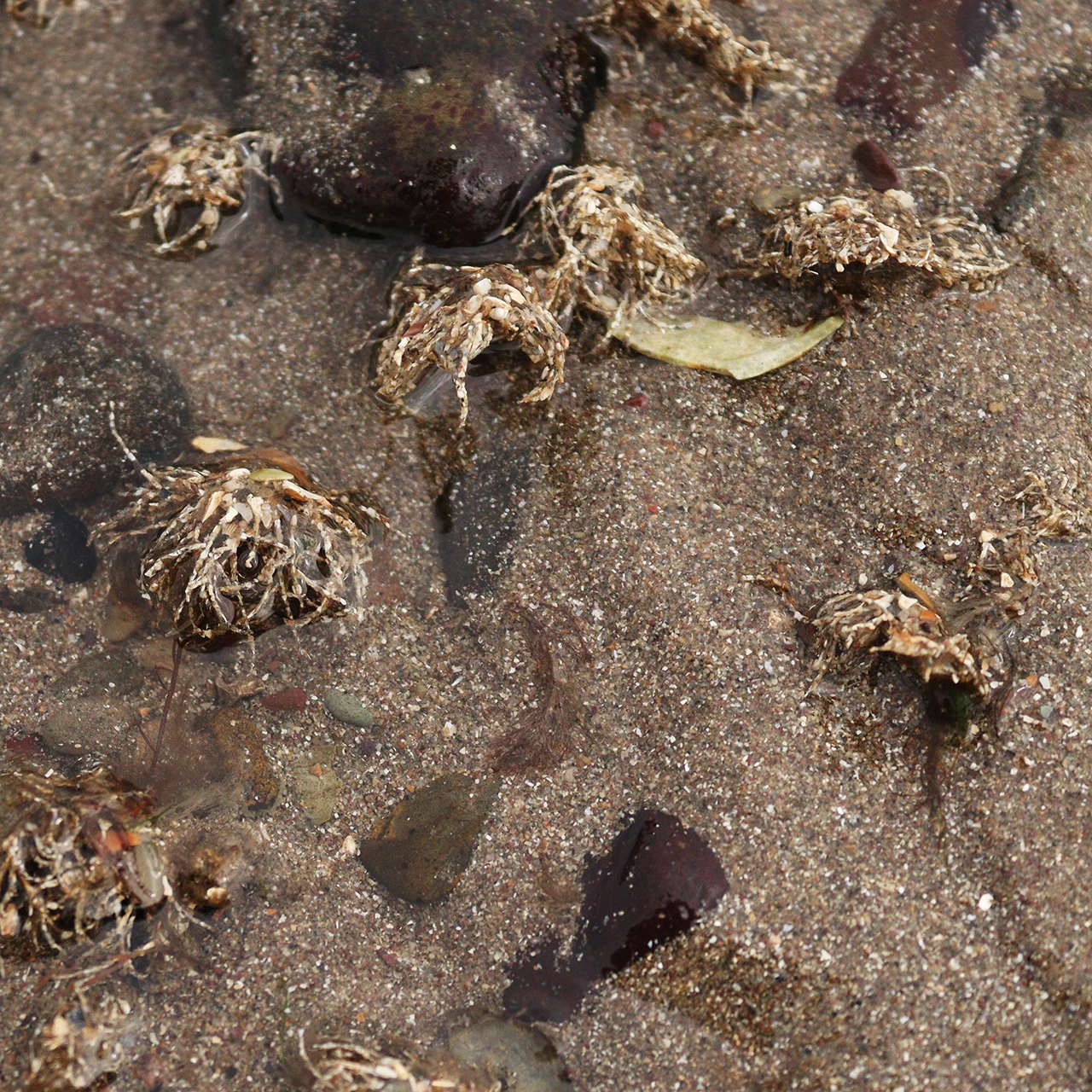
I’m lucky to get to work with Irish biologists, because I wouldn’t have known what these were if I hadn’t asked around. The name makes perfect sense though.
Sand mason worms make these erect burrows that they stay in. However, the actual animal is significantly longer underground than the tower we find above ground. This structure is often made of sand and shells, but can be of any small fragmented material that the worm finds around.
Photo taken: April.
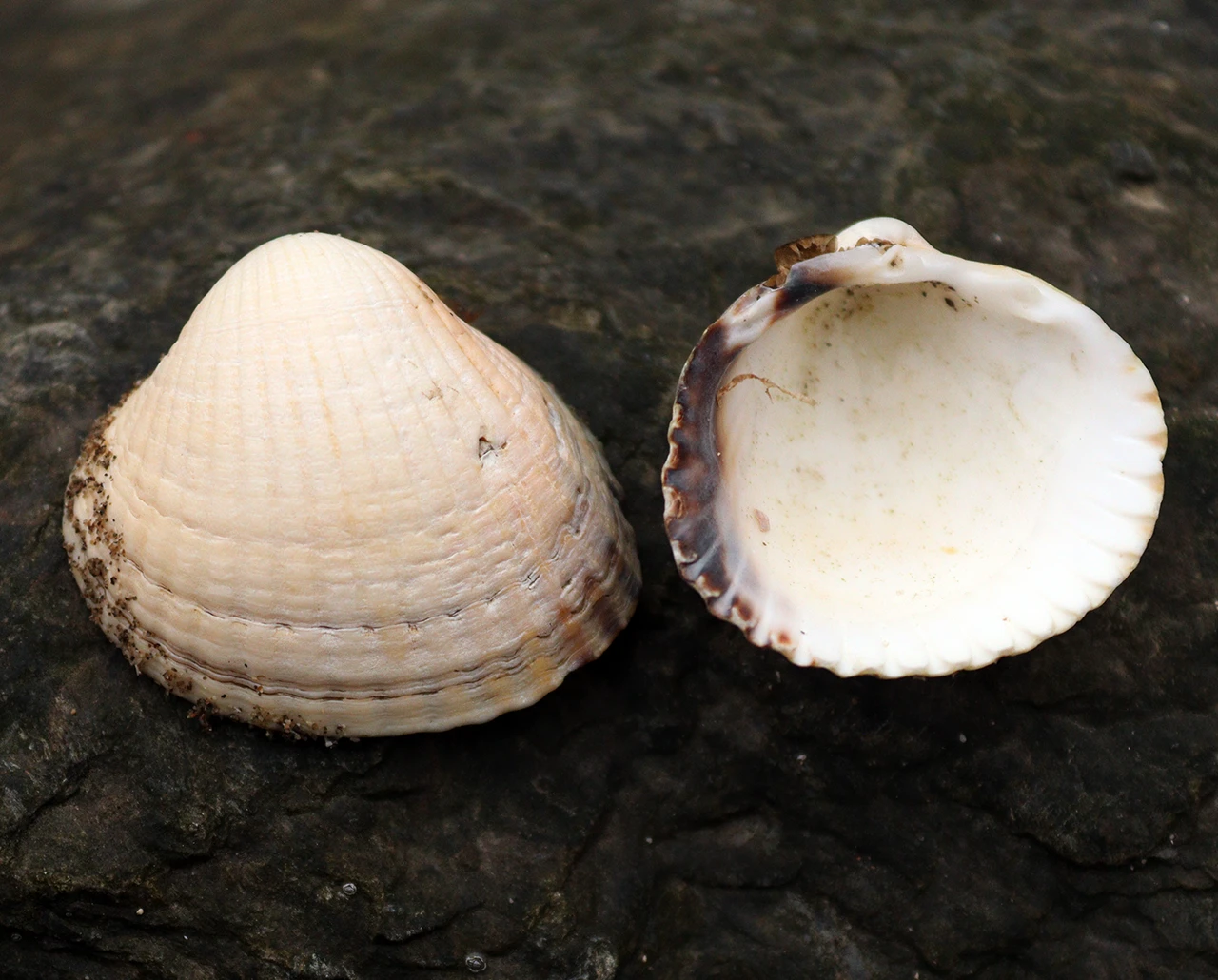
A good deal of people will get surprised when you tell them that mussels are animals – specifically a group of animals called molluscs that also includes snails, squids, octopuses and cuttlefish.
Cockles find food by filtering the water that passes through them, capturing tasty bits and bobs with their gills and discarding unnecessary or potentially nasty bits.
Photo taken: April.
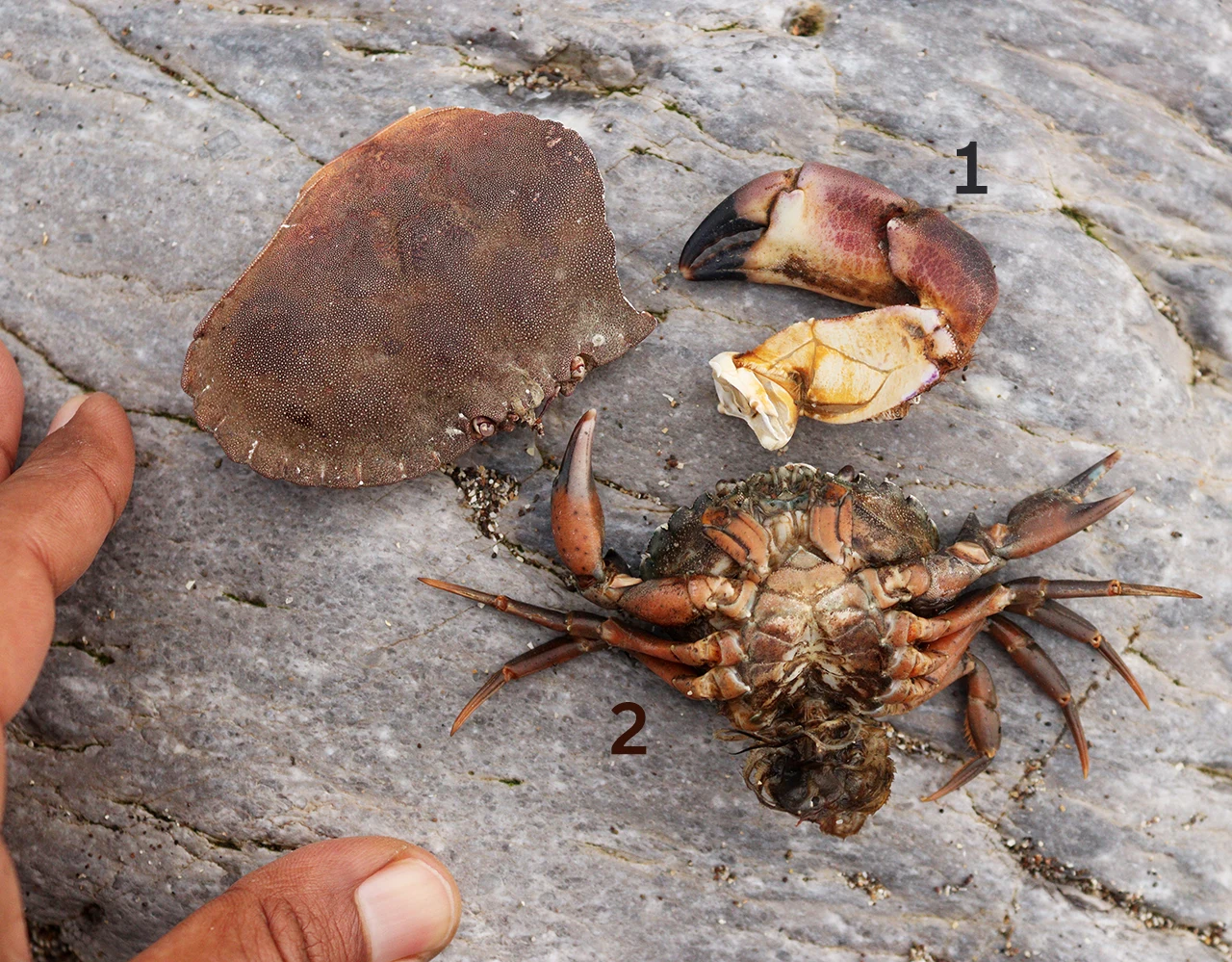
Crustaceans with loads of personality – when they’re alive of course! In the picture are the remains of two species of crabs found along Ireland’s shores: 1) the claw from a brown crab and 2) a full-body shore crab.
Photos taken: April and July.
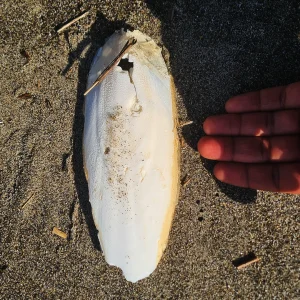
The inner hard parts of a cuttlefish – animals related to squids and octopuses.
Photos taken: March.
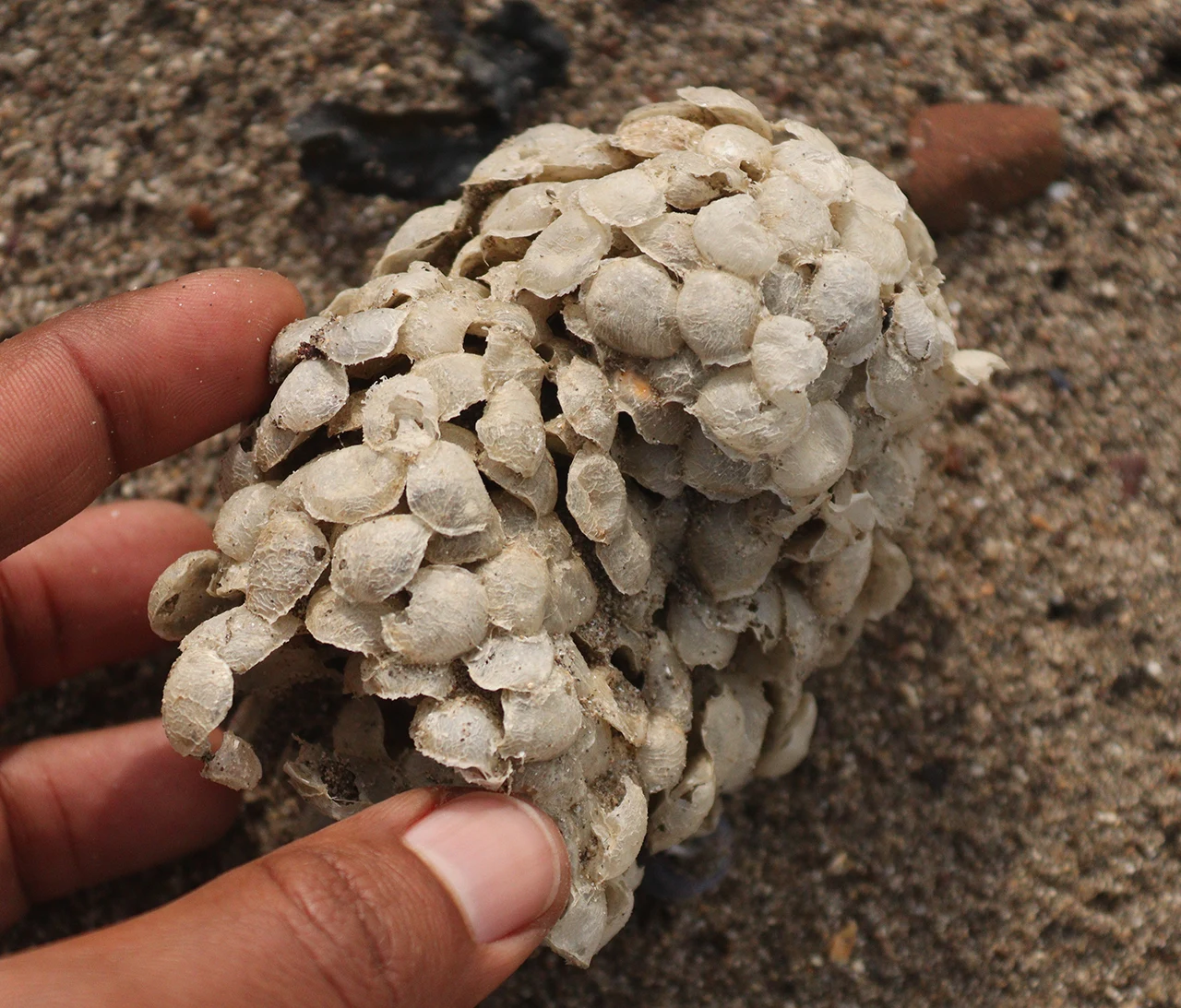
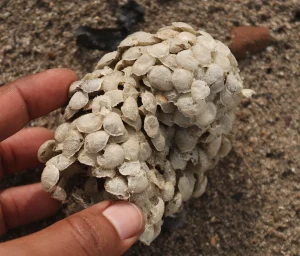
Another beach discovery that can be confused with human litter. In fact, these are empty egg cases bundled together. The eggs were laid by the whelk – a common sea snail found around Ireland’s coasts.
Photo taken: April.
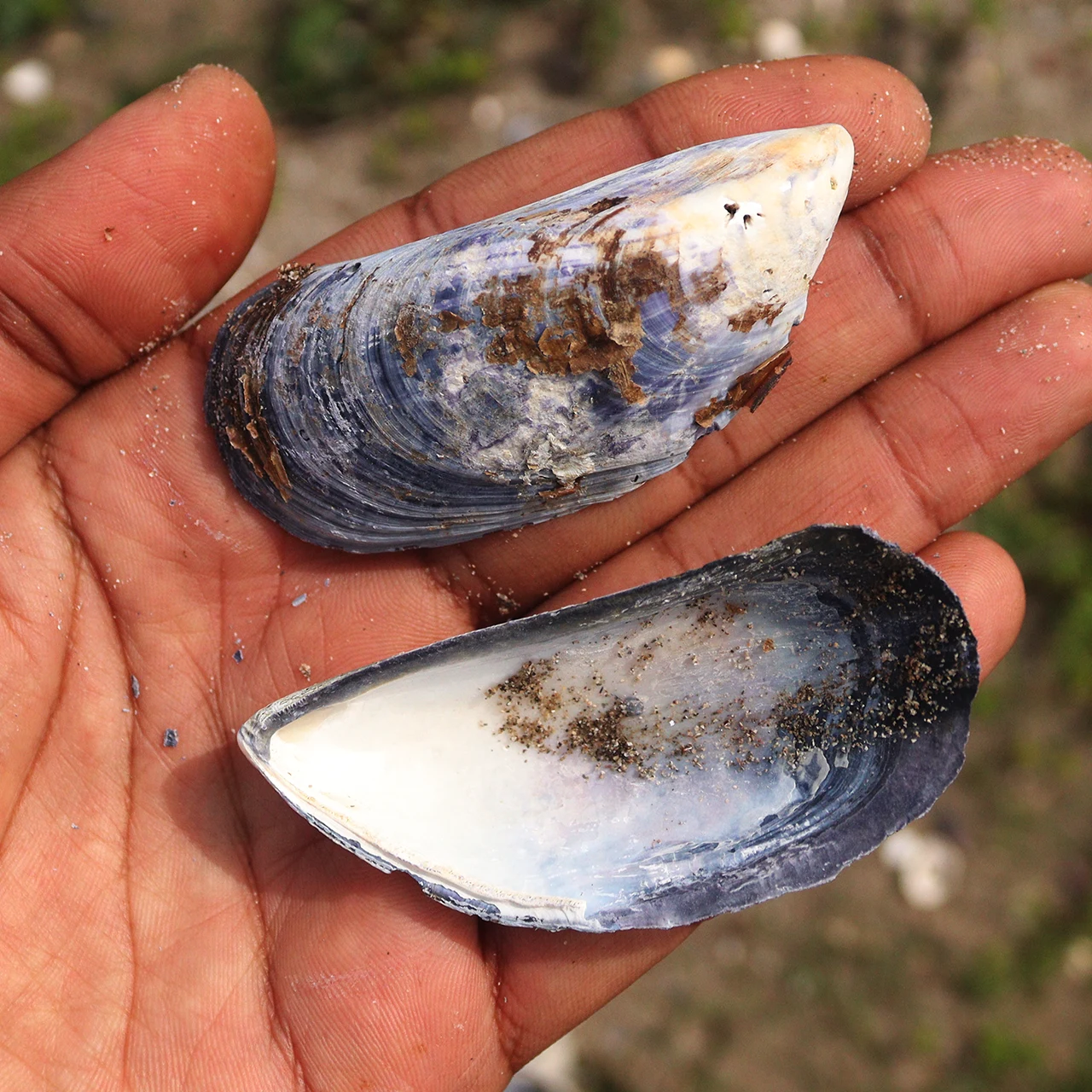
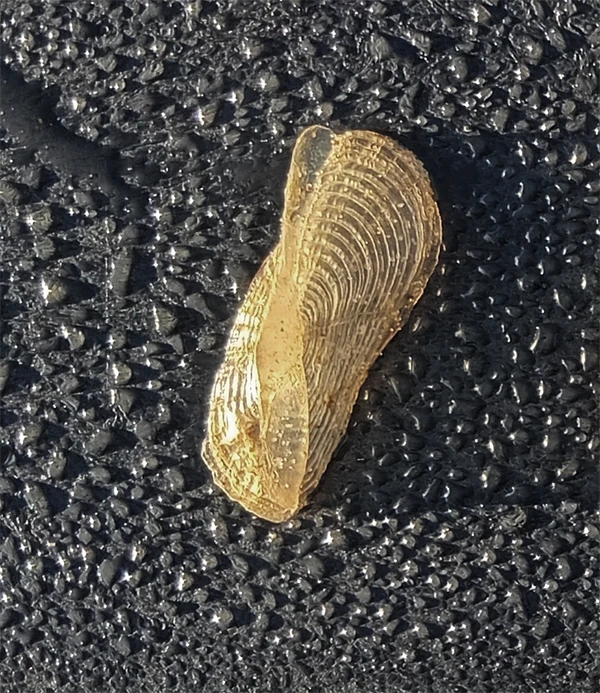
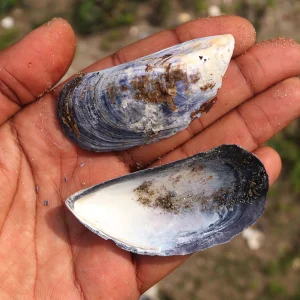
A regular delicacy in many restaurants and great measurer of coastal pollution, blue mussels are luckily very common across Ireland’s coastlines.
Photo taken: April.
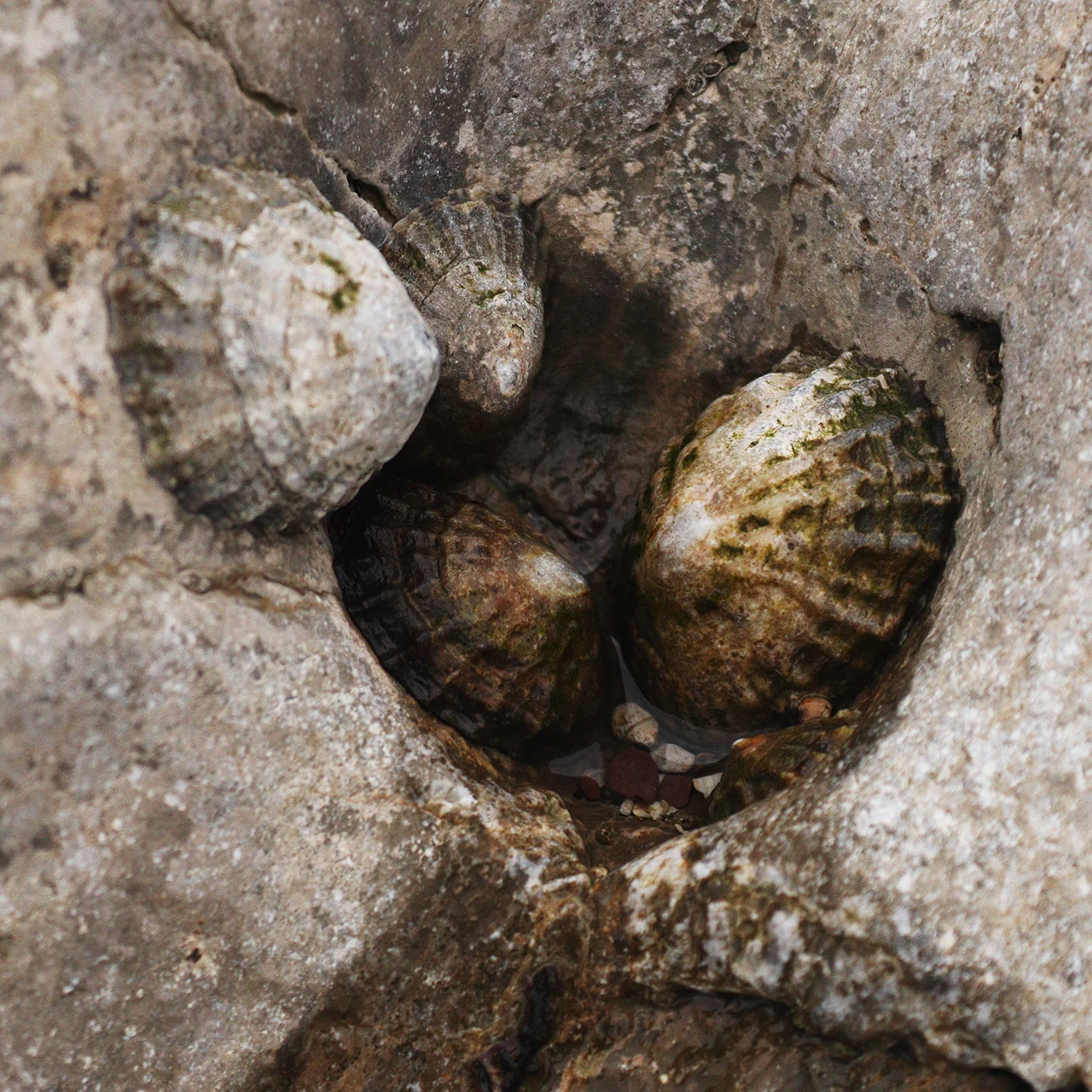
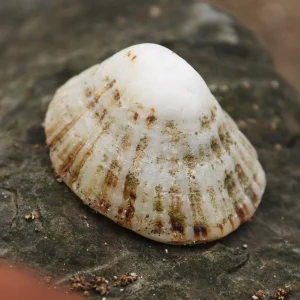
Limpets are feisty. They love gnawing on rocks, and they’re so intensely glued to the surface you’ll find them on. If you listen closely, you might even hear them gnawing!
While their empty shells may look like mussel shells, they’re instead snails.
Photo taken: April.
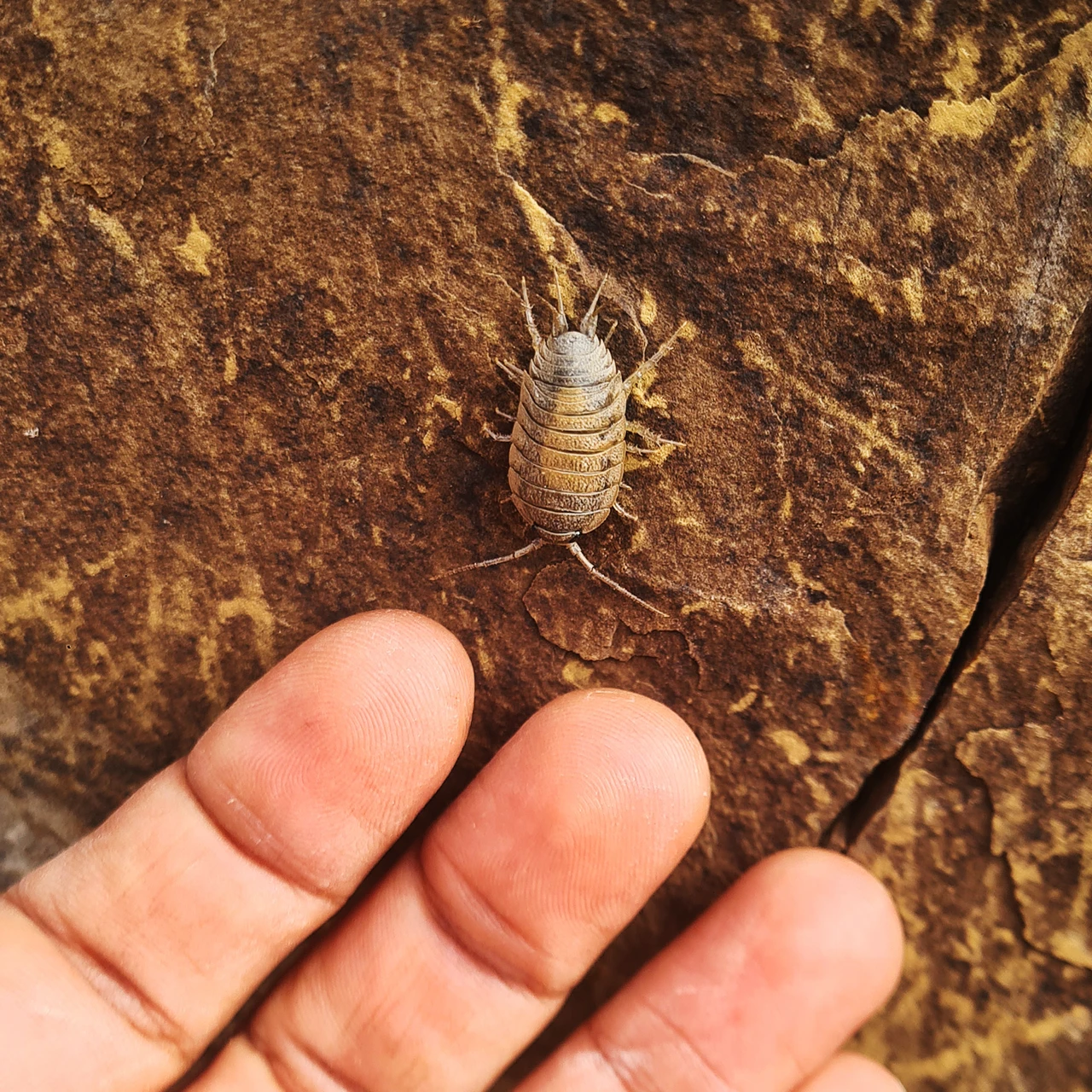
Like the woodlice in cities and houses, sea slaters hide away in dark tight spaces and like humidity. They’re sometimes referred to as sea roaches; but are actually crustaceans like crabs, hermit crabs and barnacles, while cockroaches are insects.
Photo taken: August.
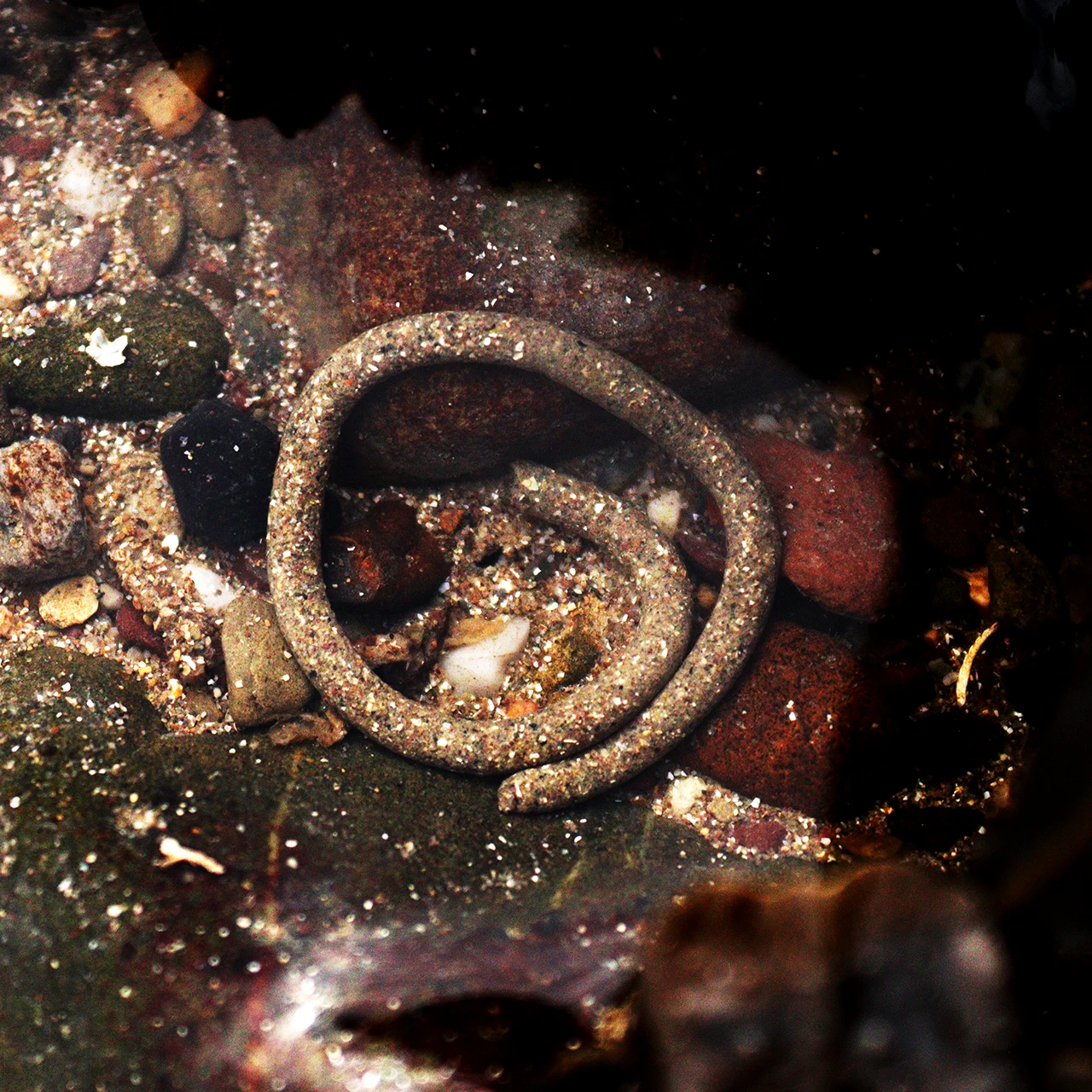
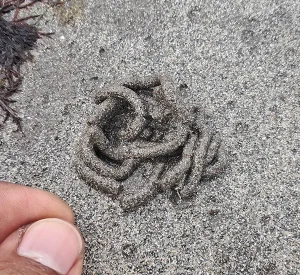
Lugworms are indeed worms that leave these tubes of sand behind after they’ve burrowed.
Photo taken: April.
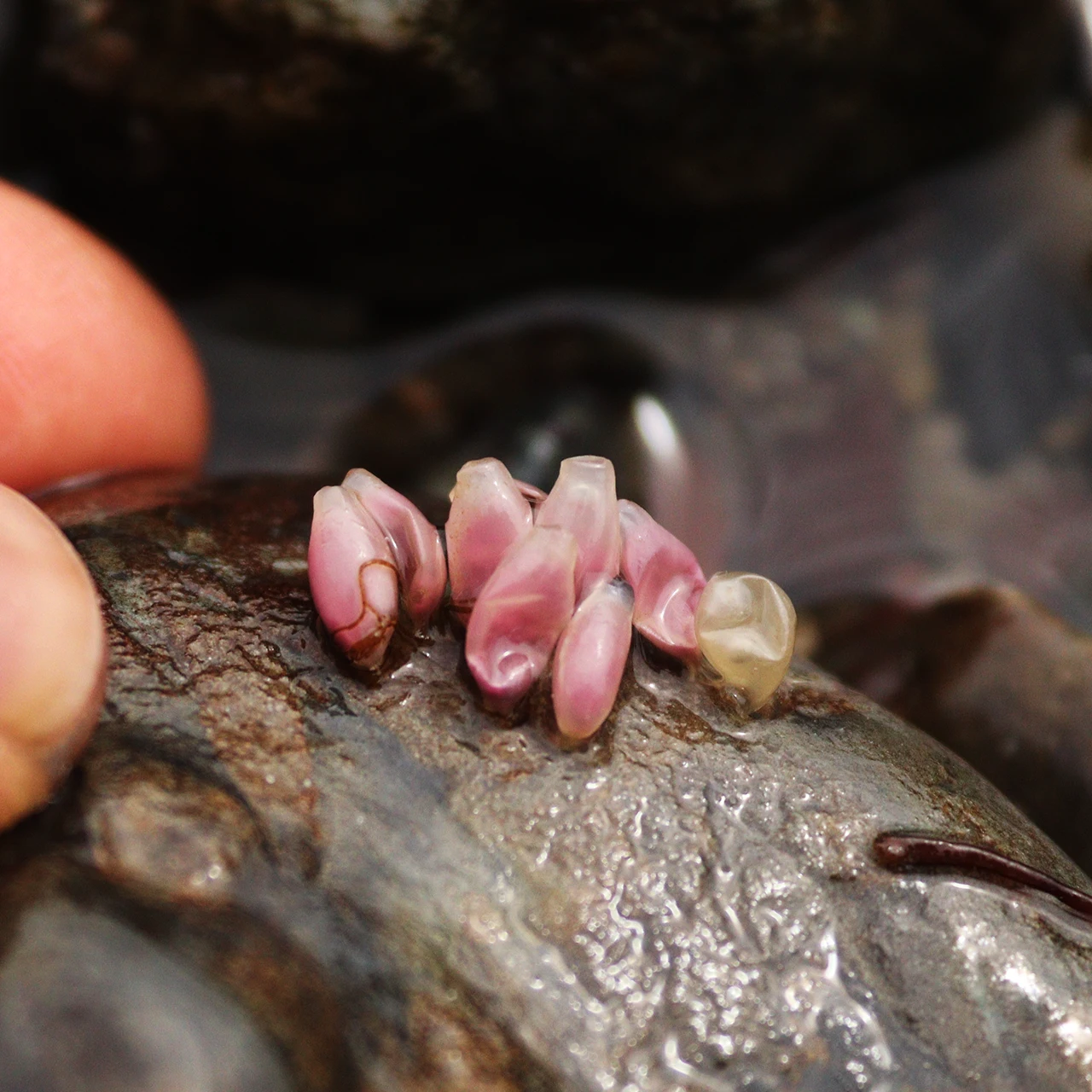
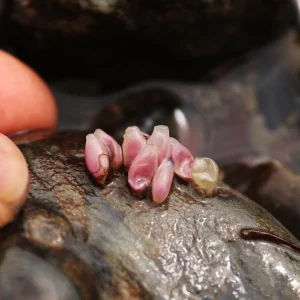
One of the reasons why I started doing this page was to make it a personal project to learn more about the life around Cork’s coasts. I did not know what these pink things were until I was researching whelk egg cases, and then found out that dog whelk egg cases looked a bit different, as seen above. Both are types of sea snails.
When dog whelks are adult, they hunt for other animals like barnacles and mussels. But they are in turn hunted by birds such as sandpipers.
Photo taken: April.
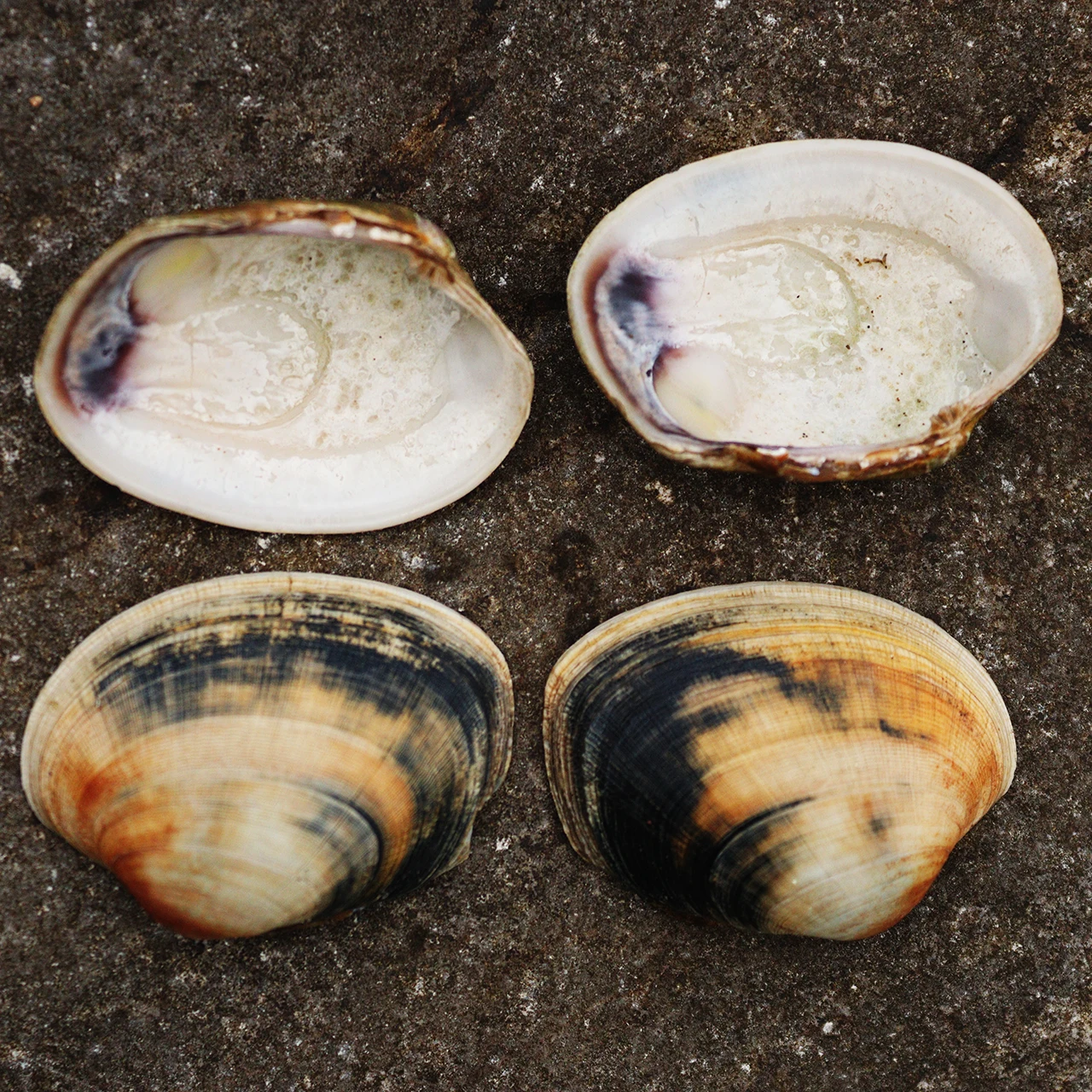
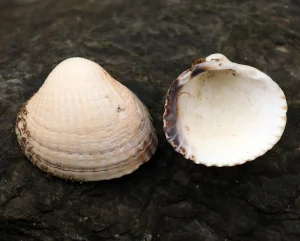
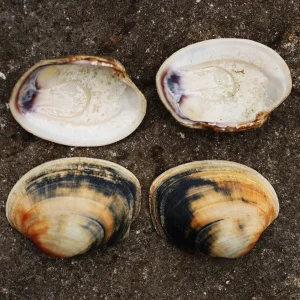
One of the hard ones to identify! Banded carpet shell are another common species of clam – again a type of mollusc. Like other molluscs, you’ll more than often find the empty shells as the animal, when it’s alive, burrows down into the sand.
Photo taken: April.
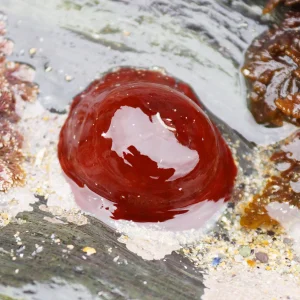
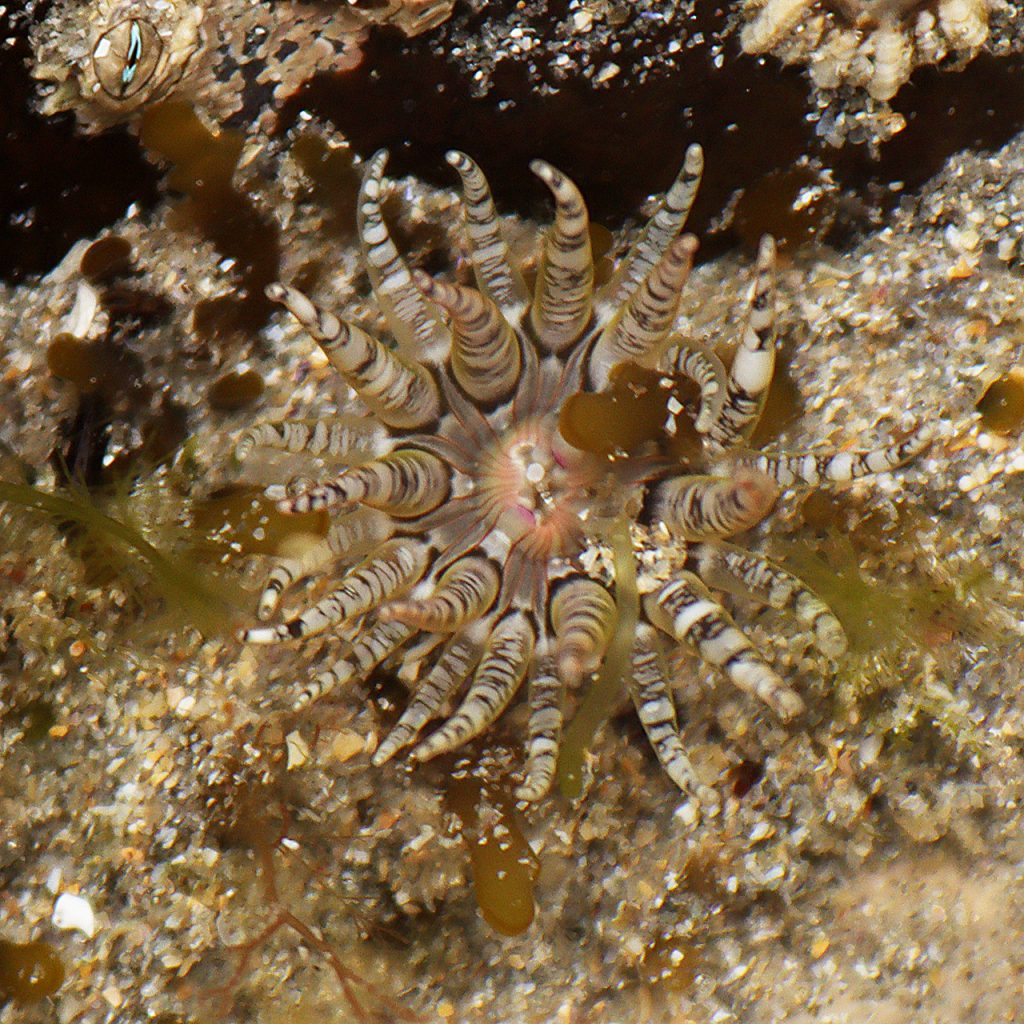
Another fierce inhabitant of the coast is the beadlet sea anemone! I simply love that their mouth is the same hole as their anus centred within writhing circles of tentacles. They use these tentacles to catch prey and force it into their cavity – a gruesome way to go if you’re a small invertebrate. Another fun fact is that they’re related to jellyfish.
Obsessed about them to the extent that I did a post specific in honour of them here.
Photo taken: May.
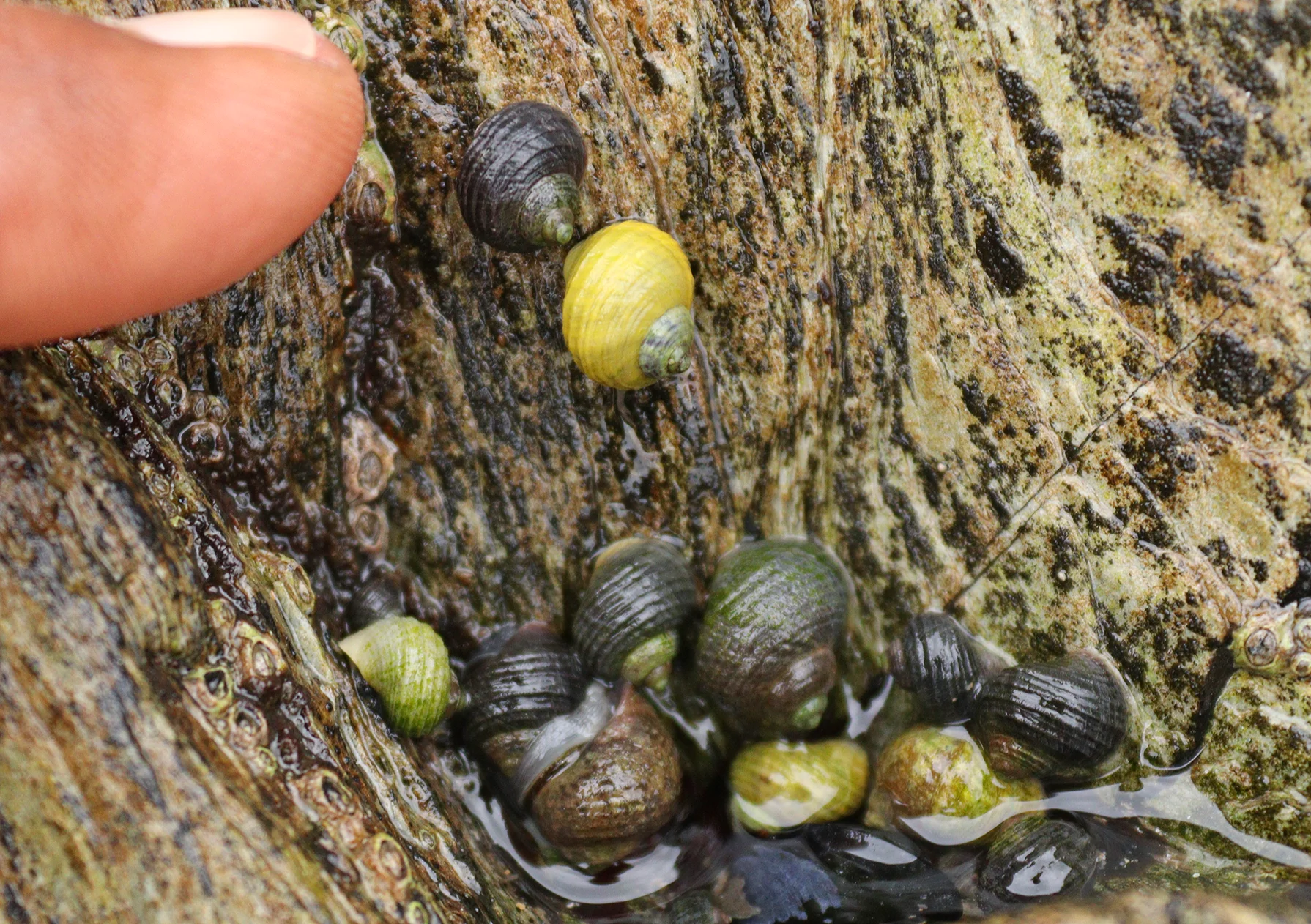
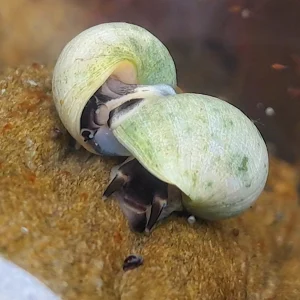
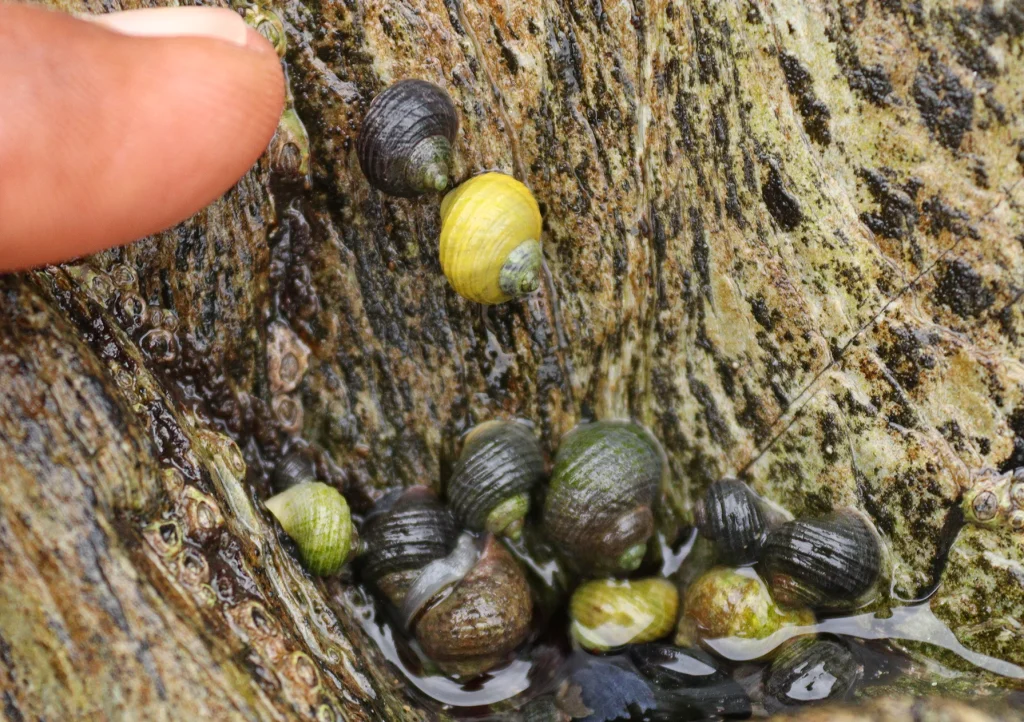
Another type of sea snails. There are a few species including the rough and edible periwinkles. If you spot them underwater, you might see the animal out of its shell.
Photo taken: May.
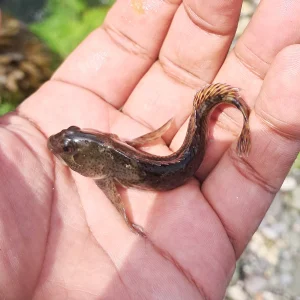
Once in a while, you’ll see little ray-finned fish zoom around in tidal pools or shallow waters along the coast. These are either blennies or gobies, and they can be difficult to differentiate between. If that wasn’t enough, there are many species of blennies and goby fish, so just be happy that you spotted one of the few vertebrates on this list.
Photos taken: May and July.
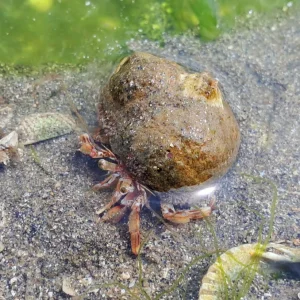
At times, you may see a snail shell move across the sand A LOT faster than any snail can move. Though it once belonged to a snail, it now houses a hermit crab. These are timid, frightened little crustaceans rarely seen outside of squatted shells.
This is why some researchers recommend that coastal visitors don’t bring snail shells along with them – there needs to be enough for hermit crabs to claim.
Video taken: June.

Moon or common jellyfish are likely the jellyfish you’ll see along Irish coasts. They often appear in large numbers as blooms over large stretches along the coast.
A key feature is their four purple-blue internal rings in their bell.
Photo taken: July.
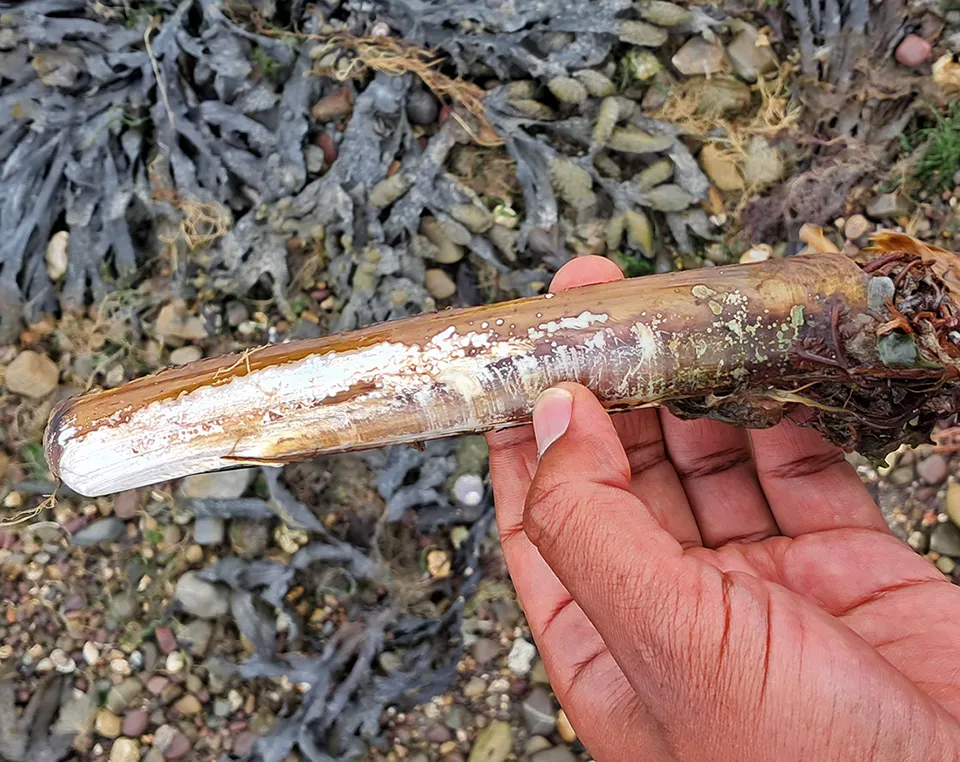
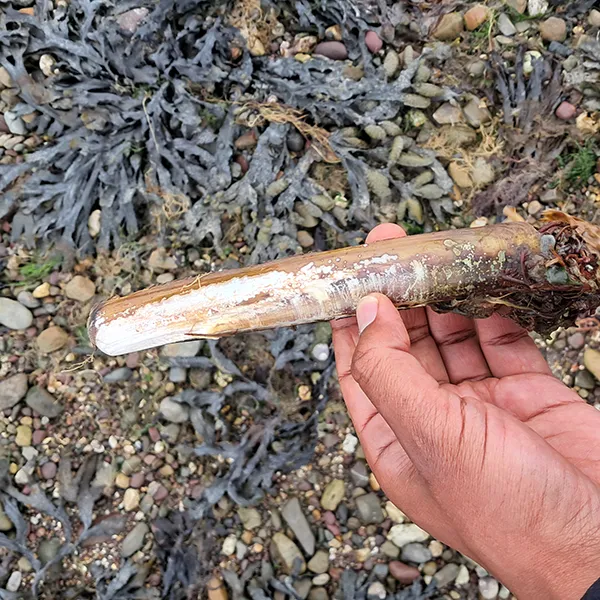
Another type of mollusc, though the largest on the list here. Razor shells or clams live largely buried in coastal sediments. If you see bubbling sand or small sprays of water from holes along the shoreline, that’s like these animals roaming around below.
Photo taken: June.
Photos taken: July.
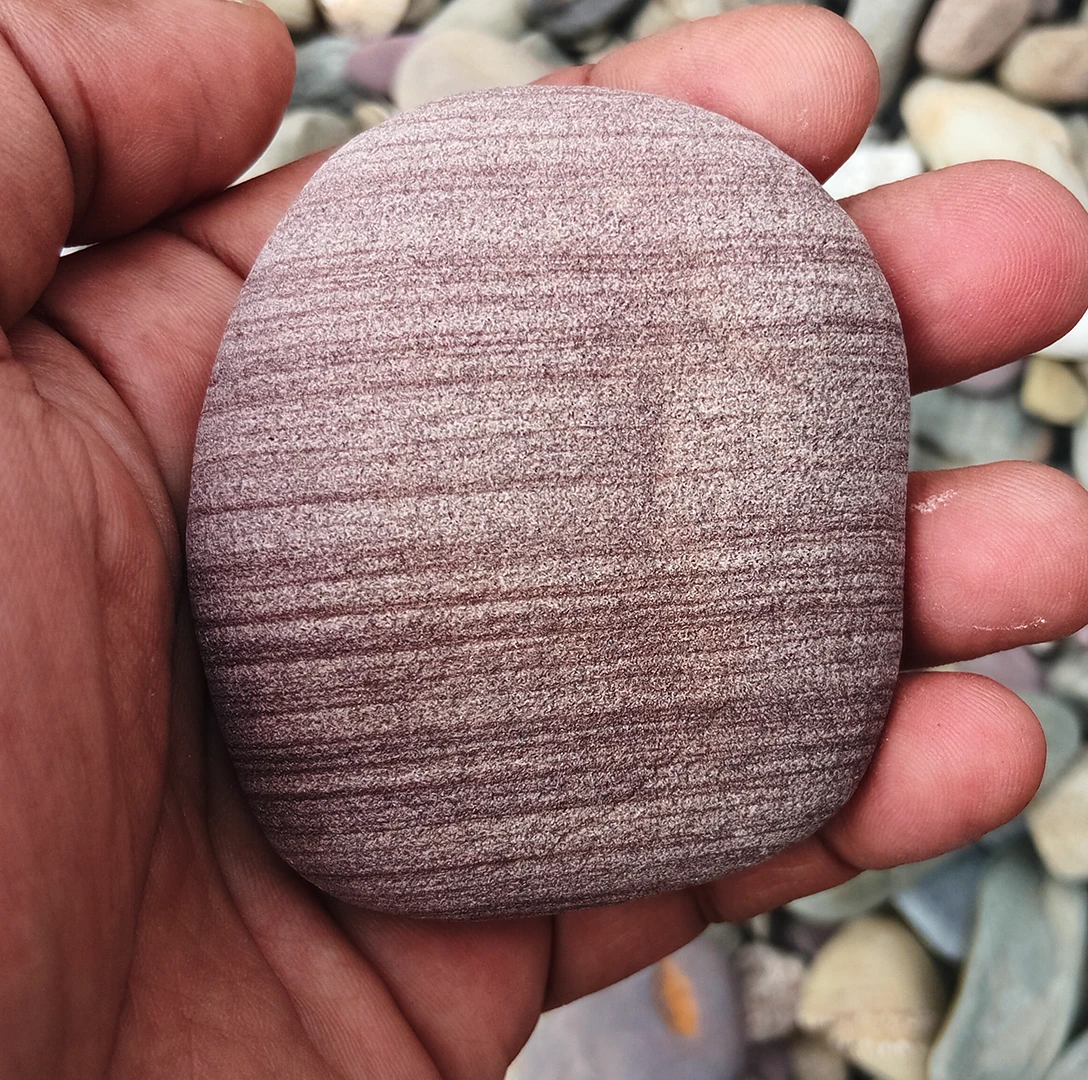
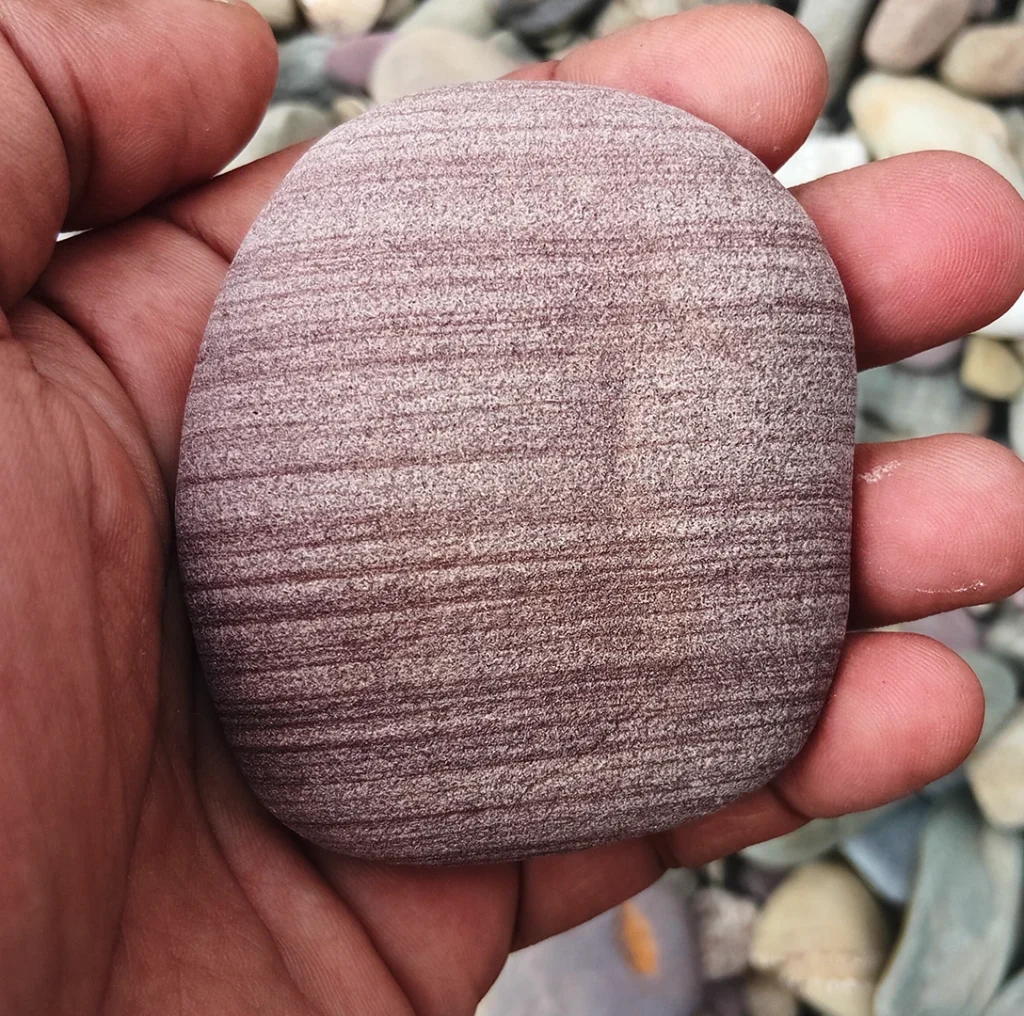
Most of the rocks that you’ll find along the coasts and beaches of Cork are Old Red Sandstone. This is such a sandstone with beautiful planar bedding. What you’re looking at is the calm layering of sediments from when the rock material was loose sand and mud.
Back then about 360 million years ago, the grains would’ve been lain under tranquil conditions on top of each other, eventually creating these linear features over long time. These features would then have been preserved over millions of years as the sediments hardened into rock.
The red colour gives away the sediments would perhaps have been laid under dry conditions on land.
This rock is from Ringaskiddy.
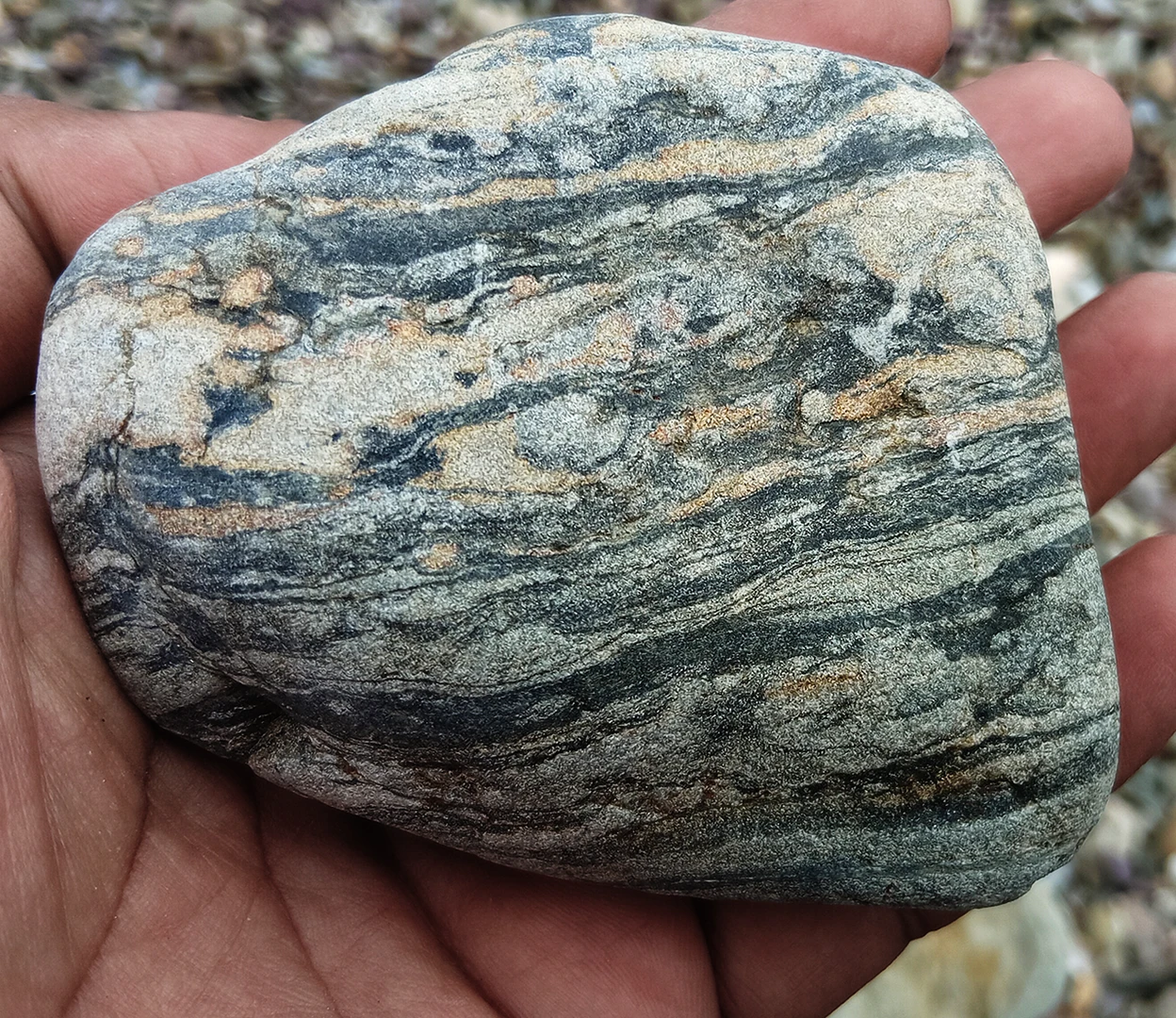
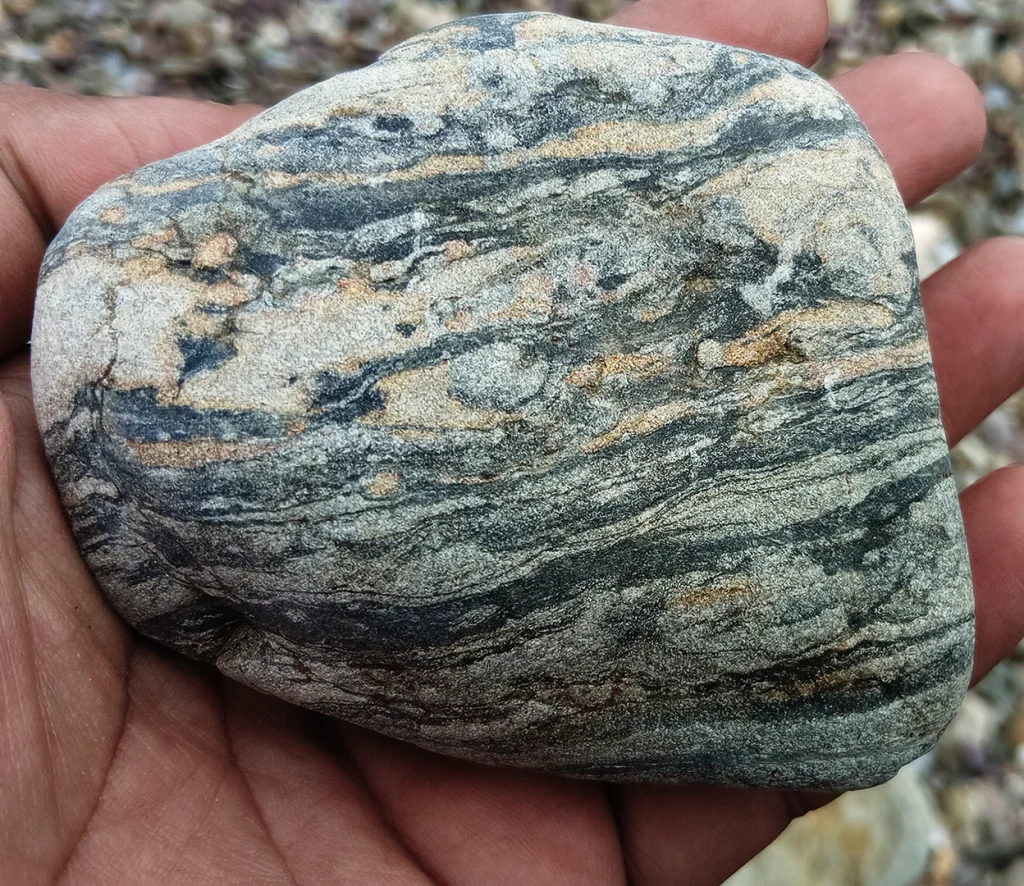
Even seasoned rock enthusiasts would look at this rock and deem it to be a gneiss-rock. However, as much as it looks like a gneiss, this is a sedimentary rock made of mud and sand.
The swirling structures come from turbulent waters pushing sediments into various disordered flow structures. One interpretation could be that when the rock was loose sediments, a raging river, mud-dwelling animals, underwater avalanches or strong wave action pushed the sediments around as seen above.
This one is from Ringaskiddy.
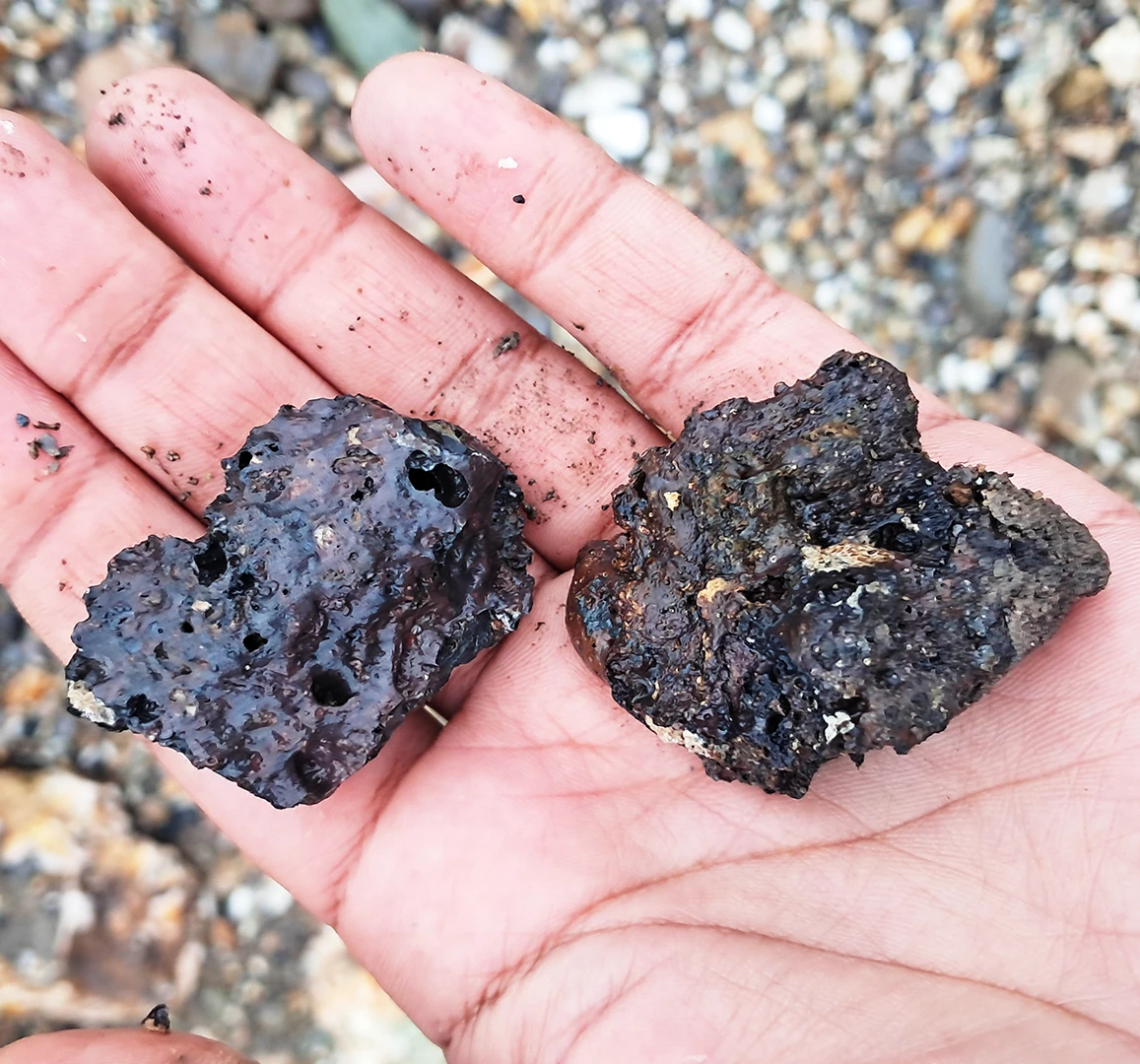
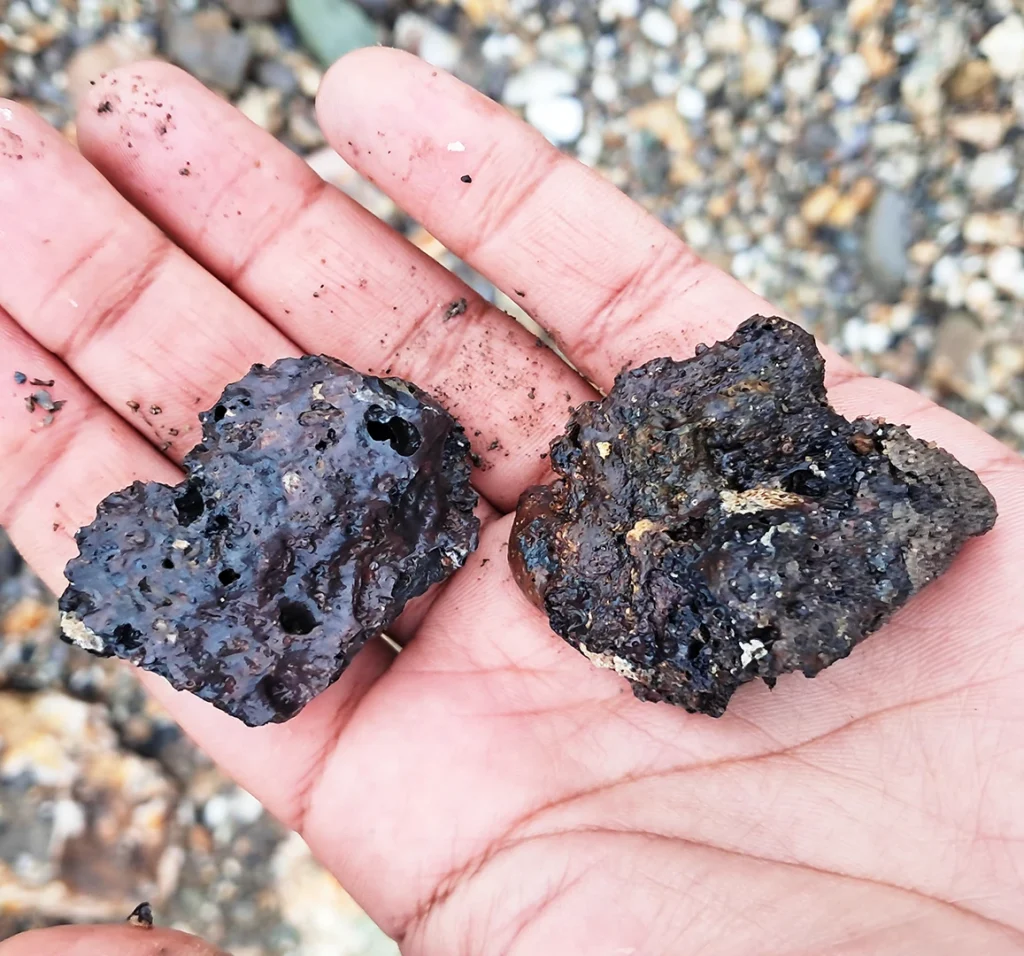
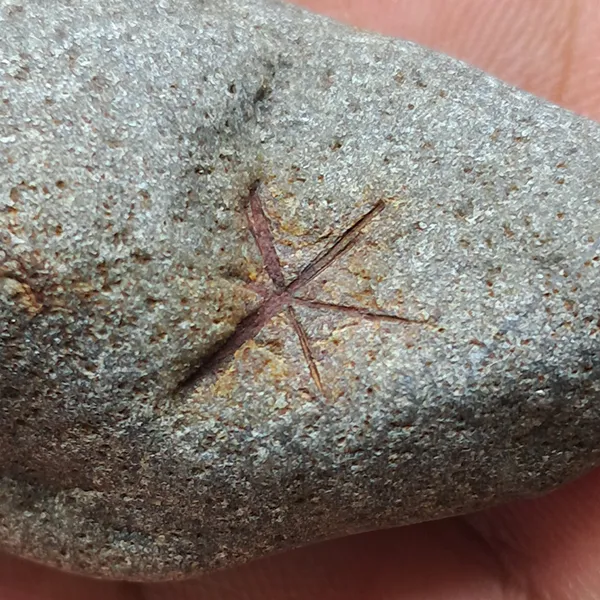
Occasionally these “chewed-up” nodules will wash up along with Old Red Sandstone-rocks. As the Old Red Sandstone is rich in iron, these nodules will form as the iron precipitates out of the rock layers and form these nuggets in cavities inside the rock.
These are from Allihies.
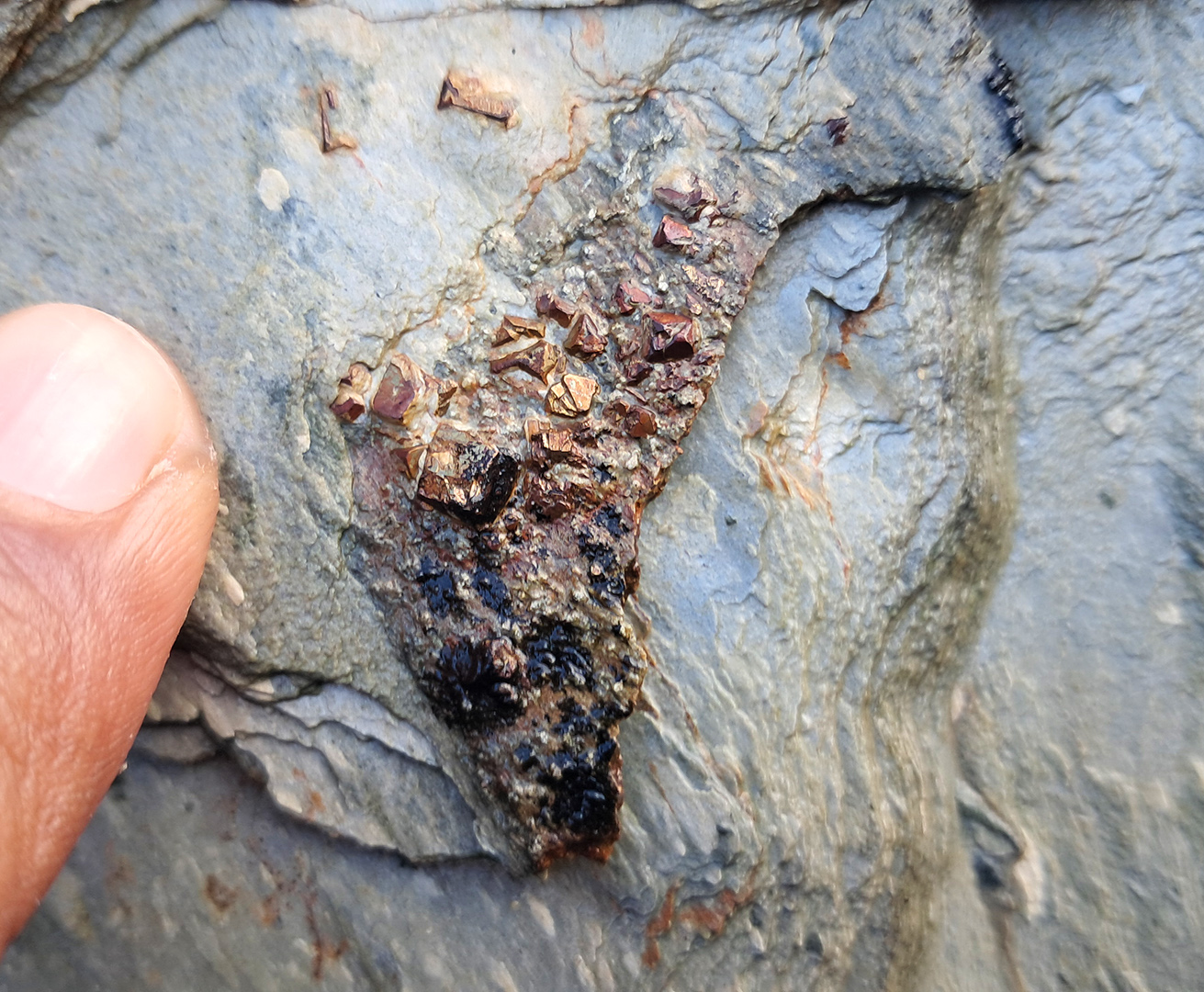
Though you may be lucky to find small amounts of real gold in the Old Red Sandstone, you’ll likely find many times more the amount of fool’s gold; also known as the iron sulfide mineral pyrite. The colour and specularity may be deceiving, but the big giveaway is that pyrite often grow cubic and very angular crystals. Moreover, pyrite is noticeably brittle while gold is more malleable.
These are from Sherkin Island.
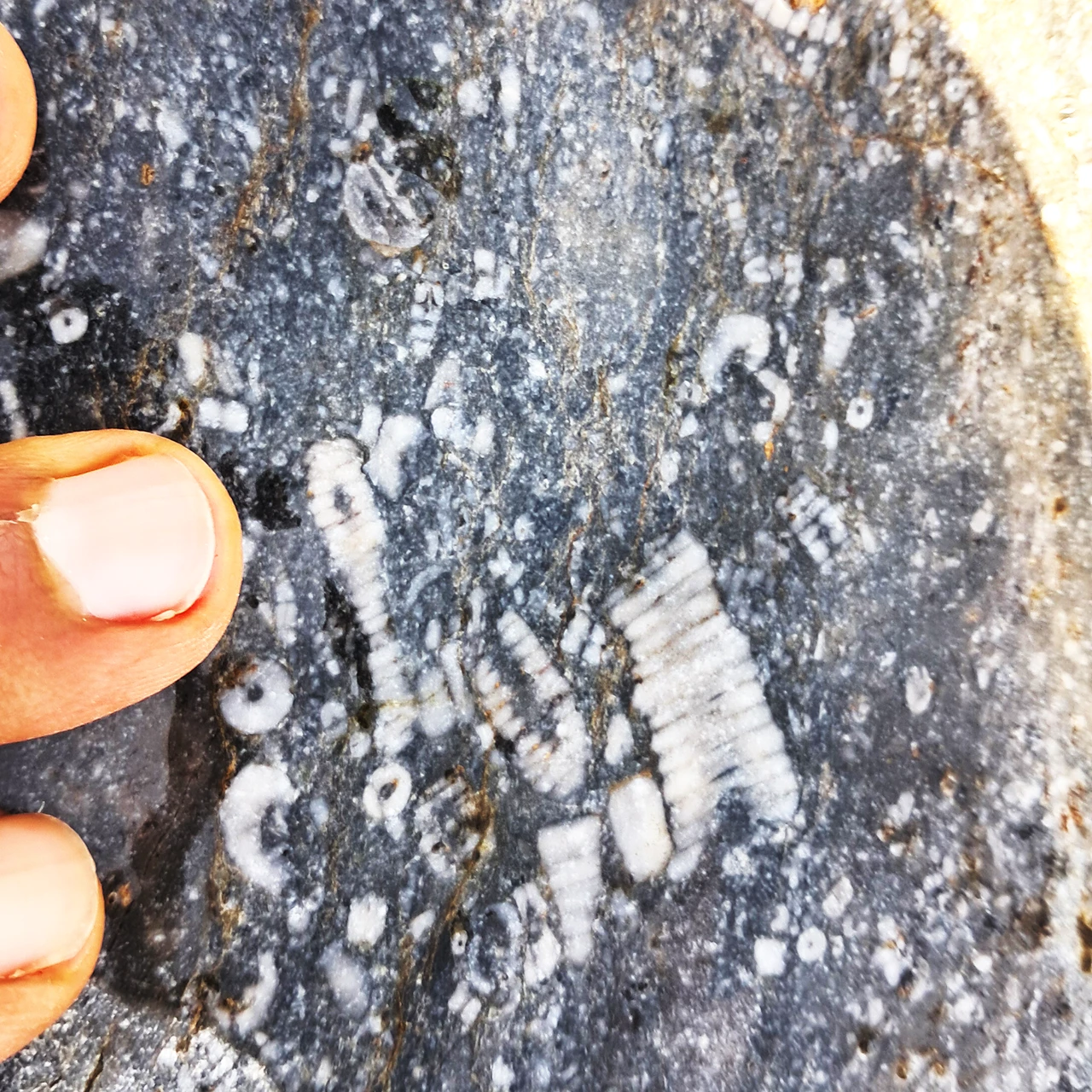
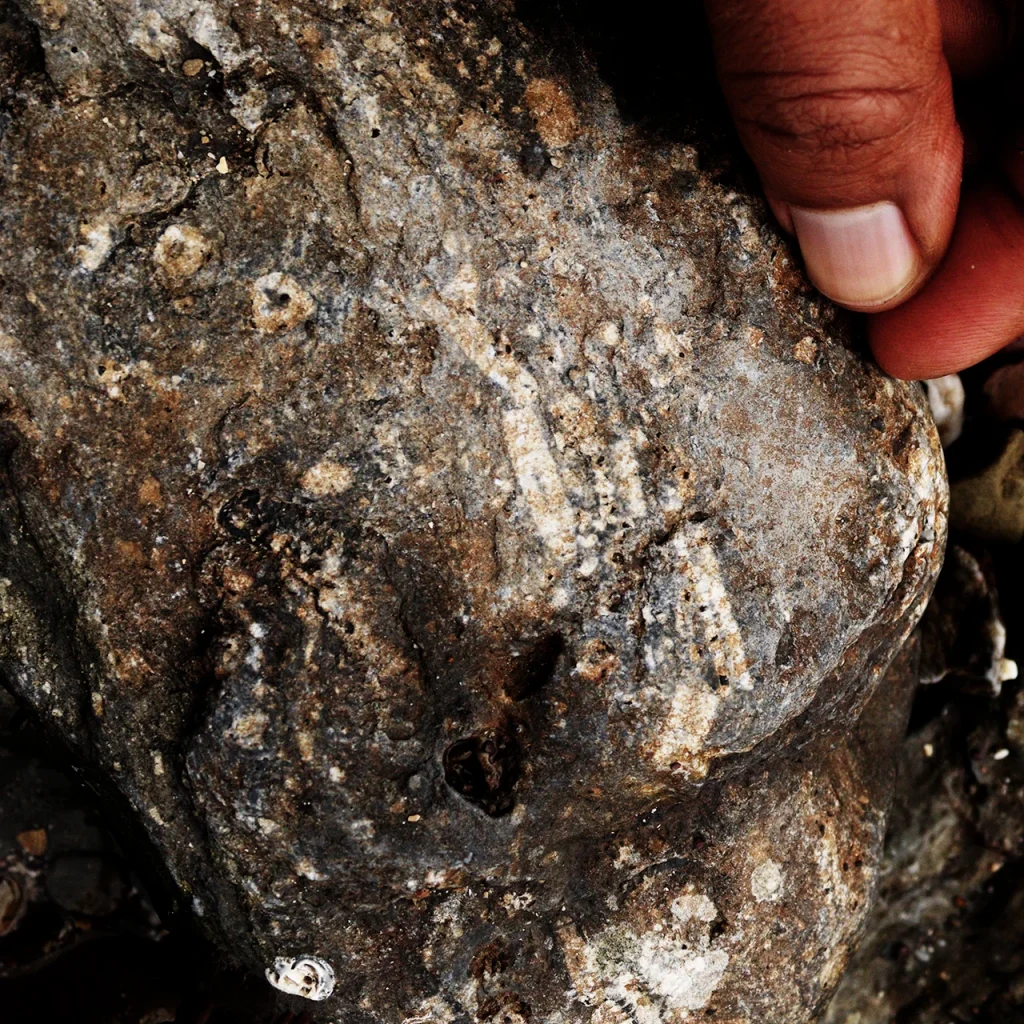
Crinoids are a type of marine animals that came about hundreds of million years ago and still live today. However, the crinoid fossils you find around Ireland are mostly 350 million years old. Today these appear as fragmented white rings and cylindrical shapes in limestone and mudstone rocks.
This rock is from Ringaskiddy.
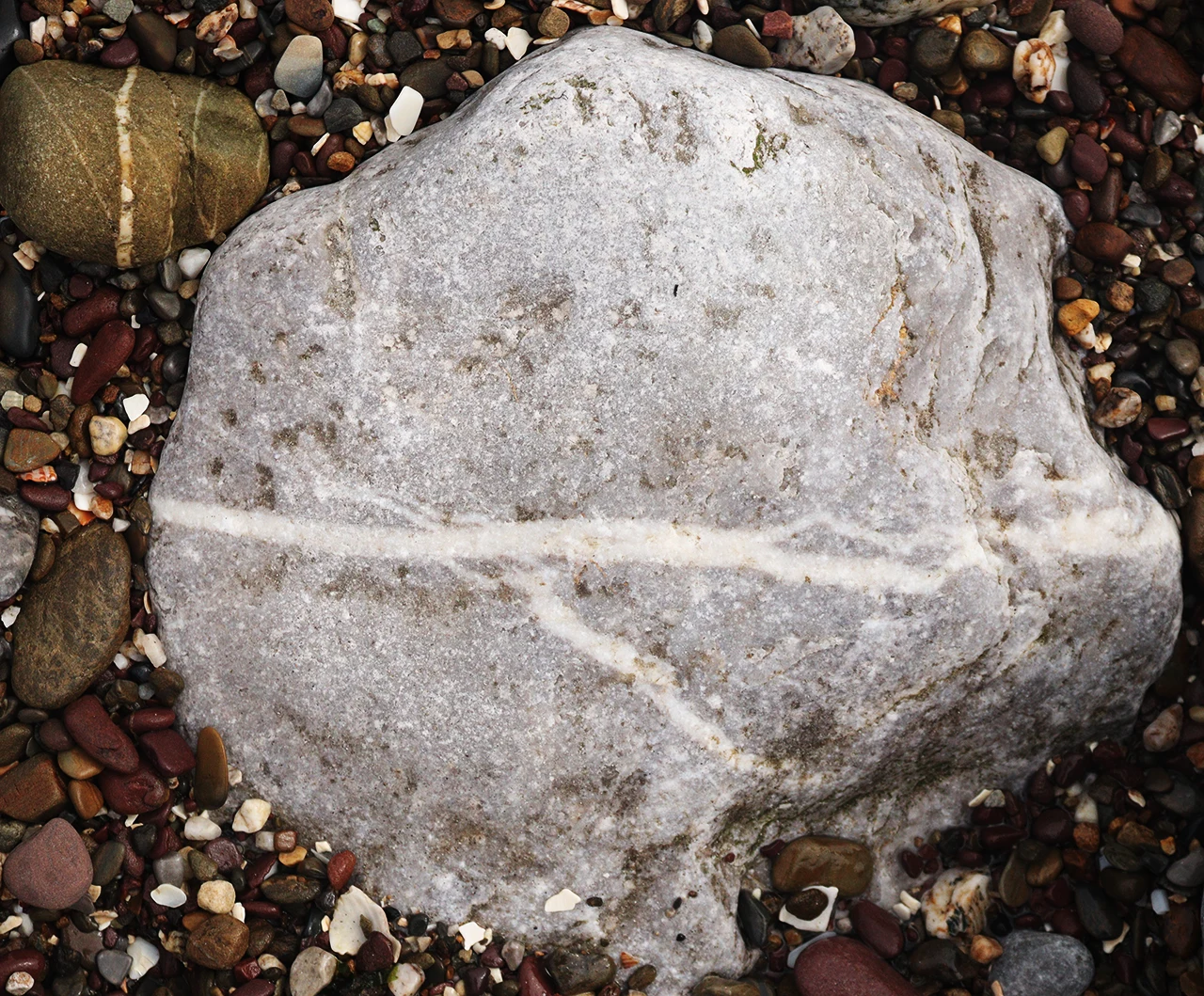
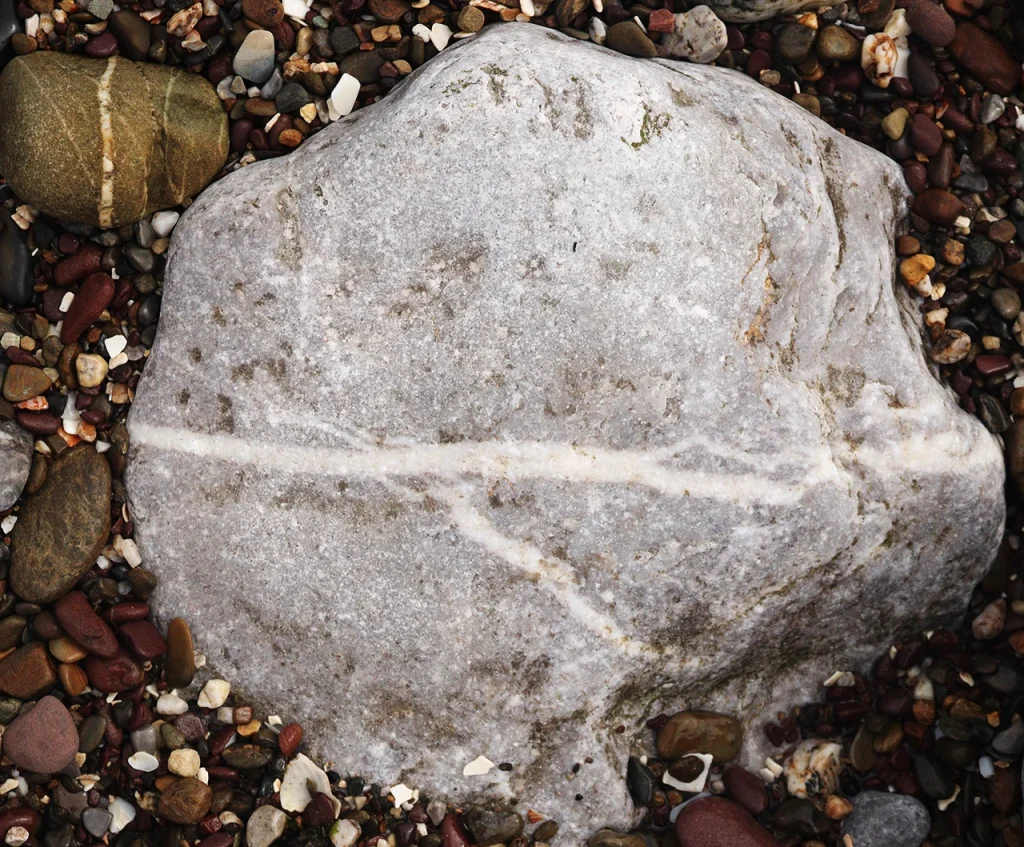
Limestone is the most widespread rock found on Ireland’s land surface. As such, it can get trivial seeing one exposure of it after another. Yet once you start getting familiar and attentive to its many properties and details, it can get exciting pretty quickly.
The rock above is such a limestone with 350-million-year old fossils inside. The white vein is likely secondary mineralisation; meaning this white stripe of concentrated minerals recrystallised after the main rock was formed.
Often with carbonate rocks, such as limestone, minerals recrystallising are often calcite, dolomite, magnesite and aragonite. Calcite is often the contender we go with when seeing white mineralisation in limestone rocks.
This one is from Ringaskiddy.
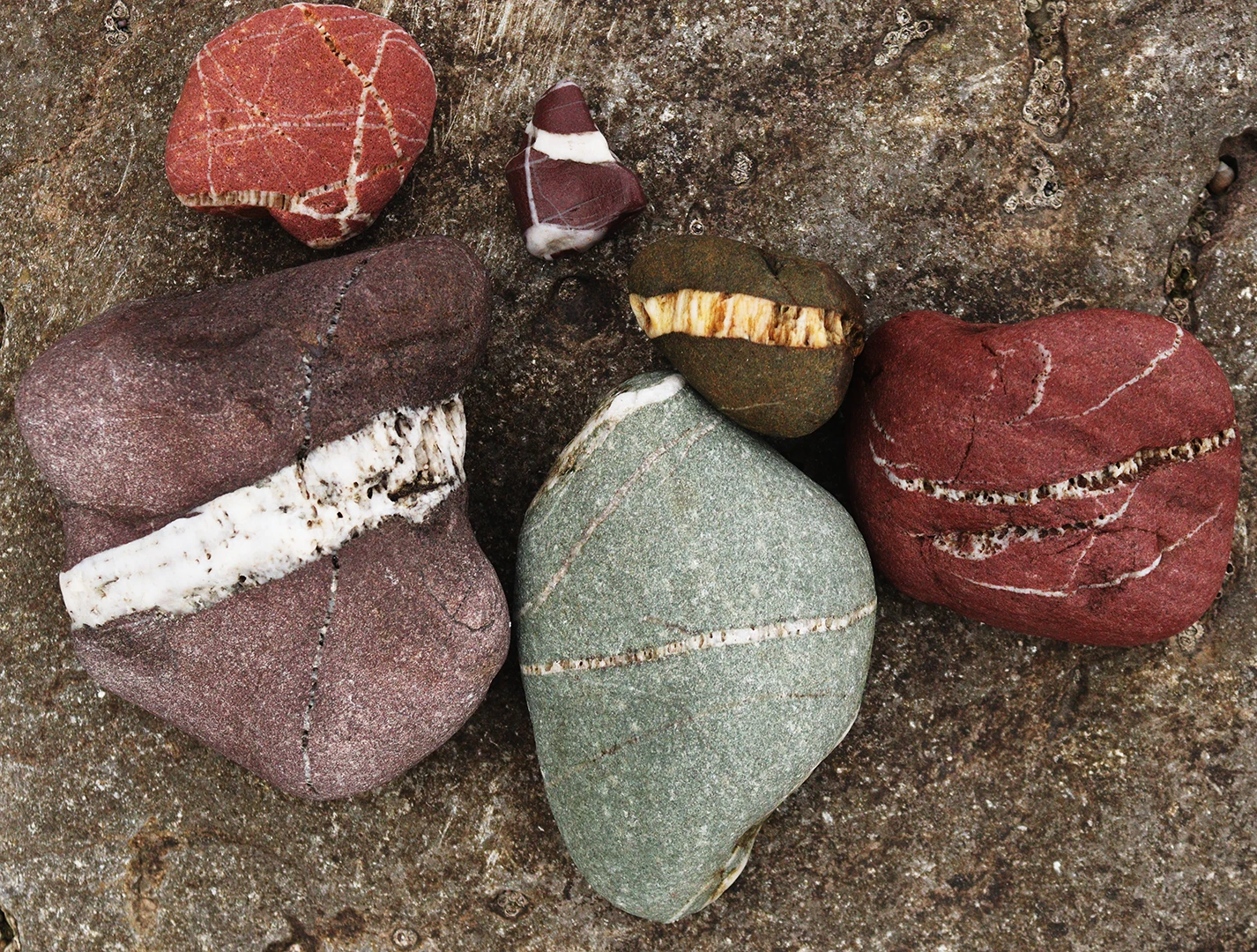
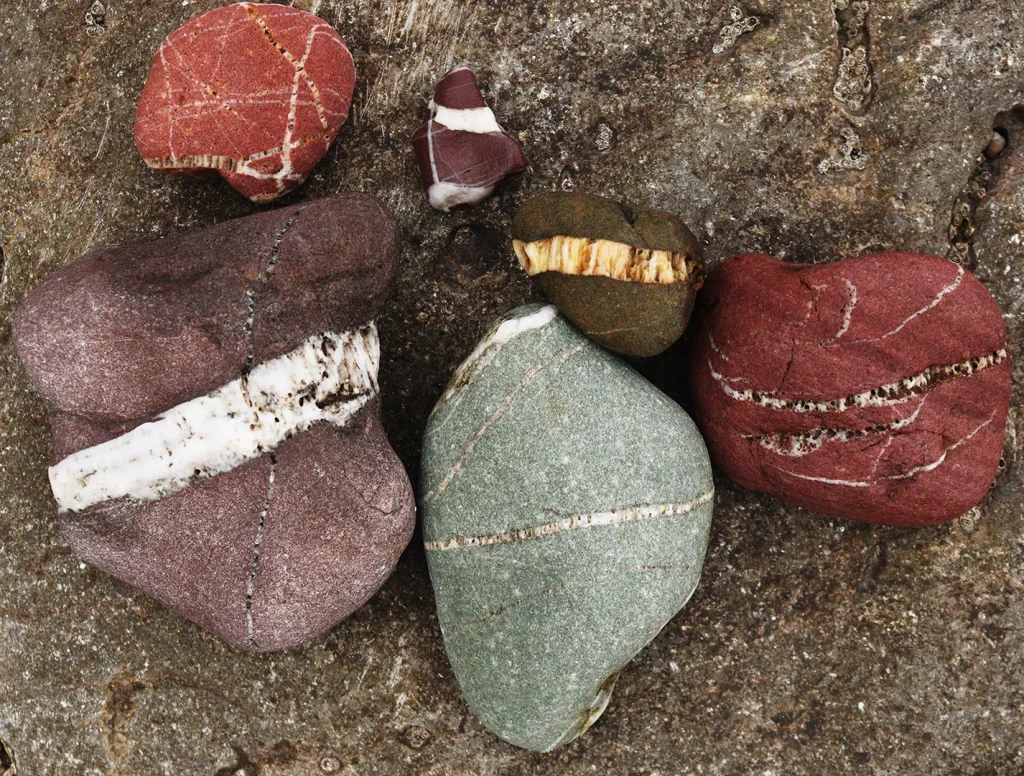
The vast majority of County Cork’s surface is made of sedimentary rocks (rocks like limestone, siltstone, sandstone and mudstone that have sedimentary origins). In the picture are various siliciclastic rocks (meaning sedimentary rocks with minerals that are silica-based) shown with white stripes passing through them.
These white stripes are mineralisations that formed after the rock was formed. Since these are siliciclastic rocks, we can assume that the white stripes are primarily the mineral quartz (which is made of silica and oxygen).
In more recent times, the rock layers would’ve broken up into these individual stones that would’ve then have been smoothed by the waters of the Lee and the ocean.
These are from Ringaskiddy.
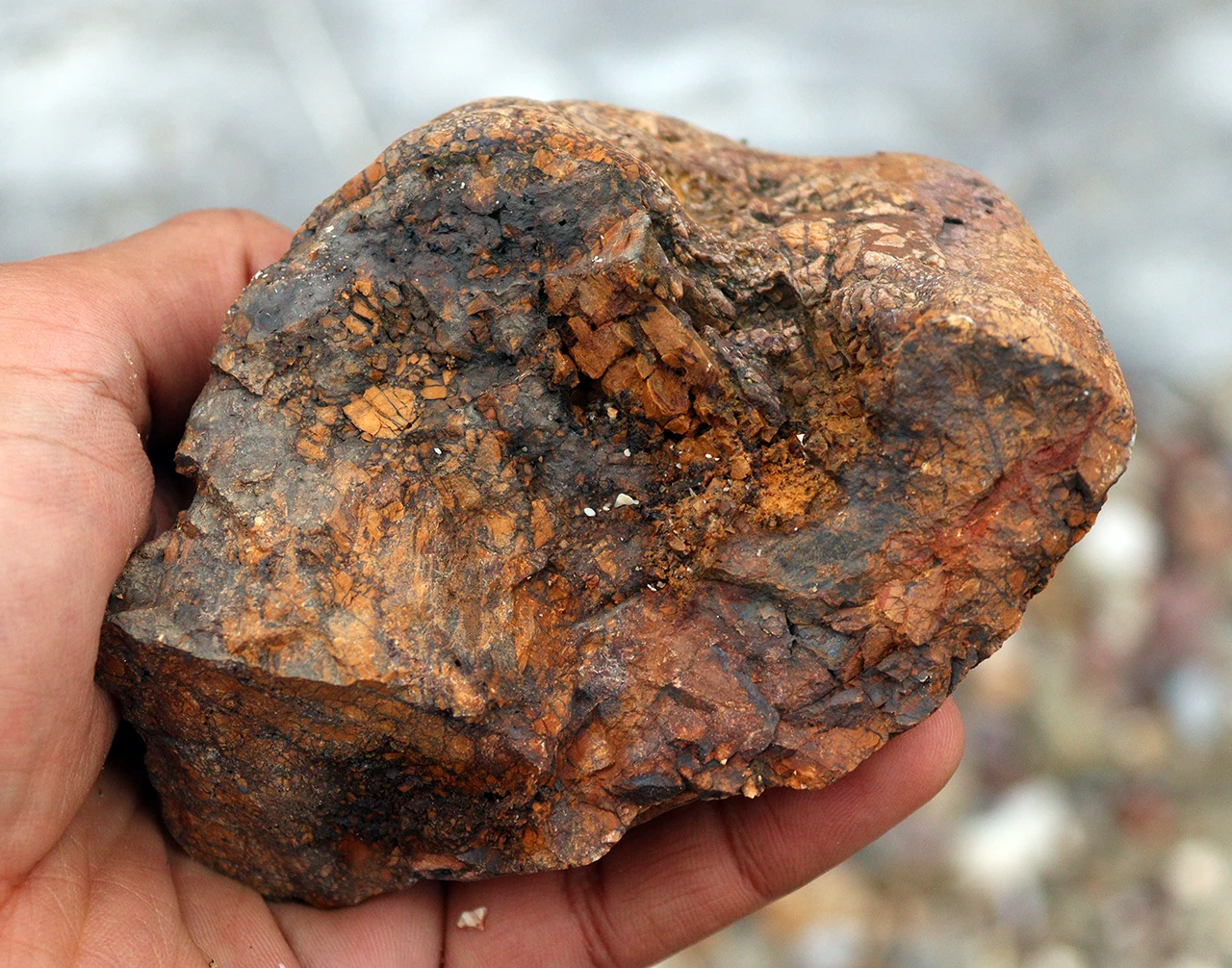
Breccia or brecciated rocks are easily recognised by smaller angular rock shapes meshed together through a natural cement, as seen in the picture. In this case, this rock is made of oxidised iron and sediments giving it a rusty look (because it is literally rust).
The iron likely came about as secondary mineralisation after the original sedimentary rock was formed. The brecciated state could’ve come about from an underwater avalanche or fault movements such as earthquakes.
This one is from Ringaskiddy.
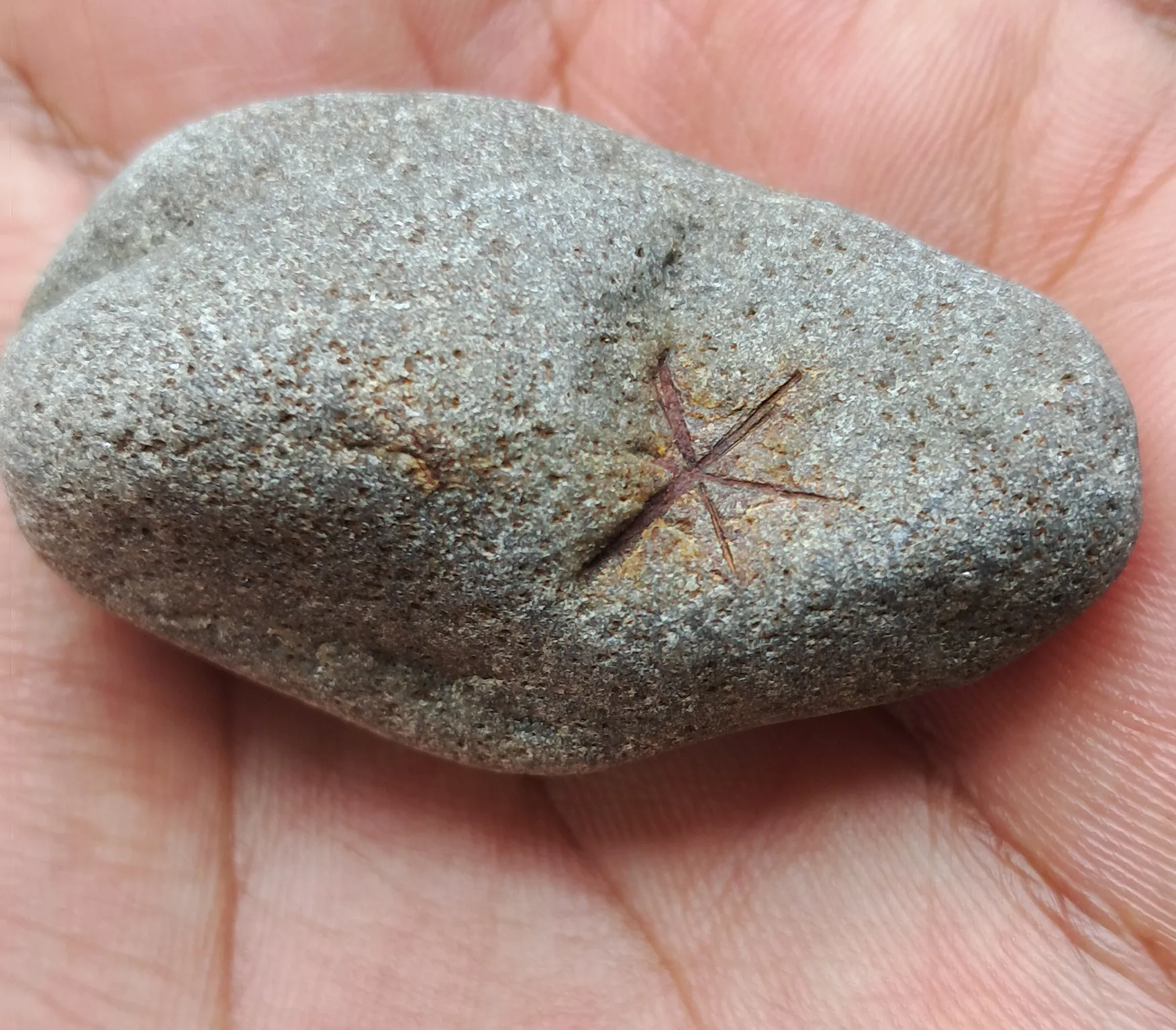
Different minerals grow in unique ways due to their inherent properties. Arsenopyrite is like pyrite a sulfide mineral and common in sedimentary like the ones found all across Cork. And no, this is not a fossil.
As with pyrite, different minerals can manifest in near perfect mathematical geometries.
Here you see arsenopyrite crystals twinning cyclically – meaning that each of the six crystals above grew symmetrically from the same microscopic lattice. If you take an angle protractor, you’ll see that each angle between the crystals is almost exactly 60° – combined equalling 360°.
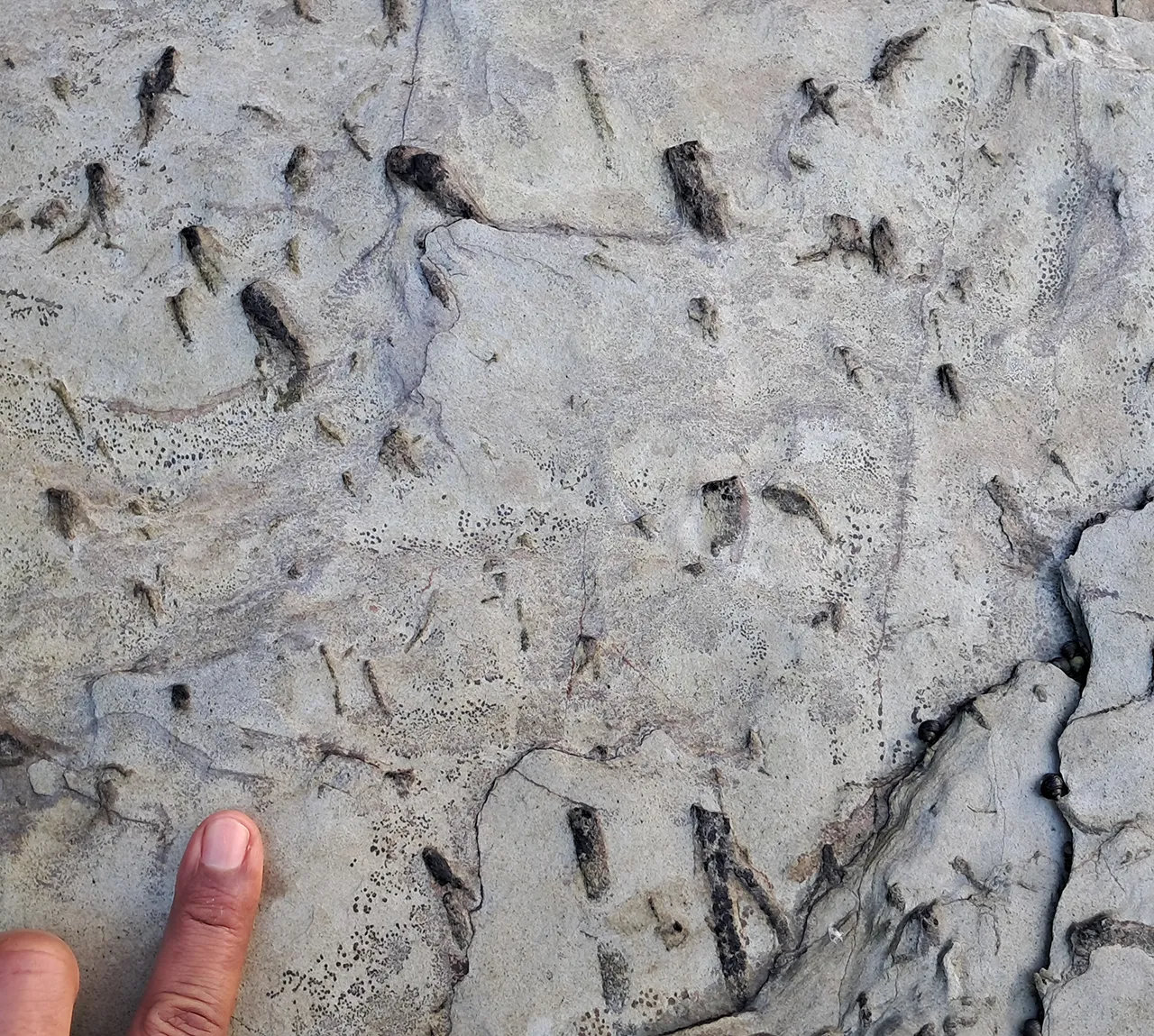
360 million years ago, small animals were burrowing through the soft warm sediments of the Munster Basin. Today, these burrows are preserved as small, elongated three dimensional features in the Old Red Sandstone of Sherkin Island.
We can’t be sure what kind of animal made these burrows as no fossils of them have been found yet. These trace fossils are common enough throughout West Cork’s rocks and tell us that there was plenty of life on land back in the Late Devonian Period.
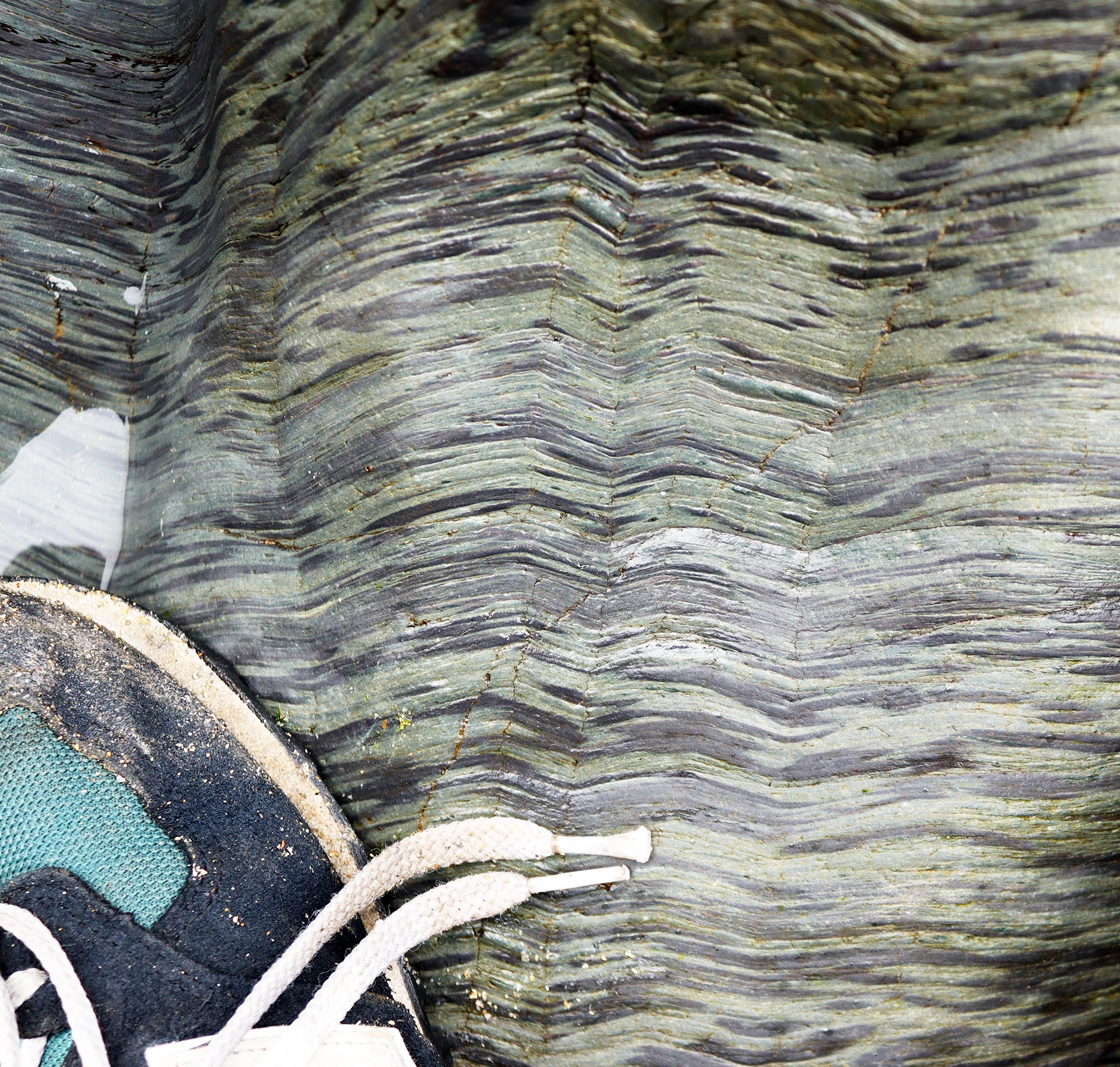
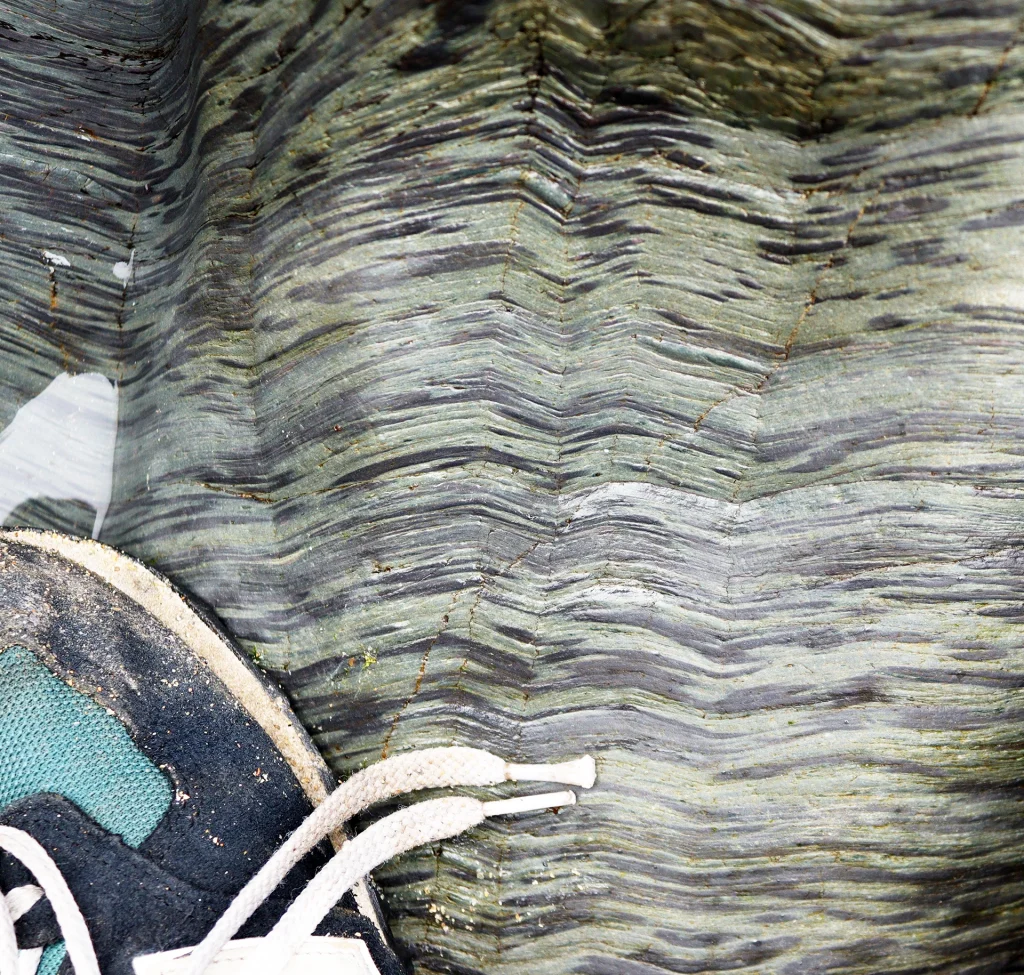
Wavy bedded textures can be found on many of Cork’s rock outcrops and pebbles. These hint at conditions where water was rhythmically moving fine-grained sediments back when the rock was merely loose sediments. This could be through ripple-forming processes in a river or a tidal-influenced environment such as a lagoon.
The dark streaks here are referred to as lenses and are made of finer sediments. As a rule of thumb, the green colour seen here indicates that the sediments were originally laid underwater back in the Devonian about 360 million years ago.
References:
Feare, C. J. 1970. Aspects of the Ecology of an Exposed Shore Population of Dogwhelks Nucella lapillus (L.). Oecologia (Berl.) Col. 5, PP. 1-18. DOI: 10.1007/BF00345973
Malham, K. S., Hutchinson, T. H. & Longshaw, M. 2012. A review of the biology of European cockles (Cerastoderma spp.). Journal of the Marine Biological Association of the United Kingdom. Vol. 92(7), PP. 1563–1577. DOI: 10.1017/S0025315412000355
Neufeld, C. J. & Palmer A. R. 2008. Precisely proportioned: intertidal barnacles alter penis form to suit coastal wave action. Proc Biol Sci. Feb 5;275(1638). PP. 1081–1087. DOI: 10.1098/rspb.2007.1760
Parry, W. T. 2011. Composition, nucleation, and growth of iron oxide concretions. Sedimentary Geology. Vol. 233, Issues 1–4, PP. 53-68. DOI: 10.1016/j.sedgeo.2010.10.009
Petraitis, P. S. 1987. Immobilization of the predatory gastropod, Nucella lapillus, by its prey, Mytilus edulis. The Biological Bulletin. Vol. 172. PP. 307-314. DOI: 10.2307/1541710.
https://www.therockpoolproject.co.uk/
https://www.marlin.ac.uk [1],[2],[3],[4]
https://cleancoasts.org [1],[2]
https://www.marinespecies.org/
https://www.wildlifetrusts.org [1],[2],[3]
https://naturalhistory.museumwales.ac.uk
https://www.discoverwildlife.com