Fossil hunting in Toe Head, Cork
Back to the Lab
Return to Toe Head!
Directly south of Skibbereen lies a geological gem – metaphorically and figuratively!
This is my second post narrowing in on the Toe Head-peninsula in West Cork, but I think it’s fair to do so again. It isn’t a widely known Irish tourist spot. But by pure coincidence, people end up arriving at this specific coastline spontaneously as part of exploring the Wild Atlantic Way – possibly not knowing about its beautiful evidence of some of the earliest tree-like plants on Earth.
Also want to acknowledge the name itself as readily suitable for a pun around the expression “from head to toe“, but I’m not good at puns!
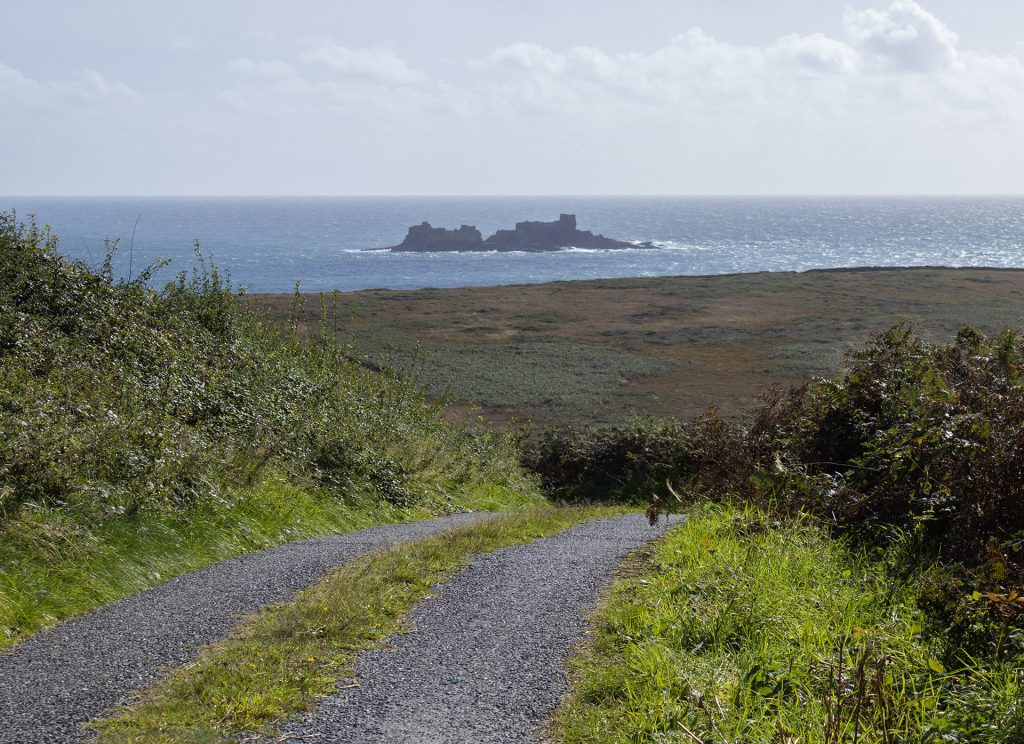
The iconic Stags – isolated Old Red Sandstone rocks 1.5 kilometres off the coast of the Toe Head peninsula.
Anyways, enough of the intro text, let’s get to the rocks right away! Moreover, I’ve already described the geology of Cork in detail in another post. This particular post here will hone in more on the fossils of Toe Head.
But let's recap a bit anyway
As much of Cork’s bedrock, Toe Head is made up of Old Red Sandstone rocks from the Late Devonian. This means that they’re about 360 million years in age. While Ireland is today an island with a temperate climate, the area back then would’ve been unrecognisable.
360 million years ago, Ireland was part of a continental floodplain under a warm climate. Large rivers and lakes would fill during wet season, while more desert-like conditions would take over during the drier season. And we see loads of evidence of these conditions in Cork’s rocks!
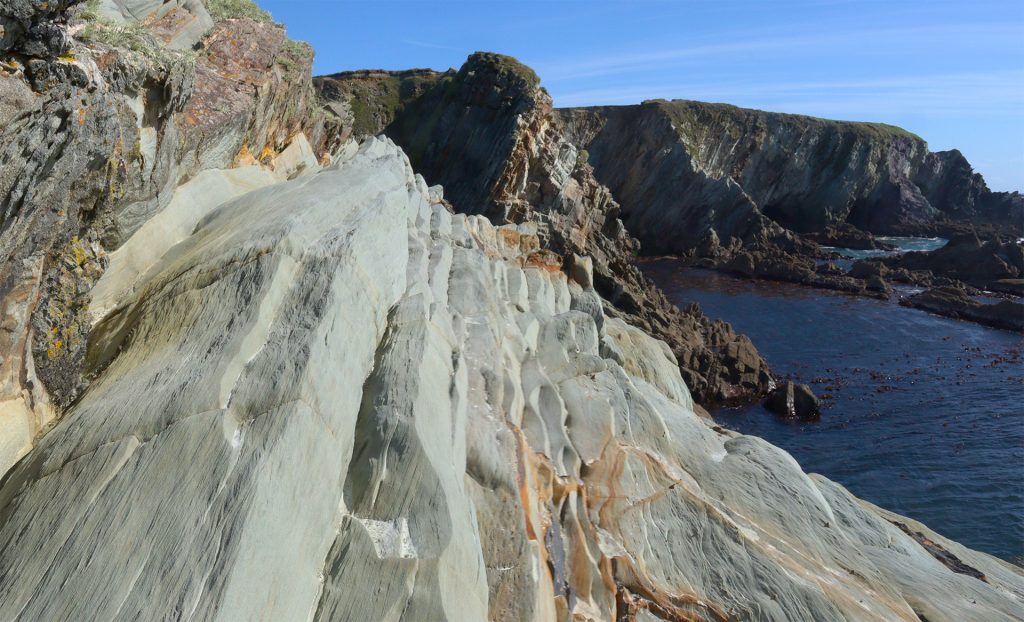
The pale green-grey rocks in the centre are well-preserved river channel deposits from the Devonian Period 360 million years ago.
Present-day Toe Head is also quite dynamic with its own cycles. To get to the fossils requires some synchronisation with the tide. Occasional small rockfalls are also things to look out for.
I’d love to say where I climb down to these geological wonders, but it could get me in trouble. So, to keep my slate clean: don’t go climbing down to the beach along Toe Head.
Note: None of the content on this site is produced using AI. Therefore, you can always reach out to me if there’s anything factually or textually incorrect.
There's still-alive life here too
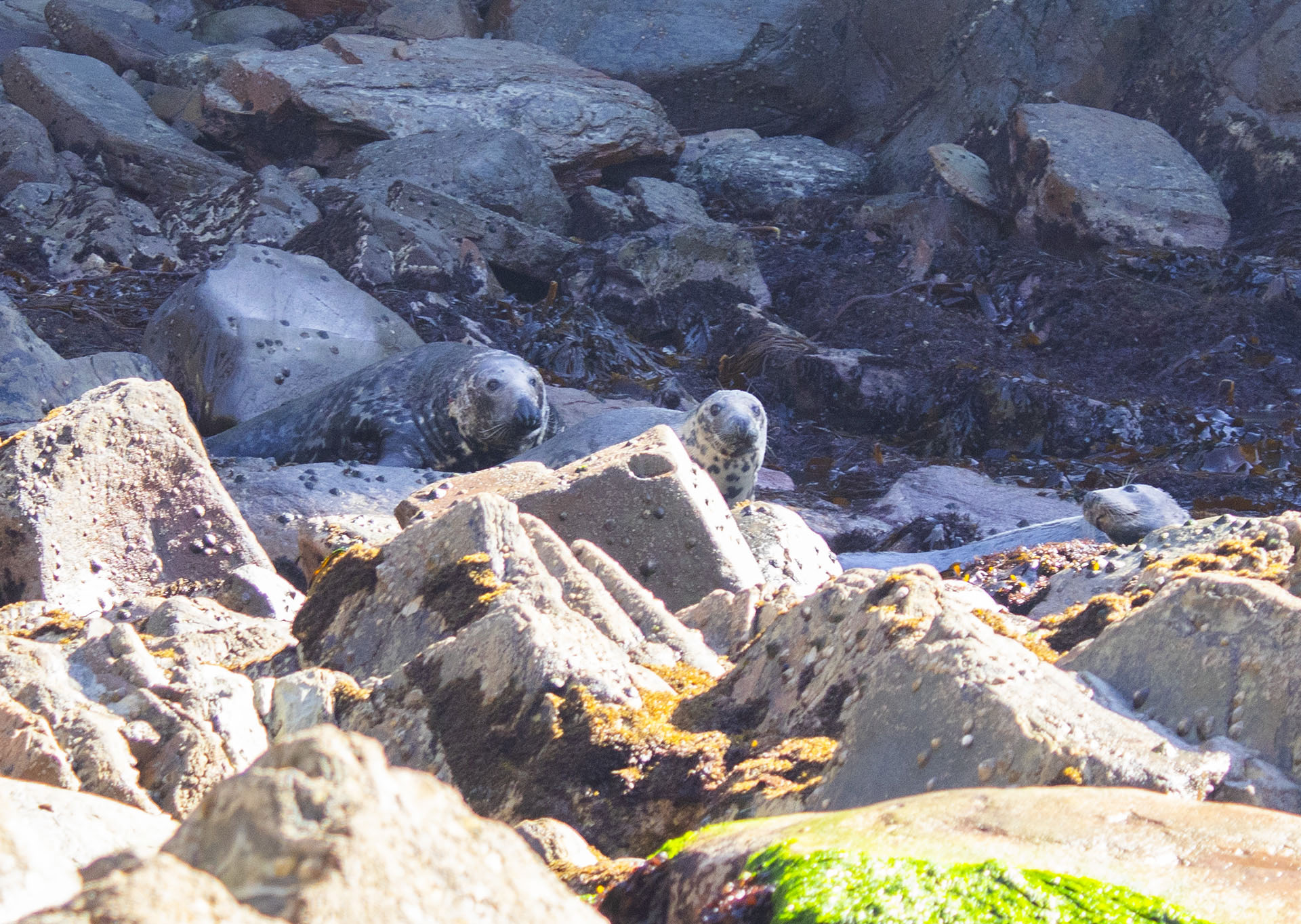
A small colony of lucky seals that haven't succumbed to human activities yet, yay! I kept my distance to avoid disturbing them.
Also, if you do go down during low tide, expect seals to be around! They’re usually more afraid of you than you are of them. BUT in the water, they might feel differently. There’s also a video of them further down.
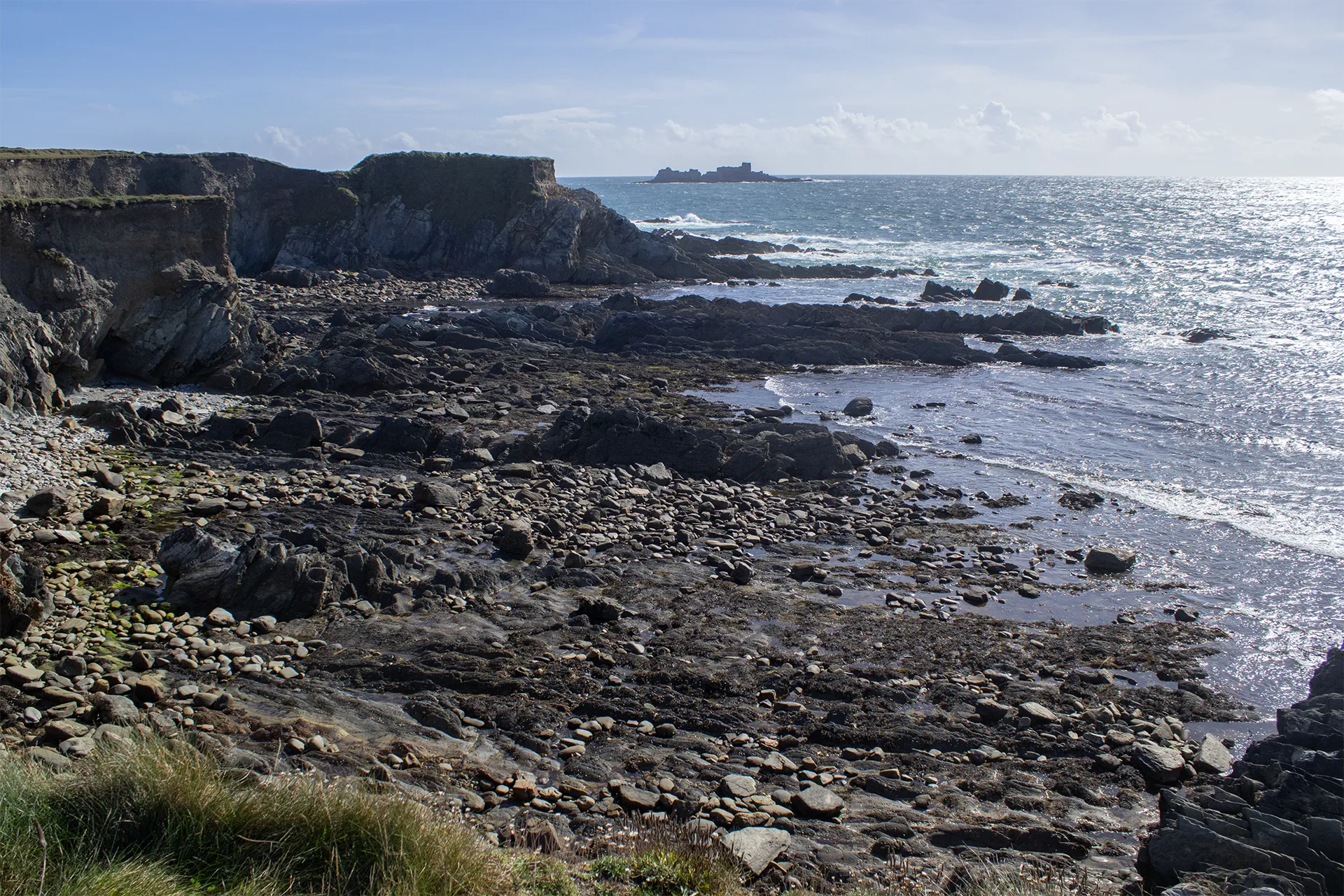
Ideal fossil hunting conditions at Toe Head, West Cork.
When the tide is low, a cove, with two plant fossil sites that I know of, becomes accessible.
Plant fossils are rare in Cork. Despite the Old Red Sandstone being our much ubiquitous rock, there’s surprisingly little fossil evidence in it of life back during the Late Devonian Period.
The fossils
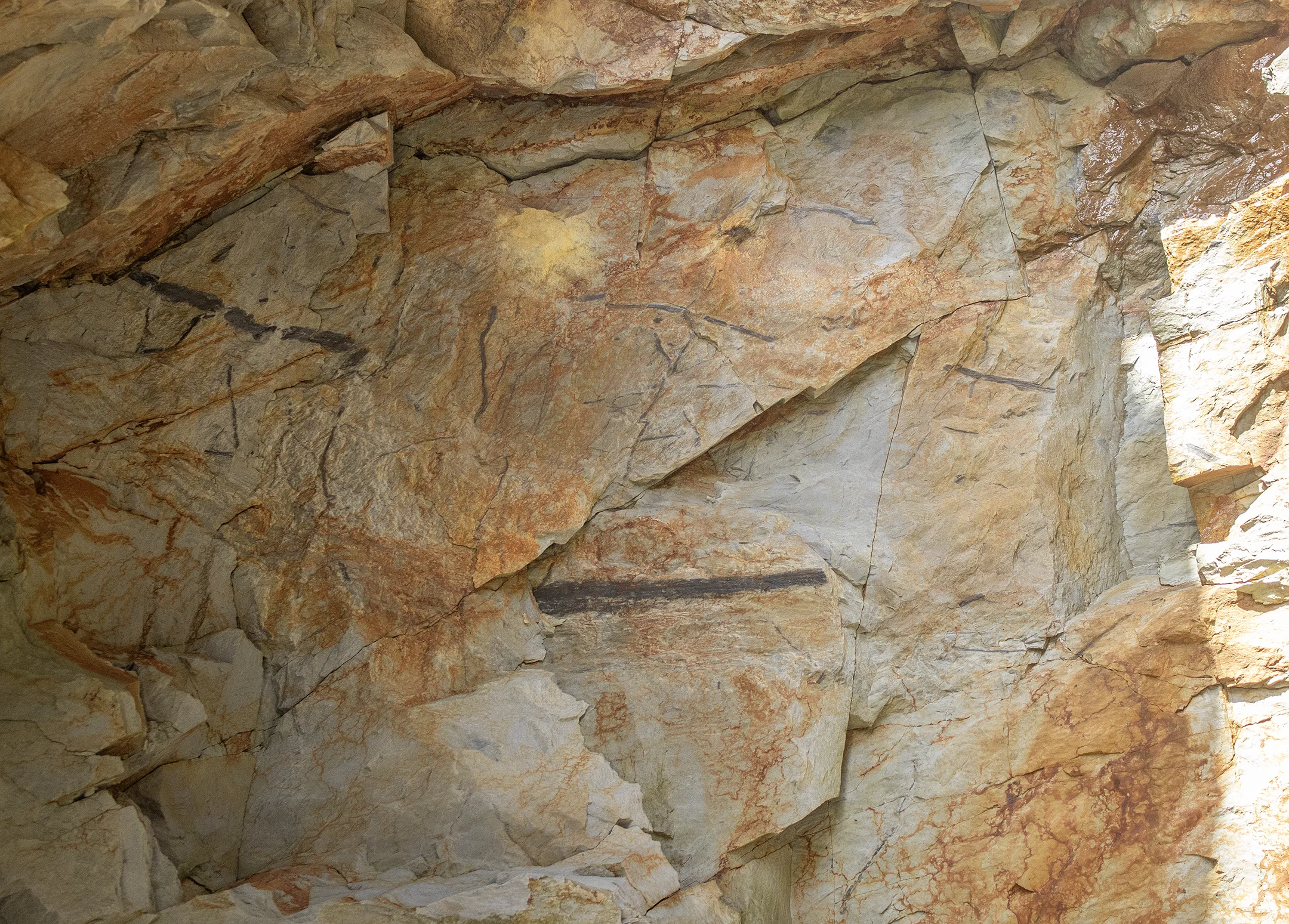
A wider view of the plant fossil assemblages. The view here is about three metres across.
Here, a few metres up on the cliff, there are some well-defined fossilied branch features, likely of the tree-like plant Archaeopteris. They might not look like much in these pictures, but these plants are from the earliest kinds of forests we know of.
To witness the structures of an organism preserved after 360 million years is a bit surreal. They’ve survived decomposition, mountain building processes, burial, heating to several hundreds of degrees, mineral alterations, exposure and coastal erosion. I’ve come back to Toe Head many times because of these plant fossils and to see if there are more around.
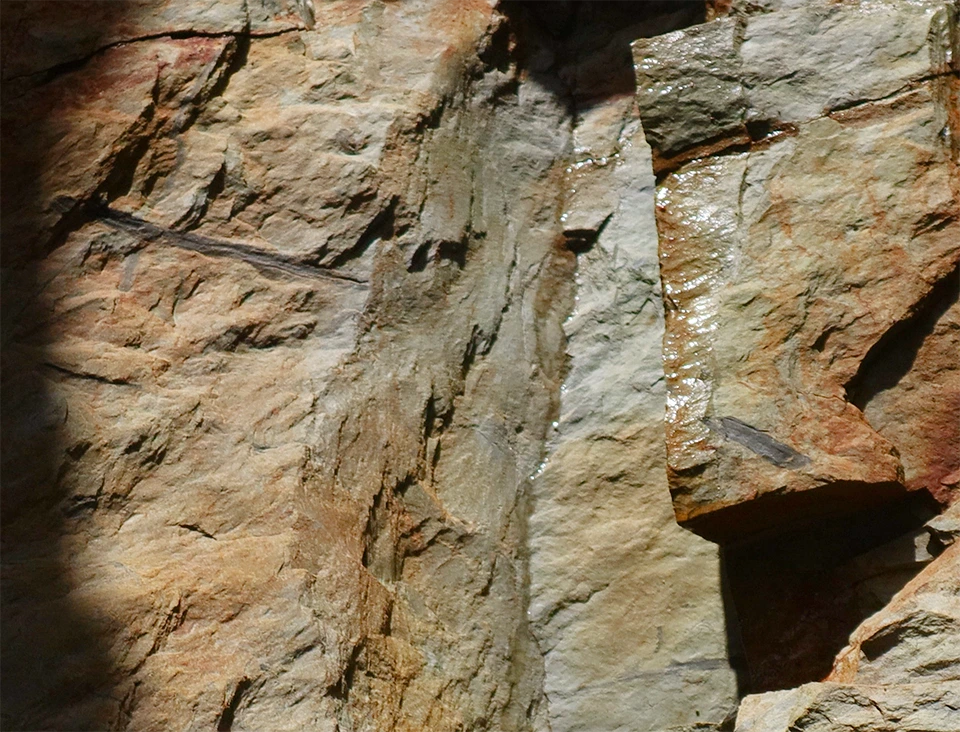
Visible are stems or branches from Archaeopteris plants discontinued in the middle by an eroded section of the cliff. These fossils are about three to four metres up high on a cliff wall and the view here is about a metre across.
There were other geological gems along these cliffs, including “fossilised” river channels (seen further up also) with well-exposed and preserved original features. The sediments in this river channel were made up of largely finer sands and silts, but occasionally, more turbulent horizons show chaotically placed clasts and pebbles.
Such latter features indicate periods where this river would’ve increased in flow, scouring the river bed and jumbling pebbles and sediment clasts together. Remarkably, you can gently scrape the sediments out of the rocks as if they were laid yeesterday!
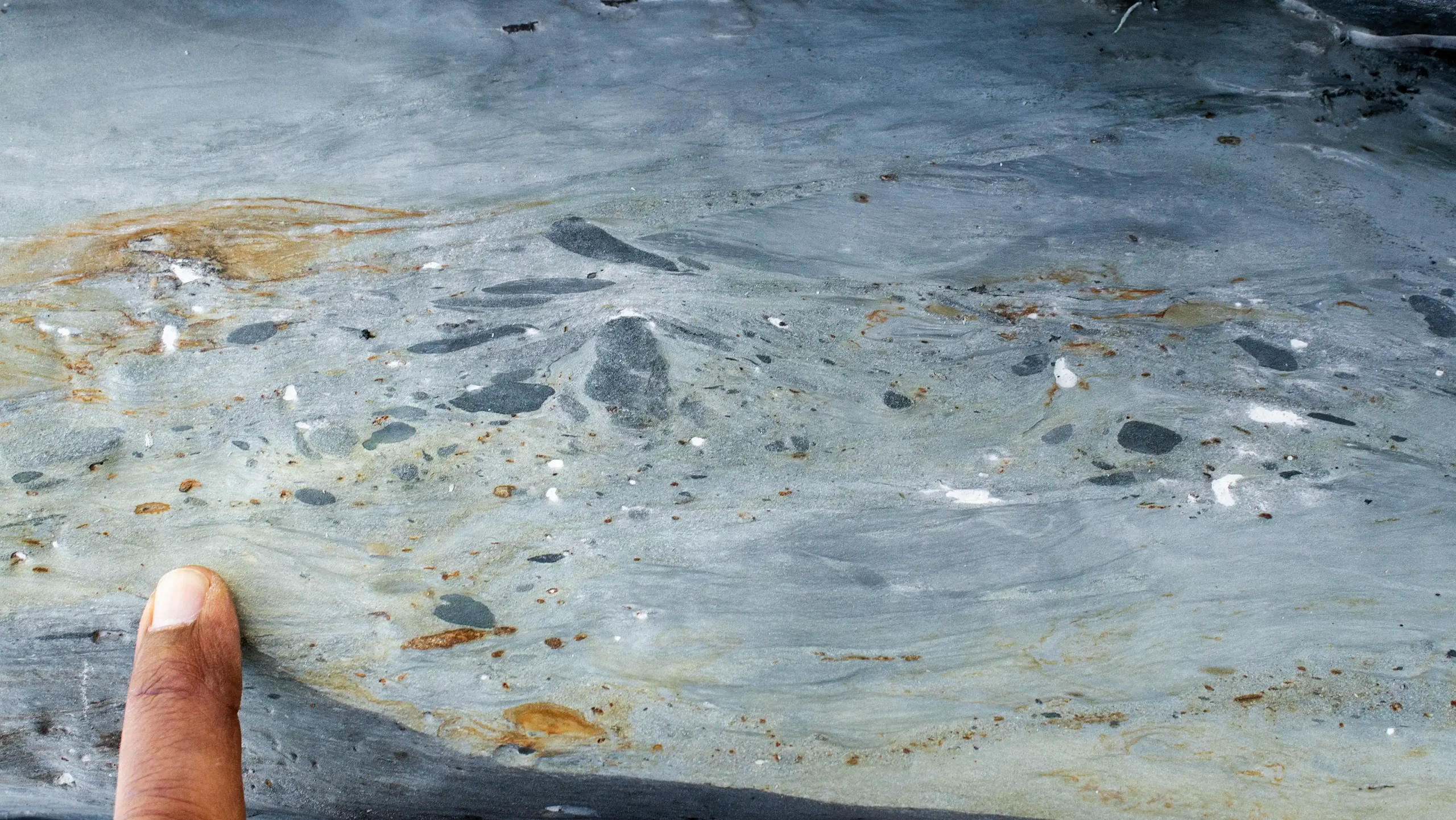
Closeup of the river channel deposits showing clasts and material that were swept along with stronger river flow.
Some of these features are known as flute clasts or sole marks.
Some of these features are known as flute clasts or sole marks.
The rocks of Cork were subjected to a massive mountain building event about 300 million years ago. This deformed and mangled the rock layers creating some pretty wild features.
Some of these rock layers scraped against each other as they moved, creating iconic features like these slickensides seen below. It’s basically the rocks abrading one another as they’re displaced.
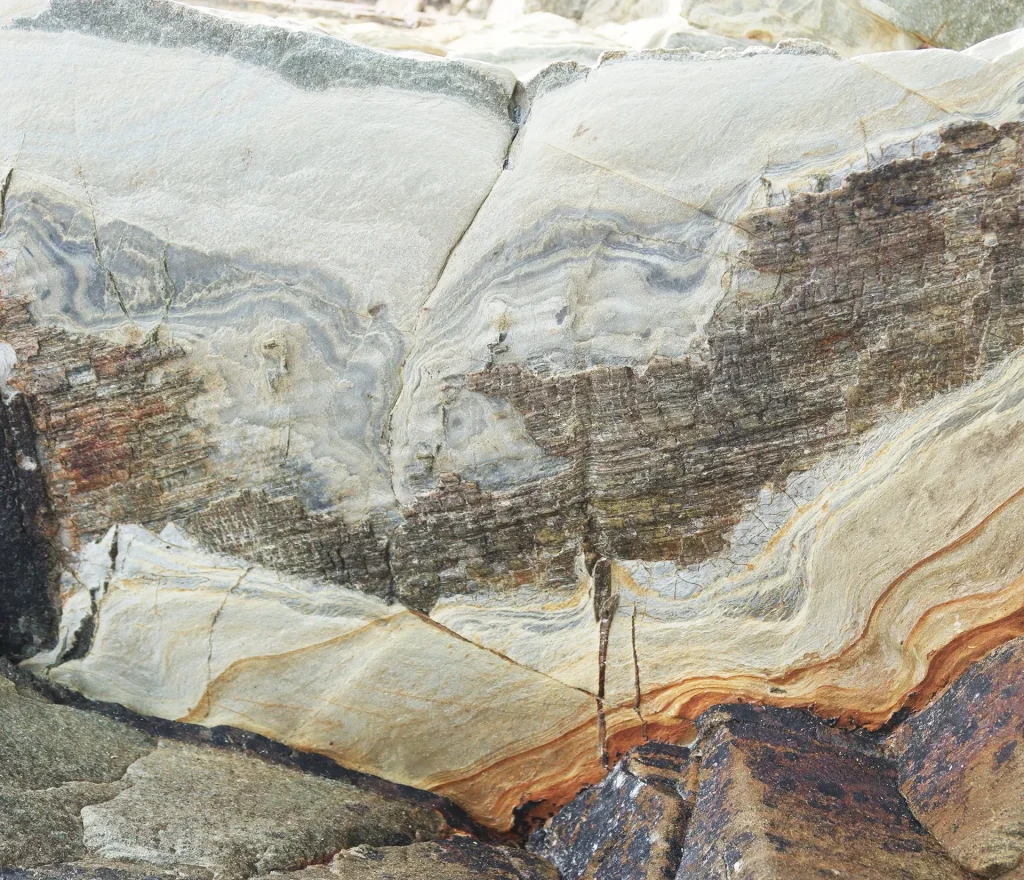
Slickensides like above can look a bit like bark from a tree, but have no organic origins. Notably, they orientate parallel along a fault surface rather a sediment layer. This section is less than a metre across.
In another corner, what I assume to be precipitated copper oxide is seen smeared along a cavity and structural weakness.
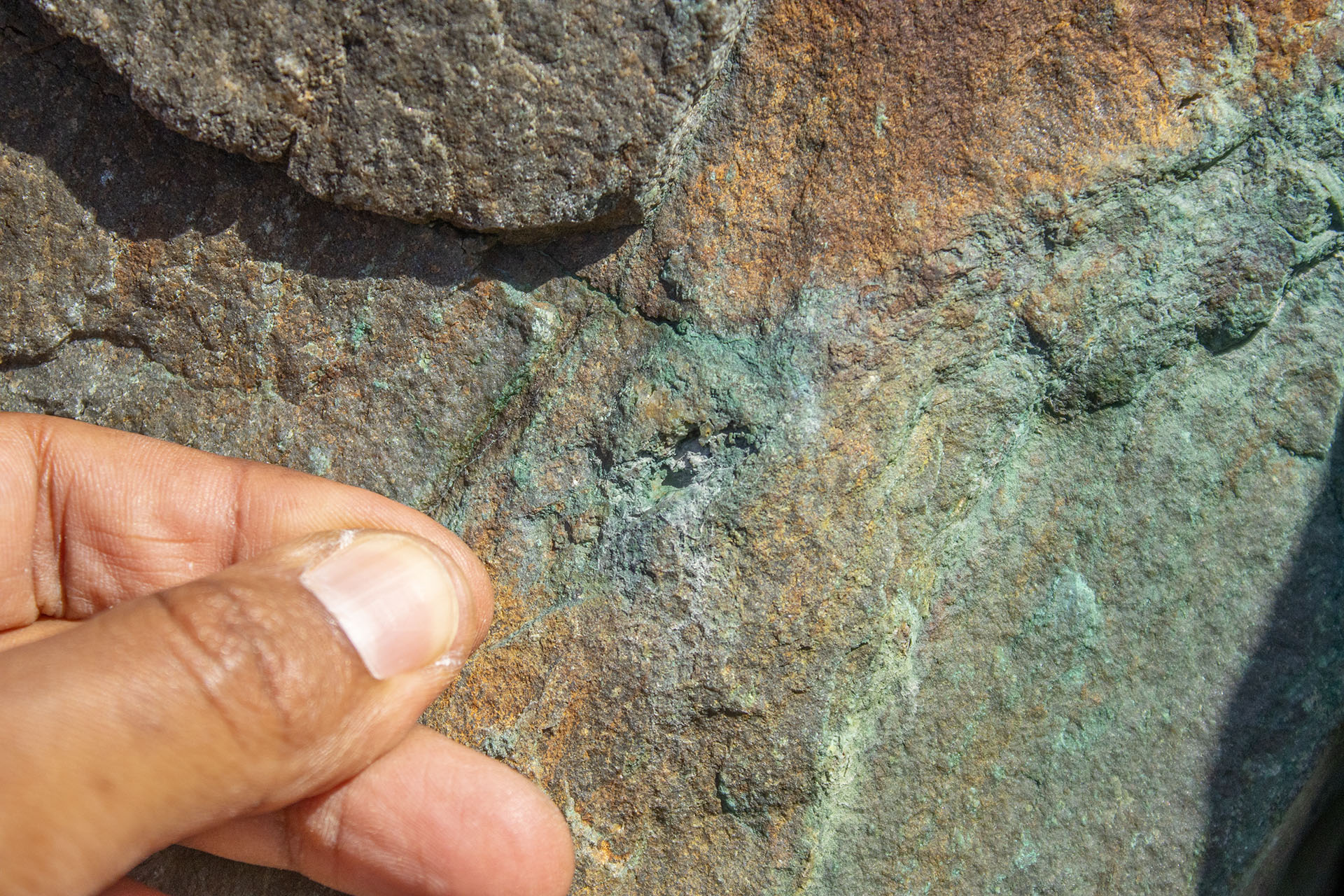
Copper precipitation is common in the Old Red Sandstone, yet some areas have more than others.
I already covered the other plant fossils at Toe Head which are more accessible. While I enjoy studying extinct life, extant (species still alive today) life is also super interesting. As my geology excursion took place on a rock stack with raging waters below, the seals swam curiously up to the shore where I was.
I got curious too, but we all kept a wary distance.
Music in video licensed via audiojungle.net.
References:
Connery, T. 1999. Plant fossils from the Late Devonian Toe Head Sandstone Formation, West Cork, Ireland: a preliminary report. Acta Palaeobot. Suppl. 2: PP. 21–25.
Meere, P., MacCarthy, I., Reavy, J., Allen, A. & Higgs, K. Geology of Ireland: a field guide. The Collins Press, Cork, Ireland (2013).
Nichols, G. Sedimentology and Stratigraphy, second edition. Wiley-Blackwell (2013).
https://www.gsi.ie/en-ie/publications/Pages/The-Geological-Heritage-of-County-Cork.aspx
A bit about me
Thomas Heising here!
I’m originally from Denmark, but now living in Cork, Ireland and working with visual science communication. You may have found this post because you were curious about this page or wanted to know more about the topic at hand – in any case: welcome.
There are more writings, visuals and videos around here about geology, the weather, our planet, Ireland, Denmark and other things that interest me.