Self-destructive thunderstorms
Video - Storms, storms, storms

Small test for a video I’m working on. Even through the refractions and reflections of the water, the gluttonous behaviour of a beadlet anemone is apparent as it latches on to a sea snail. Footage is sped up about 20 times.
Along the coastline of Cork lives some of the most unassuming and nightmarish predators: beadlet sea anemones.
Despite the adorable name, sea anemones are neither flowers nor plants. The flower-like structure is not made of petals, but of writhing tentacles ready to drag prey into the animal’s digestive system.
Beadlet anemones will try and eat just about anything they can hold on to – anything that’s small and tasty enough to last the journey into its gut. It’s a slow end inside then, as the prey is broken down slowly by digestive fluids. And if the catch isn’t compatible with its culinary preferences or body fluids, the sea anemone will simply spit it out.
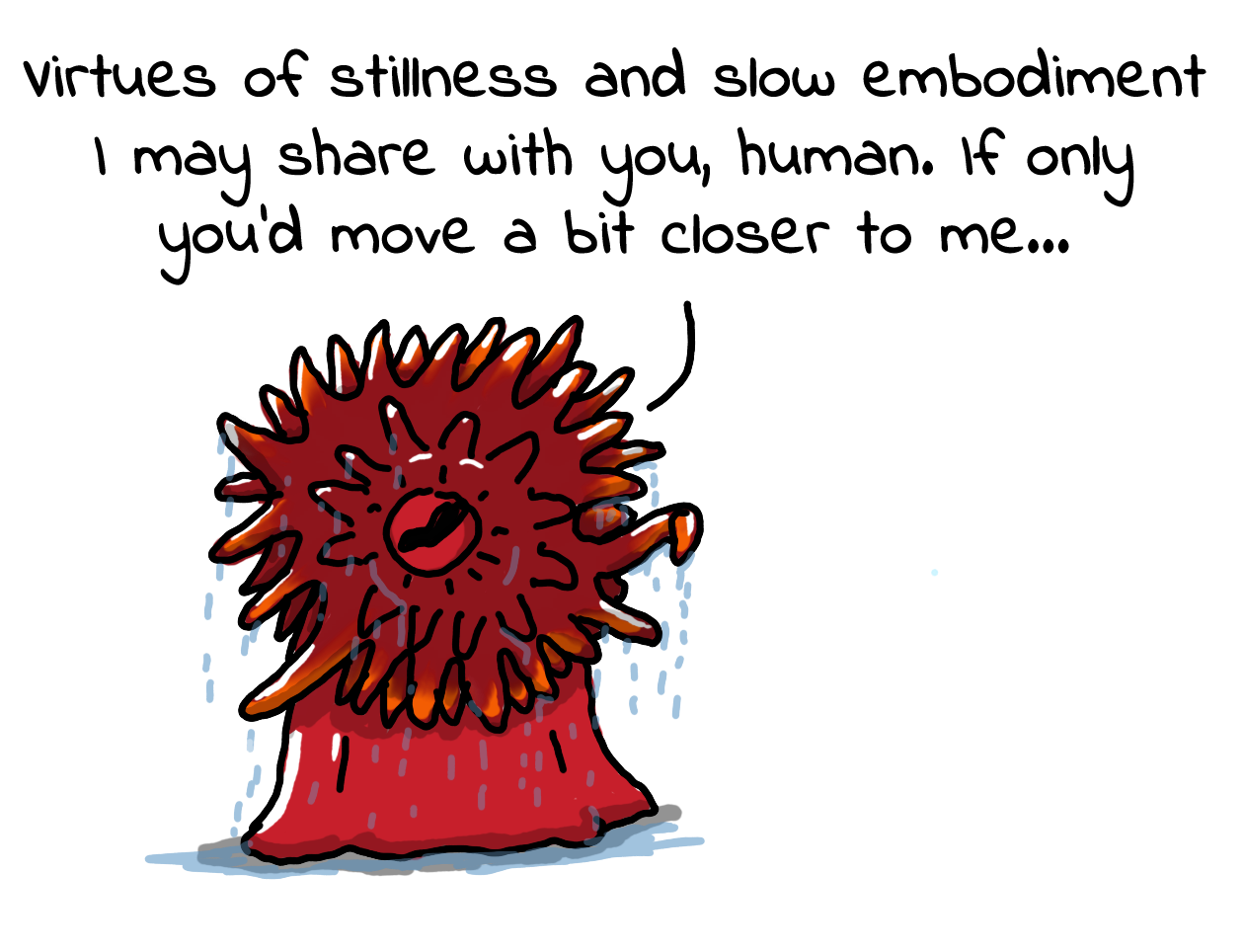
Observing them requires patience though, which is a challenging skill in today’s culture. I’m currently working on a project time-lapsing these strange animals along West Cork’s coasts, and I’ve had to confront myself with just how impatient I really am. Thus I’m learning from these blubbery animals on how to take my time.
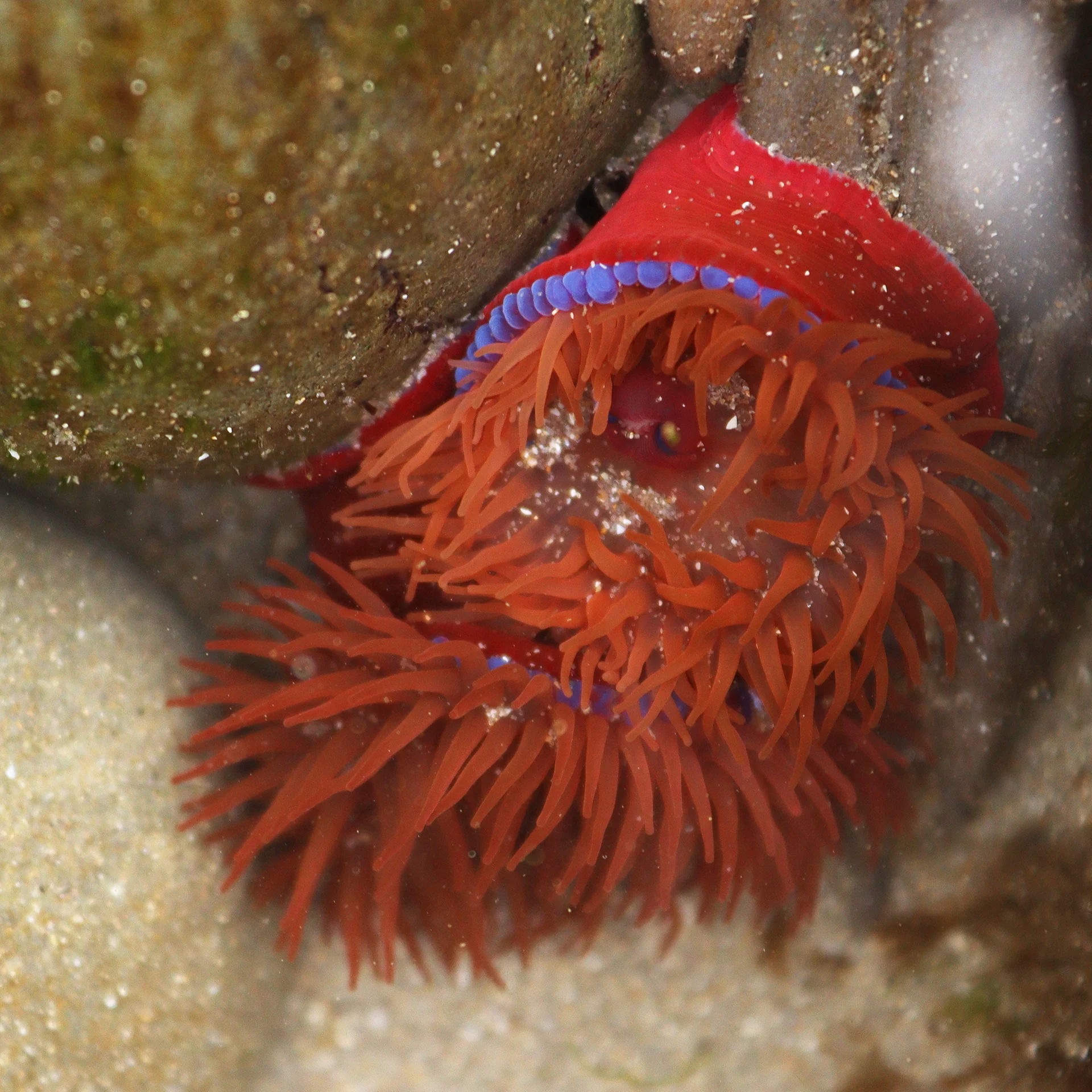
After a while, they seem quite cute.
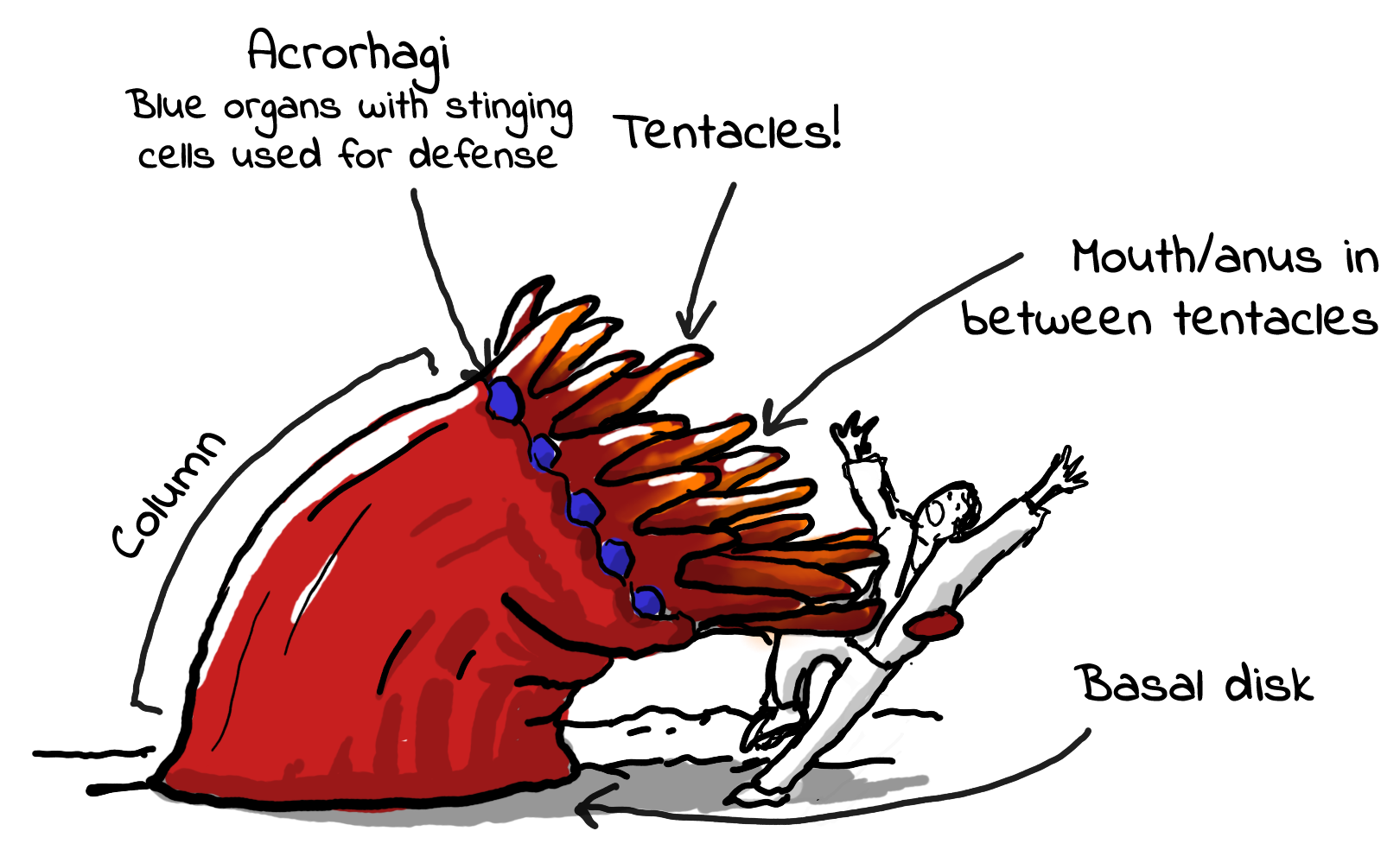
Anatomy of a beadlet sea anemone.
Anyways, if you’re creating a story featuring monsters of absolute horror, then just visit an Irish rockpool and envision being a periwinkle-sized human.
Proper fuel for a nightmare!
References:
Collins, J.R., Vernon, E. L. & Thomson J. S. 2017. Variation in risk-taking and aggression in morphotypes of the beadlet anemone, Actinia equina (L.), and the green anemone, Actinia prasina (Gosse). Journal of Experimental Marine Biology and Ecology. Vol. 496, PP. 29–36. DOI: 10.1016/j.jembe.2017.07.011
Russell-Hunter, W. D. 1979. A Life of Invertebrates. Syracuse University and The Marine Biological Laboratory, Woods Hole. Macmillan Publishing Co., Inc. New York. Collier Macmillan Publishers. London. ISBN: 0-02-978300-8
https://www.wildlifetrusts.org/wildlife-explorer/marine/anemones-and-corals/beadlet-anemone