Thomas Heising

Visual science communication
Back to the Lab

To budding commercial creatives

Tutorial
2025 | Cork, Ireland

Life as a commercial creative

My 2025 tips & tricks to anyone who wants to start out in creative industries. This is based on my experiences working in Denmark and in Ireland – first as an animator and video generalist, then later as a visual science communicator. Video above is from 2016.
Something to be honest about: taking off as a commercial creative is difficult! The capitalist system is not kind to creatives, especially not in an age of AI.
 
I’ve been involved with a wide range of projects and media, except having my stuff shown in a feature-length film. Besides that, I’ve done visual effects and graphics for shortfilms, TV-series, live events, concerts and ads, and animations and explainer videos for so many different companies and projects. I’ve done and worked on tutorials, e-Learning content, video installation art, illustrations, data visualisation, websites, and now my head is bursting trying to remember projects I’ve worked on over the last 17 years!
 
You’ll always have to sell your soul in one way or another. At some point, you might be able choose a field to zone in on and then you won’t have to sell your soul as much.
 
A few years ago, I was working on animating videos on Bitcoin and finally said, “no way, I want out!”. Subsequently, I zeroed in on environmental topics and gradually got more work through that. I’m not saying that that’s a possibility for everyone though. There are less and less opportunities out there.
 
But maybe some of my reflections, experiences and advice below can help another creative trying to find themselves.
Do you envision a version of who you want to be? Be sceptical about that version. You’re likely mirroring yourself unnecessarily in other people.
Before I go further, it’s only fair that I declare my own privileges:
 
I’m European, cis male, verbally and textually adept in Danish and English, my bachelor’s and master’s degrees were paid for by the Danish state, and I got my first creative job through my father’s network when I was 17 years of age. My family are not wealthy by Danish standards, neither did I lack much materially growing up. I got my own computer and camcorder when I was 13, and my father had a job testing and reviewing graphics software. I know these were big purchases for him, and I’m forever grateful for him giving me these.
 
But maybe you have rich parents where money is no object? Or perhaps your parents are doing okay-ish and have a relevant network?
 
On the other hand, you might be off to a more socioeconomically disadvantaged start in life. For instance, your parents might not know anyone who can help you enter the industry. They might not be able to pay for your education. Maybe you’re struggling with money? With mental health? Perhaps you’re going through physical illness?
Alas, the innocence we lose over time.
Life.
It happens. Our parent(s) chose to have us for their own personal reasons and then… SWOOSH… here you are. With your own hopes, thoughts and dreams. Thrust into a world run by people who’re unfortunately primarily interested in making money at the expense of all living organisms on our planet.
 
Where to start off if you want to work with animation, illustrations, digital art, video or even writing in an increasingly cynical world?
 
Throughout your life, you’ll encounter people who will want to make money off of you. They’ll offer business consultancy, education and subscriptions sold with the promise of helping you move forward in life. I’ve availed of some of these, and yes, some of them have helped. But much advice and knowledge can be found for free on the Internet.
 
My advice: experiment first. Before studying for a digital artist career, download Blender 3D or Gimp on a laptop. See how you feel sitting for an entire week in front of a computer. Are you loving it? Maybe it’s your thing. Did you hate it? Chase another dream.
The reality is that there’s less and less work out there with AI-slop and economic inequality accelerating. I’ve know illustrators and artists who’ve been fired because AI rendered their jobs less important. It’s not your fault. The world is quite harsh, but you don’t have give up just yet. After all, most of human history is comprised of struggle.
 
The obvious and best advice is to make your own stuff. And to keep making your own stuff. It’s good for the head too. Use what you like to use in terms of software or tools. Find free apps and play with them on a computer, tablet or phone. Take stuff from the real world and put them into a digital realm. Take stuff from the digital realm and put them into the real world. 
 
You’re into snails or cats? Make animations or artwork of them. Tell stories. Tell your story, not other people’s stories. Bring to life a topic that you like. Also, be careful not to replicate others too often. There are enough self-serious sci-fi shortfilms and series about alien invasions. Make something that makes you sad, happy or even angry. Something that builds empathy. Perhaps something to make people laugh. Do most of it because you love doing it.
 
ALSO! There’s a lot of really talented people out there. You don’t want to compete on the basis of technological know-how. Stand out as yourself through a style, sense of humour or a topic.

Letting your hormones guide you from time to time is okay… but I also grew up with hetero-male 3D artists uploading petabytes of naked digital women – it got boring pretty quickly.

Don’t trust too much
People say a lot to make others feel better in the moment. A college or school will say fantastic-sounding things to recruit students, even if there’s little jobs afterwards. Don’t trust most systems. One year it might be fruitful to be an animator, next year the focus and the money will have shifted.
 
We’re all interested in money, but at different levels. Understand that there are people out there, who are ONLY concerned about money. Even if you’re ill, exhausted, stressed, hurt or dirt poor, these people will still ask you to go above and beyond, so that money comes in for them. The sooner you can get away from them, the better. But sometimes that isn’t possible.
 
Storytime
However, support can come from the most unexpected places. When I was a young video editor, I had this ruthless salesman of a manager. Gifted or cursed with an incredible ability to compartmentalise, you might say.
 
One day we were doing videos for a big client, and I was responsible for fixing stuff that the cameraperson had done wrong. The deadline was short and there were a lot of videos to fix. I was stressed, couldn’t sleep, cried and hated myself. I spent my weekends and occasional weekdays partying and sleeping with random guys, so also, I had a limited sense of self-preservation.
 
My manager likely observed this despite me never saying anything. Eventually, he called me aside into a meeting room. All he had to ask was: “Thomas, how are you?”. A few seconds later and I was a sobbing mess.
 
He then compassionately empathised like few people are capable of empathising. “Do you feel like wanting to crawl out of your skin, Thomas?”, “Y…ye… yees…” I stuttered with snot and tears pouring out of my orifices. “You’re experiencing stress”, he said. This was my first encounter with work stress. He then told me about his own experiences with it, and how it made him hate himself. “We’d like to finish the videos on time, but at the end of the day, it’s just videos.”. At the end, he hugged me and told me the best advice I’ve ever gotten:
 
If you can’t do anything about something right now, let go of it.
 
That has stayed with me all my life. We finished the videos at bit past the deadline, and the world didn’t end. It’s a lesson I’ll pass on to you reading this. When you’re in bed at night, you’re meant to rest. Wait until tomorrow with worrying. It’s just pixels on a screen.
 
So also, don’t write off people just yet.
Networking at a young age can be so dreadful. Admittedly, it can be dreadful at any age. There’s so little to talk to most adults about, even when you’re an adult.
 
Which networking events should you go to? Do you need business cards?
 
Go beyond standard business networking events. Expand your circles. Join an art group. Go look at birds with an ornithological association. Society is yours as well! Get in touch with other artists of your discipline. Overall, get into groups where you share interests with people. I’ve gotten work through running groups, a cancer conference, nights out, Instagram, sleeping with people, helpline volunteering, activist circles etc etc.
 
I’m definitely not saying you should do the same things I listed above, but my point is: vary your social circles. Even if you’re an introvert, you’ll still find necessity in community.
If you find yourself at networking events, don’t just chat away without listening. You’ll be better remembered for having listened to someone and shown interest in them than for talking about how great you and your art is.
 
Did you meet someone locally who is in a role you find interesting? See how you can bump into them. Invite them out for a coffee, a pint or lunch at your expense to hear about their work. At this stage, it should be about finding inspiration and knowledge.
 
I personally never sat in a conventional animation studio, but you should definitely get in touch with someone who has or currently is, if that’s your goal. Again, ask them if you could trouble them for your time.
 
If they say no, that’s fine. Ask someone else. In a different way this time. 
 
If you find someone of importance who’s promising you introductions to a range of “important” people, be wary. Some people, especially well-resourced ones, want to help for the sake of feeling great about themselves. It’s not beneath them to expect uncomfortable things in return from you. Especially if you’re cute and/or female.
 
Accept their help kindly, but don’t rely on a single individual for finding your way through an entire industry.
 
Instead of business cards at networking events, have little drawings, personally designed postcards or little poems printed on cards that you can pass on. Something that’s less sales-y and more something they can put on a fridge at home.
Website?
I won’t stop you from having a website, but I’d recommend only having a website if you have commercial work to show off. It takes time building one and I meet creatives who are already busy with client work, but hyperstressed about not having a website.
 
No need. A website won’t guarantee you work. What you need is a platform to show your work off on. That can be via social media or a free portfolio-platform.
 
Just be sure to test the portfolio for user-friendliness. Someone once shared a portfolio as a Google Document that I had to request access for. That’s not user-friendly.

I was young. I needed the money.

Content creation?
Do something fun and creative for yourself online for sure. It’s free promotion anyways.
But maybe you want to earn money on YouTube or TikTok?
 
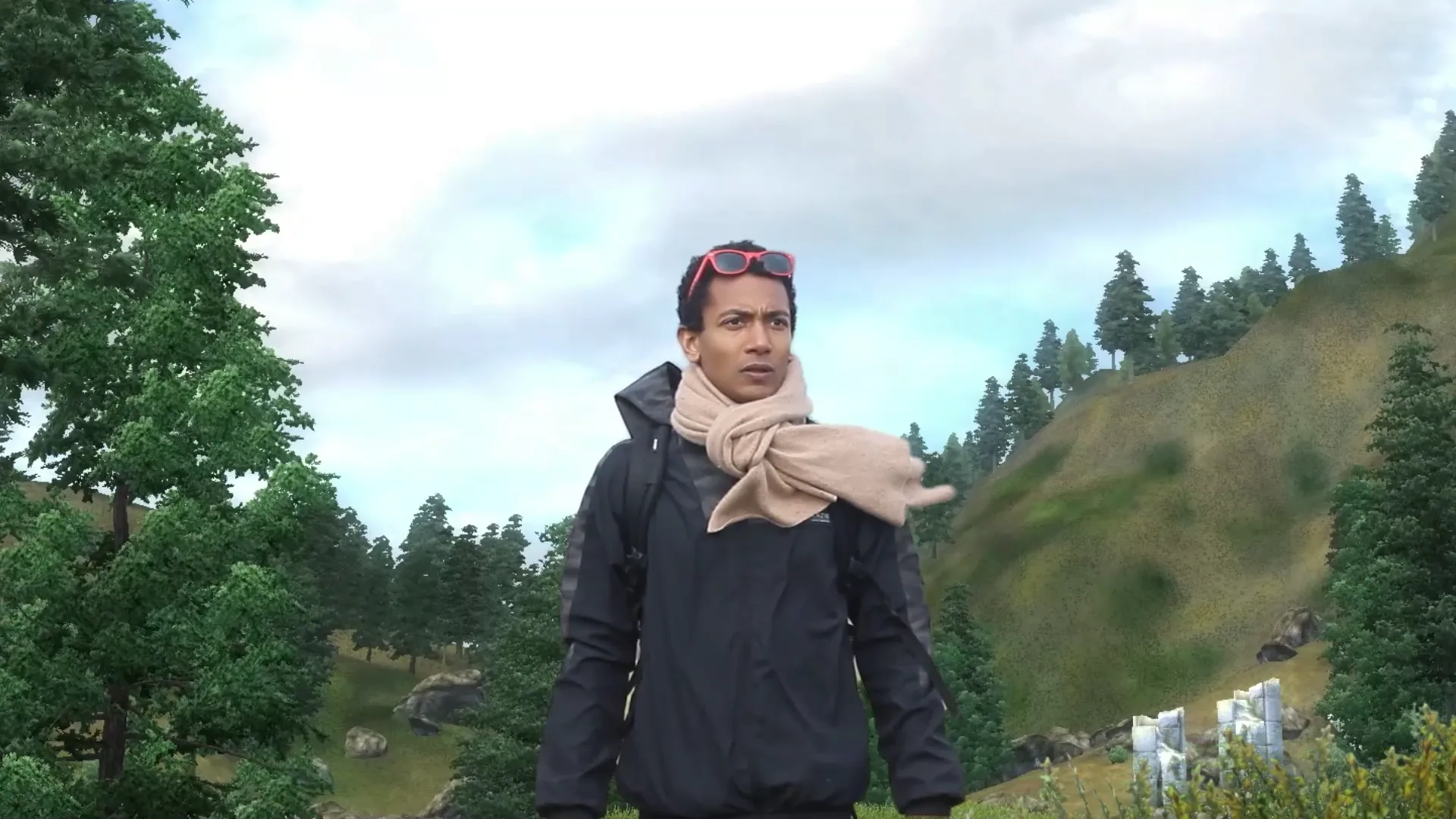
So, I ran a small-ish YouTube-channel Cor Canish with about 70.000 followers for a few years where I put myself into videogame-footage with small cute little narratives about different things. Starting out as a passion project, I got a bit of monthly money in to pay my rent with via a Patreon and a Buy Me A Coffee-page. 
 
At one point I had 90 patrons plus a decent streak of +100.000-view videos contributing as advertisement revenue which in total covered my rent and bills at 800 EUR. But that was hard to keep up with. 
 
YouTube is a greedy and manipulative machine, and my type of videos would take weeks and sometimes months to do next to completing commercial gigs. I definitely felt a lot of burnout with people’s and my own artistic expectations on top and the pressure to produce, grow and connect with the community. In the end, I even closed my Patreon.
 
I felt happier afterwards, but that’s just me. The thing about video sharing platforms is the numbers-game aspect of it. The algorithm isn’t rewarding your artistic skills – it’s looking for ways to keep viewers watching. 
 
YouTube especially forces you to be ruthless and to let that creator jealousy take over in order to replicate what others are doing. When you’re relying on it for your basic revenue, it’s risky experimenting or having integrity. Previously, your best bet was to captivate your audience and to grow your following steadily through engagement. 

But today, social media interfaces keep introducing you to new accounts and content instead of those you already follow. Keeping interactions with the community going is getting harder, simply because people swipe past your content all the time. It takes a lot of effort even if you get one or two videos that receives several hundreds of thousands or millions of views.
 
I personally preferred doing YouTube without ad revenue switched on. I could focus on the community and making the videos without stress. Eventually, that felt overwhelming for me as well, but the community is the one thing I miss from time to time. People were really nice.
 
If you want to do YouTube or TikTok, I highly recommend going into it for the fun of it. Not with the prospects of earning money or for career purposes. You’ll give up quickly. Be experimental. Do something different. Cringe. Embarrassing. You never know how people will respond.
Looking for jobs.
Where not to work and where to work? Experience through a full-time job is always great and if you’re young, you’re better at handling the abuse. That’s a cynical statement, but it was real for me. 
 
I had to make many valuable, and often embarrassing, mistakes in order to become better at what I do. I still make mistakes. Sometimes, a mistake can seem catastrophic from a work or personal perspective. That happens. It’s hard being in the moment, and it can break a human being depending on where and how you land a job, gig or opportunity. Sometimes, you observe others making mistakes. Be empathetic – treat them how you’d want to be treated if you made the same mistake.
 
You might be lucky though, and end up at a creative company where there’s respect for you and your well-being. Perhaps, you already have a great work ethic instilled in you and will have little professional friction at your first job.
 
But it might also be that you end up like two friends of mine.
 
Storytime:
One friend got a job at a visual effects company. He even made 3D-models for a Marvel-series and for a big-budget blockbuster. He is a fantastic 3D-sculptor, but that didn’t matter at the company. What was appreciated was corporate compliance. Understandably so from their side as Disney was one of their clients. Non-disclosure agreements prevented him from profiling his work even after completion. Eventually, he was fired. He asked too many questions. They gave him a bottle of whiskey as a parting gesture. He doesn’t drink alcohol.
 
Another gorgeous friend of mine ended up in a creative 3D-job with many fantastic benefits and perks. The money was good and so life seemed to be too. We all spoke of how she was the example of how one could make it in the industry. However, a manager at her workplace was giving her a lot of trouble and the communication at the office was tense. She eventually broke down from stress. Suffering massive cognitive setbacks because of it, she was unable to work for a long period afterwards. Leaving the job and the town she’d moved to, she eventually left the country as well and found another creative role aboard.
 
As I said, life. It happens.
 
So, again, looking for jobs.
I’ve been freelancing in Copenhagen and Cork for many years – increasingly broadening my field from just doing animations and explainer videos to websites, animations, videos, illustrations and science writings. 
 
Ironically, I never believed when people said that it was best to specialise, but it is sometimes. Often that gets interpreted as one should only do data illustrations or only do humanoid 3D-character animation work. That kind of specialisation is fine too. But having a topical or stylistic specialisation also makes you recognisable, and invites you to do your own things.
 
If you’re a generalist like myself, find something that really makes you happy to talk about. In my case, it’s environmental matters and sustainability. When I saw my graphic skills and tools as means to tell stories and find solutions for people and problems, it meant that I suddenly knew what I wanted to do.
 
Hence, I now do visual science communication. I’ve probably wanted to do this since I was a child.
 
But life happens… perhaps I won’t be doing this in three years’ time. Maybe I’ll be dismissed, dead, ill or perhaps there’ll be widespread disaster. Who knows?
 
Freelance or full-time?
Full-time. Freelancing is only something you should do when you’ve actual paying client work lined up. Don’t start freelancing full-time until your fourth invoice has been paid. It’s not the glorious spectacle of a life that many on the Internet sell it as. You’re less your own boss, and more your own marketer, employee, bookkeeper, receptionist, administrator, project manager, art director, etc etc.
 
Freelancing is better to do next to a job – full-time, part-time, hospitality, farming, you name it. 6 years ago, I might’ve been more optimistic, but with most world leaders planning to invest in war and conflict, defunding art departments and maximising corporate influence, I’ll wear pessimism like a cashmere scarf.

So you’re at work – what now?
 
Accept that sometimes you can be principled, but in most cases you can’t. Someone hierarchically above you is making sure that there’s money coming to all of you. A manager can seem unfair, and in many cases, they are. But they may also be empathetic and concerned with your well-being. 
 
Just don’t expect compassion from them all the time. Be the person that takes care of you. Eat, sleep and drink water. But if you’re or feel ill-treated, talk to someone you trust about it.
 
Also, be transparent about your progress with something. Some people would rather not want to know too much about your workflow, but it can be helpful to keep a paper trail of how far you are with a job. Write deadlines and timelines down. Especially, if you’re working with technology. Some jobs I wouldn’t have finished on time if I had not done a detailed timeline highlighting exactly how long I was to work on individual elements. It’s easy to get trapped in perfectionist details, but mostly just counterintuitive. Most client don’t expect perfect art – lay the groundwork and build upon it.
 
Whatever distance you want from your work is up to you. I personally prefer a workplace where I’m surrounded by like-minded people. The social aspects of an office are highly important to me, but I also know people who just want to clock in and out with as little human interactions as possible.
 
Final tips:
  • Use society. Again, it’s yours.
  • Talk about yourself and what you do to various people. Talk about what you want to do. But don’t overwhelm people talking about yourself and your ambitions too much. Just the surface stuff.
  • Keep a finger on the pulse of geopolitics too. Creatives can be cowardly when it comes to politics, but it’s politics that decide where the money goes. Our politicians going to war means a decrease in creative funding. Either you adapt to declines in creative industries and grants and to social dumping through automation, you leave the industry entirely or you fight it.
  • Be patient. Sometimes, we don’t have time. But starting a creative career because we want to desperately make money is a bad idea. You’re better off getting a job in hospitality or administration for a period or being on social benefits until something pops up.
  • Practice early being organised with folders, papers and your tools. Your assets and tools should be easy to find for yourself, so that it’s easy for collaborators and your future you to find later on.
  • “If you can’t do anything about something right now, let go of it.”
  • Eat properly, get plenty of sleep and drink water.
  • Being a creative is something most non-creatives don’t understand. Those who are older will recommend you get your pension savings scheme, health insurance, life insurance, mortgage and car as soon as possible. They’ll recommend that you wear a suit for networking events or that you cold call and pester every creative agency in town. Instead…
  • … listen to other creatives in your network. Block those non-creative voices out.
  • Also, as a creative you don’t have to work in a creative industry. You can keep a boring job and fill your free time with beauty and art! Working in the industry won’t necessarily make you happy about yourself or about your art.
  • Even if you did a creative degree and you don’t end up in a creative role, don’t despair. You’ve learned a lot during your studies and can hopefully have fun with that knowledge without capitalising on it. Not everything needs to be made money off of.