Thomas Heising

Visual science communication
Back to the Lab

Promoting local heritage

Tutorial
2025 | Cork, Ireland
People or community-driven heritage is one of those elements that Irish institutions do quite well. Local and national institutional bodies can help with funds to promote your local heritage, community or area. Though there’s money involved, you don’t start a heritage project to put money in your pocket – you start it because you know something about the local area that you want more people to know. The funds are available because it’s in the interest of the general society that these projects get developed.
 
If you’re here for that vibe, then let’s go!
Cork city summarised
Heritage can mean a few things depending on your interests. For me personally, it’s weaving a particular natural, physical or historical feature of an area in with people’s current daily lives. In my eyes, heritage should make people stop and look at their environment differently – appreciate nature, become proud of local architecture or feel protective about certain wildlife. 
 
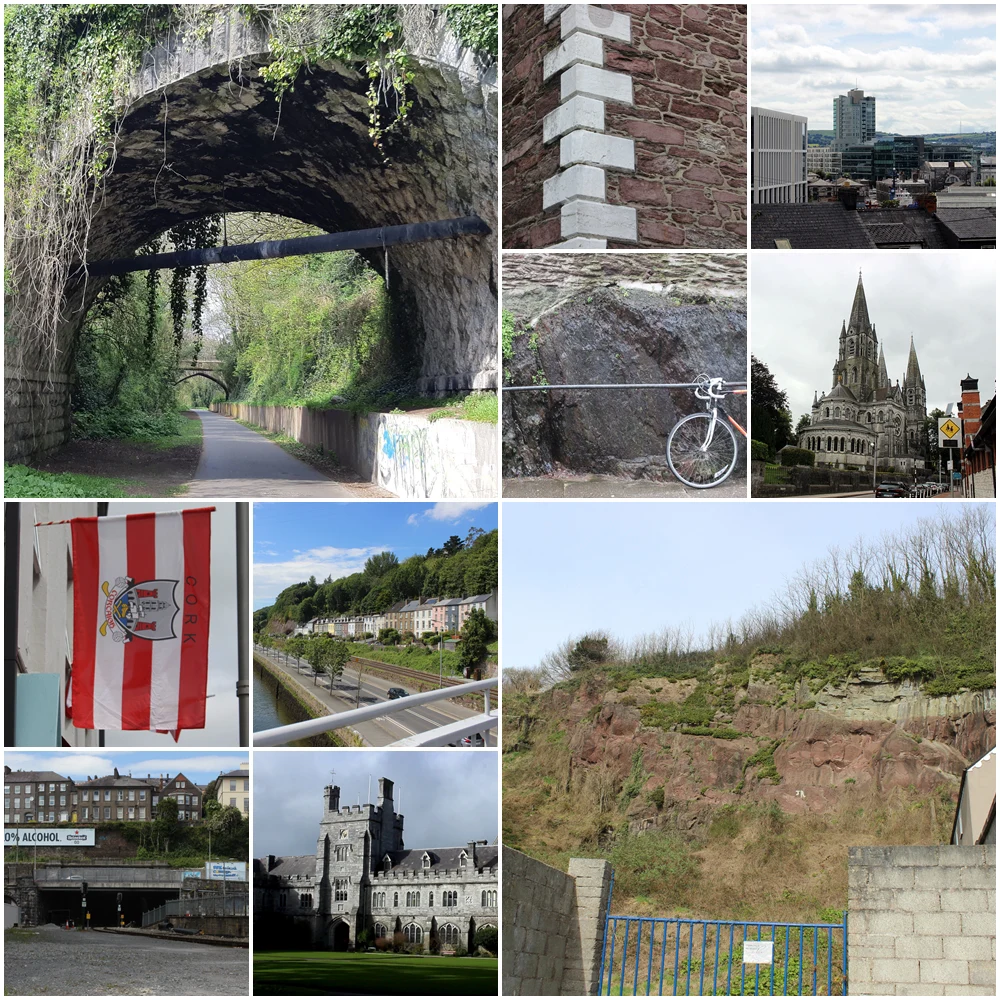
If you’ve read some of the other posts I’ve done, you might surmise that I have a manic approach to rocks. And Cork’s geology still fascinates me four years after co-launching Hardcore Cork. I want more people to know why the geology of Cork is fascinating and relevant. Moreover, I want more people to connect with nature through the geology of the city – to stop and notice the little details that exist around the place.
 
The city never becomes boring then.
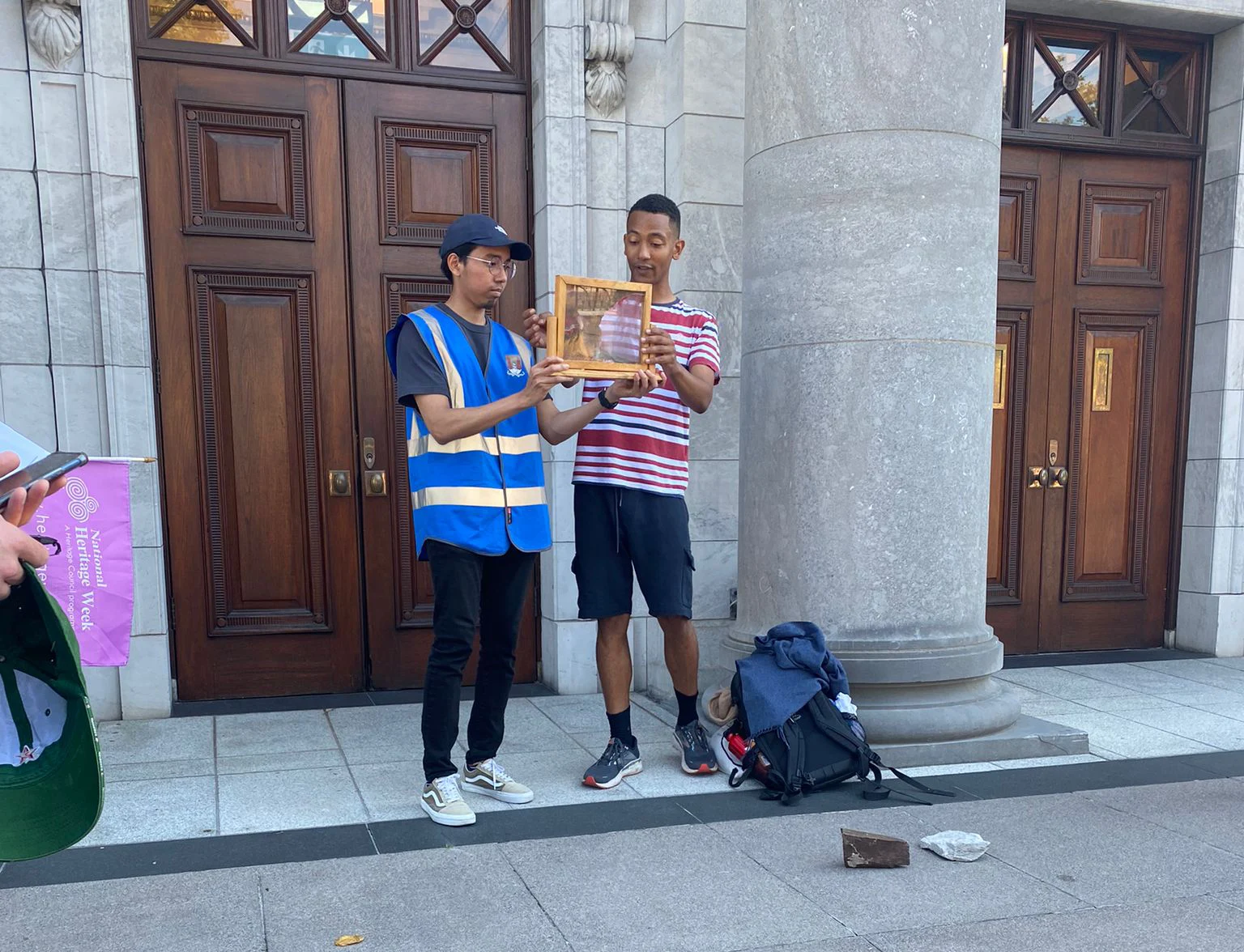
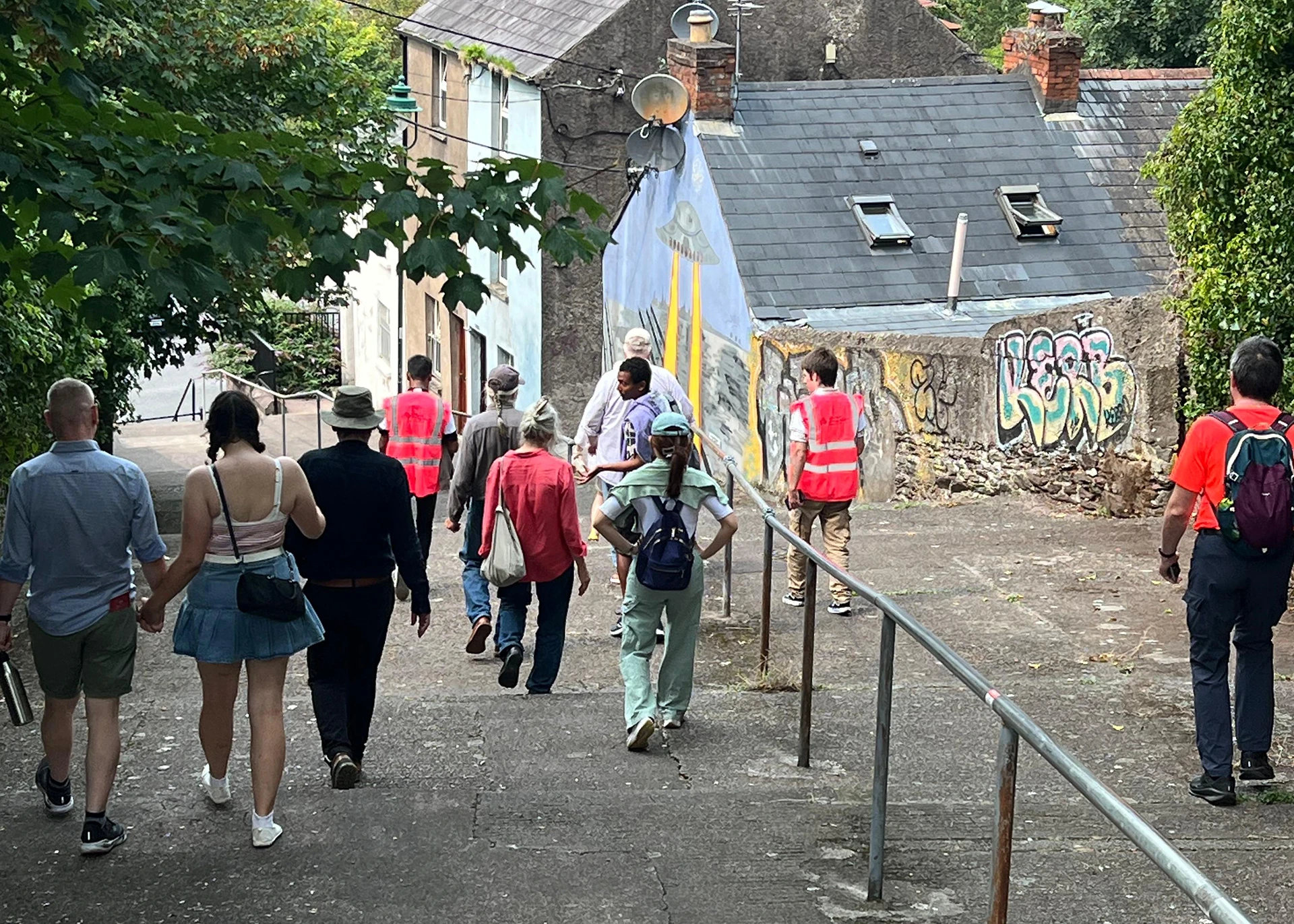
Geological heritage tour in Cork city in 2022

Though, “nature” is also a broad and vague term conjuring up different meanings for whoever utters the word. We often don’t like to admit it, but cities are nature too: crows, trees, grass, dogs, cats, rats, spiders, mice, bees, flies and of course humans. Plus everything we’ve built are all repurposed resources extracted from the natural environment – including all the plastic.
 
Even if our shared efforts are causing enormous harm and suffering to other organisms and ourselves, including a mass extinction, we’re still nature.
Part of my motivation behind making these posts on my website lies in spreading knowledge about our natural environments; including human society. Very rarely does this knowledge come from myself, but from rich academic research that I’ve interacted with over the years.
 
With Hardcore Cork, my co-creator Aude and I aimed at making the geology of Cork accessible for both city dwellers and visitors. The coasts are still the best places to see Irish geology, but there are many things to discover within urban environments.
Enter the geological heritage tours I’ve done in Cork City for the past 4 years during Ireland’s annual Heritage Week. It’s been an amazing privilege and opportunity to involve citizens with the local natural heritage in-person rather than merely via a digital interface. Both platforms are handy, though.
 
For every tour each year since 2022, I’ve tried something new. Some experiments worked, while others didn’t.
 
Below, I’ve compiled some tips and tricks for anyone who is thinking of doing such walks, tours or projects to promote a heritage feature of their setting. Doing this involves an immense amount of fun if you’ve got the passion and will!
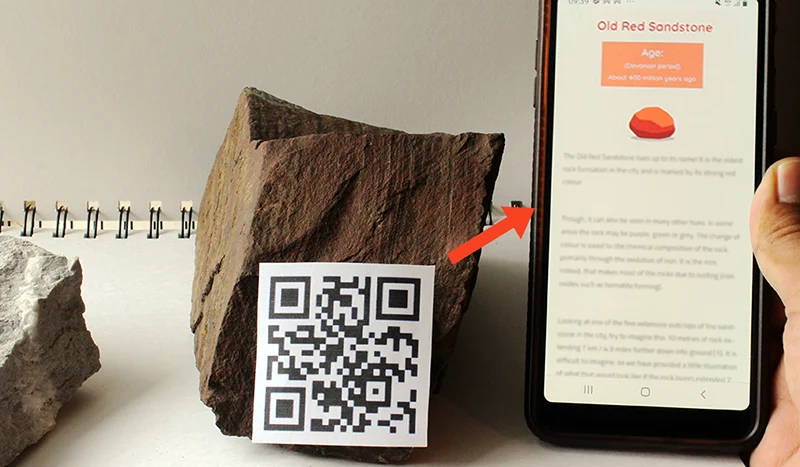
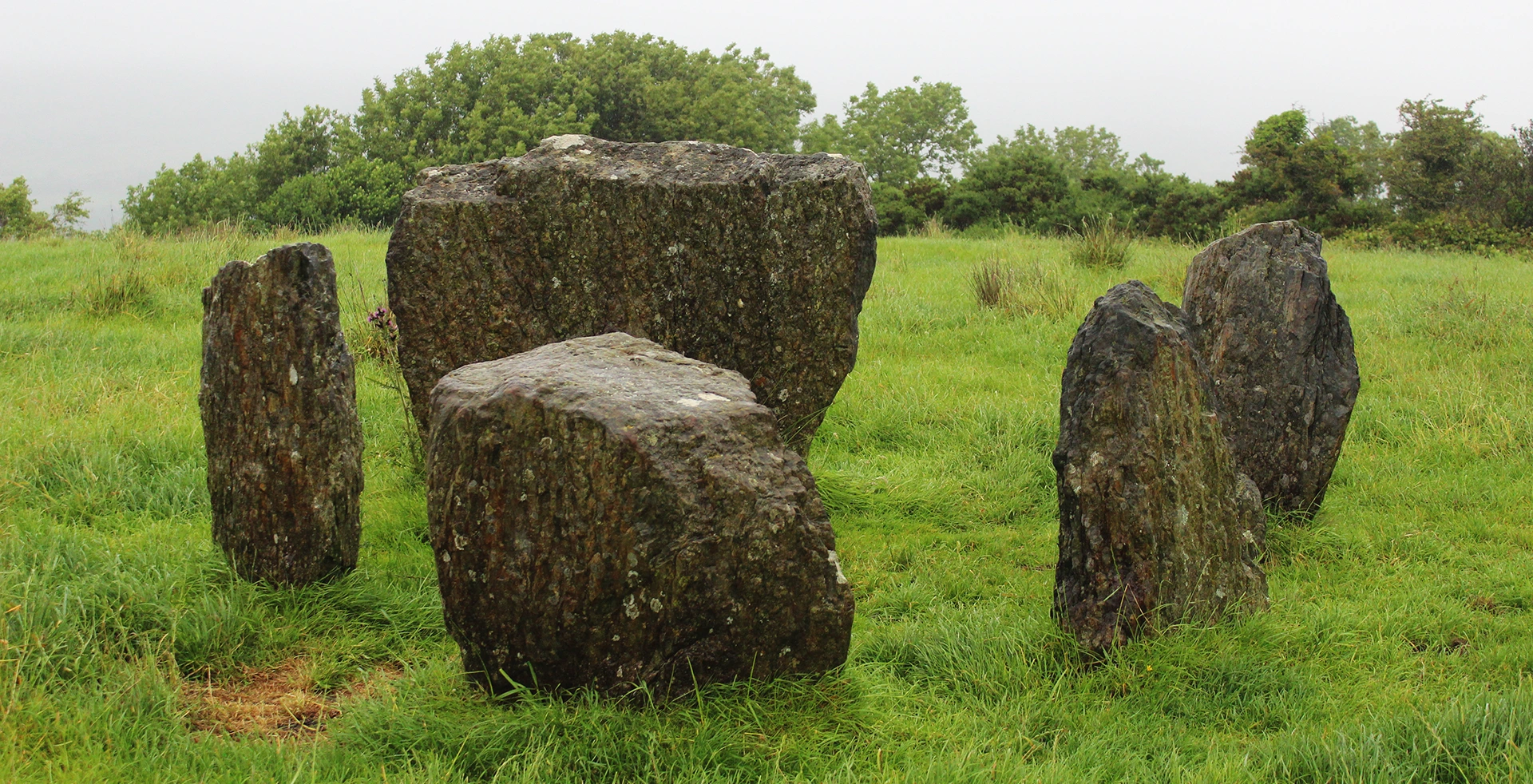
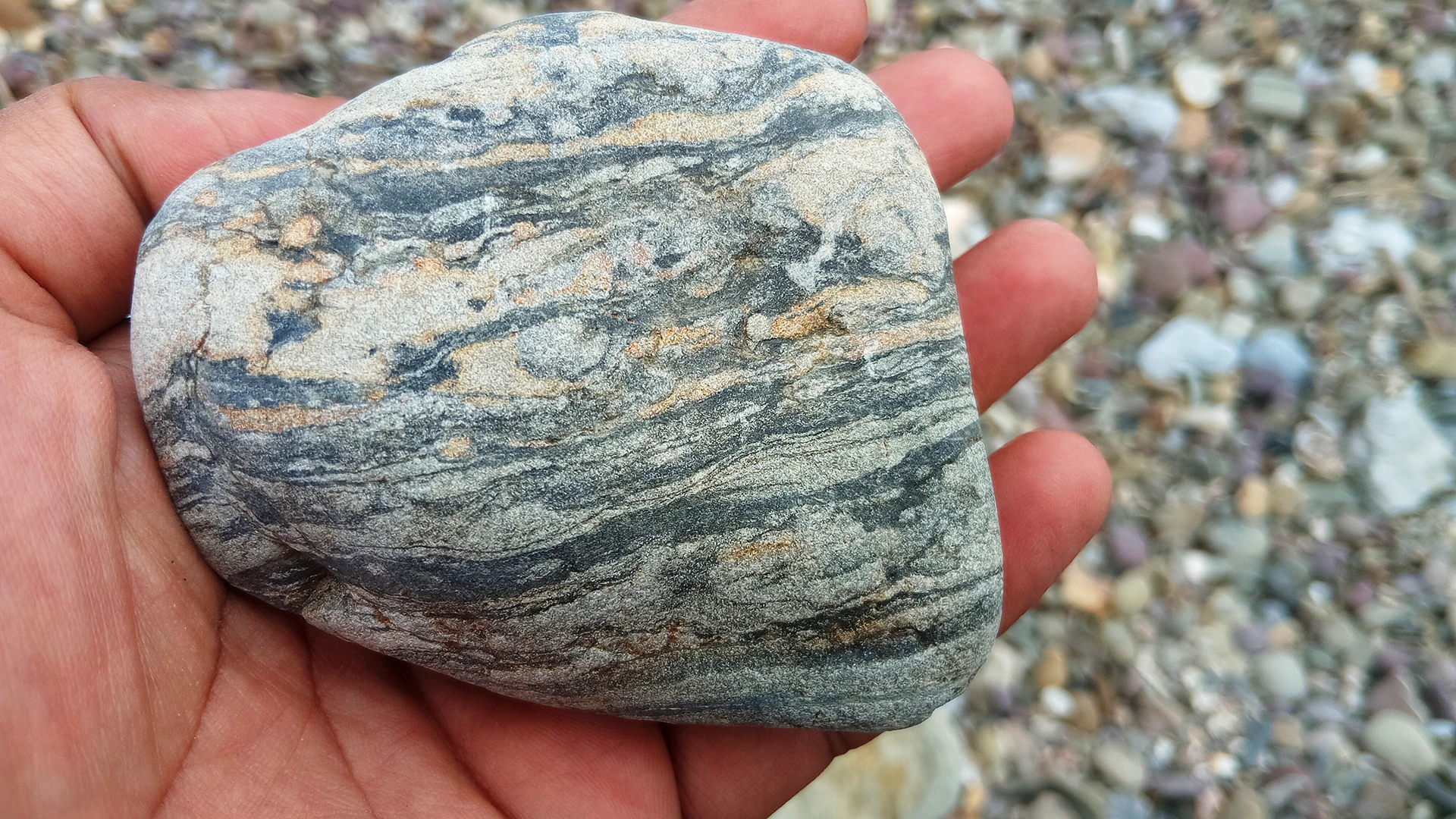
Stone from Owenahincha

Getting started with a heritage project

Hardcore Cork came about autumn 2020 when Aude and I were discussing the possibilities of having a centralised platform to show off Cork’s geology. Besides being interested in working on this, Aude worked as a geologist at UCC at the time which was convenient. I too had a few contacts within the creative communities in Cork, while leveraging off of my graphic skills.

Coincidentally, a funding call came up from Geological Survey Ireland seeking groups or organisations who had or wanted to create projects promoting Ireland’s geological heritage. Without any existing or similar projects, we started imagining what such a resource would look like for Cork city. We worked on the application over a few weeks and sent it in.

Luckily, our application was successful! 
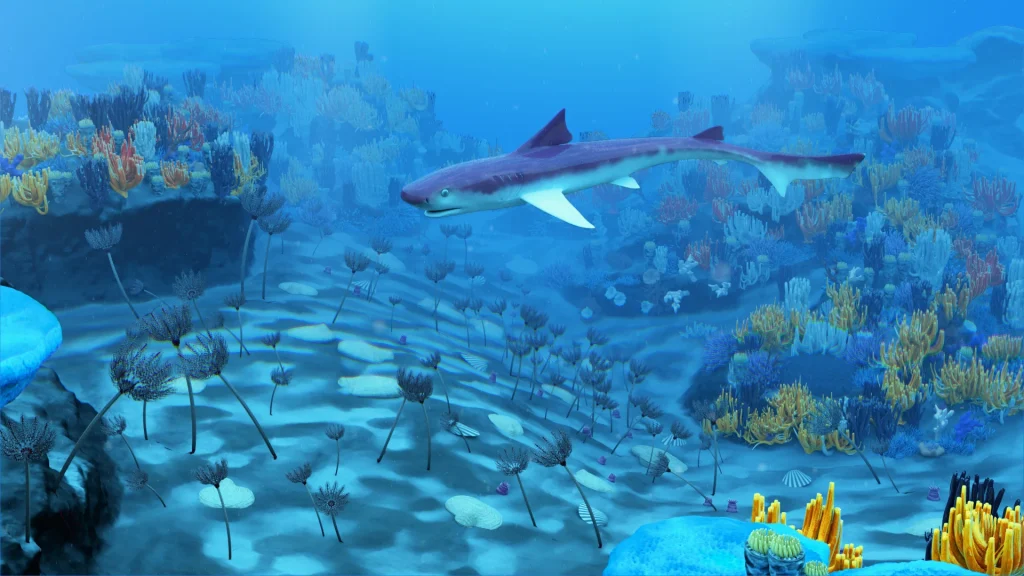
Cork during the Carboniferous Period

We had a call with the reviewers at Geological Survey Ireland discussing formalities, their expectations and the funding arrangements.

After that Aude and I pretty much started working on Hardcore Cork. We both had jobs, but were also lucky that lockdown was a thing at the time. The first two months wee spent reading about Cork’s and Ireland’s geology. Both of us knew a few things prior to, but not as much as we thought. 
Moreover, neither of us were from Ireland, so our outsider perspectives had to be put into context. We would neglect things that locals would notice, but also spot things what locals wouldn’t notice.
 
Talking to people was key: Have you noticed the rocks on your street? What would you like to learn about them? What is a rock to you? How do the local rivers affect your life?
 
These conversations were had with friends, friends of friends, local experts or even strangers in a pub. After a while, we both had hard scientific knowledge about the topic, but also soft (yet important!) local knowledge that helped making it relevant and relatable for people.

An idea:

So, let’s imagine that we’re doing another heritage project. We want to start with an idea, a potential name and description before even putting an application together. Make sure your idea or potential project is rooted in facts. You can read relevant literature or talk to experts as part of your brainstorming process if needed.
 
What good will the project do for locals or visitors? Can it be made relevant and tangible? Where will people be able to interact with it or access it?

Funding:

Money shouldn’t be the main motivation behind promoting natural heritage, but it certainly helps! You will have less stress about spending time and energy on the project, you can employ extra hands, acquire resources and it adds credibility for future efforts to show that an institution or organisation trusted you with money.
 
Read any funding criteria to be sure on what you’re allowed to spend the funding on. Some funding opportunities even require you to have partial costs covered already. I recommend following your local county or city council on social media to keep an eye out for opportunities. Following the National Heritage Council on social media is a great place to start.
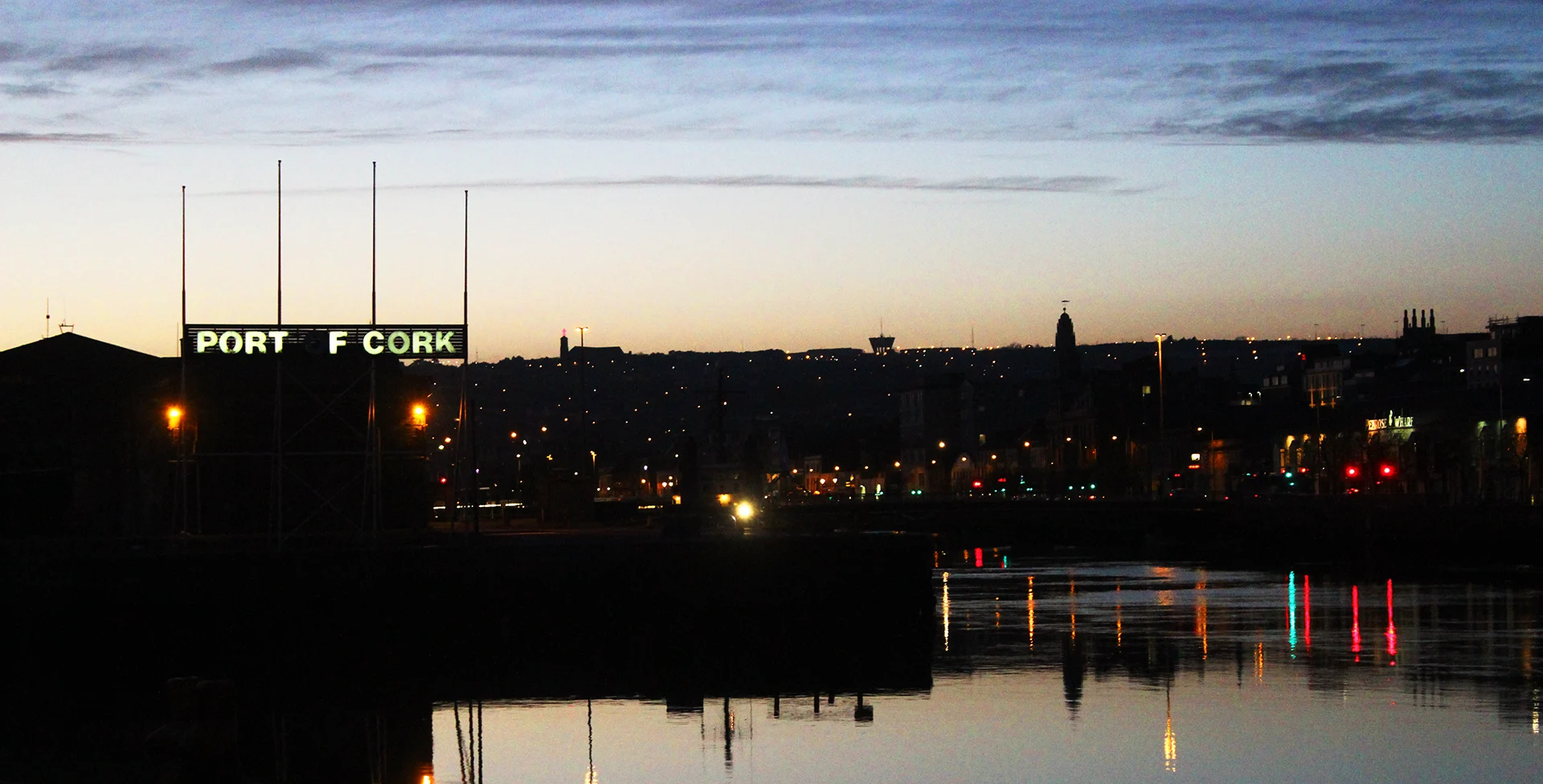
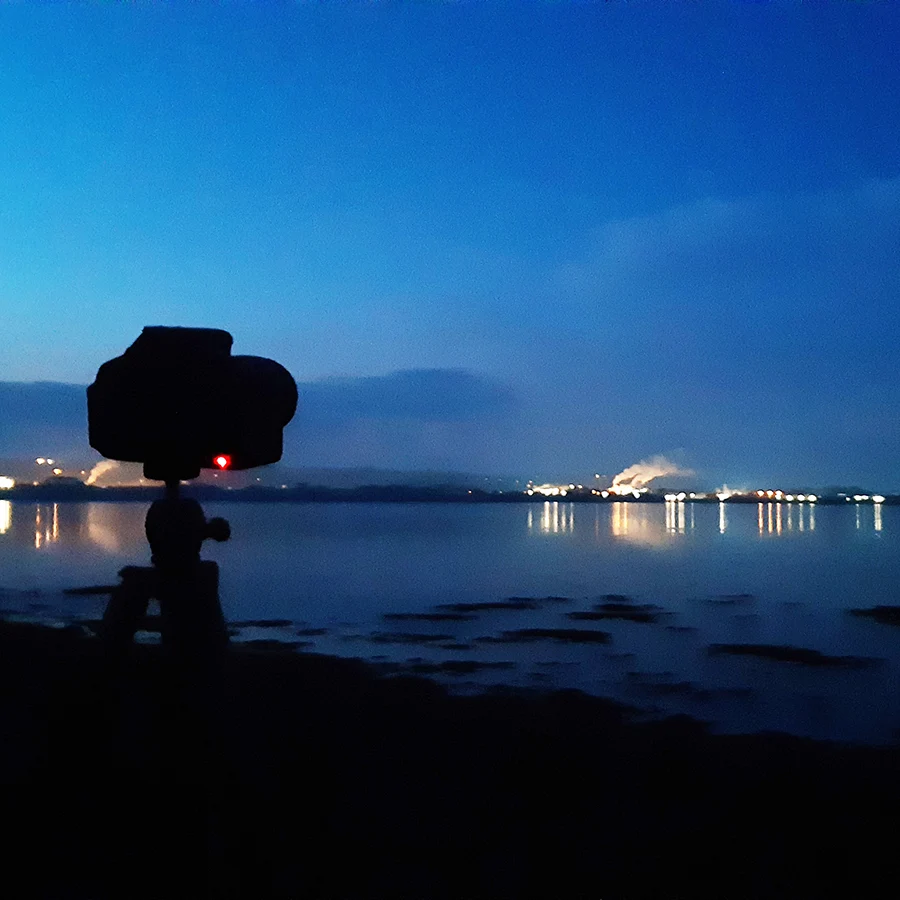
Port of Cork
Official grant funding periods and deadlines may have passed and can seem far away until next year’s rounds, but there are other opportunities all year round. Do a web search, make a calendar (even for opportunities that have passed) and start writing drafts for applications well ahead. See where other similar projects have gotten funding from, and make a plan on how to approach these.
 
Sometimes, you can even carve these out next to official funding schemes. Ask a local business if they’re willing to throw a hundred or two into your project. But be sure to keep your end of the bargain and include their logo in your product outputs. Remember to thank them specifically in your marketing material.
 
Having a portfolio, past successful projects (even personal) or a relevant career can help with boosting your application. It make take time to develop these, but have patience and passion.

The application:

The application can be daunting to attack, but it’s vital that you make sure it has everything required. Some application criteria will demand you keep it short and sweet. Others will want you to consider and describe uncountable aspects of your project. Be sure to proofread your application and have an extra pair of eyes look through it.
 
Read through the eligibility criteria and make a physical to-do list. Start writing keywords bit by bit. Expand these into full texts. Include images of your topic – the relevant area, building or natural feature.

Practicalities:

Again, how will you manifest your project? Are you building a website, a virtual or physical tour, event, product or resource?
 
Different outcomes require different efforts obviously. But key is to map it all. It really helps to draw flowcharts to see how it all can come together. Where will most of the money be invested? How will people interact with it? What will be offline, stationary, online or maybe even staffed? How will multiple resources interact?
Ideas might include:
– Graphic map over an area.
– Decorative postcards with explainers.
– A website.
– Guided tours.
– Panel discussions.
– Physical resources for actively improving an area.
– A social media-campaign.
– An animation or video.
– A brochure.
– A virtual reality-exhibition.
– A physical exhibition.
– An art exhibition (poetry, sculpture, video, paintings, audio etc.).
– A book.
– A comic book.
– Signposts.
– An event or conference.

Marketing:

Promotional efforts are super important, but should also reflect your project. Much online promotion is done via social media, websites and ads, while offline efforts may include posters, flyers, word-of-mouth or community engagement.
 
However, be aware that some of these efforts can backfire.
 
I had a client who printed A LOT of flyers for a sustainability project and was angrily questioned about this by a citizen.
 
In another example, I attended a climate talk years back where water bottles had been shipped in from another continent, and many of us commented on this to the organisers.
And in my last example, a self-declared business man got critically ravaged when he used AI-illustrations in a rather poor presentation about promoting and supporting the efforts of local artists.
 
Perhaps your efforts are related to our freshwater environments? Using AI to create promotional material for this may cause some people to question the double standards in using water-intensive technology.
 
But let’s be real: nothing we humans do will ever be completely zero-carbon. Even this website has videos, animations and images that require electricity to be displayed. I also bought food shipped from near and far away to metabolically fuel myself while creating these.

Getting to work:

You likely have something that requires your attention full-time: a job, kids, a partner or studies. These are important too. A great pitfall I hear people drop into is that they start a project and then assume that there’s a looooong time until project delivery deadline. Stagnation then ensues without a plan in place. 
 
All funding schemes I’ve checked require an end date for a project. Which is good news – after all, your work has to see the light of day.
 
Making sure you actually finish the project can be hard work. Set yourself milestones, break objectives into small tasks, work with other people, be transparent and talk about your project to everyone around you. Hold yourself accountable and don’t rely completely on external factors for the completion of your work. 
 
If you’re planning on involving suppliers or employees, get them informed as early as possible. I’ve personally been on the receiving end of many projects that decided to get me involved veeeery late in. It’s completely preventable by thinking ahead early on.
 
Use a project management application or a spreadsheet to keep track of deliverables, milestones and of who does what and when.
Geological heritage tour in Cork city 2025

Launching!

Aude and I launched Hardcore Cork for the first time in late-2021. A few elements didn’t go as expected. We had planned an exhibition at the local museum, however this fell through.
 
Instead, we decided to devote most of our resources to the website and to get two artists in to do additional work. This gave the project new dimensions and opened other doors. One of the artists designed maps of Cork City with geological heritage locations, and I’ve seen these hanging a few places around town subsequently. Also note that your first launch doesn’t have to be the only launch!
 
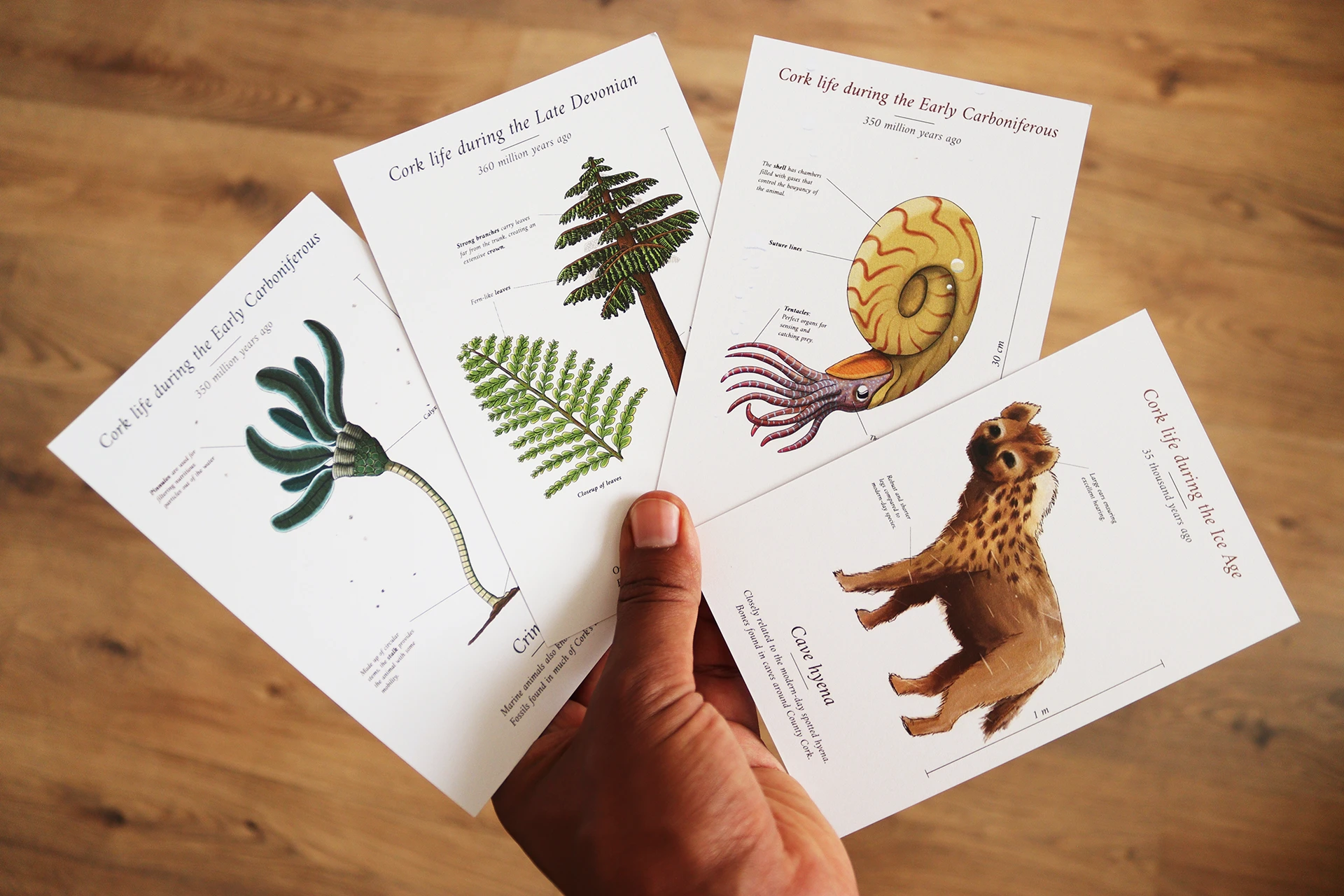
For the 2025 re-launch of Hardcore Cork, I designed a number of postcards printed to promote the website at various cafés and restaurants. On these I made scientific schematics of animals that had lived in the area of Cork thousands and millions of years ago. My hope was to create promotional material that people would not just discard after the event was over, but could simultaneously be decorative and thus be kept long-term.
 
Further, I made sure to be strategic about giving them away, treating them as “limited editions”. On the back, I had a small logo printed that showed that none of the content on these was produced with AI. 
Geological heritage postcards

I also took extra steps in making sure the Search Engine Optimisation (SEO) of the website was as optimal as I could make it in the weeks before launch. Giving images names and descriptive titles, and making sure that each page had a fitting description for the search engines to pick up on.

 
In 2024 as part of Heritage Week, a PR-company got me a spread in the local newspaper in advance of the geological heritage tour. You can however also develop your own press release to promote your project or efforts.
Whatever your goal is, experiment while being mindful of how you spend your resources.

Accessibility:

It’s possible for anyone of us to end up living with a disability. There are now many regulations and guidelines related to accessibility that need to be followed depending on the efforts. This includes subtitles on videos or disclaimers if a place or event isn’t wheelchair-friendly. You can get in touch with the National Disability Authority for guidance and resources.
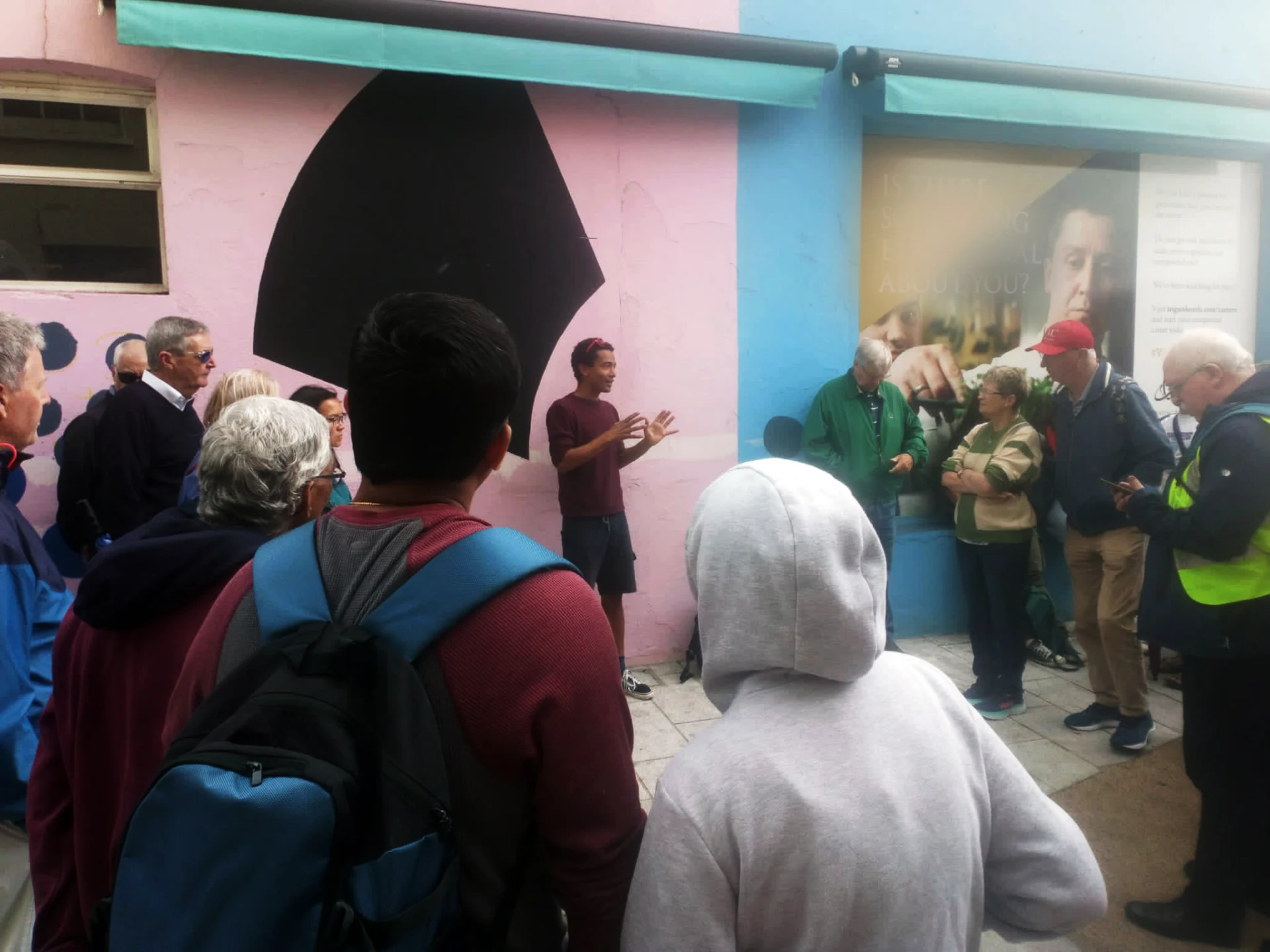
 
For in-person events, be clear on whether your event may be difficult or even impossible to partake in by people with reduced mobility. Even be mindful of this while completing a trip. You can have stewards or volunteers help to make sure that everyone feels included. The Cork City Council heritage-department have been helpful in making sure that I had extra hands during the geological heritage tours each year.

On the day:

Get a good night’s rest before you’re hosting an event. Get a nice meal, drink plenty of water, take vitamins if that’s your vibe and stay away from alcohol.
 
If you’re already comfortable with public speaking or giving presentations, you don’t need to hear this. But if you’re prone to feeling nervous before speaking in front of crowds, I recommend staying away from caffeine and instead, doing things that relax you prior to. Breathing exercises helped me years back when I first started.
Geological heritage tour in Cork city in 2023

Afterwards:

So, you’ve finished launch day and your heritage project is out there? How will you maintain longevity? Will you be paying for elements long-term or seek continued funding? Are you okay with your project ending? Who owns your work? These questions are good to consider even as you’re writing the initial application.
 
An associated website will need funding long-term (domain hosting, website and SSL-certificates) and maybe you’ve launched community initiatives that will need to be checked in on once in a while.
 
Your project may also lead to other projects as Hardcore Cork did. After launch, I worked on creating geological heritage material for the City Council, and moreover, I got to work on other natural heritage projects across Ireland.
I highly recommend you stay in touch with people. Lend a hand to other heritage projects and show up for relevant events. If there’s something our times need, it’s nature appreciation, sensitivity to our environments and community efforts.
 
Mostly a pessimist, I feel hopeful when governments help local communities with inititatives ranging from sports, sustainability, cultural events, conservation and heritage.
 
For me, geological heritage is an entrance to making people see their city as part of the natural environment and to see how it feeds into their lives. Rivers are formed by geology and geology forms rivers. Thus floods are geological events that have big impacts on our lives.
 
Hopefully it helps us understand the wider system as a consequence of climate and life.