Thomas Heising

Visual science communication
Back to the Lab

A Christmas apocalypse

Story time
2016 | Capital Region of Denmark
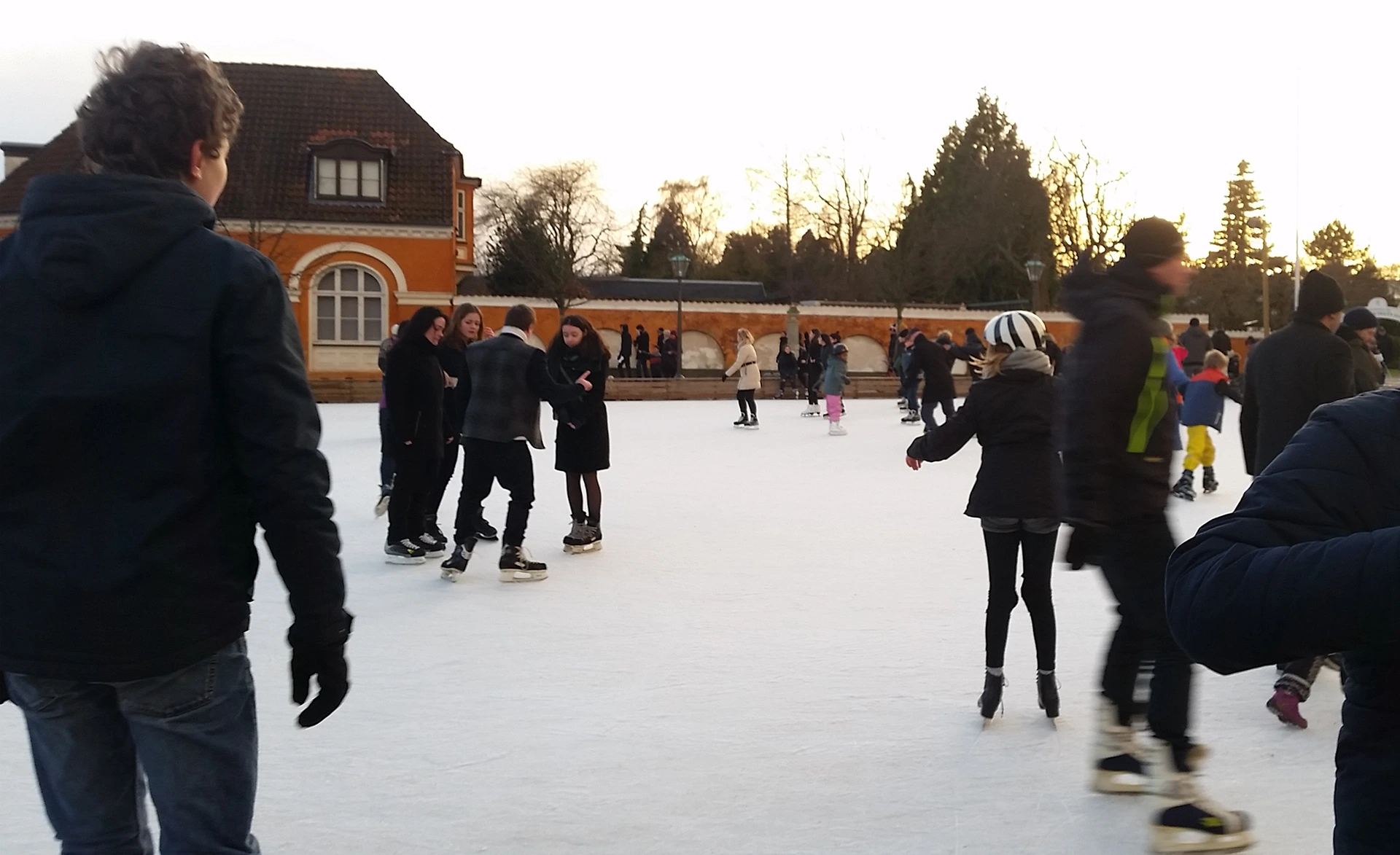
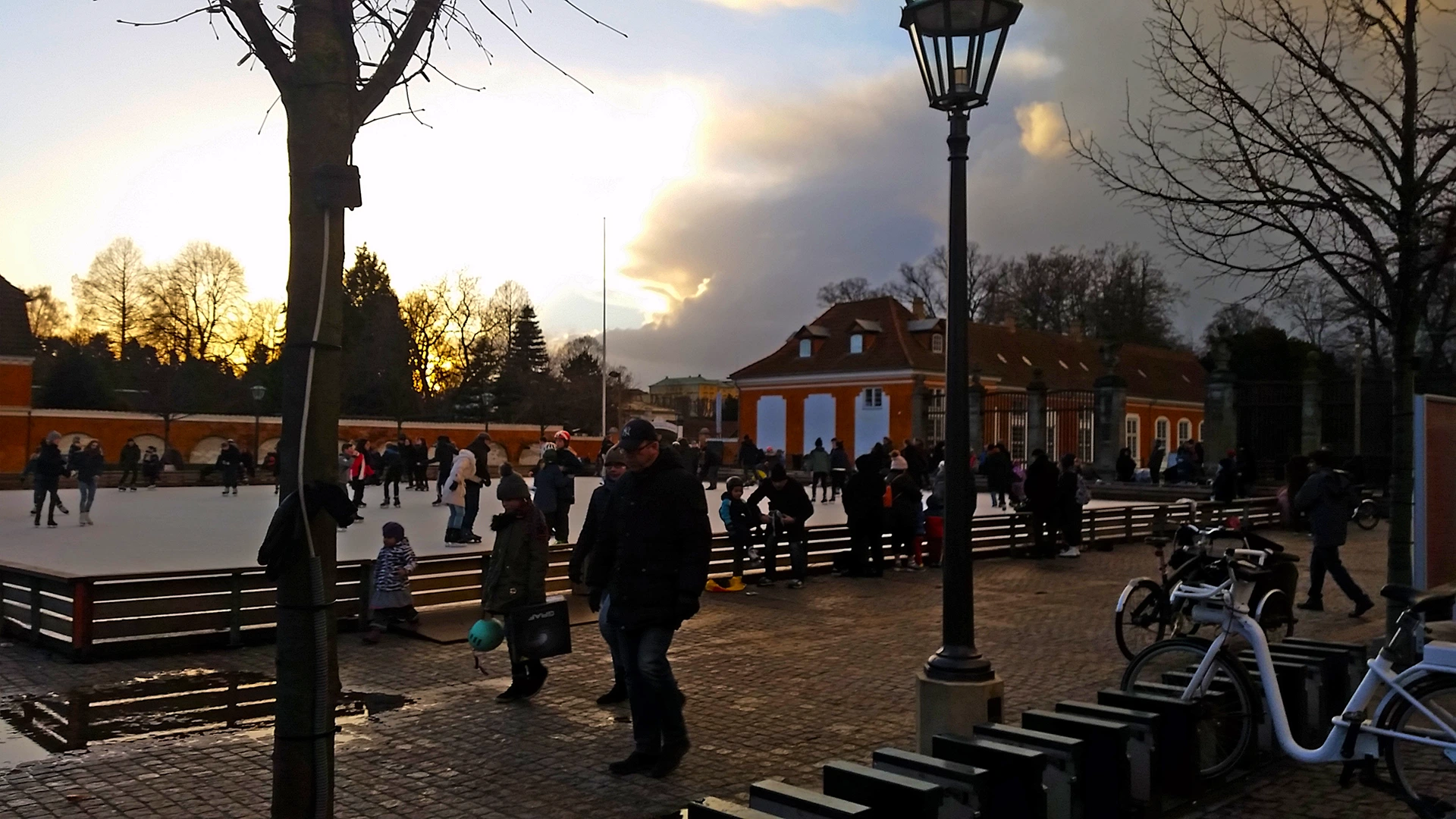
One glowy, cold and clear late afternoon, I went out with my sister and niece to skate near Frederiksberg Gardens. Every winter, an outdoor ice-skating arena is created just outside the park with skating gear conveniently rented from a nearby small hut. A lucrative setup and fun activity for families in Copenhagen during the dark and consumerist month of December.
 
Ice skating reminds me of a time during the 90s when inline skates were in. Skating on frozen water is a bit different though; especially on a busy skating course. Out of our cautiously athletic trinity, my niece was likely showing off the most this afternoon, managing both more reckless stunts and her own acrobatic experiments.
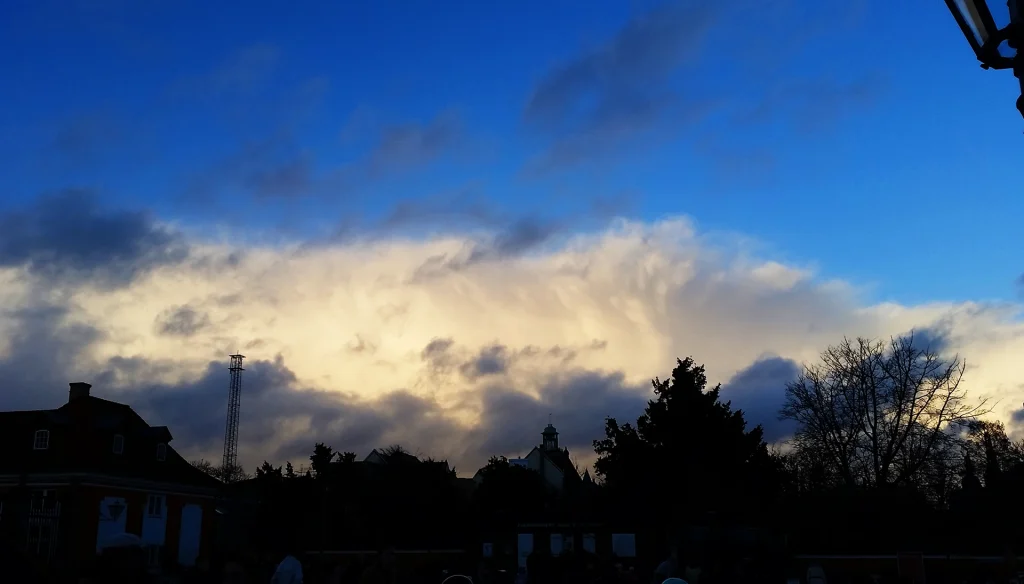
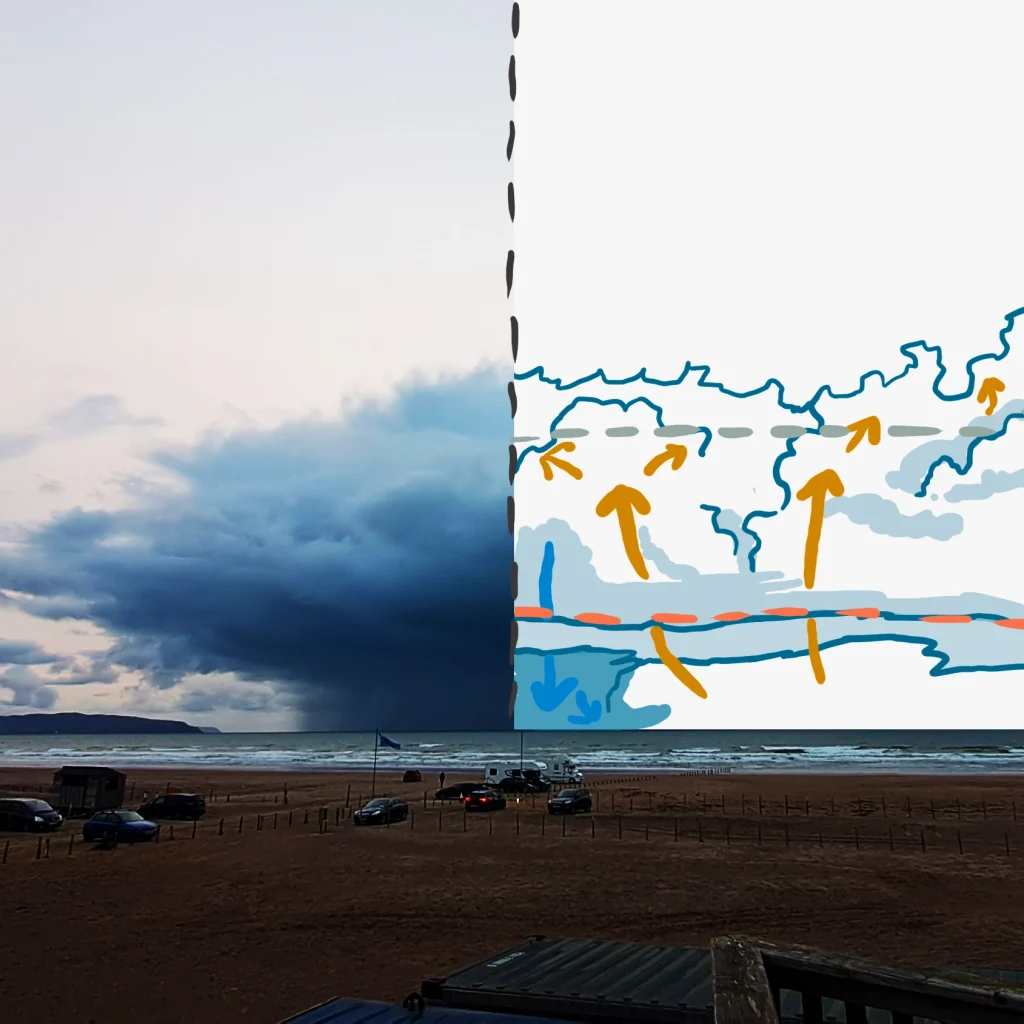
A bit of mid-altitude instability in the distance. All good, nothing to worry about!
An atmospheric cold front had recently passed after a day of rain and was pushing away the previously cloudy sky replacing it with dry, cold air descending from up above. This was, however, destabilising the warmer air close to the surface. Even a day with -5°C at the surface is nothing compared to the near constant -50°C air temperatures a few kilometres above our heads!
 
Cold days like these can yield ideal thunderstorm conditions, especially if the ground has been wettened. Thunderstorms form with basic temperature and humidity contrasts in place: warmer moist air near the surface and cold drier air above. The warm air will then bubble upwards as it’s lighter than the cold air. That’s the simple explanation, of course. I’ve yapped on and on enough about this elsewhere.
 
So back to Frederiksberg.
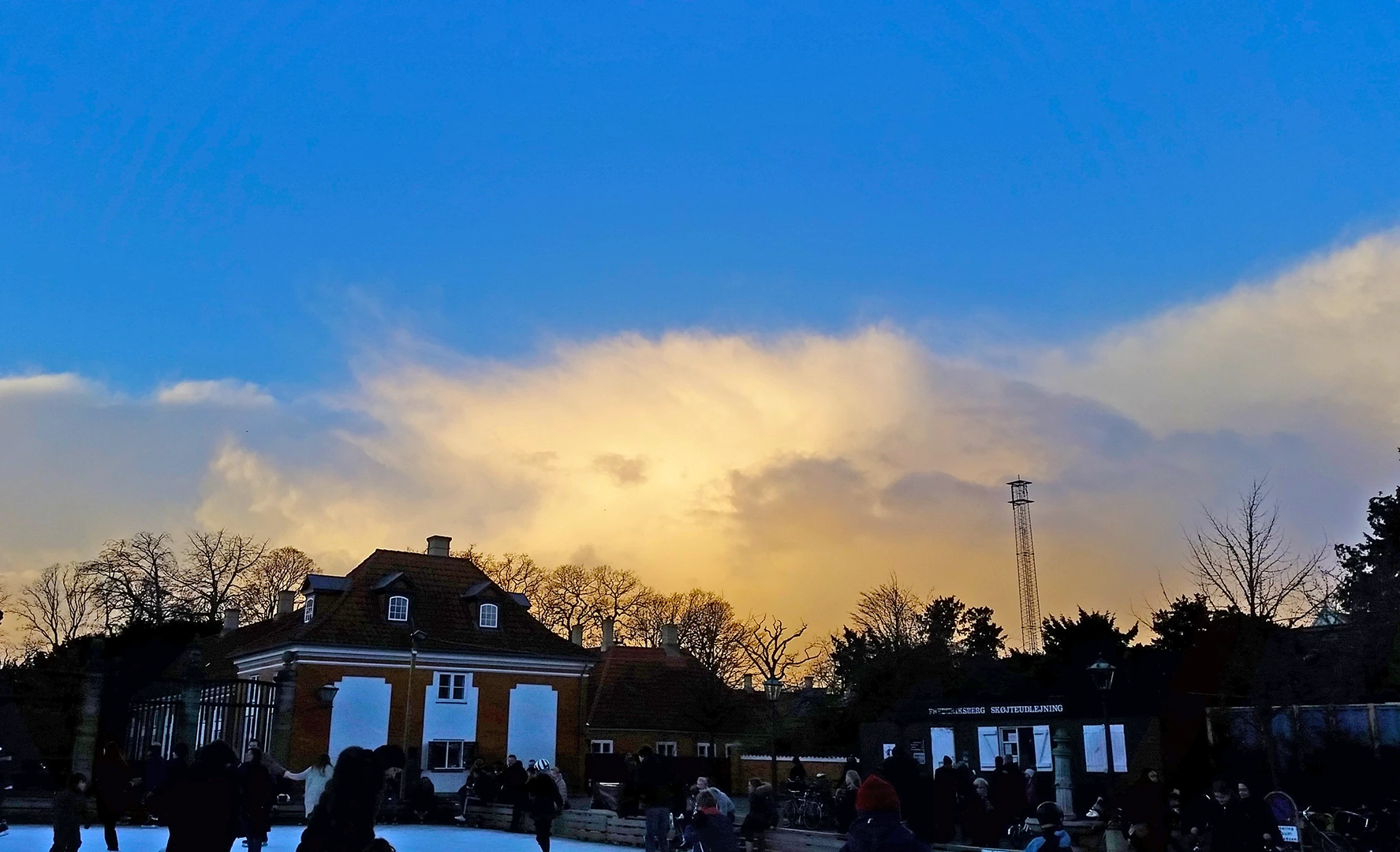
A fluffy monster rears its head in the distance and gradually gets bigger…
While twirling, sliding and laughing away incessantly, I kept looking towards the head of a several kilometres tall monster coming to view in the distance to the west.
 
An extensive and clearly-defined hat or anvil composed of ice at the top of a thunderstorm hints at strong upwards movement of air; giving rise to strong production of rain, hail, snow and/or sleet inside the cloud. Maybe even strong gusts and tornado-friendly conditions.
 
From the perspective of the skating arena, this approaching giant was in a mature stage and clearly on its way towards us – growing in size. I skated a bit more, expecting it to die out before hitting us. Initially, I estimated that it would run out of steam travelling in over West Zealand and at best, a small brief shower was due. Ice skating was great fun after all.
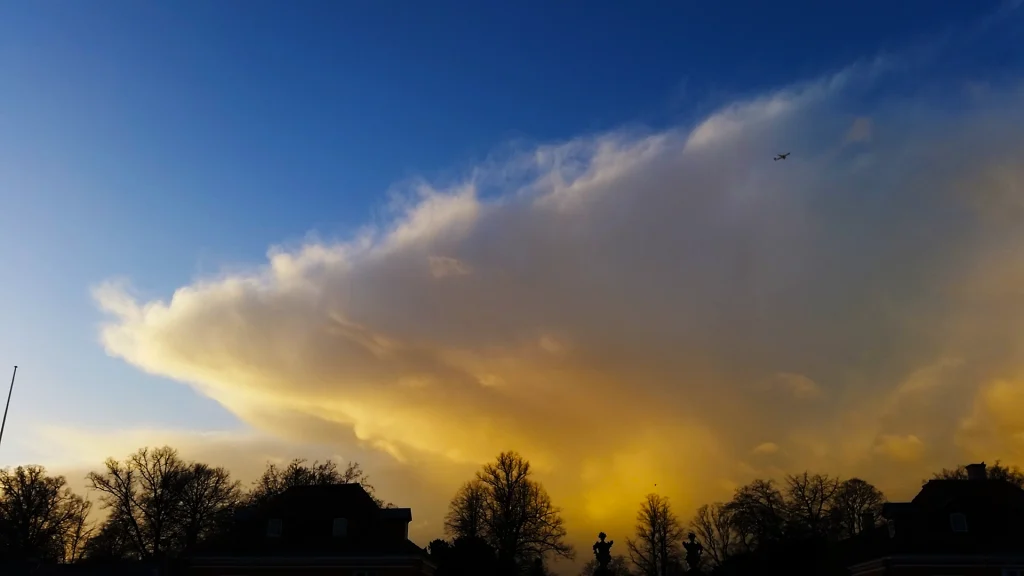
Anvil getting visibly bigger due to strong upwards air movement maturing the thunderstorm, but also as it’s getting closer…
But I kept a keen eye on the sneaky monster regardless. Typically, a westerly winter thunderstorm will sustain healthy upwards momentum for an hour or two before collapsing to something harmless. In this case, there didn’t seem to be any signs of weakening.
 
10 minutes later, it was too close too soon and with no signs of dissolution – quite on the contrary, its anvil looked even stronger and plumes of updraft peered through the white fuzzy form. Hail was not just a possibility at this point, but likely.
 
Cumulonimbus or thunderstorm clouds, like this one, can look blissful, but certain features give away their ferocity underneath all the photogenic fluffiness. Inside it all were raging winds hurling pebble-sized hail around and generating lightning by rubbing plumes of water and ice against each other.
 
The screen narrows to the cinematic aspect ratio of 2.39:1 and an Alan Silvestri-film score starts blaring in the background.
 
“We’ve got to go!”, I said to my sister. “Is it going to rain?”, she asked. I looked at her worryingly nostrils flaring and tears gliding down my cheeks from the cold: “Worse.”. To the west, the orange-tinted sun disk drowned behind icy high-altitude clouds even further away.

The thunderstorm’s soon-to-be victims.
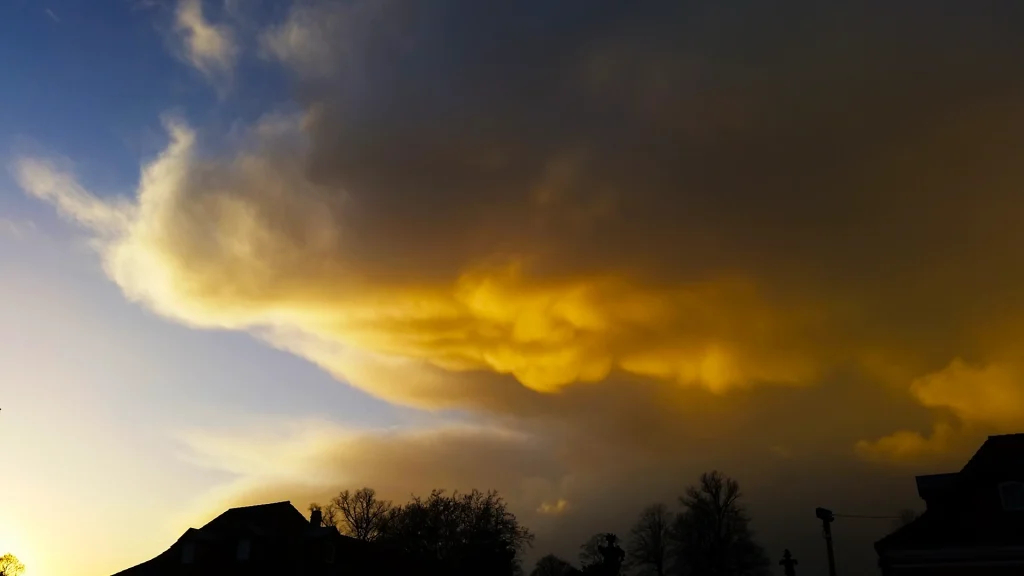
My niece crawled over the barrier of the skating field. She too had been briefed about the incoming airborne apocalypse and wasn’t keen on getting soaked by supercooled water. I looked at the anvil above that was now a few tens of kilometres away; mammatus clouds were developing under the anvil. These surreal structures form during strong upwards motion and high instability.
 
It really was time to go at this point.
 
We got on our bikes after returning the gear to the hut. As the first foot was placed on the pedal of my bike, I looked back at the innocent people still skating obliviously – kids, their parents and groups of friends hanging out – none of whom seemingly understood deep moist convective and Wegener-Bergeron-Findeisen (WBF) processes. Tsk tsk.
 
I sighed before setting off: you can’t save everyone.
 
It’s also socially unacceptable to be drawing attention to oneself in Copenhagen; within seconds, someone will come and hush you!
Mammatus features appearing on the underbelly of the thundercloud anvil!
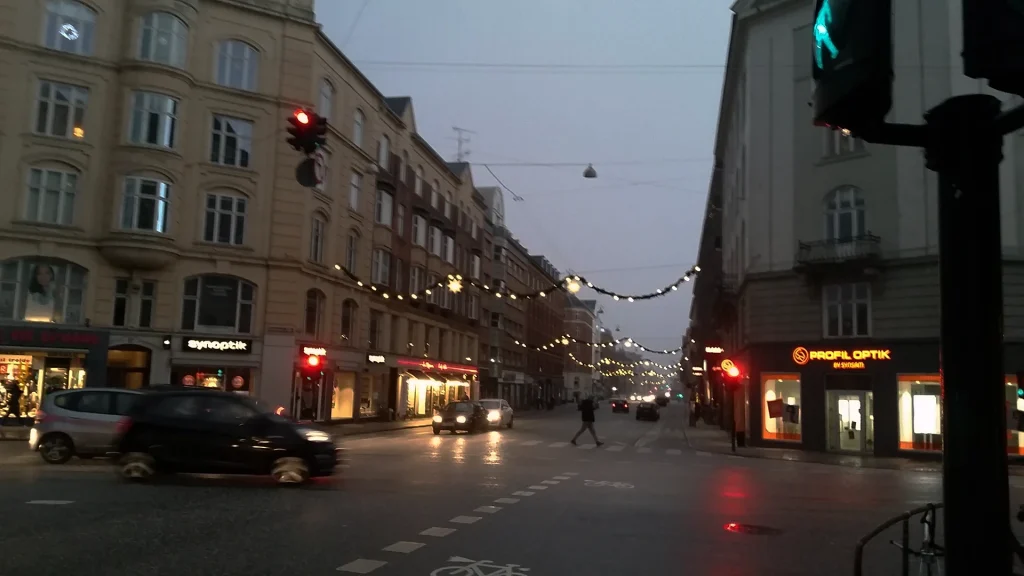
Traffic along the roads of Frederiksberg can be busy. Luckily, the bike lanes were less congested on this second day of Christmas. I looked up as we stopped at a traffic light. “Will we make it?”, my sister asked. Not taking my eyes from the strong turbulence structures of the shelf cloud now obscuring half the sky, I declared dramatically and with a husky determined voice: “No.”.
 
As the first rumblings of thunder rippled through the air, we got off our bikes and rushed to the side under the cover of an apartment entrance. That was when the hail started dropping on the pavement under our feet. Gusts of wind flung these iceballs horizontally and the lower parts of our trousers were soaked by the hail and supercooled water.
The iceball showers exasperated with flashes of lightning followed closely in time by their associated roars of thunder overwhelming the Scandinavian capital. Eventually the hail was substituted by a brief strong burst of rain. After 10 minutes of a cold, loud and dramatic hellscape, the lightning was now less frequent and the sky was brightening again. We got on our bikes once more and proceeded homewards. The last blue hues of sky was soon visibly again before a complete descent of the sun disk behind the horizon darkened everything.
 
As I got home and turned on the kettle, I thought of the likely now-frightened poor souls we left at the ice skating pitch. They really should’ve studied the Wegener-Bergeron-Findeisen process.
Cue:
Text “Starring and directed, written and produced by Thomas Heising” appears on the screen with reprise soundtrack suite blaring in the background.

Hi, before you go...

I’ve started a Substack called Thomas Reads Clouds through which I will teach about clouds and the weather to give people an everyday understanding of how our atmosphere works. I’d absolutely adore if you would become a subscriber of it – even a free one.

As a personal benefit for you, I’ll show you weekly how to read the sky with videos, images, stories and texts, which will save you from getting wet while cycling or even save your dignity while on a hike…

Once you understand the weather better, boredom will become a thing of the past!
Subscribe here!